
Indoor gardening success depends heavily on one critical factor that many growers overlook: airflow. Fixing air circulation in indoor gardens is not just about turning on a fan it is about creating proper air exchange, managing humidity, regulating temperature, supporting transpiration, and ensuring balanced carbon dioxide movement. Without adequate ventilation, plants face static air, excess moisture, pest problems, fungal diseases, and slowed growth. With the right airflow strategy, however, you create conditions that support strong stems, healthier leaves, improved transpiration, and overall plant vitality.
This comprehensive guide will walk you through everything you need to know from why airflow matters above ground and below ground, to ventilation systems, AC considerations, humidity balance, carbon dioxide management, and long-term plant health strategies.
Understanding the Role of Airflow in Indoor Gardens
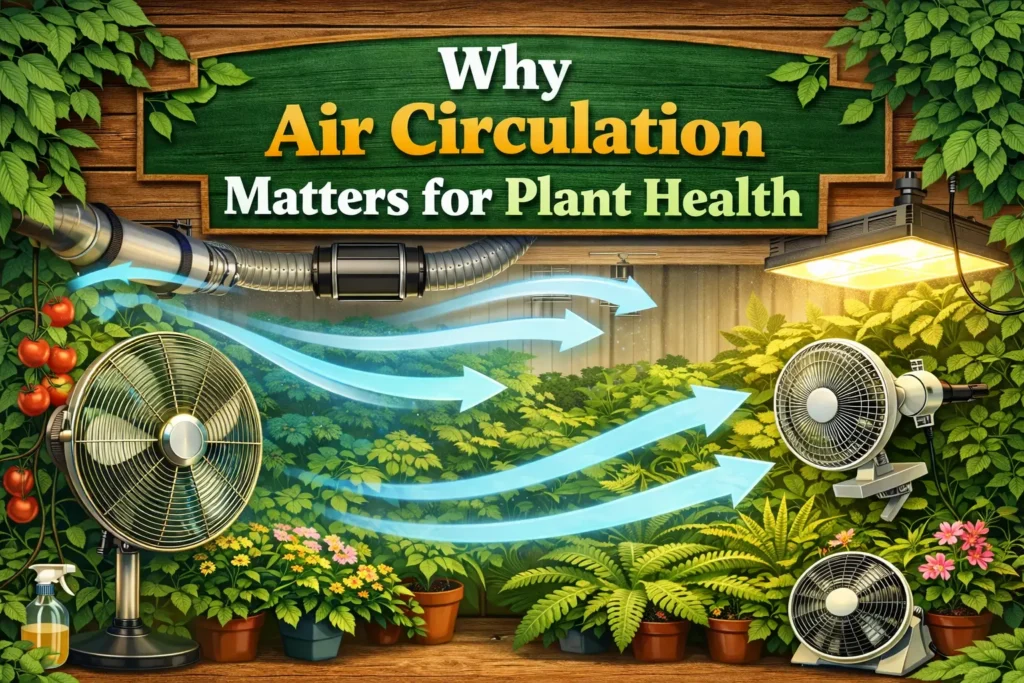
Why Air Circulation Matters for Plant Health
Air circulation plays a vital role in both visible and invisible plant processes. Plants need air to breathe. Oxygen and carbon dioxide continuously move through leaves during photosynthesis and respiration. When air becomes stagnant, gas exchange slows, humidity builds up, and the likelihood of mold, mildew, fungus, and bacteria increases.
Proper airflow:
- Reduces excess humidity
- Helps evaporate moisture from leaves
- Regulates temperature
- Decreases the likelihood of plant diseases
- Creates a less hospitable environment for pests
In outdoor environments, wind naturally strengthens plant stems and distributes heat evenly. Indoors, modern homes eliminate drafts, meaning plants do not experience the same natural stimulation. Without air currents, stems may remain weak, moisture may accumulate, and static air can damage overall plant health.
Airflow Above Ground and Below Ground
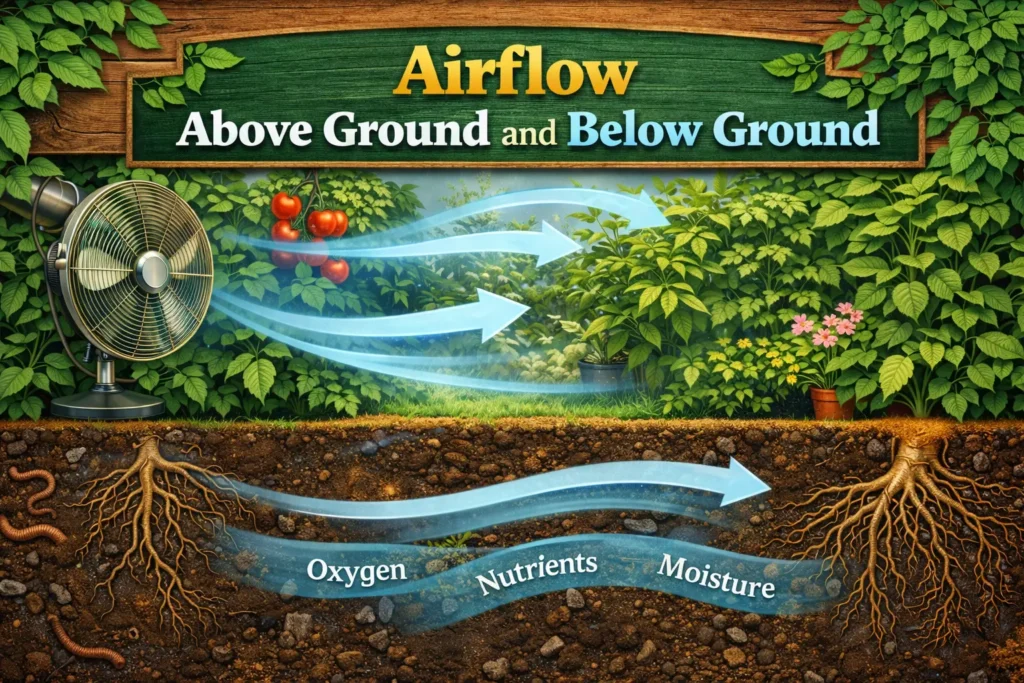
Air circulation is important both above and below the soil surface.
Above ground:
- Supports photosynthesis
- Dissipates gases exhaled by the plant
- Strengthens stems
- Reduces fungal problems
Below ground:
- Encourages roots to grow and reach beneficial nutrients
- Helps soil drain well
- Reduces moisture buildup that can lead to molds
When soil contains materials like perlite, drainage improves, but airflow in the room is still essential for preventing humidity accumulation around the root zone.
The Science Behind Air Movement and Plant Development
Transpiration and Moisture Release
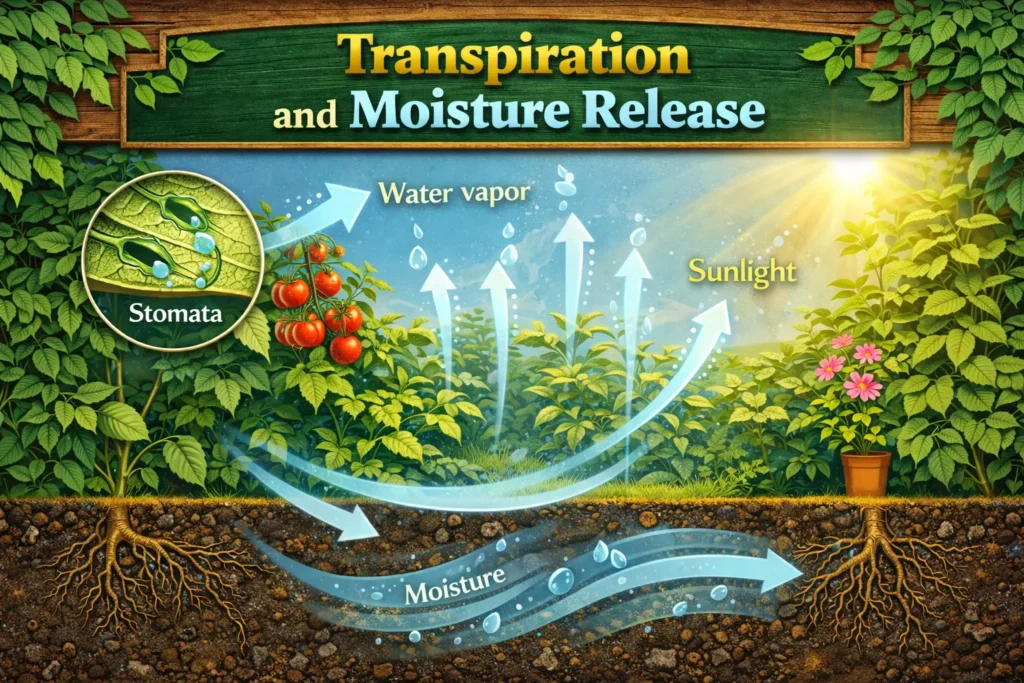
Transpiration is the plant breathing process. Water movement through leaves releases moisture into the surrounding air. Without ventilation, this moisture lingers, raising humidity and creating condensation risks.
When air is circulating properly:
- Moisture release becomes balanced
- Leaves dry more efficiently
- Excess humidity does not accumulate
This process directly impacts temperature regulation and plant growth.
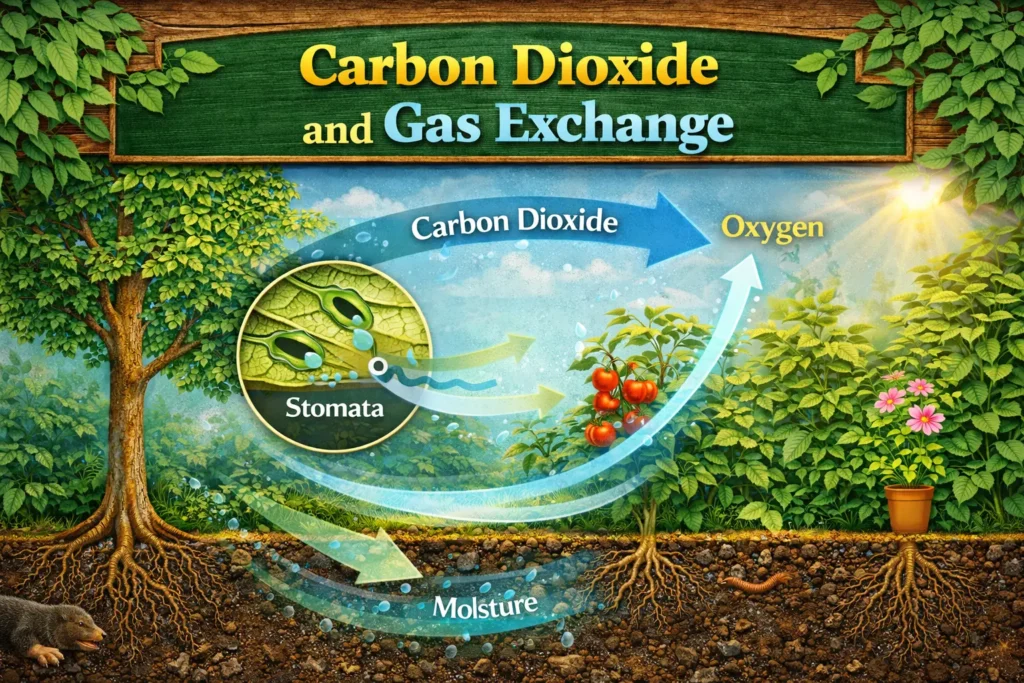
Carbon Dioxide and Gas Exchange
Carbon dioxide (CO₂) is essential for photosynthesis. During the day, plants release oxygen. At night, the process reverses: plants take in oxygen and release carbon dioxide.
If there is no air exchange:
- CO₂ levels may become uneven
- Oxygen circulation becomes limited
- Indoor plant airflow decreases efficiency
Night air exchange is important because plant respiration continues even after photosynthesis stops. Good air circulation at night helps keep plants healthy and prevents gas buildup.
Common Problems Caused by Poor Indoor Air Circulation
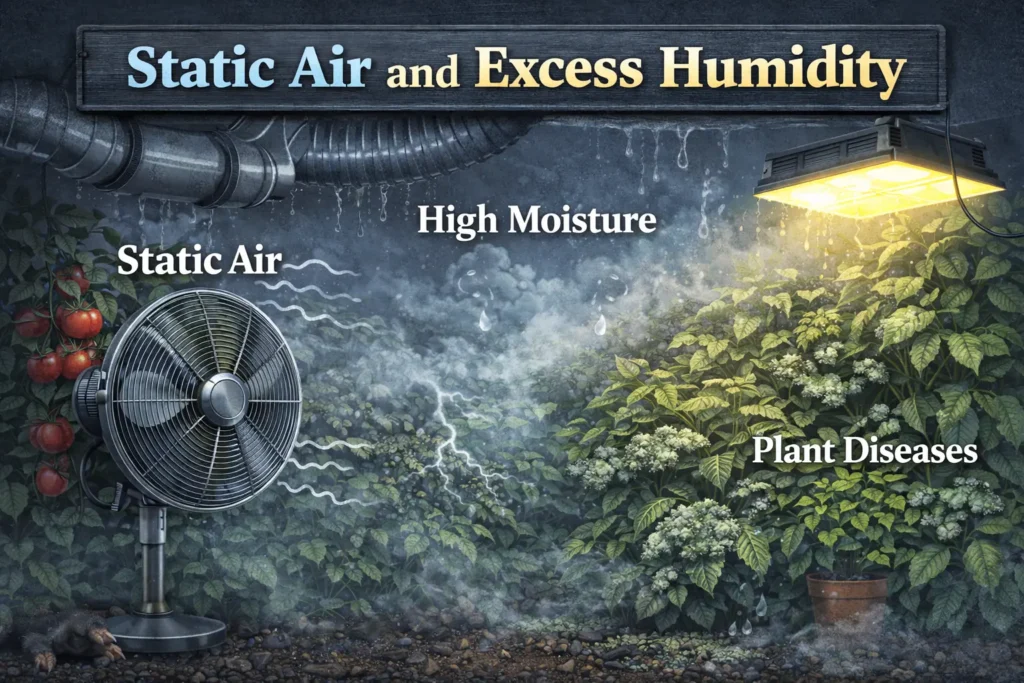
1. Static Air and Excess Humidity
Static air creates cold pockets, moisture buildup, and uneven temperature zones. This can lead to:
- Mold growth
- Mildew
- Fungal diseases
- Pest infestations
- Slowed growth
Humidity levels that drop too low (30–40%) or remain excessively high can both stress plants. Many tropical plants prefer 40–60% humidity, and dry air conditions may cause dehydration and leaf damage.
2. Pest and Disease Pressure
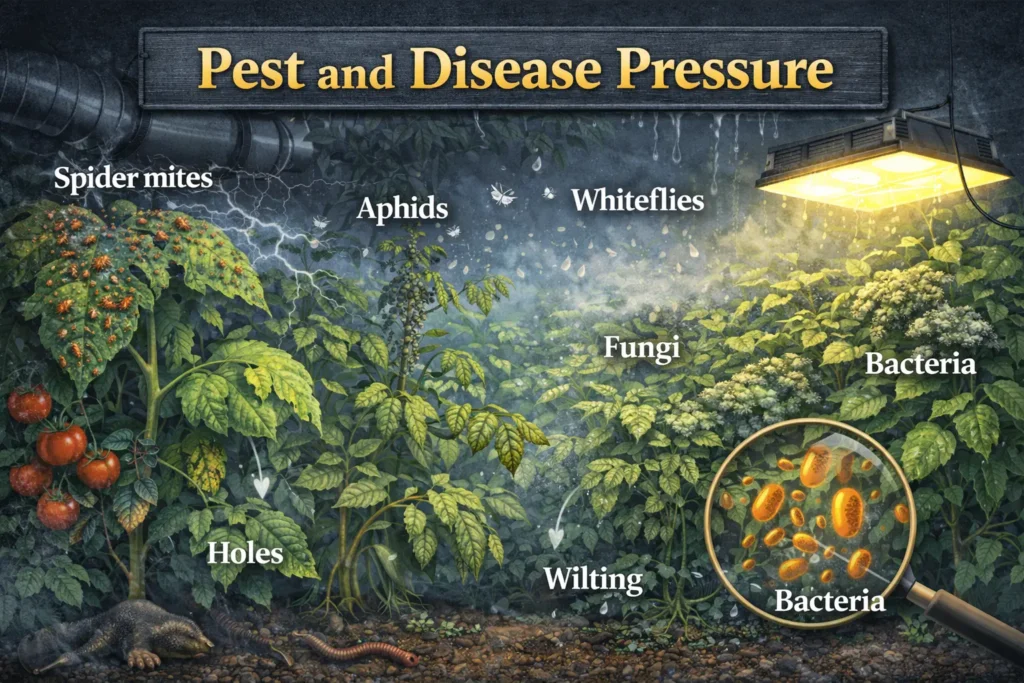
Airflow helps with pest control by reducing the environments where insects thrive. Excess moisture encourages fungus and molds, while stagnant air increases the risk of bacterial problems.
Proper airflow reduces infestations and supports disease prevention.
3. Weak Stems and Slowed Growth
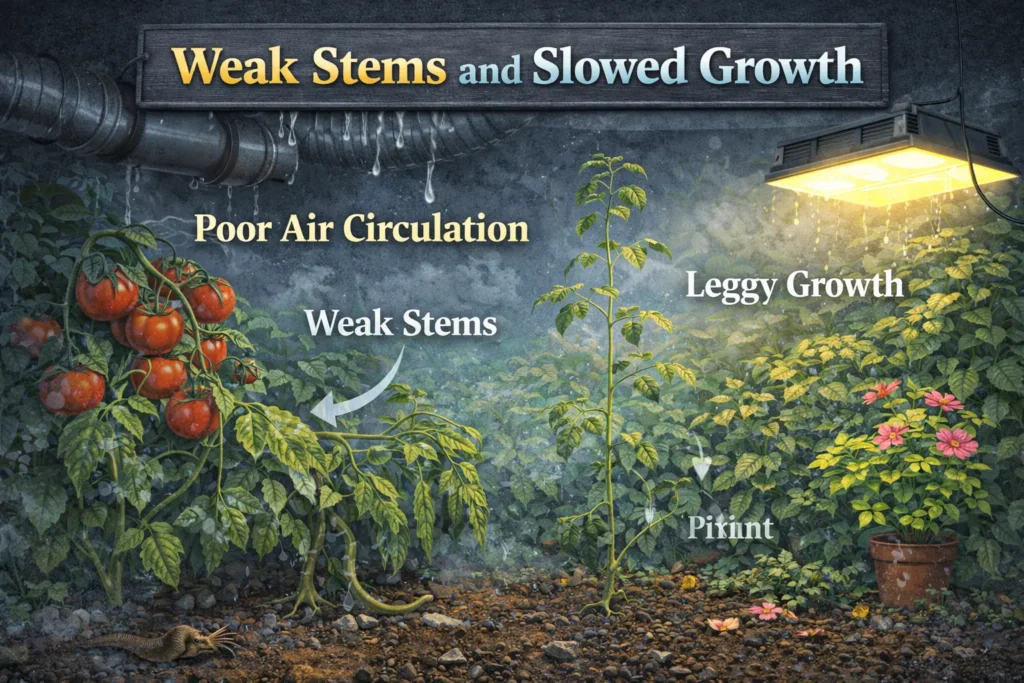
Wind simulation indoors strengthens stems. When plants experience gentle air movement, stems grow sturdy and healthier.
Without airflow:
- Growth may slow
- Flower buds may drop before blooming
- Stems may remain weak
Using airflow correctly supports healthier growth patterns.
How to Increase Air Circulation in Indoor Gardens
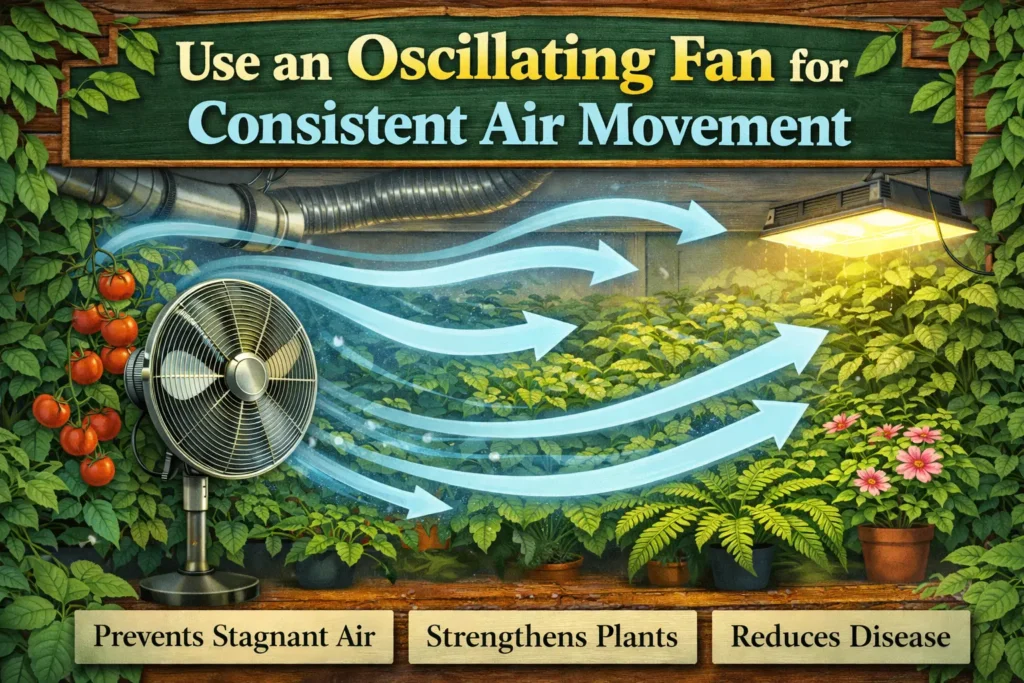
1. Use an Oscillating Fan for Consistent Air Movement
An oscillating fan provides a gentle breeze that mimics wind outside. It improves air movement and prevents stagnant zones.
Best practices include:
- Using a low setting
- Positioning approximately three feet from seedlings
- Running for at least 10 minutes per day
- Adjusting fan placement if the plant becomes stressed
Avoid directing cold air from vents or drafts directly onto plants.
2. Improve Plant Spacing and Layout
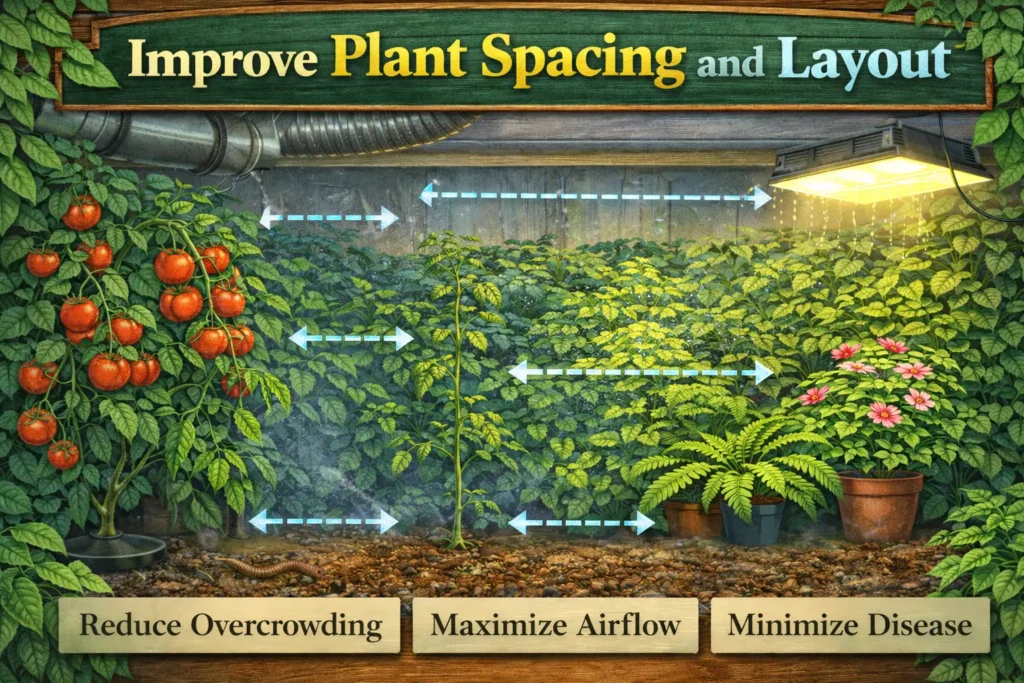
Plant spacing enhances airflow significantly. Overcrowding blocks ventilation and traps moisture.
Consider:
- Adequate space between plants
- Avoiding overcrowded shelves
- Using raised beds or vertical structures
- Hanging plants to improve air distribution
Garden placement matters. Sunlight exposure and wind exposure indoors both affect airflow patterns.
3. Open Windows and Encourage Air Exchange
Opening windows regularly introduces fresh air and improves indoor air quality. A window fan can help move air more effectively and support ventilation benefits.
However, avoid placing plants near heating ducts or air-conditioning vents, as dry air damage and leaf tip burn may occur.
4. Trim Dead or Crowded Leaves
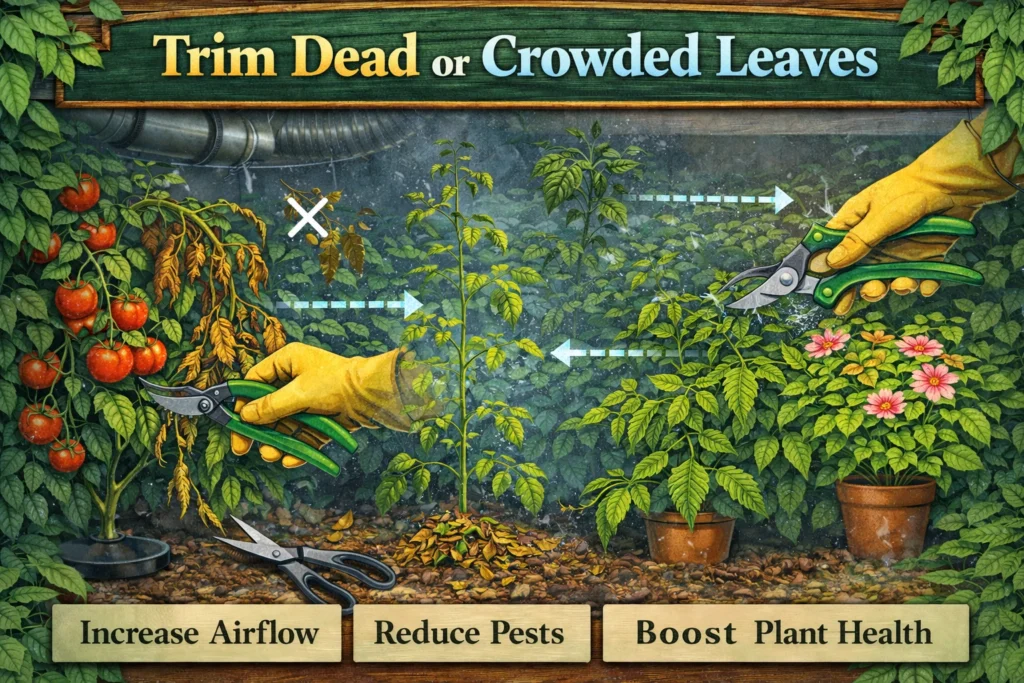
Pruning supports better ventilation around foliage. Removing crowded leaves reduces humidity buildup and decreases disease risk.
Leaf maintenance improves airflow at the plant canopy level.
Managing Air Circulation in Air-Conditioned Homes
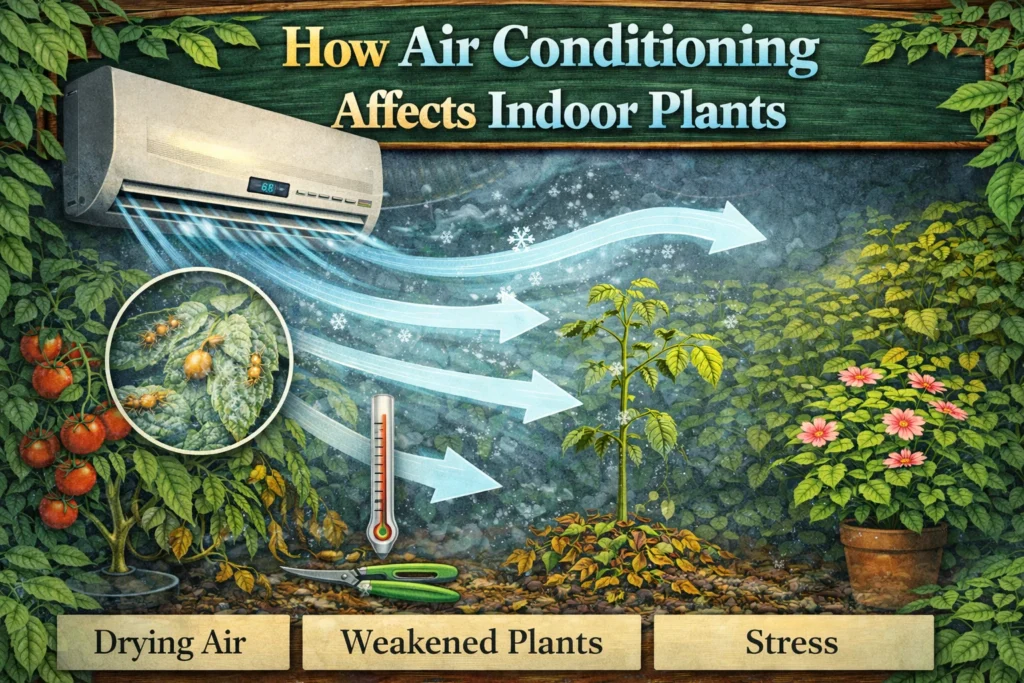
How Air Conditioning Affects Indoor Plants
Air conditioning lowers humidity and temperature. Cold air from vents may cause:
- Dehydration
- Slowed growth
- Yellowing leaves
- Crispy edges
- Drooping
- Flower buds dropping
Air-conditioned spaces often create environmental stress and humidity reduction that plants must adapt to.
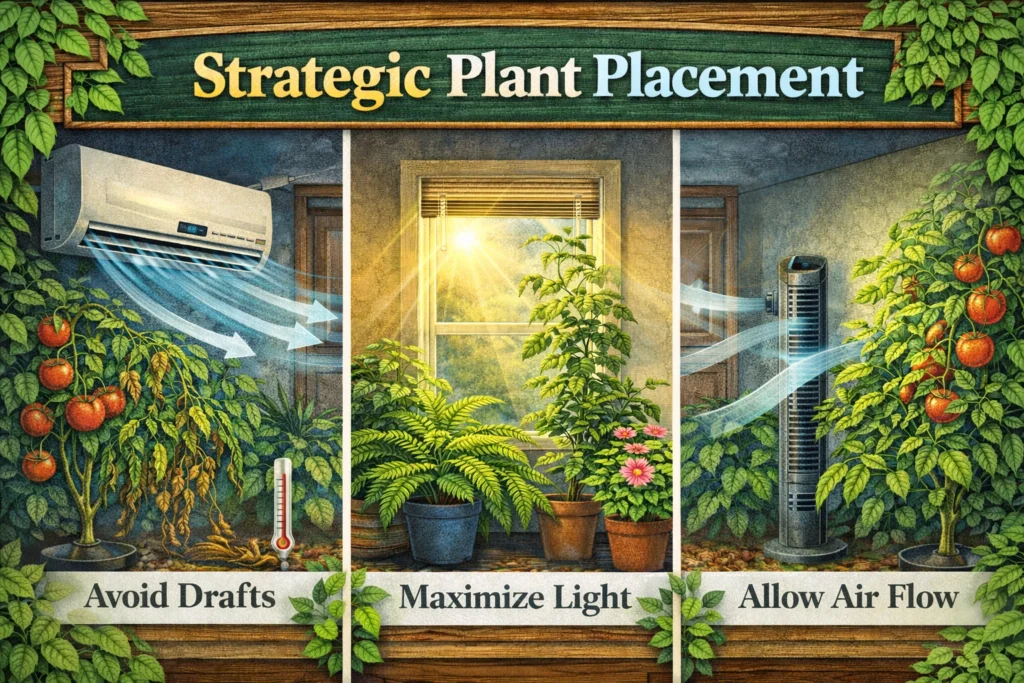
Strategic Plant Placement
Avoid placing plants near AC vents, heating ducts, or direct drafts. Strategic placement reduces airflow exposure that causes damage.
Rearranging plants during summer months may be necessary if cold pockets develop near registers.
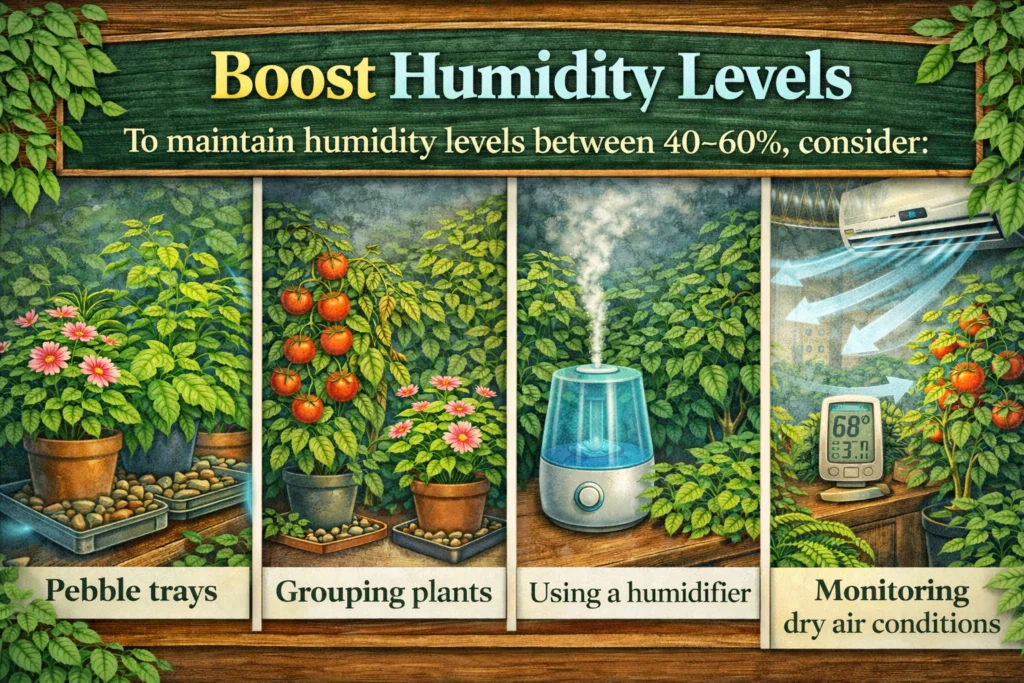
Boost Humidity Levels
To maintain humidity levels between 40–60%, consider:
- Pebble trays
- Grouping plants
- Using a humidifier
- Monitoring dry air conditions
Humidity balance prevents dehydration symptoms and supports tropical plants sensitive to cool air.
Using AC Condensate Water
AC condensate water is similar to distilled water and free from chlorine. If the collection system is clean, it can serve as an alternative water source.
This can support moisture management while avoiding chlorine exposure.
Ventilation Systems for Indoor Gardens
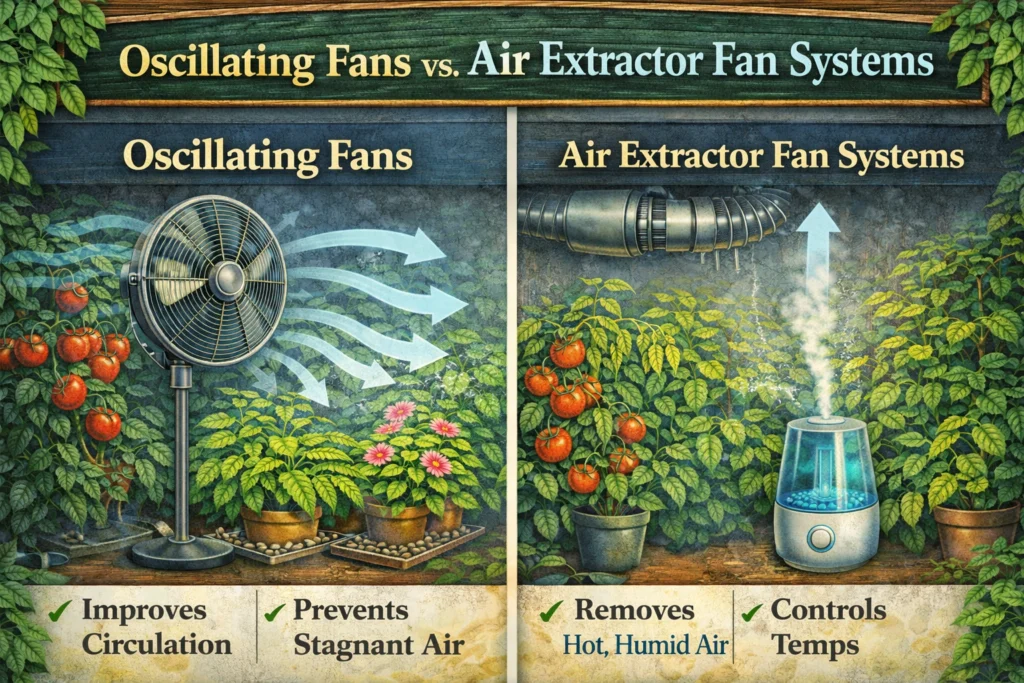
Oscillating Fans vs. Air Extractor Fan Systems
While oscillating fans circulate air within the room, an air extractor fan system removes stale air and supports full air exchange.
Extractor systems:
- Improve exhaust airflow
- Prevent moisture buildup
- Support ventilation strategies
Passive or Active Intake
Passive intake allows fresh air to enter naturally, while active intake systems force fresh air into the grow area.
Both methods help control airflow and maintain proper indoor growing conditions.
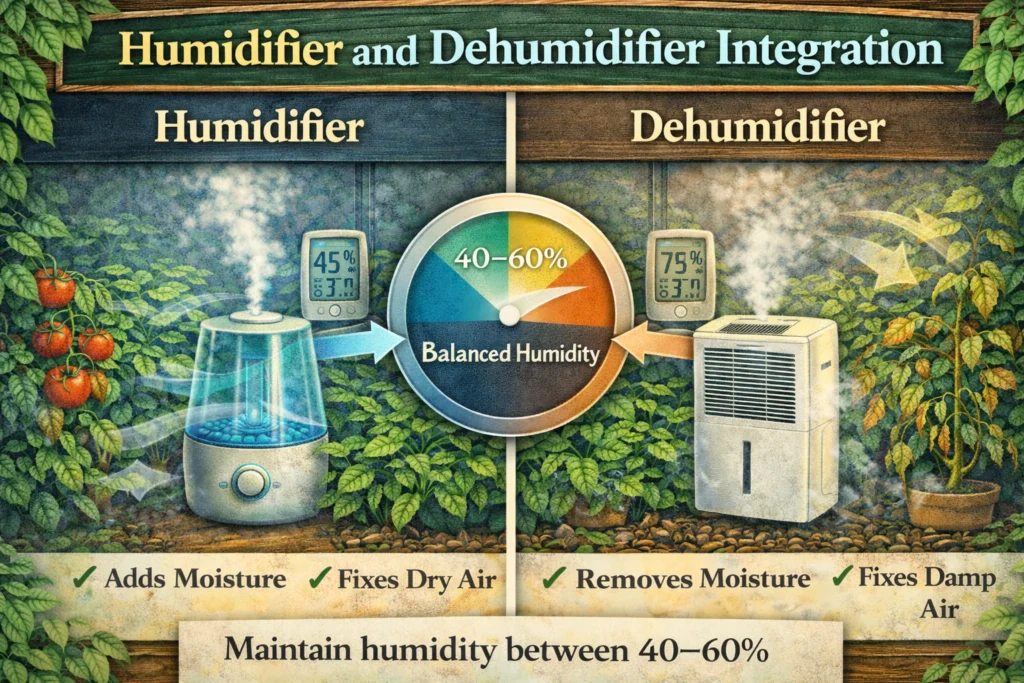
Humidifier and Dehumidifier Integration
A humidifier increases moisture when dry air conditions dominate. A dehumidifier reduces excess humidity.
Together, they provide environmental control and maintain optimal moisture balance.
CO₂ Injection for Enhanced Growth
Carbon dioxide enrichment through CO₂ injection can support enhanced plant growth when ventilation is properly managed.
However, gas supplementation must align with airflow systems to avoid imbalances.
Outdoor Plants Grown Indoors Temporarily
Air circulation prepares plants for outdoor conditions. If planning outdoor relocation:
- Gradual acclimation prevents sunburn
- Temperatures should remain above 50°F
- Seasonal adjustments are essential
This transition process strengthens plants before transplant outdoors.
Best Plants for Air-Conditioned Rooms
Plants That Tolerate Drier Air
Certain plants tolerate AC stress better than others:
- Snake plants
- ZZ plants
- Pothos
- Spider plants
- Air plants
These thrive in drier air conditions and show low humidity tolerance issues.
Plants Sensitive to Dry Cool Air
Some plants are humidity-loving and sensitive to cool air:
- Calatheas
- Ferns (except Boston fern)
- Areca palms
These may suffer permanent leaf damage in air-conditioned environments.
Creating Plant-Friendly Microclimates
Indoor microclimates help balance humidity zones and temperature variations. Grouping plants, monitoring airflow, and adjusting placement creates stable environments that support long-term plant health.
Long-Term Monitoring and Maintenance
Regular Monitoring
Plant observation allows early detection of plant stress symptoms such as yellowing leaves or slowed growth.
Nutritional Support
Balanced plant nutrients support resilience against environmental stress.
Gradual Acclimatization
When changing conditions such as seasonal relocation gradual acclimatization ensures plants adjust without shock.
Frequently Asked Questions (FAQs)
1. Why is air circulation important for indoor plants?
Air circulation supports transpiration, gas exchange, humidity control, and temperature regulation. It reduces mold, mildew, pests, and fungal diseases while helping strengthen stems and promote healthier growth.
2. Do plants need air circulation at night?
Yes. While photosynthesis stops at night, plant respiration continues. Good air exchange prevents carbon dioxide buildup and supports balanced oxygen movement during dark periods.
3. Can a fan alone fix airflow problems?
A fan improves air movement, but complete ventilation may also require air exchange systems, proper plant spacing, humidity management, and exhaust airflow to prevent stagnant air.
4. What humidity level is ideal for most indoor plants?
Many indoor plants perform best between 40–60% humidity. Levels that drop too low (around 30–40%) can lead to dehydration and leaf damage, while excessive humidity increases mold risk.
5. Does air conditioning harm indoor plants?
Air conditioning can lower humidity and temperature, creating dry air and cold drafts that stress plants. Strategic placement away from AC vents and maintaining balanced humidity reduces this risk.
6. How do I know if poor ventilation is affecting my plants?
Common signs include yellowing leaves, crispy edges, drooping, slowed growth, flower buds dropping, mold development, and persistent humidity buildup.
7. Can improving airflow reduce pests?
Yes. Airflow creates a less hospitable environment for pests and reduces fungal conditions that attract infestations.
8. What ventilation systems work best for indoor gardens?
Effective setups may include oscillating fans, air extractor fan systems, passive or active intake, humidifiers, dehumidifiers, and controlled CO₂ management depending on the garden size.
Final Thoughts: The Bottom Line on Fixing Air Circulation in Indoor Gardens
Airflow is not a secondary feature of indoor gardening, it is a structural necessity. From transpiration and gas exchange to humidity control, temperature stability, and pest reduction, ventilation directly influences every growth stage. When air becomes stagnant, moisture accumulates, CO₂ distribution becomes uneven, and plant stress increases. Over time, this leads to slowed growth, weak stems, fungal diseases, and unnecessary environmental strain.
Fixing air circulation in indoor gardens requires a balanced approach. It involves more than installing an oscillating fan. Proper airflow means combining air exchange, humidity balance, temperature management, and strategic plant placement. Whether you use an air extractor fan system, passive intake, humidifier, dehumidifier, or CO₂ injection, the objective remains the same: eliminate static air without exposing plants to cold drafts or excessive dryness.
When ventilation is properly managed, plants develop sturdier stems, maintain consistent transpiration, regulate internal temperature more efficiently, and show fewer signs of pest or fungal pressure. Strong airflow replicates natural wind patterns in a controlled way, encouraging healthier growth above ground while supporting root zone stability below the soil surface.
By treating ventilation as a core environmental system not an afterthought you create an indoor growing environment that is resilient, productive, and biologically balanced year-round.