
Indoor growing setup is increasing day by day due to the increasing trend of organic and home growing setup. People are pleased to grow home based vegetables, flowers and other culinary plants. Tents and controlled growing setups come with different natural problems like excess moisture, air circulation problems and excess watering. For better growth and plant health relative humidity must be checked.
High humidity in grow tents causes drastic effects on plants’ health and stops their natural growth. Due to this reason everyone who loves gardening or controls plantations is finding the solution to the question, how to reduce humidity in grow tents. It is clear that if you are reading this you are one of those who are facing the humidity problem, but we are sure to say that you are at the right place to know. In this blog post we are going to discuss all possible ways to grow tents humidity control.
Why High Humidity Is Bad for Grow Tents
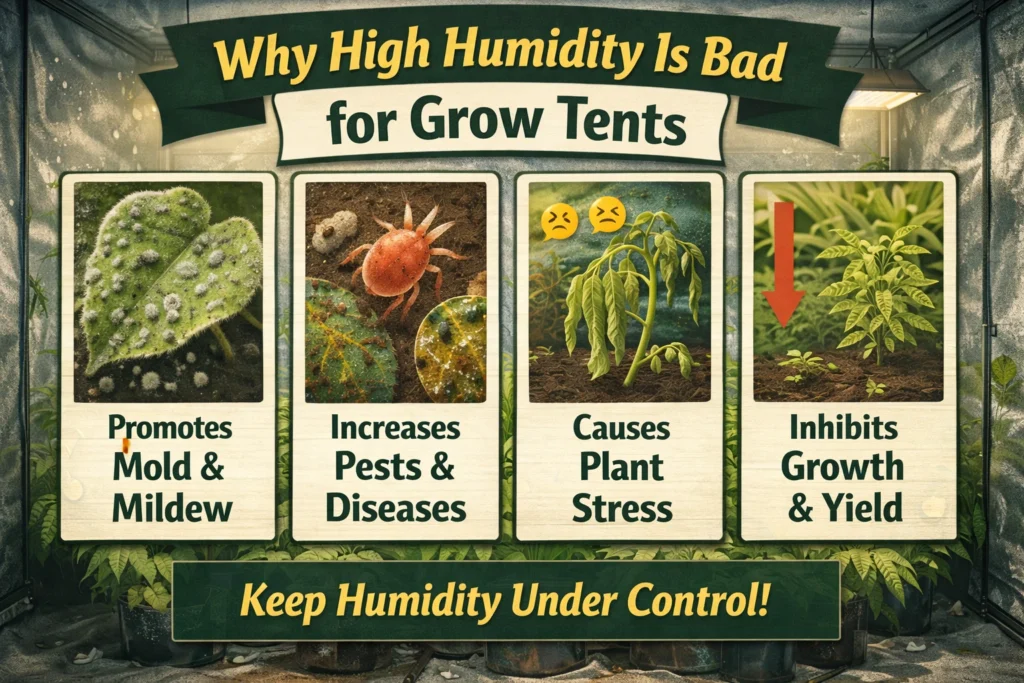
Condensation is a common problem in grow tents caused by high humidity, poor airflow and temperature difference. This condition leads to mold growth, mildew, fungal diseases, pest infections and reduced plant health. Poor ventilation leads to humidity problems in grow tents, if watering is also managed poorly you are going to have grow tent humidity too high which ultimately leads to all the problems. That is why lowering the humidity in tents and sheds is very important.
Ideal Humidity Levels for Grow Tents
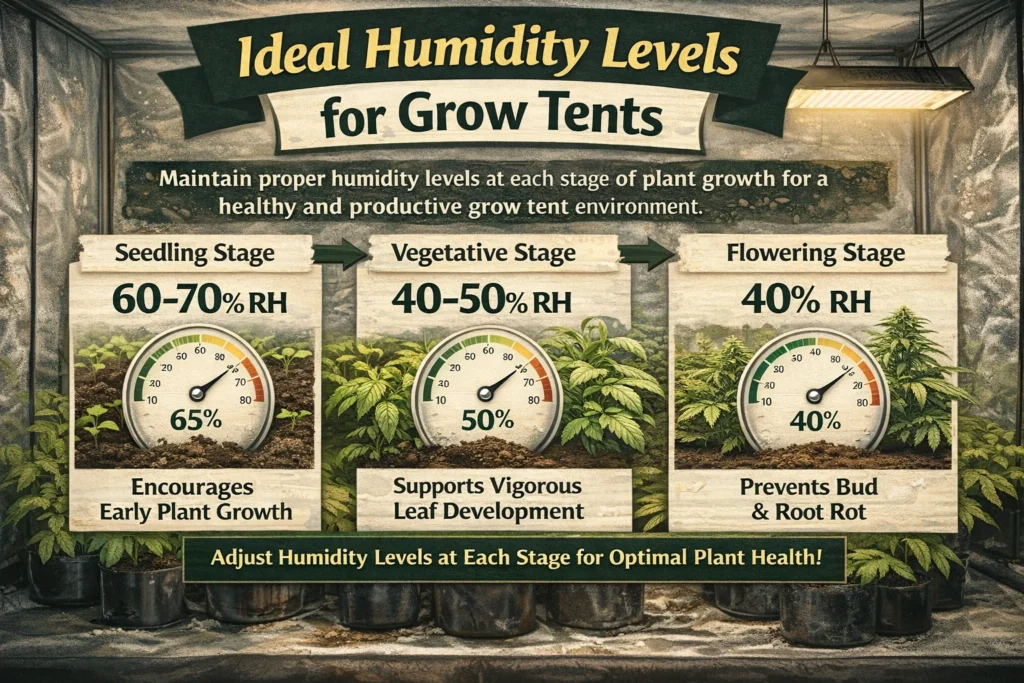
Maintaining the ideal humidity for a grow tent is essential for healthy plant growth stages and effective climate control throughout the grow cycle. At early stages of growth one should aim for 60-70% of relative humidity level, as we know higher moisture level helps plants grow in their early veg stage or seedling level. In the veg stage keeping 50% of relative humidity level is ideal this supports fast leaf growth without encouraging mold. When plants grow into the flowering stage, the growth of tent humidity during flowering should be lowered to 40% to reduce the risk of bud or root rot. Adjusting relative humidity levels at each stage creates a stable environment that maximizes plant health, yield, and overall grow tent performance.
Causes of High Humidity in Grow Tents
Grown tents are a controlled environment and they should be kept at a balanced level on every single stage of plant growth. Even little change in the environment can cause a high level of change of relative humidity. Here are some most common reasons to look which cause humidity levels to go high.
1. Poor Ventilation:
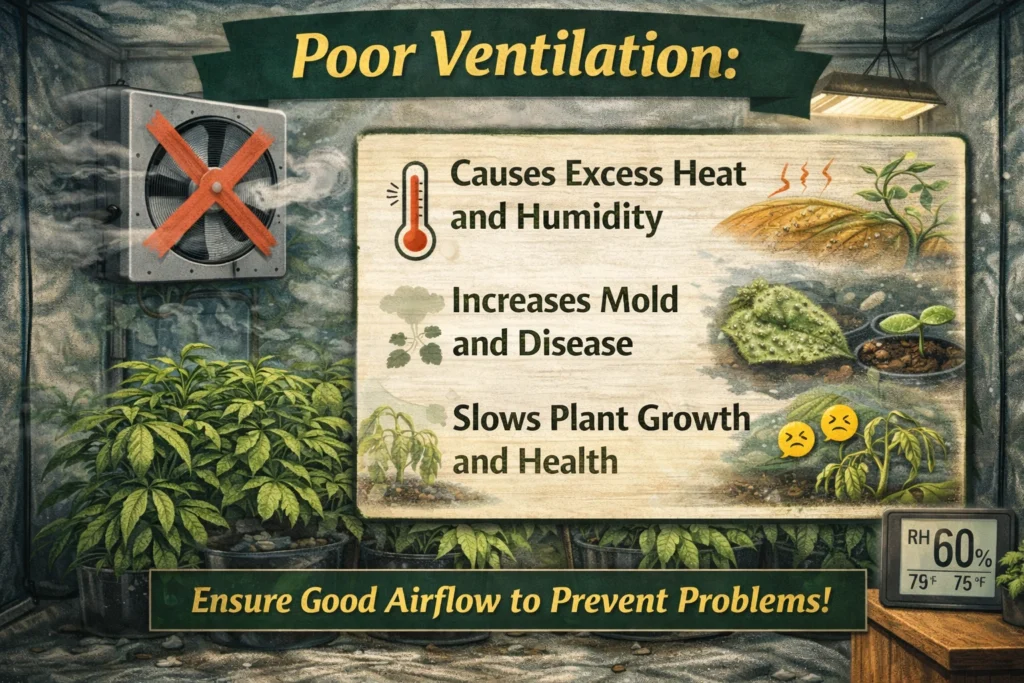
Poor ventilation is one of the main causes of high humidity in grow tents, as moist air is not properly exhausted and continues to build up inside the enclosed space.
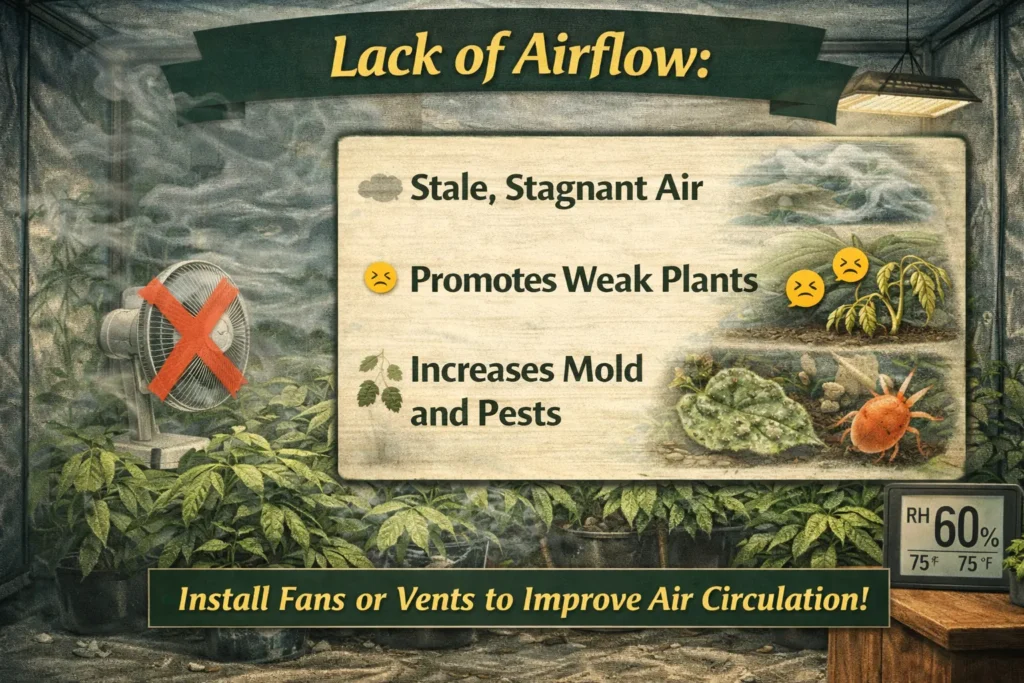
2. Lack of Airflow:
A lack of airflow from insufficient fans prevents air circulation, allowing humidity pockets to form around plants and grow media.
3. Warm Air:
Warm air produced by grow lights increases evaporation from soil and leaves, which can quickly raise moisture levels if not balanced with proper exhaust.
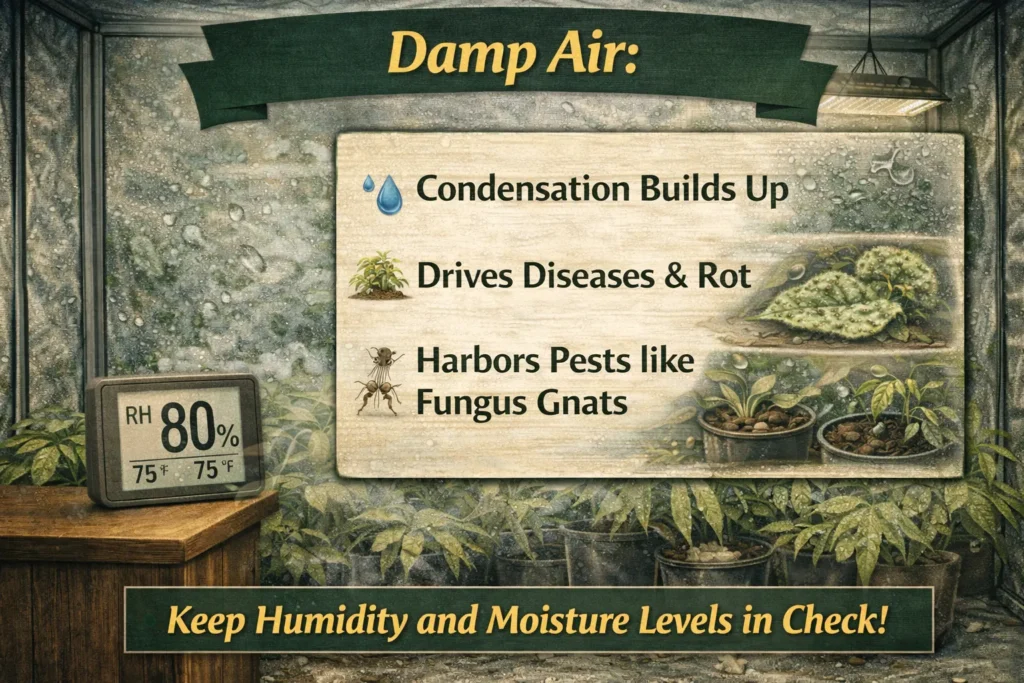
4. Damp Air:
Trapped damp air from frequent watering, hydroponic systems, or wet growing mediums contributes to consistently high humidity.
Overcrowded plants release excess moisture through transpiration, which explains why tent humidity is high even when temperatures seem normal.
Best Ways to Reduce Humidity in Grow Tents
Managing excess moisture requires a smart and advanced approach to airflow management and environmental balance. Below are some effective ways to reduce humidity and maintain a balanced grow environment.
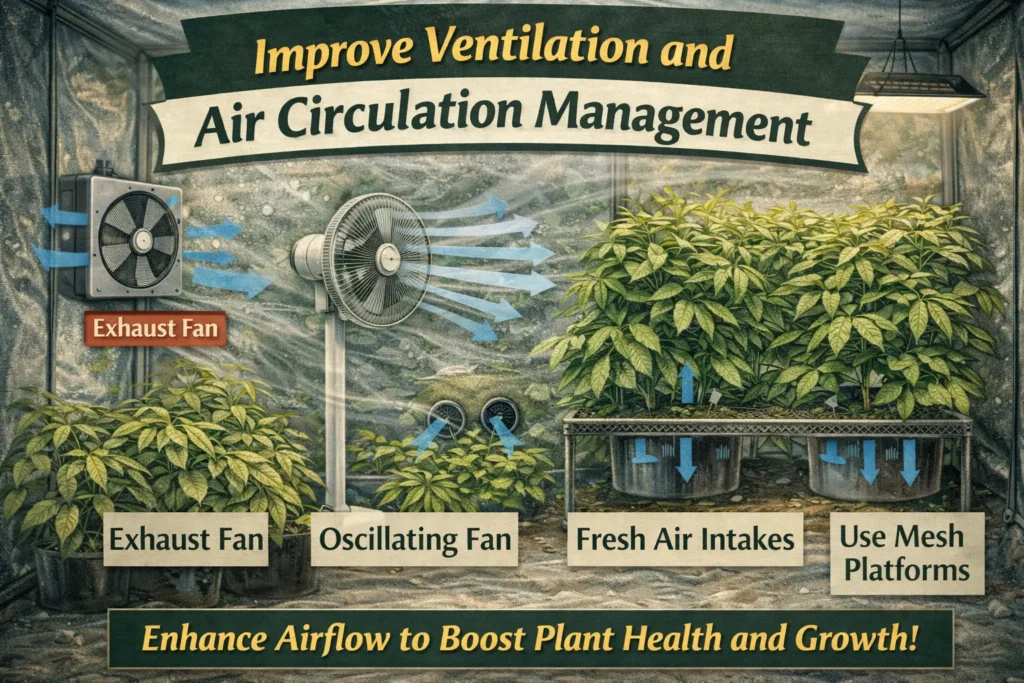
1. Improve ventilation and air circulation management
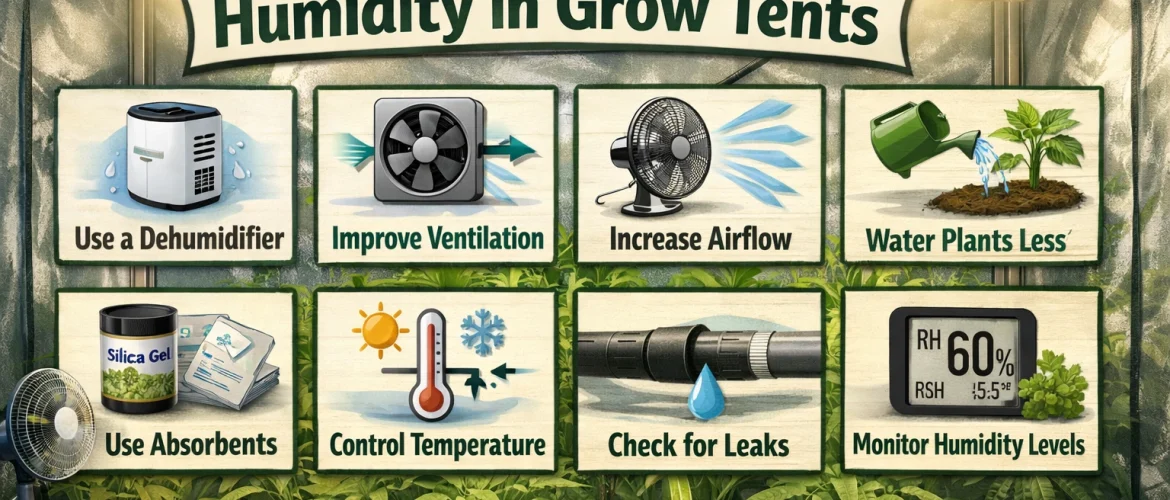
Upgrading your grow tent ventilation system is one of the most important ways to control high humidity in grow tents. An ideal ventilation system should maintain a proper airflow and passive and active air in and out. It should have a fan that pulls out the warm and damp air and sends back a fresh air intake too. This balances the internal environment and supports plants growth without losing their intake of natural nutrients. This air exchange prevents the damp air to trap in and cause higher humidity and keeps it at desired level.
Strong air circulation in a grow tent is equally important. Oscillating fans help distribute air evenly around plants, reducing moisture pockets and supporting better transpiration control. Consistent airflow management not only lowers humidity but also strengthens stems, improves CO₂ distribution, and creates a healthier overall growing environment.
2. Use a dehumidifier
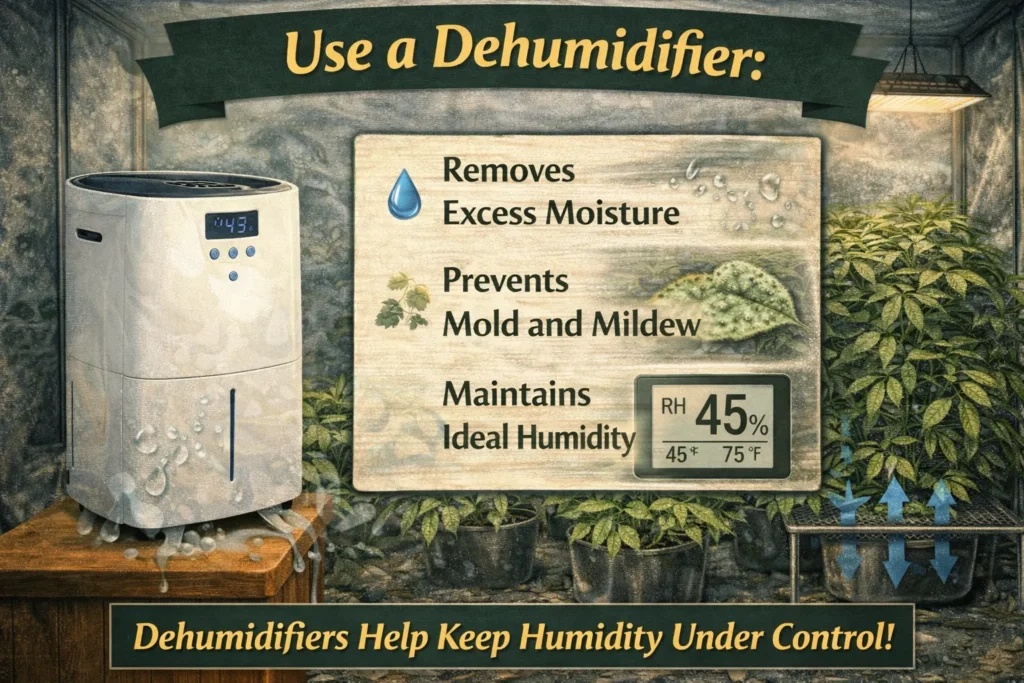
Adding a dehumidifier for a grow tent is one of the most reliable solutions for consistent moisture control and precise climate regulation. At some times alone ventilation is not enough, for example at late flowering stage, a dehumidifier properly removes excess humidity from the air and helps you to maintain a balanced level. This reduces the risk of bud rot, pest attack and helps plants natural healty growth.
Choosing the best dehumidifier for a grow tent depends on your tent size and moisture load. For small tents (2×2 or 3×3), compact units with 20–30 pint capacity often work well, while larger setups may require higher-capacity models or even a room-based unit placed outside the tent for better efficiency and heat management.
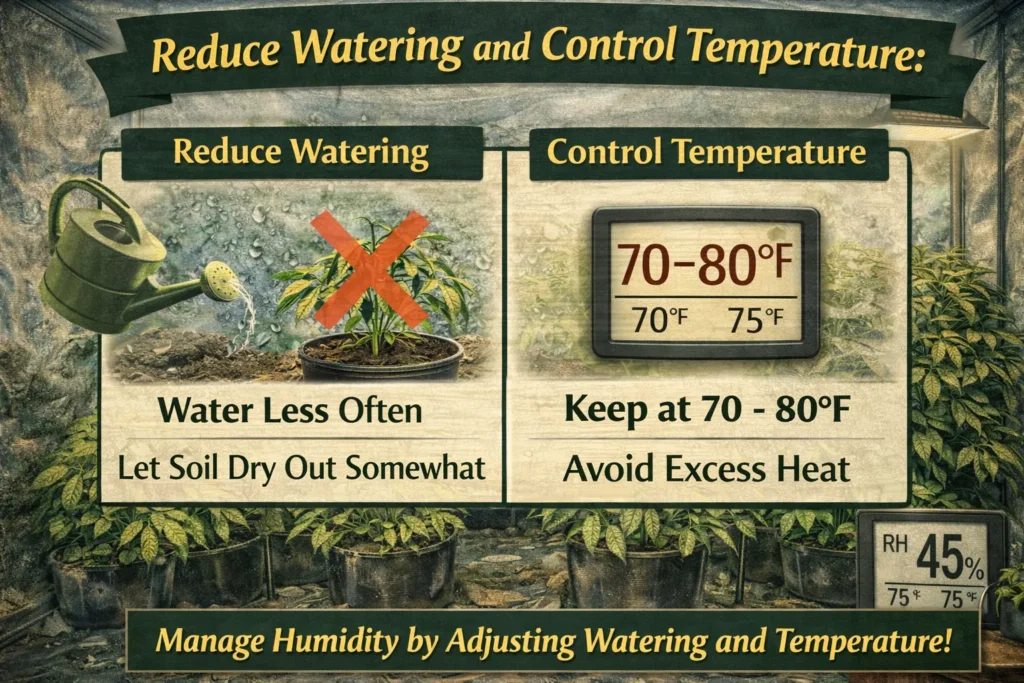
3. Reduce watering and Control temperature
Managing watering habits and temperature control plays a major role in humidity balance inside your grow tent. Overwatering increases surface moisture in the growing medium, which accelerates evaporation and raises overall humidity levels. Understanding the watering impact on tent humidity is crucial, watering less frequently but more precisely (allowing the top layer of soil to dry slightly between cycles) helps prevent excess moisture buildup in the air.
In addition, high heat levels from grow lights naturally increase evaporation from both soil and plant leaves. While some warmth is necessary for healthy growth, keeping temperatures within the ideal range (generally 22–28°C / 72–82°F) helps stabilize humidity. To reduce humidity by controlling temperature, use proper exhaust systems, LED lighting (which produces less heat), or schedule light cycles during cooler parts of the day. Balancing watering practices with steady temperature management creates a more stable and productive growth environment.
4. Use exhaust fans
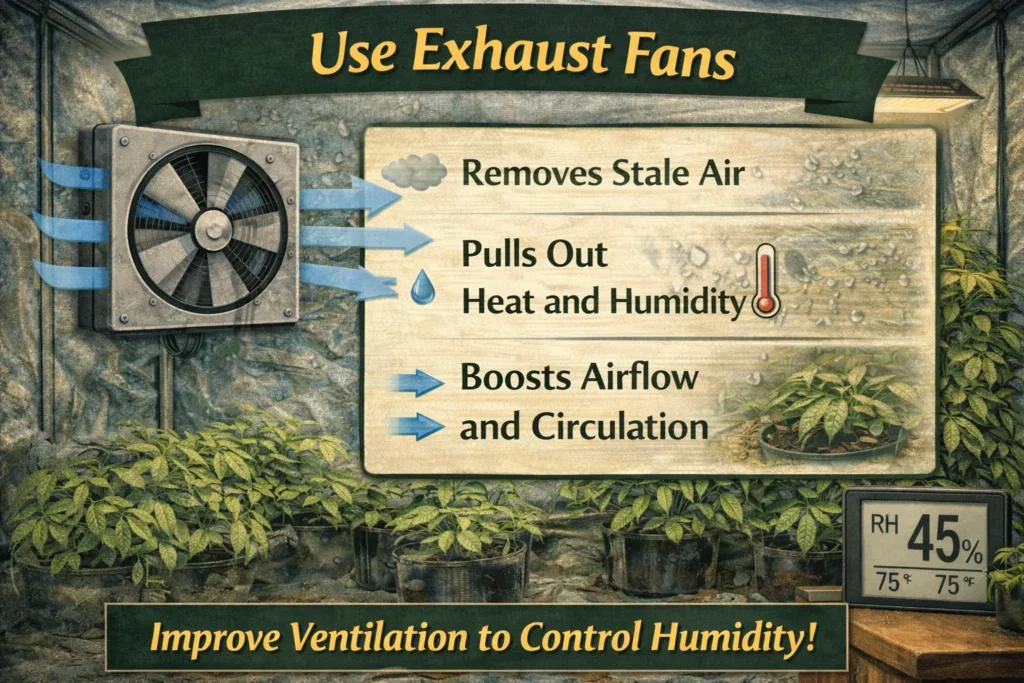
Installing an exhaust fan for a grow tent is essential for effective hot air removal and maintaining consistent humidity levels. A quality inline fan for grow tent setups pulls warm, moisture-heavy air out of the tent and replaces it with fresh air through regular air exchange, preventing humidity from building up during peak light cycles. Proper fan sizing ensures the entire volume of tent air is refreshed every 1–3 minutes for optimal performance.
Pairing the exhaust system with carbon filter ventilation enhances both climate control and odor management. While carbon filters are mainly used to eliminate smells, they also support smoother airflow when properly matched with an inline fan. Together, this setup improves air circulation, stabilizes temperature and humidity, and creates a cleaner, healthier environment for plant growth.
6. Best Tools to Control Grow Tent Humidity
Here’s a comparison table of essential grow tent humidity tools that help with monitoring humidity, achieving precise control, and creating a plant-friendly environment:
| Tool | Purpose | Key Benefits | Best For |
| Hygrometer for Grow Tent | Measures real-time humidity (%RH) | Accurate monitoring, easy to read | All tent sizes |
| Humidity Controller | Automates humidifier/dehumidifier | Keeps humidity at setpoint | Precision climate setups |
| Dehumidifier | Removes excess moisture | Lowers high RH quickly | High humidity environments |
| Humidifier | Adds moisture to dry air | Prevents overly low RH | Seedling/veg stages |
| Inline/Exhaust Fan Combo | Air exchange & moisture removal | Reduces stagnant air & humidity | Ventilated systems |
| Oscillating Circulation Fans | Promotes airflow | Prevents moisture pockets | Dense plant canopies |
Tool Highlights
- Hygrometer for grow tent
Essential for ongoing monitoring humidity choose one with digital readout and adjustable sensors so you can see conditions at canopy height. - Humidity controller
Connecting to dehumidifiers or humidifiers for precise control automatically turns equipment on/off to maintain your preferred %RH. - Grow tent humidity tools like dehumidifiers and humidifiers are chosen based on your tent size and plant growth stage (e.g., higher humidity during veg, lower during flowering).
Common Mistakes to Avoid
Even experienced growers make tent humidity mistakes that can affect plant health and yields. Avoiding these common humidity control errors will help you maintain a stable and productive environment:
Overwatering plants: One of the biggest causes of high humidity. Excess water increases evaporation and traps moisture in the tent, raising %RH and increasing the risk of mold and root problems.
Lack of airflow: Without proper circulation fans, humid air settles around leaves and growing medium, creating moisture pockets that encourage mildew and bud rot.
Poor setup of ventilation systems: An undersized exhaust fan or improper ducting reduces air exchange, allowing warm, damp air to accumulate.
Ignoring humidity monitoring: Not using a hygrometer means you’re guessing instead of managing humidity with data.
Placing equipment incorrectly: Positioning fans, dehumidifiers, or sensors at the wrong height can lead to inaccurate readings and uneven moisture control.
By correcting these common mistakes and improving airflow, watering habits, and equipment setup, you can maintain optimal humidity levels and create a healthier grow tent environment.
FAQs About Grow Tent Humidity Control
Why is my tent humidity so high?
High grow tent humidity is usually caused by overwatering, poor ventilation, or a lack of airflow. Warm air from grow lights increases evaporation, while insufficient air exchange traps damp air inside the tent. Using proper monitoring humidity tools helps identify whether climate control adjustments are needed.
How much humidity is too much in a grow tent?
Humidity above 70% RH is generally too high for most plant growth stages, especially during flowering. While seedlings may tolerate 60–70% RH, flowering plants perform best around 40–50% RH. Excess humidity increases the risk of mold, mildew, and other humidity control errors.
Do grow tents need a dehumidifier?
Not all grow tents require a dehumidifier, but it becomes essential in high-humidity environments or during late flowering. A dehumidifier provides precise control over moisture levels when ventilation alone isn’t enough, helping maintain a stable and plant-friendly environment.
Can high humidity cause bud rot?
Yes, high humidity is a leading cause of bud rot, especially during flowering. When moisture levels stay above 55–60% RH, dense buds can trap damp air, creating ideal conditions for mold growth. Proper airflow and humidity control significantly reduce this risk.
Conclusion
Creating and maintaining a balanced grow tent environment is one of the most important factors in achieving healthy plant growth and consistent, high-quality yields. Proper humidity management plays a critical role throughout the entire plant life cycle, from seedling and vegetative stages to flowering and harvest. By controlling humidity levels through effective ventilation, stable temperature regulation, and the use of reliable monitoring tools such as hygrometers and controllers, growers can significantly reduce the risk of common issues like mold, mildew, bud rot, and pest infestations.
Focusing on long-term humidity control also improves overall airflow within the grow tent, helping plants transpire efficiently and absorb nutrients more effectively. When humidity and temperature are properly balanced, plants experience less stress, develop stronger root systems, and produce denser, healthier foliage and flowers. In addition, consistent humidity control creates a more stable growing environment, reducing the need for constant adjustments and making the grow tent more energy-efficient.
By implementing a well-planned humidity management strategy and regularly monitoring environmental conditions, growers can maintain ideal humidity levels at every stage of growth. This not only leads to stronger plants and better yields but also ensures a cleaner, safer, and more productive grow tent setup over the long term.