
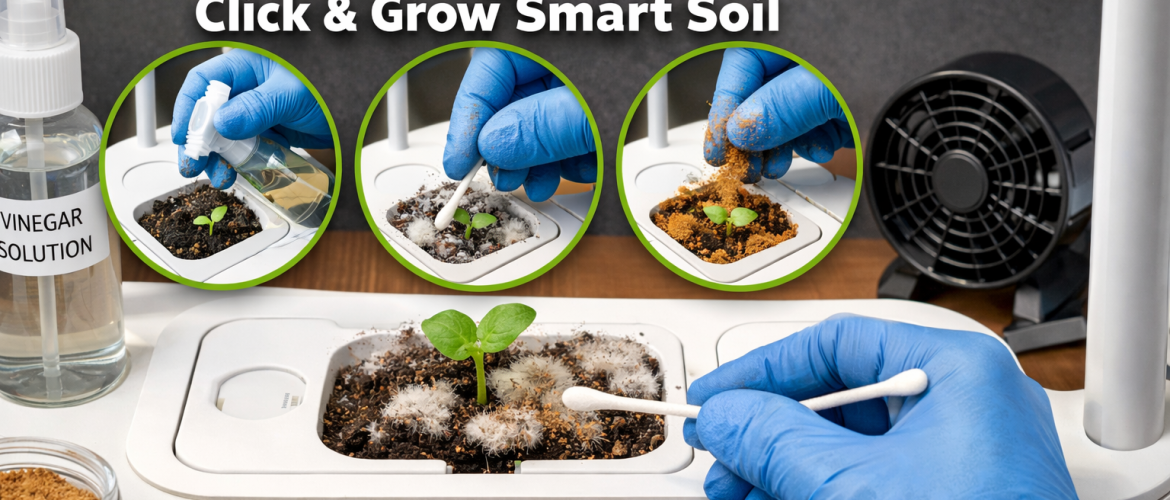
If you’ve recently noticed white fuzz, gray patches, or strange growth on your pods and started searching for fixing mold on Click & Grow smart soil, take a deep breath you are absolutely not alone. Mold in smart gardens, hydroponic systems, coco coir trays, and even traditional plant soil is far more common than most growers expect. The good news is that in most cases, mold appearing on Click & Grow Smart Soil, HydroSoil pods, or indoor garden systems is harmless and manageable.
In this complete guide, we’ll walk through everything you need to know how mold forms, how to tell mold from root hairs, how to fix mold on plant soil, how to get rid of mold in hydroponics, how seasonal conditions affect fungal growth, and whether moldy soil can actually be saved. By the end, you’ll feel confident, informed, and fully in control of your indoor growing environment.
Understanding Mold in Smart Gardens
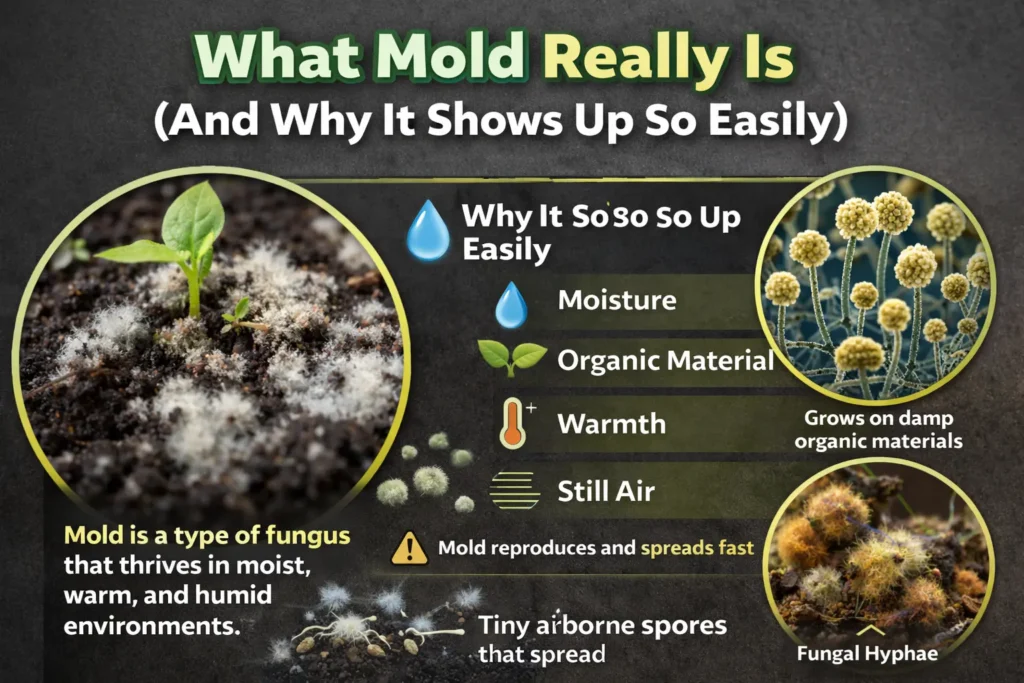
What Mold Really Is (And Why It Shows Up So Easily)
Mold is a type of fungus. It reproduces through microscopic spores that float in the air constantly. These spores are present in your home, in soil, on seeds, in water, and even on surfaces you don’t think about. Mold only becomes visible when spores land on a damp, nutrient-rich surface and begin to grow.
Smart garden systems like Click & Grow are designed to create the perfect growing environment. They provide:
- Consistent moisture
- Balanced nutrients
- Controlled light cycles
- Stable temperatures
Ironically, those same optimal growing conditions that help herbs and vegetables thrive can also encourage fungal species to grow if conditions tip slightly too far toward excess moisture or humidity.
In many cases, what you see is white mold or green algae forming on the soil surface. In microgreens production or dense trays, you might notice fluffy white patches that look alarming but may not always be dangerous.
The Difference Between Mold and Root Hairs (The Most Common Panic Trigger)
One of the most misunderstood aspects of indoor gardening is the confusion between mold and root hairs.
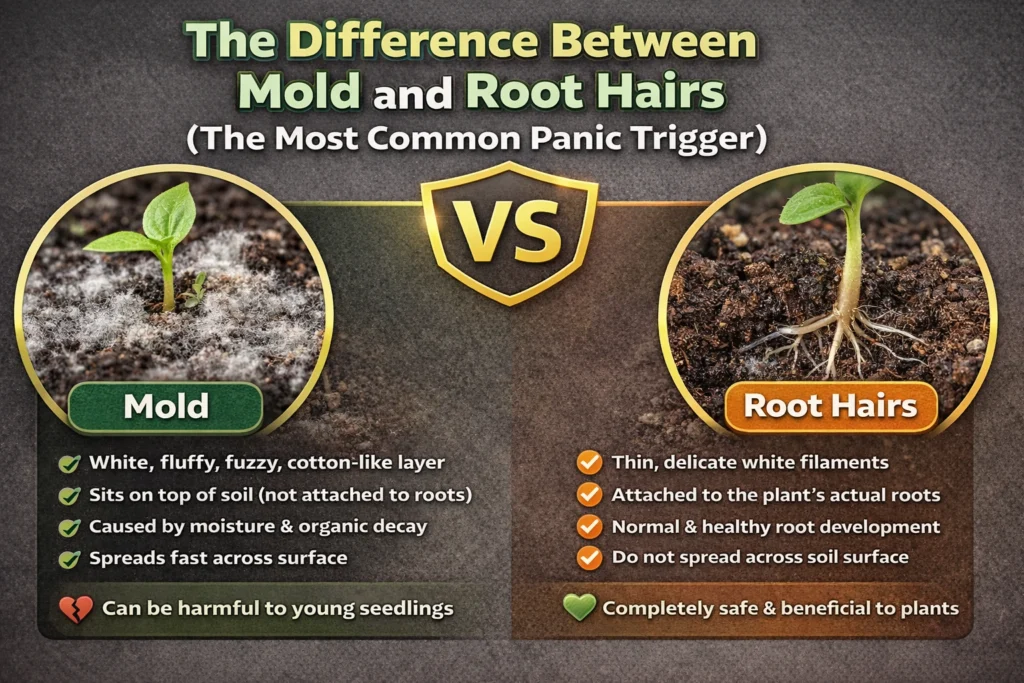
Root hairs are tiny white growths that extend from plant roots to absorb water and nutrients. They often look like white fuzz and appear especially in seedlings and microgreens.
Here’s how you can tell the difference:
Root hairs grow uniformly along the root. They are symmetrical and always attached to the root structure. Mold, on the other hand, may spread across soil surfaces, seeds, stems, or even leaves.
Another simple method is the water mist test. Lightly mist the fuzzy area with water. If the fuzz collapses and clings to the root, it is almost certainly root hairs. If it remains visible, slimy, or forms a web-like structure, it is likely mold.
Root hairs are odorless. Mold often produces a musty smell.
Understanding this difference alone prevents unnecessary worry for many indoor gardeners.
Why Mold Grows on Click & Grow Smart Soil
The Role of Nutrient-Rich Smart Soil
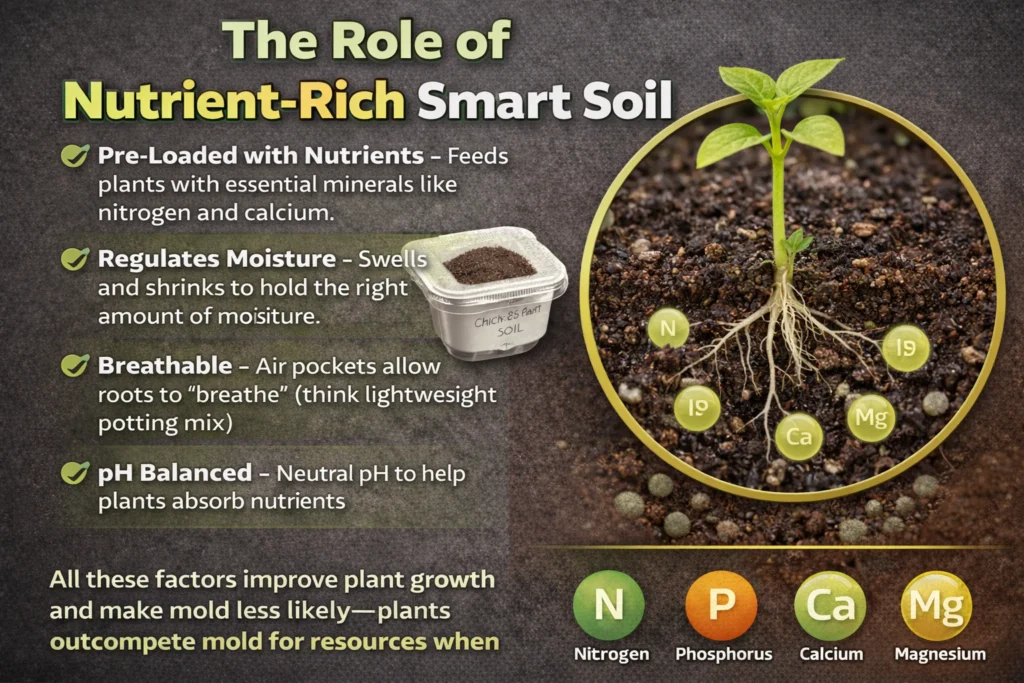
Click & Grow Smart Soil is engineered to provide plants with everything they need without additional fertilizer. It contains built-in nutrients activated by plain water. Because it is free from added chemical fungicides and pesticides, it creates a clean, plant-friendly environment.
However, nutrient-rich soil combined with moisture is also attractive to fungal spores.
This does not mean the product is flawed. It simply means that mold spores, which are everywhere in nature, can grow when conditions are favorable.
Overwatering and the Water Reservoir Float
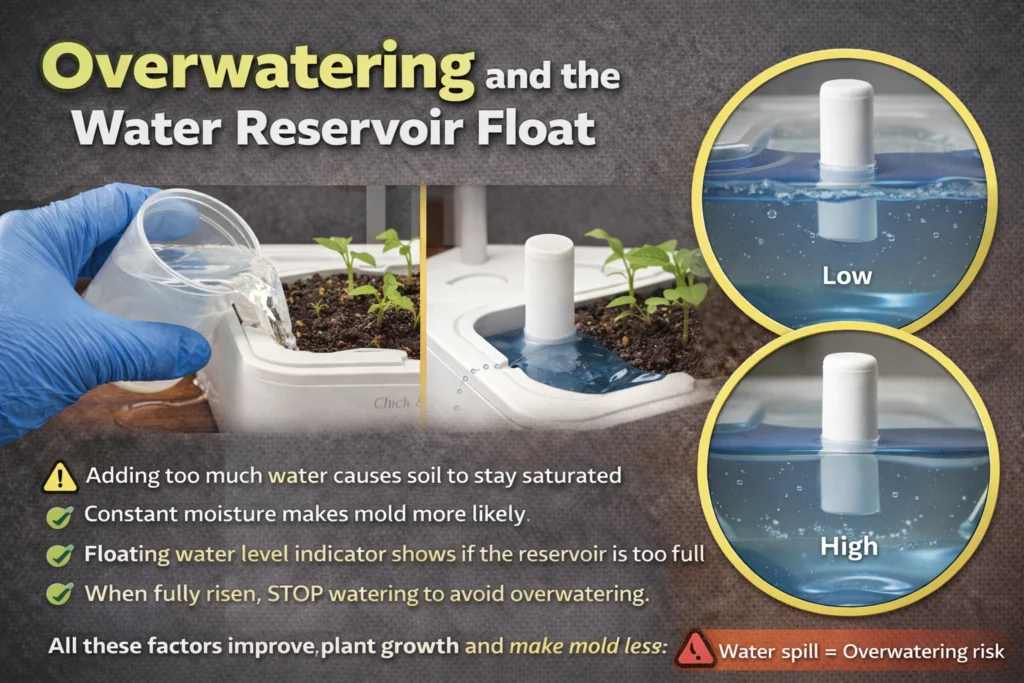
Many mold issues in smart gardens are connected to water levels. If the water reservoir is overfilled, or if the water float rises too high above the soil surface, it increases moisture availability.
Excess moisture is the primary driver of mold growth.
Even though smart gardens are semi-hydroponic, they still require proper water management. Flooding pods or allowing the soil surface to remain consistently saturated encourages fungal activity.
Temperature and Humidity Balance
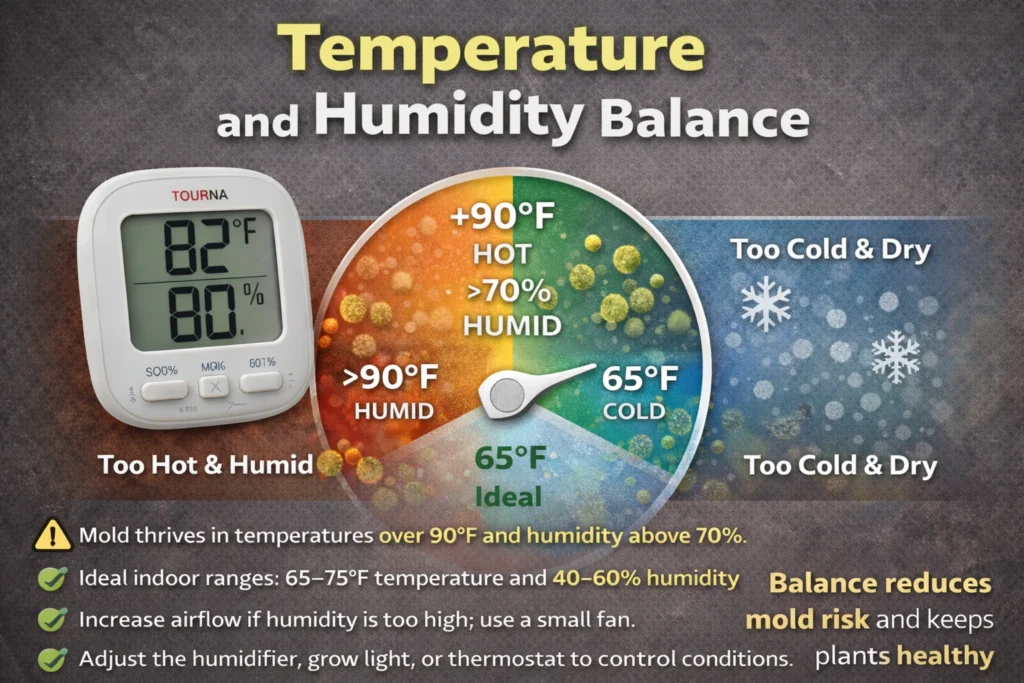
Ideal room temperature for most smart gardens is around 18–24°C (64–75°F). When indoor temperatures rise above this range and humidity increases, mold growth accelerates.
Warm air holds more moisture. If air circulation is poor, that humidity remains trapped around your plant pods.
In summer months especially, mold risk increases.
Air Circulation and Stagnant Environments
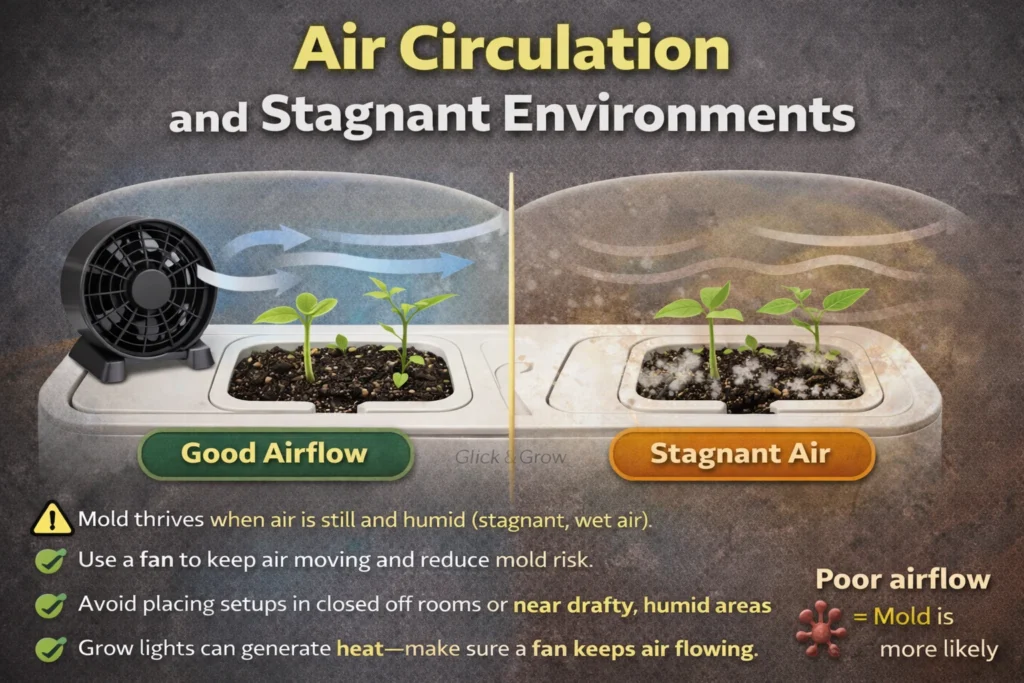
Indoor gardens placed in corners, tight shelves, or enclosed spaces may suffer from poor airflow. Without moving air, moisture lingers on the soil surface.
Air circulation helps evaporate excess moisture and keeps fungal spores from settling.
Overseeding and Dense Growth (Especially in Microgreens)
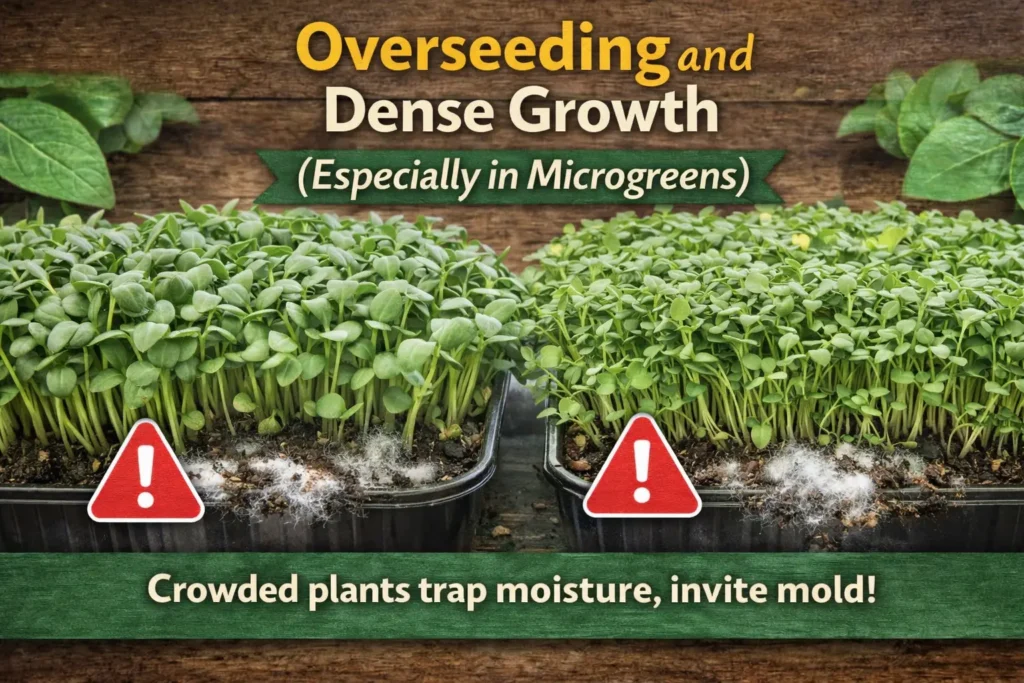
When seeds are planted too densely, airflow between stems becomes restricted. In microgreens production, this is a very common mold trigger.
Crowded trays create humid microclimates. Mold spores love that environment.
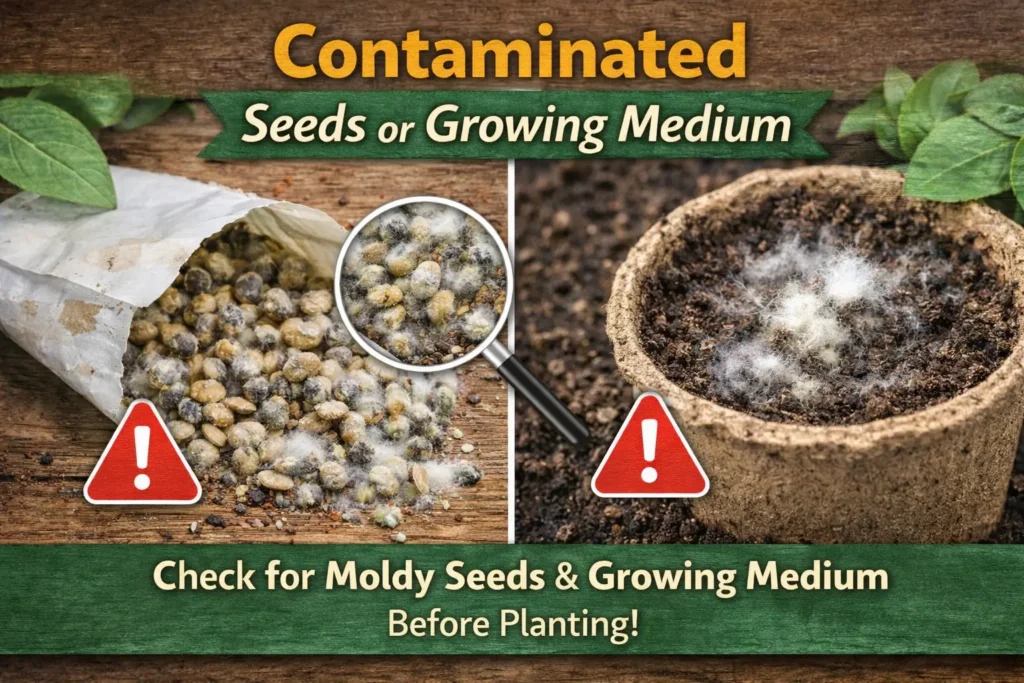
Contaminated Seeds or Growing Medium
Seeds can carry mold spores from storage conditions. Growing mediums such as coco coir, potting soil, or even dry fertilizer (like bone meal or fish meal) can harbor spores if stored improperly.
Sometimes mold appears not because of your watering habits, but because the medium already contained dormant spores.
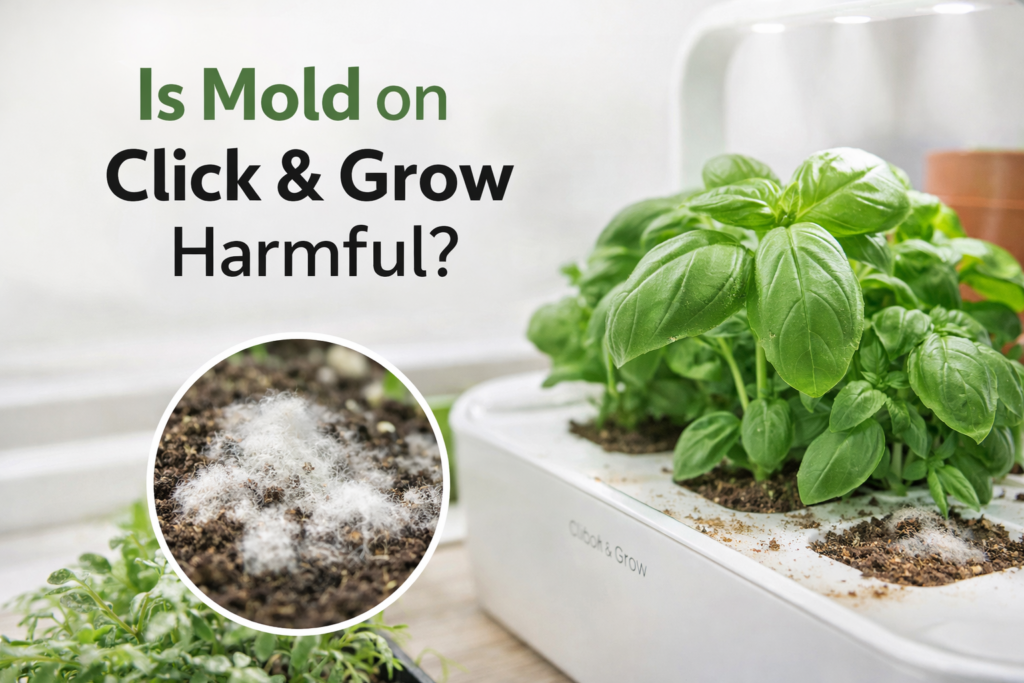
Is Mold on Click & Grow Harmful?
In most smart garden cases, mold on the soil surface is cosmetic. It does not harm plant growth. It does not damage roots. It does not impact nutrient absorption.
However, in microgreens or edible tray production, mold that spreads to stems or leaves makes the crop unsafe to eat.
Mold that produces a strong musty odor or causes damping-off disease in seedlings is more serious and requires full disposal.
Step-by-Step: Fixing Mold on Click & Grow Smart Soil
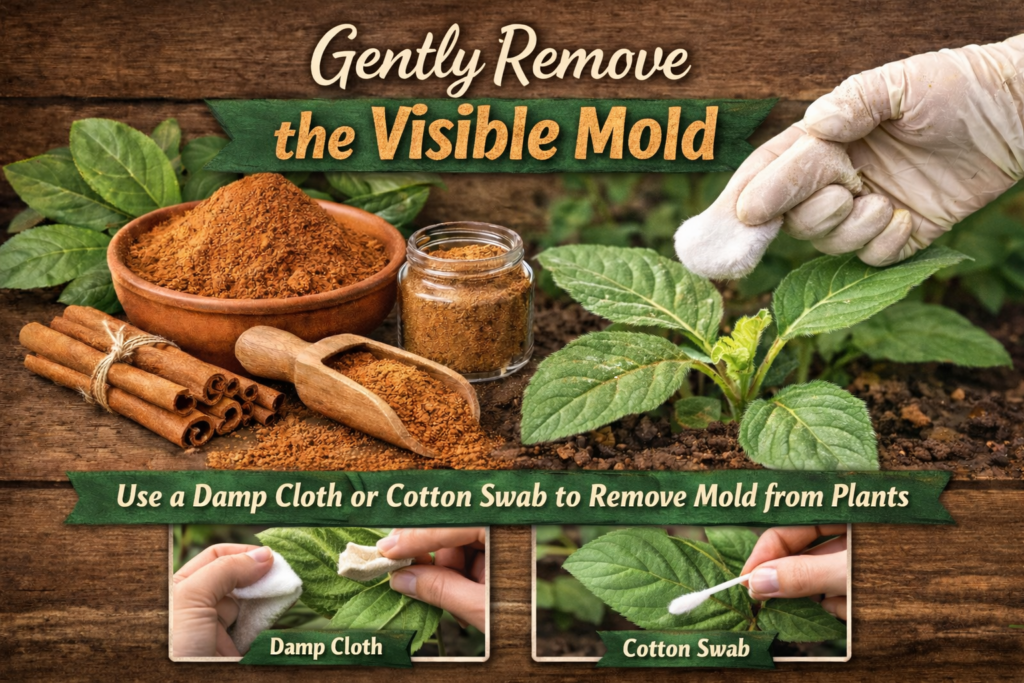
1. Gently Remove the Visible Mold
Start by carefully removing the U-shaped lid from the pod. Using a clean paper towel or spoon, gently scrape the mold from the soil surface. Be careful not to disturb seeds or roots.
This addresses cosmetic mold immediately.
2. Apply Cinnamon as a Natural Fungicide
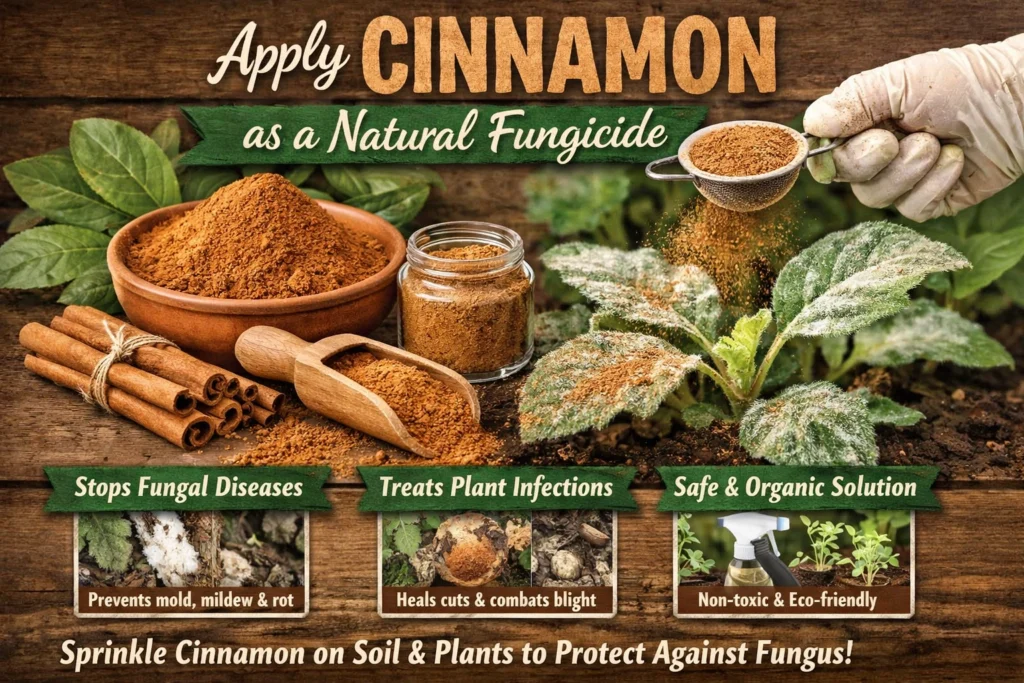
Cinnamon is widely used as a natural mold deterrent. A light dusting over the soil surface can help discourage fungal regrowth. Avoid burying seeds under heavy layers.
Cinnamon works because it has natural antifungal properties, making it useful in smart soil and potted plant environments.
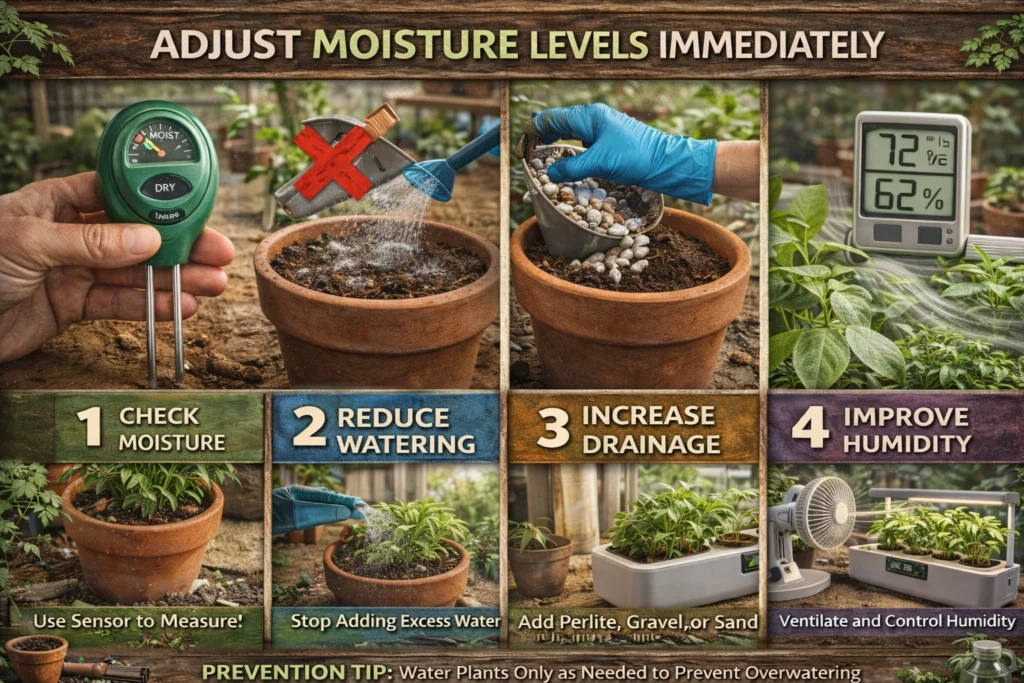
3. Adjust Moisture Levels Immediately
Check your water reservoir. Ensure it is not overfilled. Allow the soil surface to dry slightly between refills.
Smart soil is designed to wick moisture from below. It does not need surface flooding.
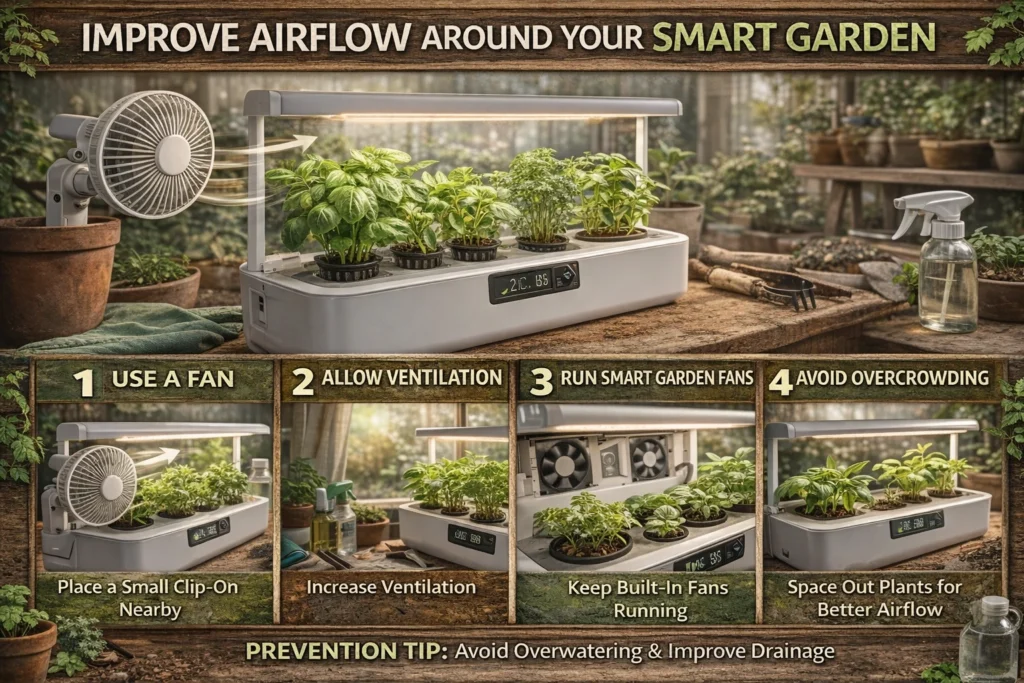
4. Improve Airflow Around Your Smart Garden
Move your unit to a well-ventilated space. Consider placing a small fan nearby. Even gentle airflow dramatically reduces humidity buildup.
Fixing Mold on Traditional Plant Soil
If you’re growing houseplants in pots, mold often appears as white fuzzy growth on the top layer of soil.
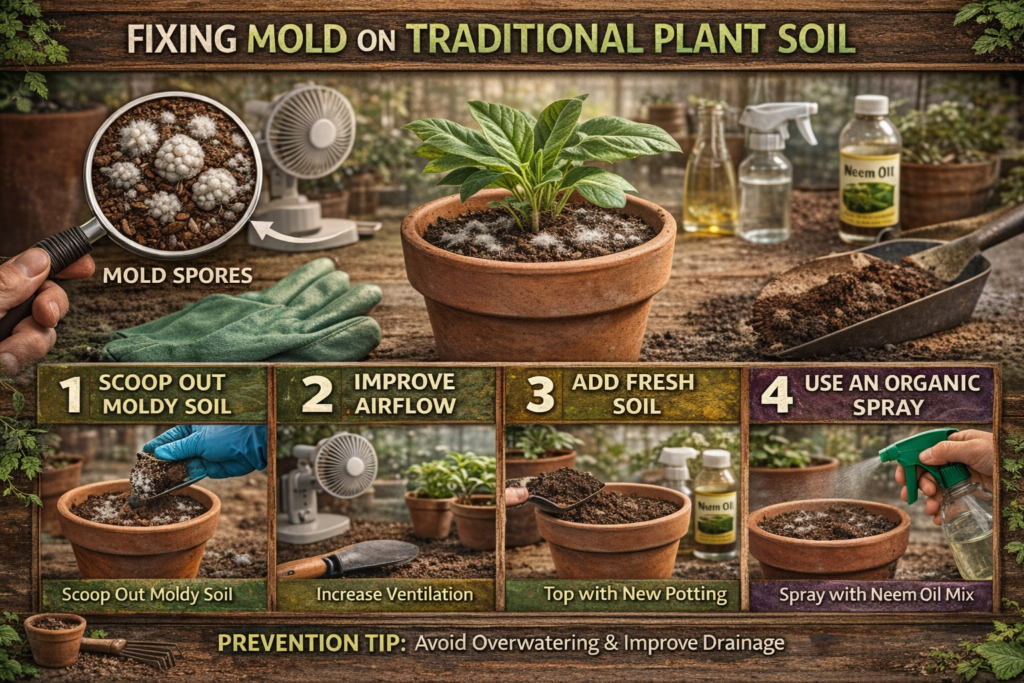
First, scoop out the affected soil layer. Remove at least one inch of the top surface.
If mold returns quickly, consider repotting. Remove the plant, discard contaminated soil, wash the pot with warm soapy water, and replace with fresh soil that has good drainage.
Ensure your pot has drainage holes. Mold frequently appears when soil remains waterlogged.
How to Get Rid of Mold in Hydroponics
Hydroponic systems eliminate soil but not mold risk.
Mold in hydroponics often grows on:
- Net pots
- Growing medium (like rockwool or coco coir)
- Seed surfaces
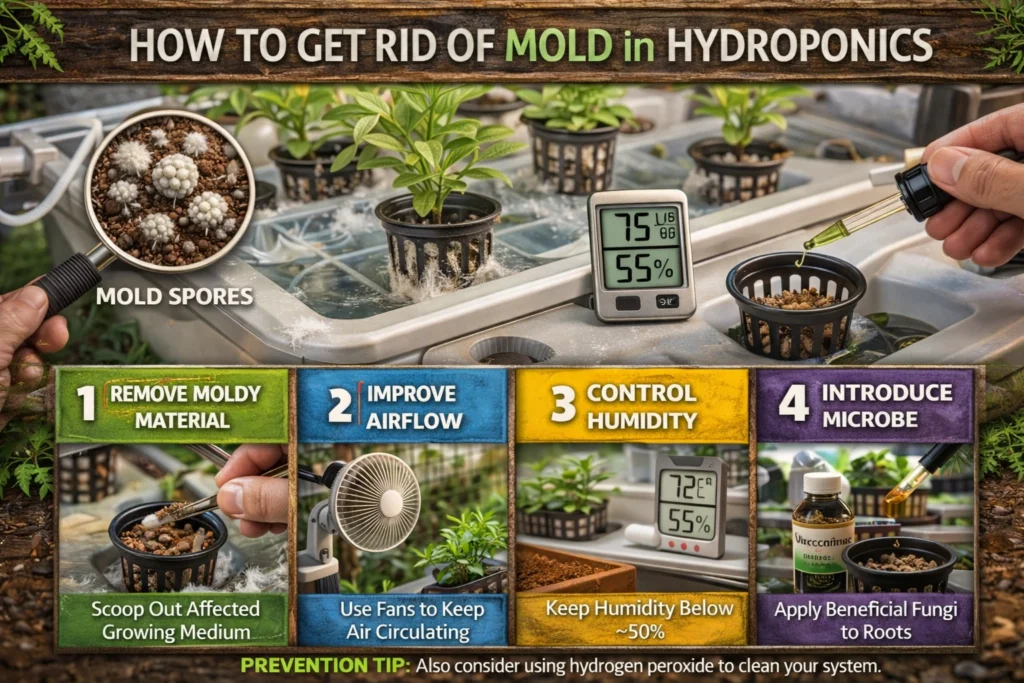
Increase airflow and monitor humidity. Clean trays and reservoirs between batches. If a tray shows severe mold (covering large areas or producing odor), discard the entire tray.
In hydroponic environments, prevention is more effective than treatment.
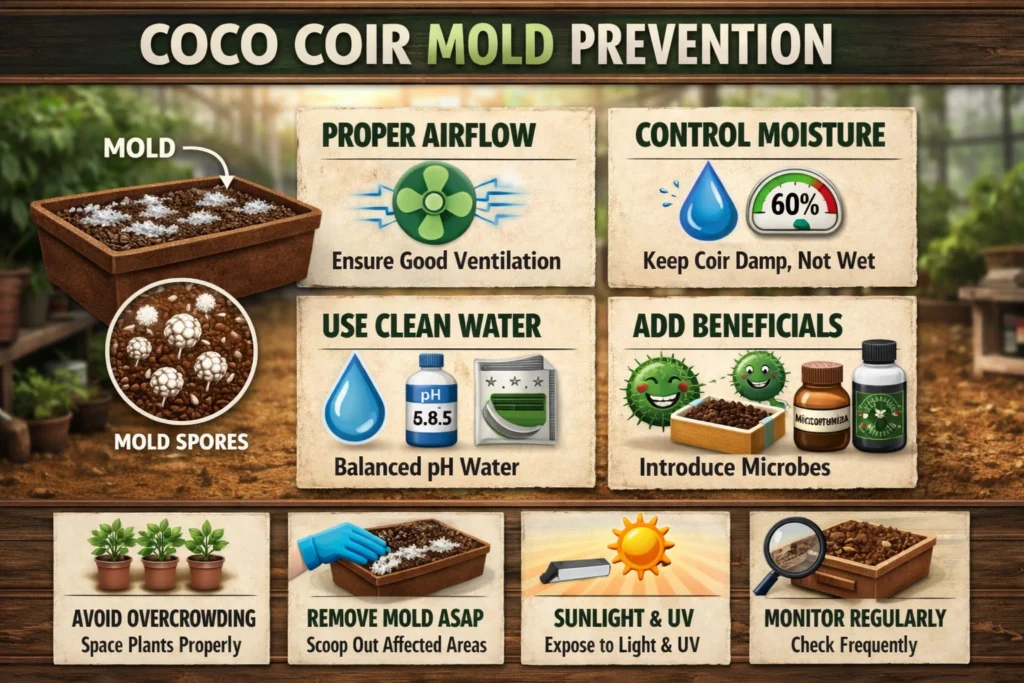
Coco Coir Mold Prevention
Coco coir retains moisture efficiently. While excellent for root development, it can become overly wet if not monitored.
Avoid oversaturating coco coir during initial hydration. Consider mixing in perlite for improved aeration.
Store unused coco coir in dry conditions to prevent pre-contamination.
Seasonal Considerations for Mold Prevention
In summer, high humidity increases mold risk. Use fans or dehumidifiers if needed.
In winter, indoor heating reduces air exchange but can still trap moisture around plants. Monitor carefully.
Mold risk changes with seasons, so adjust your approach accordingly.
Can Moldy Soil Be Saved?
If mold is limited to the surface and there is no strong odor, soil can usually be saved.
If mold spreads extensively, produces musty smells, or causes plant collapse (damping-off), discard the soil entirely.
Always prioritize plant health and safety.
Frequently Asked Questions
How to prevent mold in Click and Grow?
To prevent mold in Click & Grow systems, maintain proper water levels using the float indicator, avoid overfilling the reservoir, keep U-shaped lids on pods during early growth, ensure room temperature remains between 18–24°C, and improve airflow around the unit. Cleaning the reservoir and components between planting cycles also reduces spore buildup.
How to fix mold on plant soil?
Fix mold on plant soil by removing the affected surface layer, adjusting watering habits, improving drainage, and increasing airflow. If mold is widespread, repot the plant using fresh soil and clean containers.
How to get rid of mold in hydroponics?
Increase air circulation, monitor humidity, sanitize trays and reservoirs, and discard severely infected growing mediums. Mold prevention in hydroponics depends heavily on airflow and moisture control.
Can moldy soil be saved?
Yes, if mold is minor and limited to the surface. No, if mold spreads extensively, smells strongly, or affects plant stems and leaves. Severe mold usually requires discarding soil.
Conclusion
Fixing mold on Click & Grow smart soil is less about panic and more about understanding balance. Mold spores are naturally present in every indoor environment, and smart garden systems provide moisture and nutrients that can occasionally support fungal growth. Fortunately, most cases are harmless and cosmetic. By managing water levels, maintaining proper room temperature, improving airflow, and keeping your system clean between planting cycles, you can dramatically reduce mold risk. Learning to distinguish root hairs from mold prevents unnecessary worry. And knowing when soil can be saved versus when it should be discarded keeps your plants healthy and your growing space safe. Indoor gardening is meant to be enjoyable, not stressful. With the right knowledge and simple adjustments, you can confidently maintain a thriving, mold-free smart garden year-round.