
Indoor gardening systems make it easy to grow herbs and plants, but many gardeners eventually notice fuzzy white growth on the soil surface or around plant pods. The click and grow mold problem solution focuses on understanding why mold appears in indoor gardens and how to manage it effectively. Mold in indoor gardens usually forms when mold spores, moisture, and organic material combine in a damp environment. Because spores are naturally present in the air and in potting soil or smart soil, they can grow when the soil surface stays constantly moist.
In many cases, mold seen in indoor gardens is a saprophytic fungus that feeds on organic material and does not directly harm plants. However, excessive mold growth can spread across the soil surface and create concerns for plant owners. This guide explains the causes of mold in Click and Grow systems, plant pods, and indoor seed starting environments, and provides clear strategies to remove mold, improve airflow, regulate moisture levels, and maintain a healthy growing environment for seedlings and houseplants.
Understanding Mold in Indoor Gardening Systems
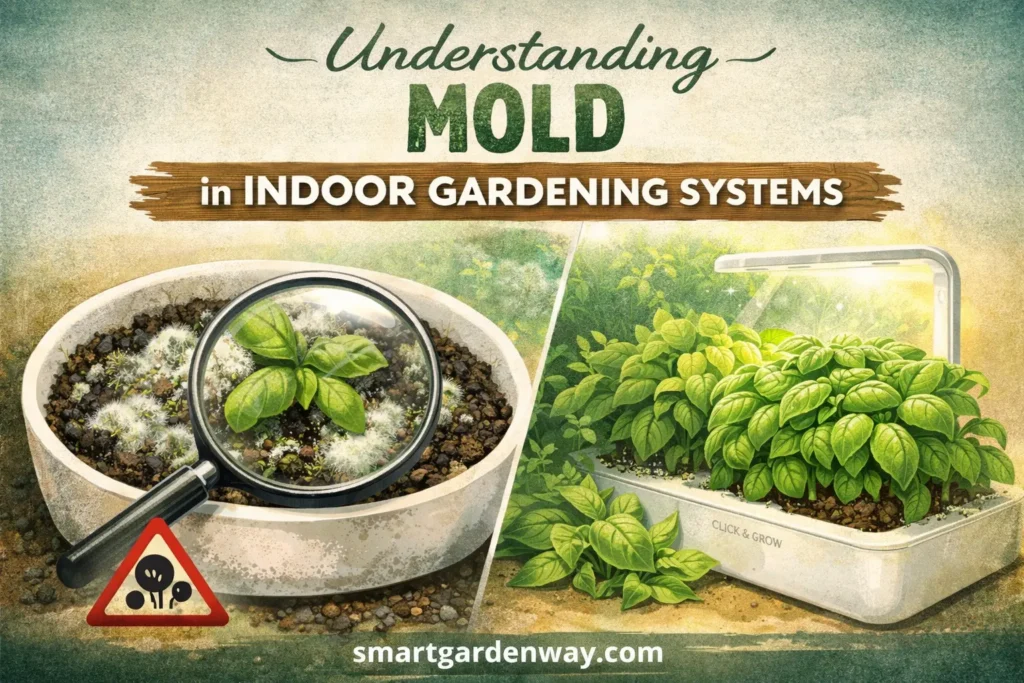
Indoor gardening environments create ideal conditions for plant growth, but they can also encourage mold development if moisture and airflow are not balanced properly. Mold is a fungus that reproduces through microscopic spores, which travel through the air and settle on surfaces such as soil, plant containers, and seed trays.
In indoor gardens, mold spores may already be present in gardening mixes containing bark, peat, and organic materials. When these spores encounter a damp environment, they begin to grow on the soil surface. This is why mold can appear even in clean growing systems.
Mold thrives in areas where moisture, damp soil, and limited airflow exist. Indoor seed starting areas, plant pods, and potting soil often hold moisture for extended periods, allowing mold spores to establish colonies. Once mold begins growing, it may appear as white, green, gray, or black fuzzy growth on the soil surface.
Understanding the biological nature of mold helps gardeners recognize that the presence of mold does not always indicate a severe problem. However, excessive mold growth signals that environmental conditions such as moisture and airflow should be adjusted.
What Exactly Is Mold?
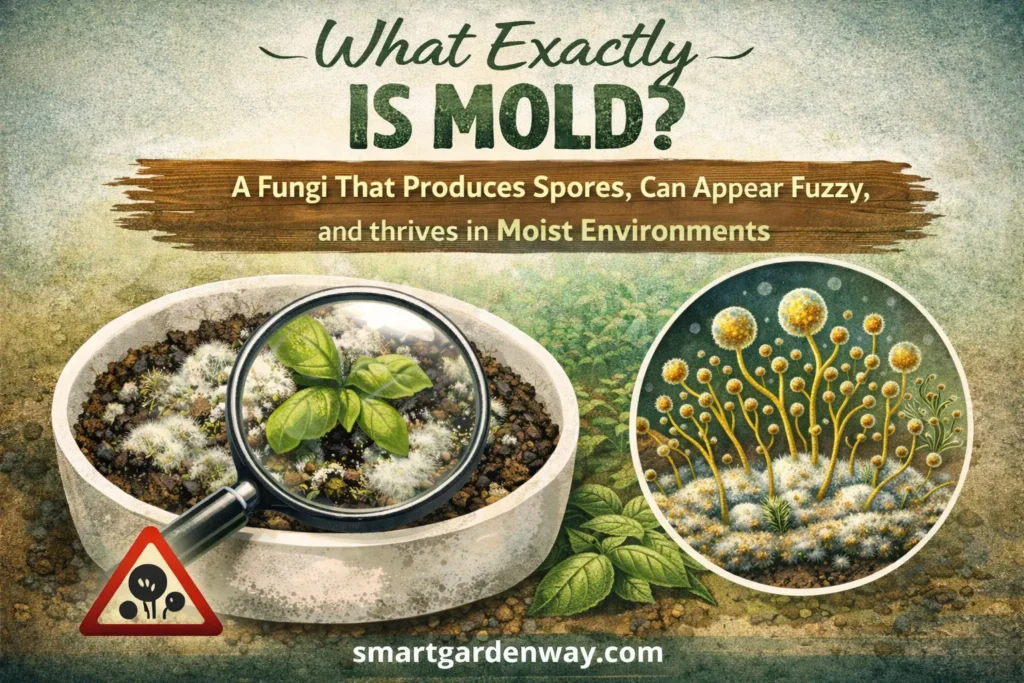
Mold belongs to a group of fungi composed of small organisms that grow in moist environments. These organisms reproduce through tiny airborne spores, which are present almost everywhere in indoor and outdoor air.
Spores become active when they land on a surface that provides moisture and organic material. In gardening environments, spores can grow on potting soil, smart soil, plant debris, and other organic matter. Once growth begins, mold colonies expand across surfaces and release additional spores.
Mold appears in several forms and colors, including:
- White mold
- Green mold
- Purple mold
- Black mold
- Orange mold
Different species of mold behave differently. Some molds simply break down organic material, while others may spread quickly across soil surfaces. For example, certain fungi such as Penicillium, Aspergillus, and Sclerotinia sclerotiorum can grow in soil when moisture and organic matter are present.
Although mold can look alarming, many molds found in gardening soil are saprophytic fungi, meaning they feed on decaying organic material rather than living plant tissue.
Why Mold Appears in Click and Grow Systems
The click and grow mold problem solution begins with identifying why mold develops in indoor gardens. Most mold issues occur when environmental conditions allow spores to thrive on the soil surface.
Click and Grow systems use smart soil and plant pods designed to hold nutrients and moisture for plant growth. While this environment supports healthy plant development, it can also provide moisture conditions that allow mold spores to grow.
Several factors contribute to mold growth in these systems.
Moisture and Overwatering
Mold requires moisture to grow. When soil remains constantly damp or when water accumulates near the soil surface, spores find an ideal environment for growth.
Indoor gardens often rely on water reservoirs or watering systems, which keep soil moist. If the water level is too high or the soil surface remains wet, mold colonies can form.
In some cases, the presence of softened water or excessive watering may also create conditions that encourage mold development.
Limited Air Circulation
Airflow plays an important role in preventing mold growth. Without adequate ventilation, moisture remains trapped near the soil surface.
Indoor growing systems placed in enclosed spaces may experience stagnant air, allowing mold spores to settle and grow on damp soil. Introducing airflow using a fan or open window can help dry the top layer of soil and reduce mold growth.
Warm Indoor Temperatures
Most indoor gardens operate at temperatures that support plant growth. Mold organisms also grow well in similar temperature ranges.
Indoor environments typically maintain temperatures around 18 to 24°C (64 to 75°F), which can support both plant growth and fungal activity. When humidity is high, these temperatures may accelerate mold development.
Organic Material in Soil
Smart soil and potting mixes often contain organic materials such as peat, bark, or compost components. These materials provide nutrients for plants but also act as a food source for certain fungi.
Saprophytic fungi break down these materials naturally, which is why mold may appear even in healthy plant systems.
Mold on Smart Soil and Plant Pods
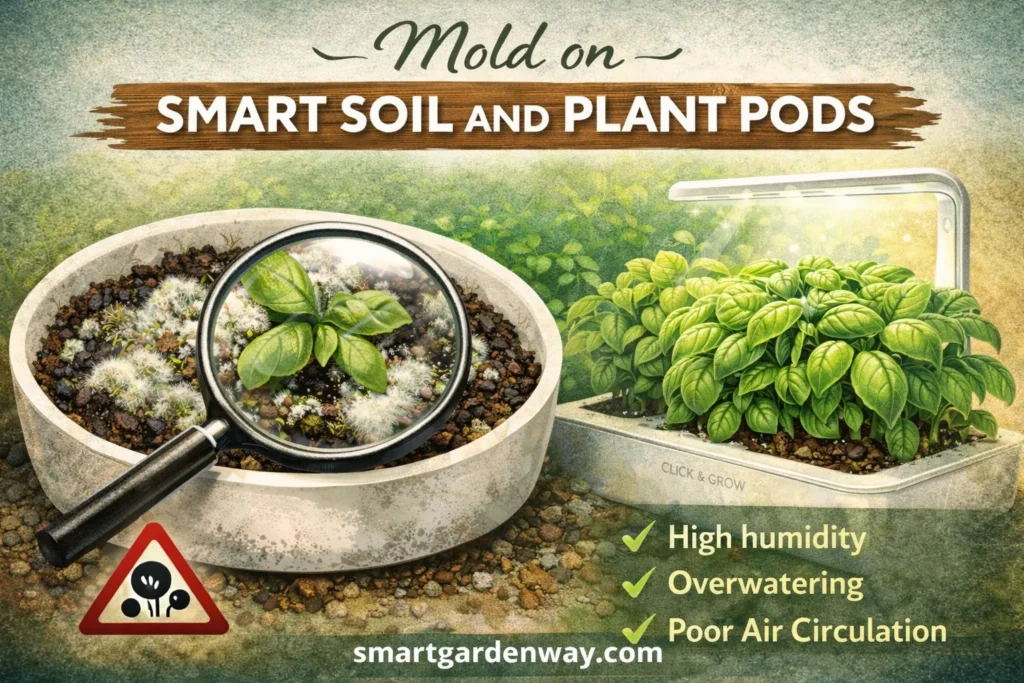
Many indoor gardeners notice mold forming directly on smart soil surfaces or plant pods. This usually appears as fuzzy white or gray growth spreading across the top layer of soil.
In most cases, mold on smart soil is considered harmless mold, particularly when it results from natural decomposition of organic material. The smart soil environment contains nutrients, oxygen pockets, and balanced soil pH designed to support plant life cycles.
However, when mold becomes aggressive and spreads rapidly across the soil surface, gardeners may wish to remove it and improve environmental conditions.
Scraping away the top layer of mold or removing affected soil can help restore a cleaner soil surface. Maintaining proper moisture levels and airflow also prevents mold from reappearing.
Mold vs Root Hairs in Microgreens and Seedlings
Many growers confuse mold with root hairs, which appear as fine white fuzz near plant roots. Root hairs form naturally during the early stages of plant growth and are responsible for absorbing water and nutrients.
Unlike mold, root hairs appear directly around the roots and disappear when exposed to airflow or water movement. Mold, on the other hand, spreads across the soil surface and may cover larger areas of the growing medium.
Understanding the difference between these two growth patterns helps gardeners determine whether a mold treatment is necessary.
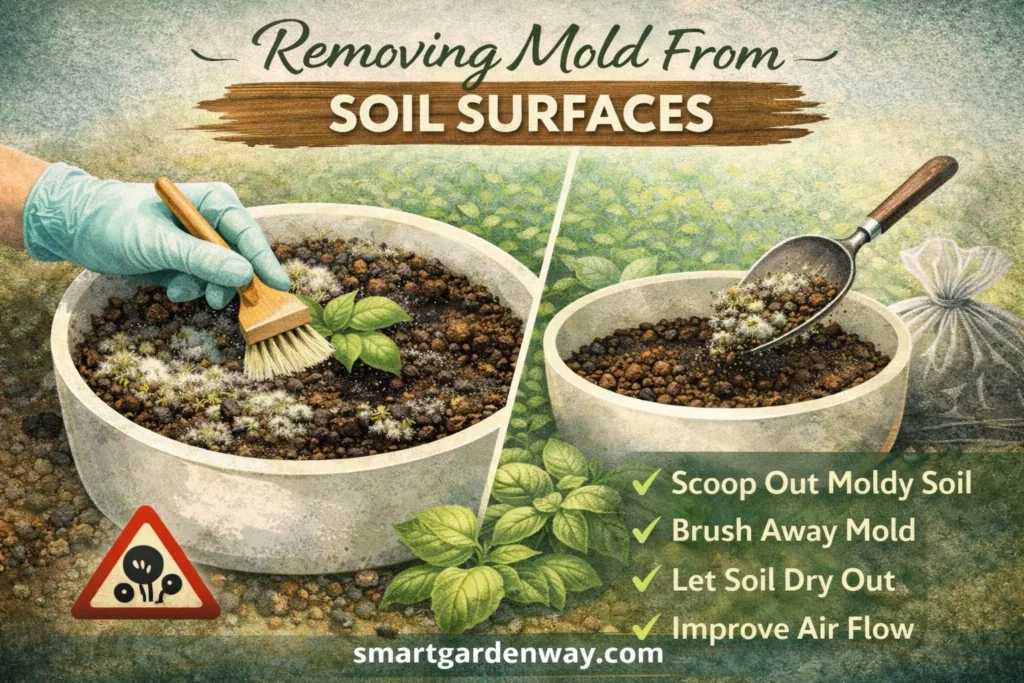
1. Removing Mold From Soil Surfaces
When mold appears on soil surfaces, the first step is to remove visible mold and restore proper environmental conditions. Several methods can help eliminate mold growth.
Removing the Top Layer of Soil
In many cases, mold develops only on the top portion of the soil surface. Removing the affected soil layer can eliminate mold colonies before they spread.
Gardeners may carefully scoop out moldy soil and replace it with fresh sterile soil. This prevents spores from spreading deeper into the growing medium.
Scraping Mold From Smart Soil
When mold forms on smart soil pods, gently scraping the surface can remove fungal growth without disturbing the plant roots. Removing this layer helps prevent spores from continuing to spread.
Repotting Plants
If mold contamination becomes severe, repotting plants into fresh sterile potting soil may be necessary. During repotting, damaged roots should be trimmed using clean tools, and the plant should be transferred to a clean container.
Repotting eliminates contaminated soil and creates a healthier environment for plant growth.
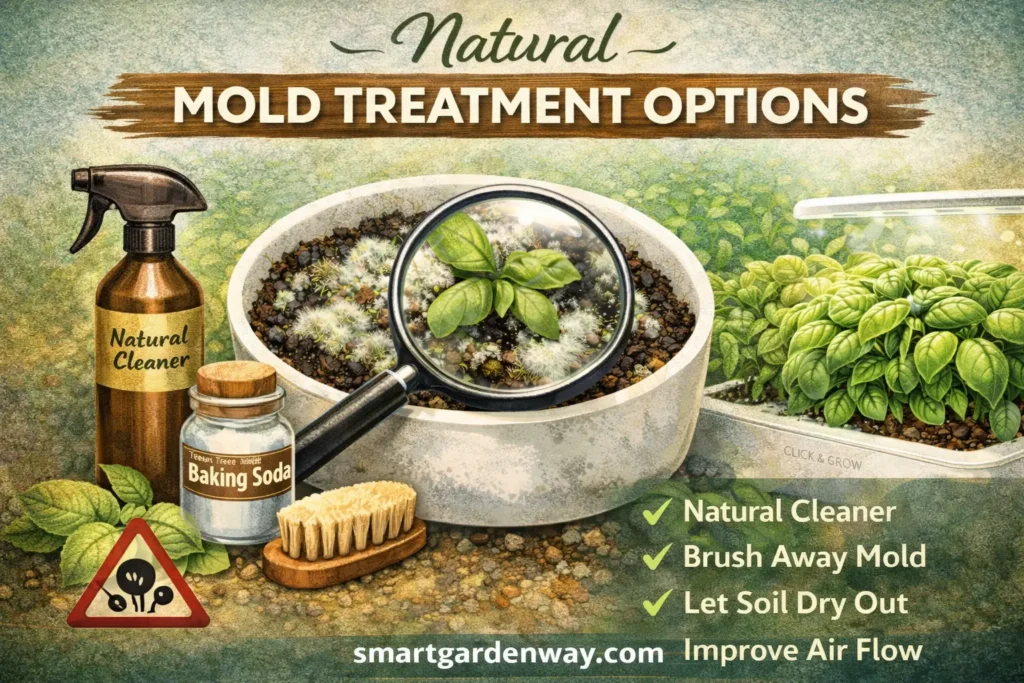
2. Natural Mold Treatment Options
Several natural ingredients are commonly used to control mold in indoor gardens.
Cinnamon as a Natural Deterrent
Cinnamon is widely recognized as a natural antifungal ingredient. Sprinkling cinnamon on the soil surface can discourage mold growth by creating a protective layer.
Cinnamon powder is often applied directly to moldy spots on soil, helping reduce fungal activity.
Hydrogen Peroxide Solution
Hydrogen peroxide is frequently used to treat mold in seed starting trays and microgreens. When diluted with water, hydrogen peroxide releases oxygen that helps eliminate mold.
A common mixture used by gardeners combines hydrogen peroxide with water, allowing the solution to be misted onto affected soil surfaces.
Vinegar Treatments
Vinegar solutions may also be used to treat mold. Diluted vinegar can be sprayed on moldy soil surfaces to slow fungal growth. Some gardeners use white distilled vinegar or cider vinegar diluted with water for mold control.
Grapefruit Seed Extract
Another treatment sometimes used in gardening environments is grapefruit seed extract mixed with water. This mixture may be applied using a spray bottle to help control mold growth on soil surfaces.
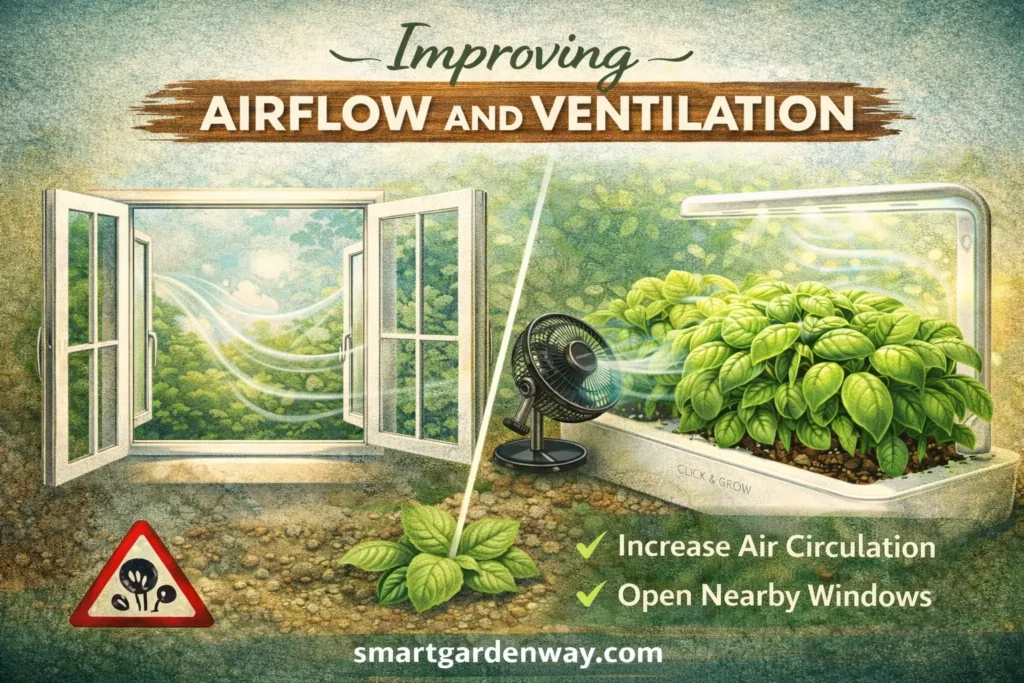
3. Improving Airflow and Ventilation
Air circulation is one of the most effective methods for preventing mold growth in indoor gardens. When air moves across the soil surface, moisture evaporates more quickly, preventing mold spores from settling.
Placing a fan near the indoor garden can improve airflow and help dry the top layer of soil. Increased ventilation reduces humidity levels and discourages mold development.
Opening windows or allowing natural airflow through the growing area can also improve ventilation and maintain a healthier environment.
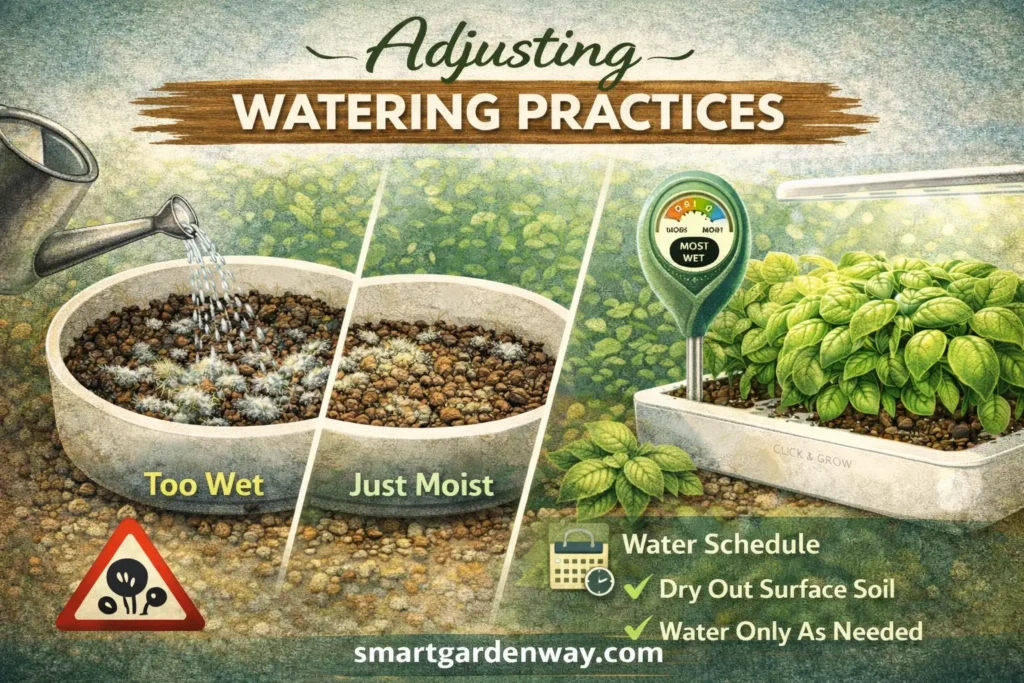
4. Adjusting Watering Practices
Proper watering practices are essential for preventing mold growth. Soil should remain moist enough to support plant growth but not so wet that mold colonies develop.
Some gardeners prefer bottom watering, which allows plants to absorb moisture from below rather than saturating the soil surface. This method keeps the upper soil layer relatively dry and less prone to mold.
Watering schedules should also allow the top portion of soil to dry slightly between watering cycles.
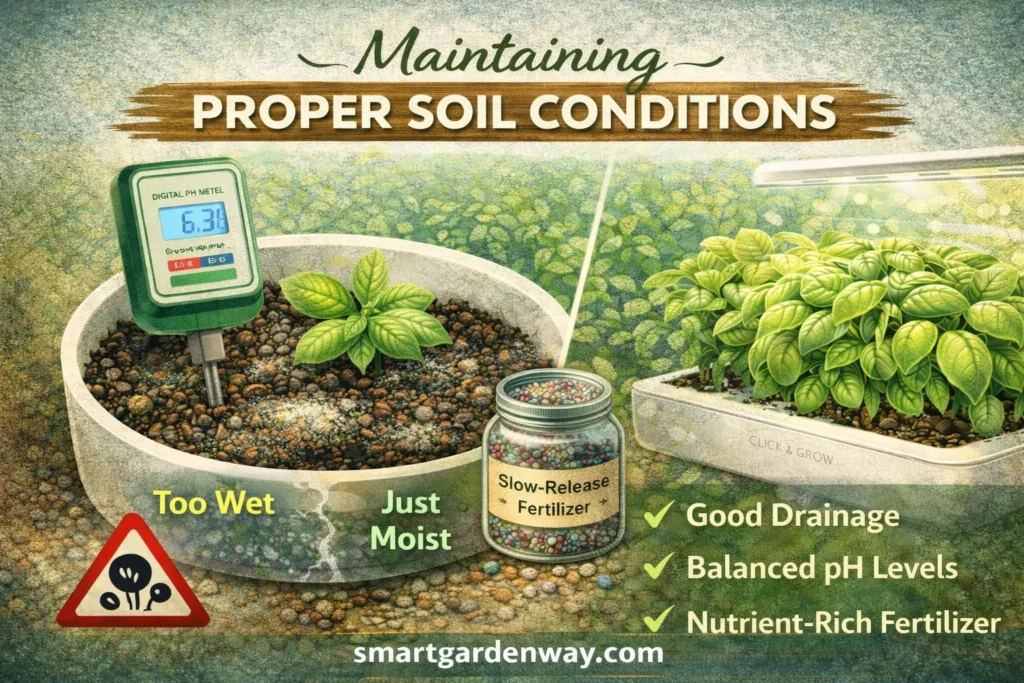
5. Maintaining Proper Soil Conditions
Healthy soil conditions reduce the risk of mold growth. Soil should provide adequate drainage while retaining enough moisture to support plant roots.
Using porous soil components such as perlite, peat moss, or sand can help improve soil structure. These materials create air pockets that improve oxygen flow and prevent water from accumulating near the surface.
When soil drains effectively, mold spores have fewer opportunities to grow.
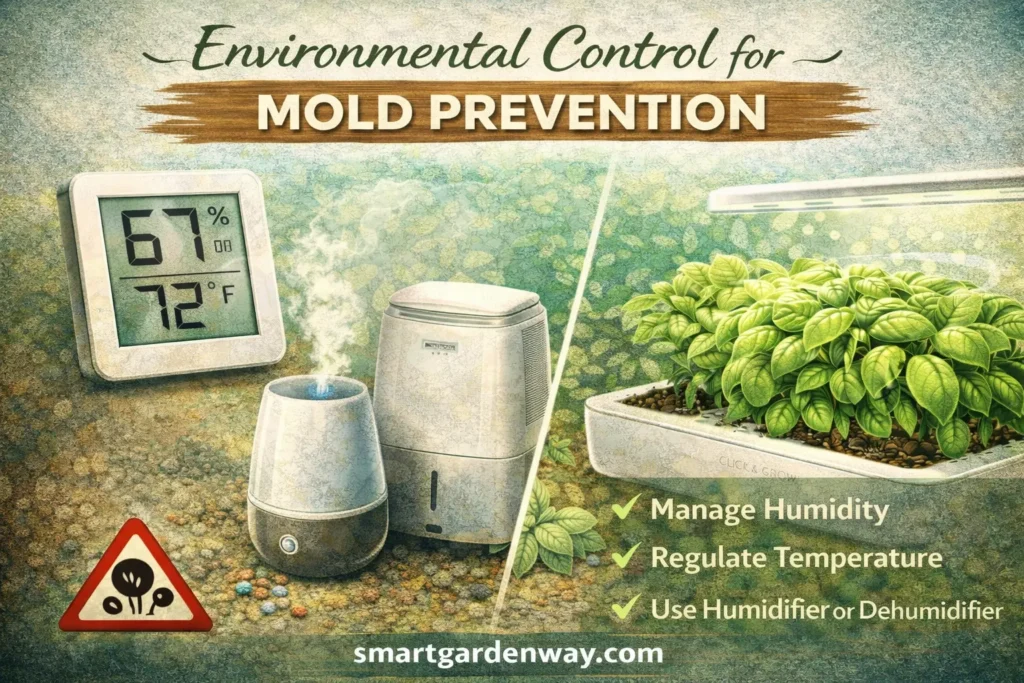
6. Environmental Control for Mold Prevention
Indoor gardens benefit from balanced environmental conditions that support plant growth without encouraging mold development.
Maintaining moderate humidity levels, proper temperature ranges, and adequate airflow helps prevent mold from becoming a persistent problem.
Avoid placing indoor gardens in high-humidity areas such as bathrooms, basements, or enclosed spaces where airflow is limited.
Long-Term Click and Grow Mold Problem Solution
The most effective click and grow mold problem solution focuses on maintaining a balanced indoor gardening environment. Mold spores exist naturally in the air and soil, so completely eliminating them is not possible. Instead, successful mold management relies on controlling the conditions that allow mold to grow.
Regular monitoring of soil moisture, ensuring proper ventilation, and maintaining clean containers and tools all contribute to a healthier growing environment. When mold appears, removing affected soil, adjusting watering practices, and improving airflow can quickly restore balance to the indoor garden.
Indoor gardening systems such as Click and Grow are designed to simplify plant care, but like any growing environment, they require attention to moisture levels and environmental conditions. By understanding how mold develops and how environmental factors influence fungal growth, gardeners can prevent mold from becoming a recurring issue.
How to prevent mold in Click and Grow?
Preventing mold in a Click and Grow system mainly involves controlling moisture, airflow, and soil conditions. Mold spores naturally exist in the air and can grow on smart soil or plant pods when the soil surface remains constantly damp. To reduce the risk, maintain proper air circulation around the indoor garden, avoid overwatering, and check that the water float level is not too high. Allowing the top layer of soil to dry slightly and keeping the growing area well-ventilated helps prevent mold from forming on the soil surface.
How to prevent mold when growing sprouts?
Mold can appear when growing sprouts because the environment is warm, moist, and rich in organic material, which encourages mold spores to grow. To prevent this, ensure proper ventilation and airflow, rinse sprouts regularly with clean water, and avoid leaving them in a damp, stagnant environment. Keeping the sprouting container clean and allowing excess moisture to drain properly can reduce the chances of mold developing during germination.
How to stop mold from growing on plants?
Stopping mold from growing on plants usually requires adjusting the growing environment. Mold thrives in conditions with high humidity, poor airflow, and damp soil, so improving ventilation and allowing soil surfaces to dry slightly between watering cycles can help control mold growth. Removing visible mold from the soil surface and ensuring plants receive adequate light and air circulation also helps prevent mold from spreading around plant roots or containers.
How do I clean my Click and Grow?
Cleaning a Click and Grow system involves removing plant pods and wiping the garden unit to prevent mold spores or residue from building up. Start by emptying the water reservoir and wiping the interior surfaces with a clean cloth and mild cleaning solution. Rinse the water container and remove any debris or residue from the pod area. Keeping the system clean between planting cycles helps maintain a healthier indoor garden environment and reduces the risk of mold forming in the future.
Conclusion
Mold growth in indoor gardens can be concerning, but it is often a manageable issue when gardeners understand the environmental factors involved. The click and grow mold problem solution begins with recognizing that mold spores are naturally present in soil and air. When these spores encounter moisture, organic material, and limited airflow, they can grow on soil surfaces or plant pods.
By controlling these conditions, gardeners can reduce mold growth and maintain healthy plants. Practices such as adjusting watering schedules, allowing the soil surface to dry slightly, and improving airflow with fans or ventilation help prevent mold from returning. Removing moldy soil, scraping affected surfaces, or repotting plants may also help restore clean growing conditions.
Natural treatments like cinnamon, hydrogen peroxide solutions, and vinegar mixtures are often used to manage mold when it appears. These treatments can reduce fungal activity while maintaining a safe environment for plants.
Ultimately, the key to preventing mold lies in maintaining a balanced indoor gardening environment. Proper moisture control, good ventilation, and healthy soil conditions allow plants to thrive while minimizing the risk of mold growth. With these strategies, indoor gardeners can enjoy productive growing systems and healthy plants without ongoing mold problems.