
Growing fresh herbs at home has become one of the most practical ways to bring flavor and freshness into everyday cooking. An indoor herb garden for kitchen counter allows you to grow herbs indoors year-round without needing a large outdoor garden. Whether you place herbs on a kitchen windowsill, use a hydroponic herb garden system, or set up small containers with potting soil, a countertop herb garden makes it easy to harvest fresh herbs whenever you cook.
Many indoor gardeners grow herbs like basil, parsley, mint, thyme, oregano, chives, rosemary, and cilantro directly in the kitchen. With the right sunlight, containers, grow lights, watering routine, and herb garden kit, these plants thrive indoors and provide a steady supply of herbs for cooking. This guide explains how to create a successful indoor herb garden for kitchen counter, including the best herbs to grow, lighting needs, containers, hydroponic systems, and maintenance techniques to keep your herbs healthy.
What Is an Indoor Herb Garden for Kitchen Counter?
An indoor herb garden for kitchen counter is a small indoor gardening setup where herbs grow in containers, planters, or hydroponic systems placed on a kitchen counter or windowsill. Instead of growing herbs outdoors in soil beds, indoor herb gardens allow you to cultivate plants in a compact space using pots, herb garden kits, or hydroponic growing systems.
Many people use countertop herb garden kits, self-watering systems, or hydroponic gardens with LED grow lights. These systems help herbs germinate and grow quickly while maintaining the right amount of water and nutrients.
Indoor herb gardens can include:
- Container herb gardens with potting soil
- Hydroponic herb gardens using nutrient-rich water
- Self-watering indoor herb garden kits
- Countertop smart gardens with LED grow lights
Some popular indoor garden systems include products like AeroGarden Harvest Elite, Click & Grow Smart Garden, iDOO hydroponic systems, Rise Gardens, and Auk Mini smart gardens. These systems automate lighting, watering, and nutrient delivery, making indoor gardening easier for beginners.
For many households, a kitchen countertop herb garden becomes both a decorative feature and a practical cooking tool. Fresh herbs can be harvested directly from the plant while preparing meals, ensuring the herbs are always fresh.
Benefits of Growing an Indoor Herb Garden for Kitchen Counter
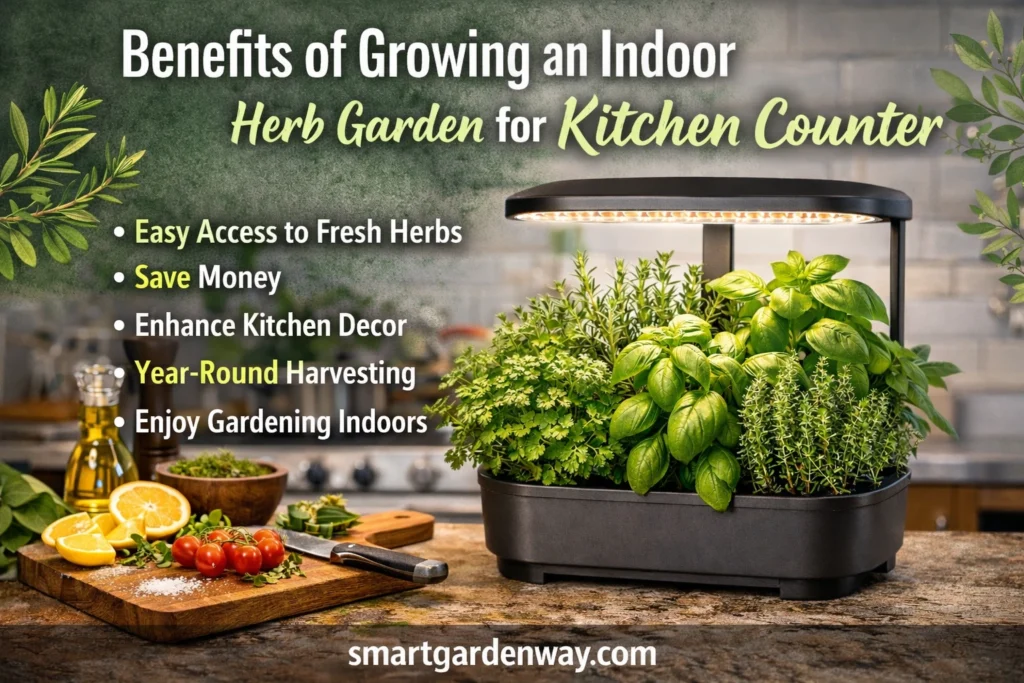
A well-designed indoor herb garden for kitchen counter offers many advantages compared with purchasing herbs from a grocery store.
Fresh Herbs for Cooking
Fresh herbs such as basil, cilantro, parsley, thyme, oregano, and chives add strong flavor to meals. Instead of buying packaged herbs that spoil quickly, an indoor herb garden provides a continuous supply.
Year-Round Herb Harvest
One of the biggest benefits of indoor herb gardening is the ability to grow herbs year-round. Even during colder seasons, herbs can grow indoors with adequate light and proper care.
Space-Saving Gardening
A countertop herb garden requires very little space. Small containers, vertical herb planters, floating shelves, or compact hydroponic systems allow herbs to grow in limited kitchen space.
Convenient Access
Keeping herbs directly on the kitchen counter makes them easy to harvest. Instead of walking outside to a garden, you can trim herbs while cooking.
Decorative Kitchen Feature
Many indoor herb gardens double as decorative kitchen elements. Terracotta pots, mason jars, ceramic hanging pots, and modular indoor garden systems add visual interest while growing plants.
Best Herbs to Grow in an Indoor Herb Garden for Kitchen Counter
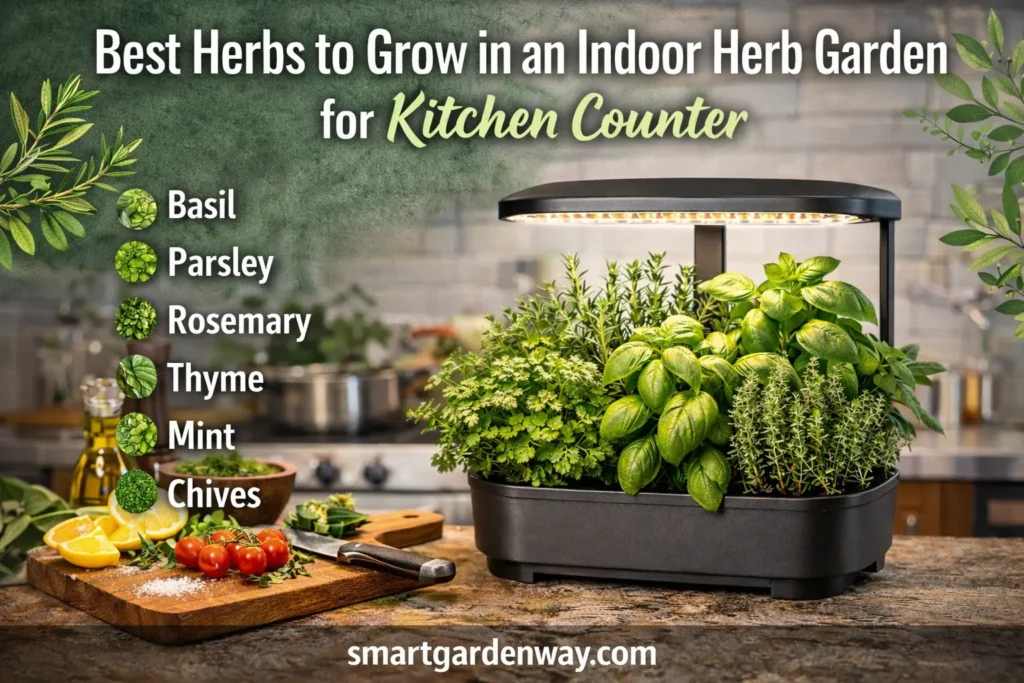
Some herbs grow better indoors than others. Herbs that tolerate container gardening and moderate sunlight are ideal for a kitchen countertop herb garden.
Basil
Basil is one of the most popular herbs for indoor gardening. It grows quickly in containers and thrives with bright light and consistent watering. Basil is widely used in pasta dishes, sauces, and salads.
Parsley
Parsley grows well indoors in small pots with good drainage. This herb requires moderate sunlight and moist soil.
Mint
Mint is one of the easiest herbs to grow indoors. It spreads quickly and grows well in containers placed on kitchen windowsills.
Chives
Chives are compact herbs that thrive in small pots. They require moderate sunlight and are commonly used as garnishes for soups and salads.
Oregano
Oregano grows well indoors with good drainage and sunlight. It is commonly used in Mediterranean cooking.
Thyme
Thyme is a hardy herb that adapts well to indoor conditions. It requires moderate watering and plenty of sunlight.
Rosemary
Rosemary grows best in well-drained soil and requires bright light. It may benefit from supplemental grow lights when sunlight is limited.
Cilantro
Cilantro grows quickly and prefers cool indoor temperatures with consistent moisture.
These herbs are commonly included in indoor herb garden kits and hydroponic systems, making them ideal for beginners starting a countertop herb garden.
Indoor Herb Garden Requirements
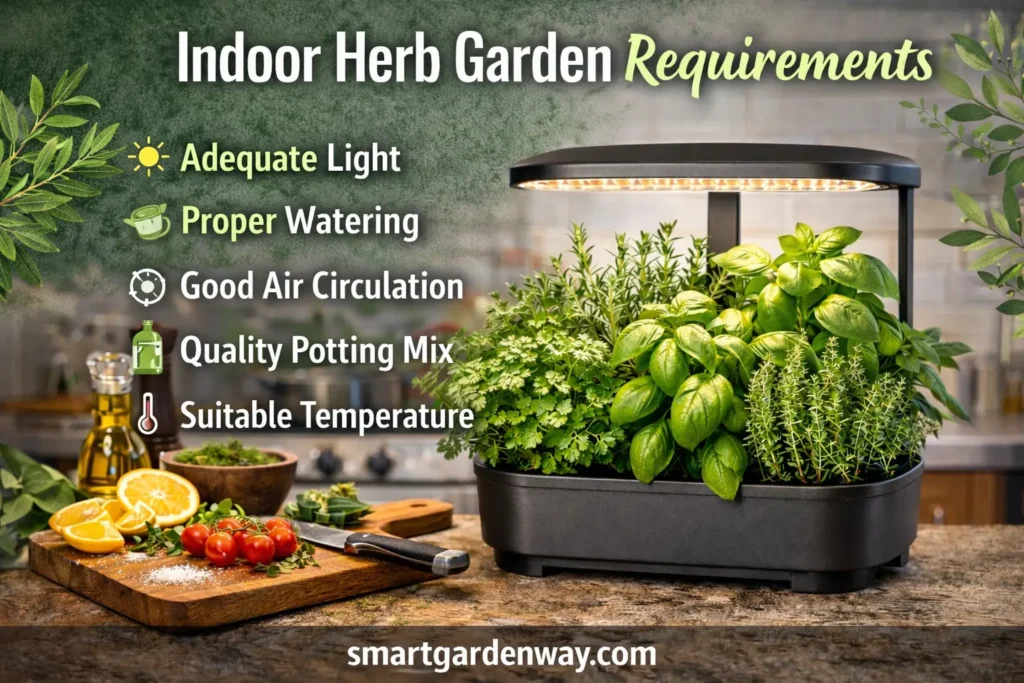
Before setting up an indoor herb garden for kitchen counter, several environmental conditions should be considered to support healthy herb growth.
Sunlight
Most herbs require bright sunlight for several hours per day. A sunny windowsill or kitchen window is often the best location for a countertop herb garden.
Containers with Drainage
Herbs need containers with drainage holes to prevent excess moisture. Pots made of terracotta, ceramic, or plastic can all work for indoor herb gardens.
Potting Soil
Indoor herbs should grow in potting soil designed for container plants. Good potting soil supports root development and allows proper drainage.
Watering Routine
Herbs require regular watering to maintain moist soil. Overwatering can damage roots, so proper drainage is essential.
Air Circulation
Indoor plants benefit from moderate air circulation to prevent pests and promote healthy growth.
By maintaining these conditions, herbs can thrive in a kitchen countertop herb garden throughout the year.
Should You Use a Countertop Herb Garden Kit?
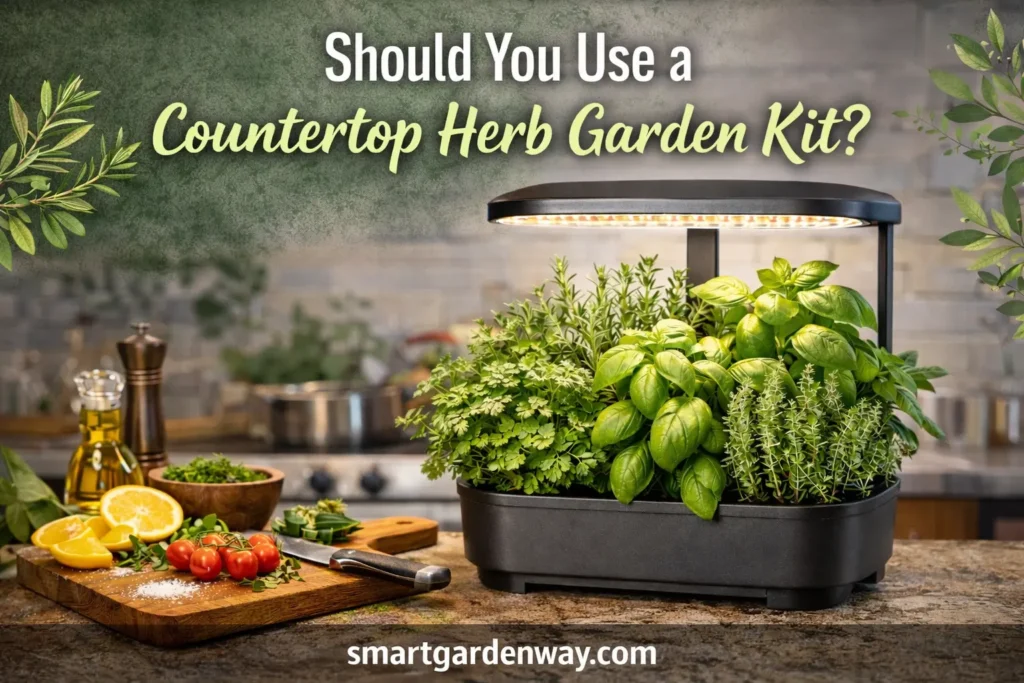
Many beginners prefer using an indoor herb garden kit because these systems simplify the gardening process.
Herb garden kits often include:
- Pre-seeded pods
- Nutrient systems
- LED grow lights
- Water reservoirs
- Automated watering systems
Popular systems such as AeroGarden Harvest Elite, Click & Grow Smart Garden 3, iDOO hydroponic systems, Rise Gardens, and Auk Mini allow herbs to grow using hydroponic technology rather than traditional soil.
In hydroponic herb gardens, plants grow in nutrient-rich water instead of soil. The system circulates water and nutrients while LED lights provide artificial sunlight.
These systems are convenient for people who want a low-maintenance indoor herb garden for kitchen counter.
Creating a DIY Indoor Herb Garden for Kitchen Counter
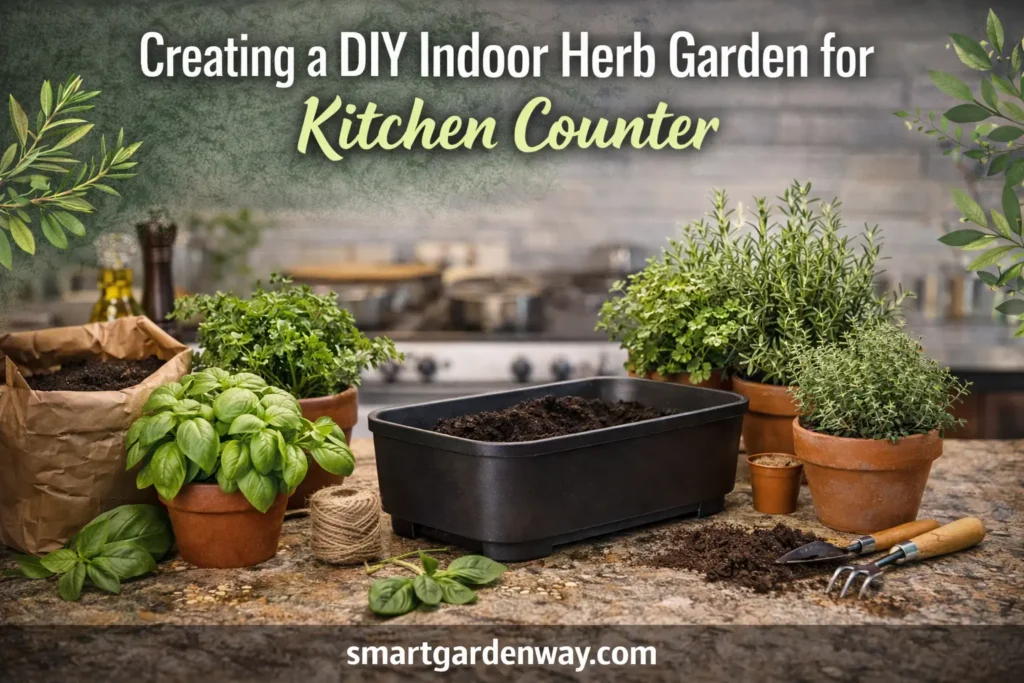
For those who prefer a simple setup, a DIY countertop herb garden can be created using common containers and gardening supplies.
Choosing Containers
Many container types can be used for ind oor herb gardening:
- Terracotta pots
- Mason jars
- Metal containers
- Ceramic pots
- Wooden crates
- Tea tins
Containers should always have drainage holes or a drainage layer made from pebbles or aquarium gravel.
Preparing the Planter
The planter should include:
- A base layer of pebbles for drainage
- Potting soil suitable for herbs
- Herb seedlings or starter plants
Herbs should be planted with enough spacing to allow growth.
Placing the Herb Garden
The finished planter should be placed on a kitchen counter near a window where the herbs receive adequate sunlight.
Lighting Requirements for Indoor Herbs
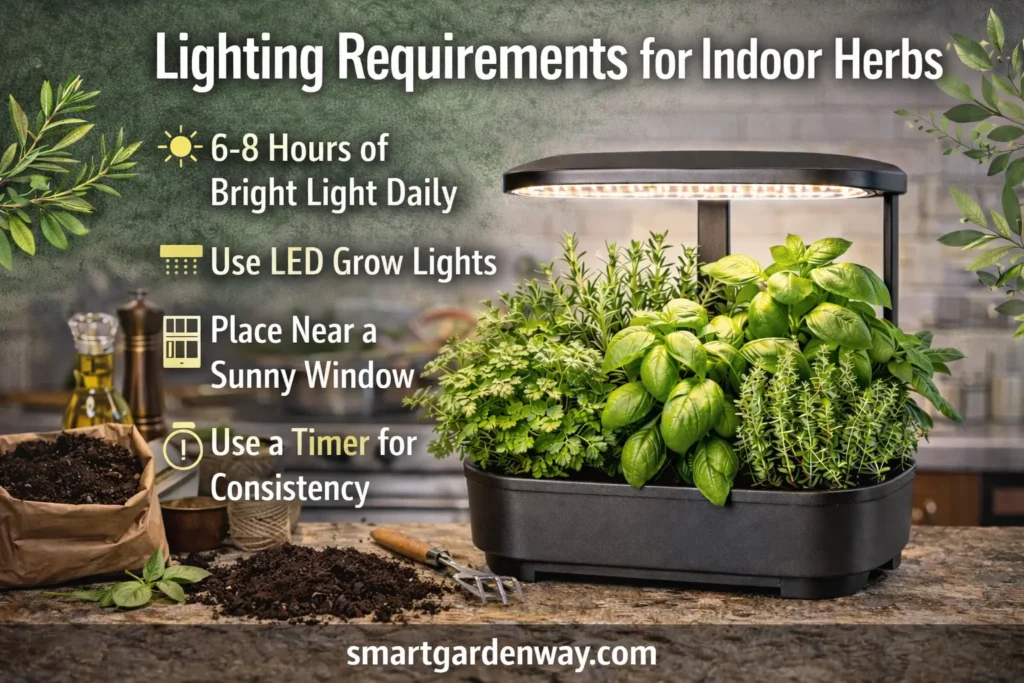
Light is one of the most important factors in maintaining a healthy indoor herb garden for kitchen counter.
Natural Sunlight
Most herbs require six hours or more of sunlight daily. Placing herbs on a windowsill or near a kitchen window helps them receive natural light.
Grow Lights
If sunlight is limited, LED grow lights can provide the necessary light for herbs to grow indoors.
Grow lights simulate sunlight and support plant growth even in low-light environments.
Many hydroponic systems include adjustable grow lights that automatically provide the correct light cycle for plants.
Watering and Fertilizing Indoor Herbs
Proper watering and nutrient management are essential for healthy herbs.
Watering Schedule
Herbs should be watered when the soil begins to dry. Maintaining moist soil without overwatering is important.
Fertilizer
Indoor herbs benefit from liquid fertilizer or plant nutrients to support growth. Fertilizer should be used sparingly to avoid damaging roots.
Hydroponic herb gardens typically include nutrient solutions designed specifically for plant growth.
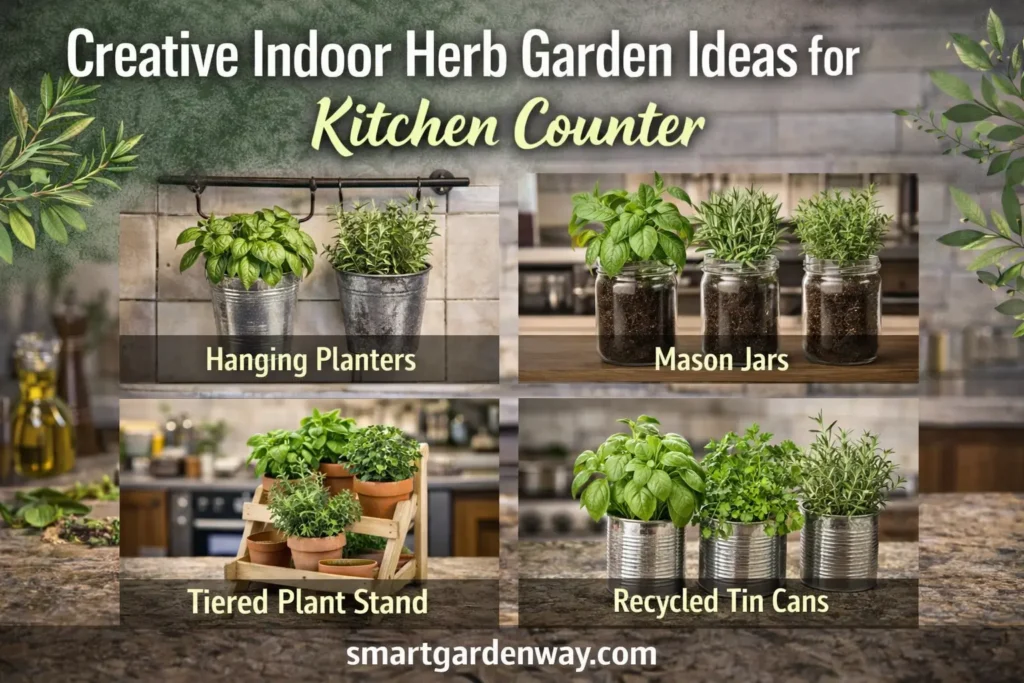
Creative Indoor Herb Garden Ideas for Kitchen Counter
An indoor herb garden for kitchen counter can be designed in many creative ways.
Windowsill Herb Garden
A windowsill herb garden is one of the simplest setups. Small pots or containers are placed along the window where herbs receive natural sunlight.
Hanging Herb Baskets
Hanging herb baskets can save counter space while allowing herbs to grow vertically.
Magnetic Herb Jars
Magnetic herb jars can attach to a refrigerator, creating a compact indoor herb display.
Floating Shelf Herb Garden
Floating shelves allow multiple herb containers to grow vertically on a kitchen wall.
Vertical Wall Herb Planters
Vertical herb planters create a decorative living wall of herbs.
Repurposed Wine Crate Planters
Wooden wine crates can be used to create rustic herb planters.
Terracotta Herb Tower
Stacked terracotta pots can create a vertical herb tower suitable for small kitchens.
These creative setups allow herbs to grow while enhancing kitchen décor.
Care and Maintenance of a Kitchen Countertop Herb Garden
Maintaining a healthy indoor herb garden for kitchen counter requires regular care.
Pruning and Harvesting
Herbs should be harvested regularly to encourage new growth. Trimming leaves also prevents plants from becoming overgrown.
Cleaning Containers
Containers and hydroponic systems should be cleaned periodically to prevent algae or mold buildup.
Monitoring Plant Growth
Indoor gardeners should observe plant growth and adjust light, watering, and nutrients as needed.
Preventing Pests
Indoor herbs may occasionally attract pests. Proper air circulation and regular inspection can help prevent pest problems.
Harvesting Fresh Herbs from Your Countertop Garden
Harvesting herbs is one of the most rewarding parts of maintaining an indoor herb garden for kitchen counter.
When herbs reach maturity, small portions can be trimmed from the plant while leaving enough foliage for continued growth.
Common herbs harvested from indoor gardens include:
- basil
- parsley
- thyme
- oregano
- chives
- cilantro
Frequent harvesting encourages plants to produce new leaves, ensuring a steady supply of herbs.
Frequently Asked Questions
What herbs can I grow on my kitchen counter?
Many herbs grow well in an indoor herb garden for kitchen counter, especially herbs that thrive in containers and moderate sunlight. Popular choices include basil, parsley, mint, thyme, oregano, chives, cilantro, rosemary, and dill. These herbs adapt well to container gardening and can grow in terracotta pots, mason jars, or hydroponic herb garden systems. Placing them near a sunny windowsill or under LED grow lights helps maintain healthy growth and ensures you always have fresh herbs available for cooking.
Which plant is best suited for indoor kitchen gardening?
Several herbs are well suited for indoor kitchen gardening, but basil, mint, parsley, and chives are often considered the easiest for beginners. These herbs grow quickly, adapt well to potting soil or hydroponic systems, and require only moderate sunlight and regular watering. Many indoor herb garden kits also include these plants because they germinate easily and produce fresh leaves frequently. With proper care, these herbs can grow year-round in a kitchen countertop herb garden.
How do you grow kitchen herbs indoors?
To grow herbs indoors, start by choosing suitable containers such as pots with drainage holes, terracotta planters, or herb garden kits. Fill the containers with potting soil, plant herb seeds or seedlings, and place them on a kitchen counter near a sunny window. Herbs require regular watering, bright sunlight, and occasional fertilizer to stay healthy. If natural sunlight is limited, LED grow lights can provide the necessary lighting. With proper care and pruning, herbs can grow successfully in an indoor herb garden for kitchen counter.
What plants are good for kitchen countertops?
Plants that grow well on kitchen countertops include culinary herbs and small container plants. Herbs such as basil, parsley, thyme, oregano, mint, rosemary, and chives are especially suitable because they grow well in compact containers and are frequently used in cooking. Many people grow these plants using countertop hydroponic systems, smart indoor gardens, or simple container planters. Keeping herbs on the kitchen counter makes them easy to harvest while preparing meals and adds a fresh, decorative element to the kitchen.
Conclusion
An indoor herb garden for kitchen counter is a practical and rewarding way to grow fresh herbs at home. By placing herb containers or hydroponic systems on a kitchen counter or windowsill, gardeners can cultivate herbs such as basil, parsley, mint, thyme, oregano, chives, rosemary, and cilantro throughout the year.
Successful indoor herb gardening depends on several important factors, including proper sunlight, watering routines, containers with drainage, potting soil, and occasional fertilizer. Many people choose countertop herb garden kits or hydroponic systems with LED grow lights and automated watering systems, while others prefer simple DIY container gardens using terracotta pots or mason jars.
Whether using a hydroponic herb garden system or a traditional container planter, growing herbs indoors allows easy access to fresh ingredients while cooking. With consistent care, pruning, and harvesting, a countertop herb garden can continue producing flavorful herbs year-round, making it a valuable addition to any kitchen.