

Growing fresh herbs indoors has become easier than ever with modern indoor gardening systems. The best countertop herb garden with grow light allows people to grow herbs such as basil, parsley, mint, cilantro, and thyme directly on a kitchen counter using hydroponic systems and LED grow lights. These compact indoor gardens are designed for small spaces and provide a steady supply of fresh herbs year-round. Many systems include features like adjustable light panels, circulating water pumps, nutrient solutions, and automated watering reminders that simplify herb cultivation indoors.
Indoor herb gardens have become popular because they remove many outdoor gardening challenges such as poor soil conditions, limited outdoor space, and seasonal weather changes. With the help of hydroponic technology and controlled lighting, herbs can grow efficiently indoors while maintaining strong flavor and consistent growth. Countertop gardens also make it convenient to harvest herbs during cooking, ensuring that fresh basil, parsley, or cilantro is always available in the kitchen.
This guide explores how countertop herb gardens work, how grow lights support plant growth, and which indoor garden systems are commonly used for growing herbs indoors.
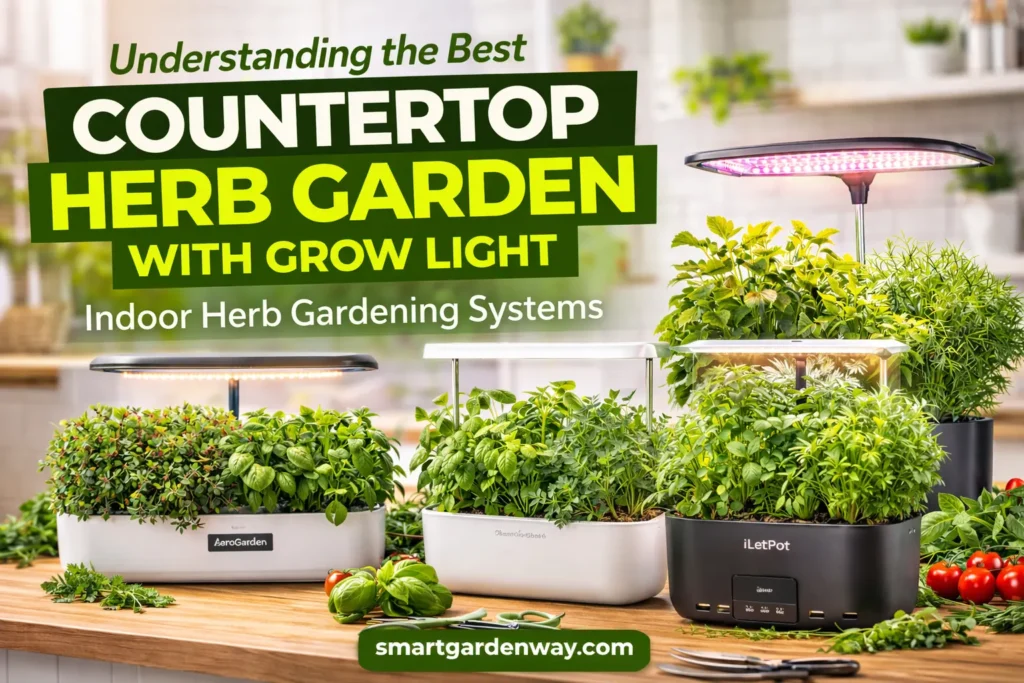
Understanding the Best Countertop Herb Garden With Grow Light
A countertop herb garden is a compact indoor gardening system designed to grow herbs in a controlled environment. These gardens often use hydroponic growing methods, which means plants grow in nutrient-rich water instead of traditional soil. Combined with LED grow lights, these systems replicate natural sunlight and provide consistent lighting conditions that support plant growth.
Indoor Herb Gardening Systems
Indoor herb gardens typically include several components that support plant development. These components often include a water reservoir, plant pods or seed pods, adjustable lighting, and nutrient solutions. Some systems also include digital displays or automated reminders that notify users when to add water or nutrients.
Hydroponic indoor gardens allow plant roots to absorb nutrients directly from water. This process supports faster germination and steady plant development compared with many soil-based herb pots. Because the systems are designed for indoor use, they also fit easily on kitchen countertops, windowsills, desks, or small shelves.
Why Countertop Herb Gardens Are Popular
Countertop herb gardens are popular for several reasons. First, they allow herbs to grow year-round regardless of outdoor weather. Second, they simplify gardening for beginners because many systems include automated features. Third, they provide a convenient way to access fresh herbs while cooking.
Indoor herb gardens also support small-space gardening. Many people living in apartments or urban homes may not have access to outdoor garden beds, but countertop gardens provide a practical alternative. Because the systems are compact and often designed with aesthetic appeal, they also function as decorative elements in modern kitchens.
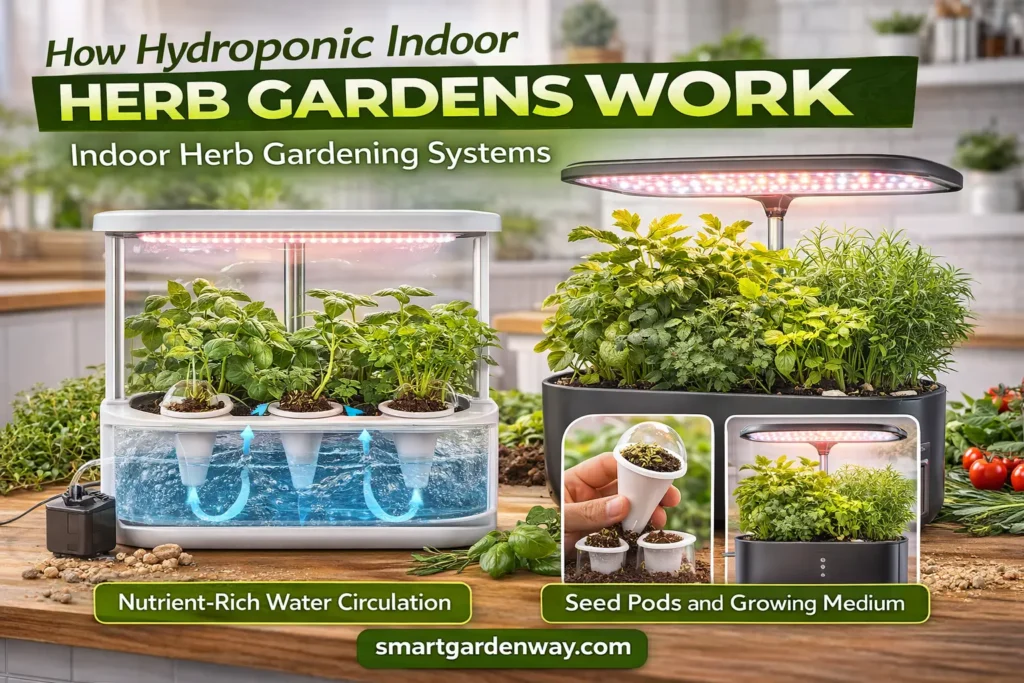
How Hydroponic Indoor Herb Gardens Work
Hydroponic systems play a central role in many indoor herb gardens. Instead of soil, these systems rely on water and dissolved nutrients to support plant growth.
Nutrient-Rich Water Circulation
Most hydroponic herb gardens contain a water reservoir that stores nutrient-rich water. A small pump circulates this water through the system so that plant roots receive consistent hydration and nutrients. Circulating water helps maintain oxygen levels around the roots, which supports healthy plant development.
This circulation system also reduces the need for daily watering. Once the reservoir is filled, plants can grow for several days before additional water is needed.
Seed Pods and Growing Medium
Many countertop herb gardens use pre-seeded pods or seed pods that contain herb seeds and a growing medium. These pods simplify planting because the seeds are already positioned correctly for germination.
Seed pods are commonly used to grow herbs such as basil, parsley, cilantro, thyme, and chives. Once the pods are placed in the garden system, the combination of water circulation and LED grow lights encourages seeds to germinate and grow.
Controlled Growing Environment
Hydroponic indoor gardens also create a controlled growing environment. Because the system regulates water, nutrients, and lighting, herbs can grow consistently throughout the year. This controlled environment helps eliminate many of the challenges associated with outdoor gardening, such as pests or inconsistent sunlight.
The Role of LED Grow Lights in Countertop Herb Gardens
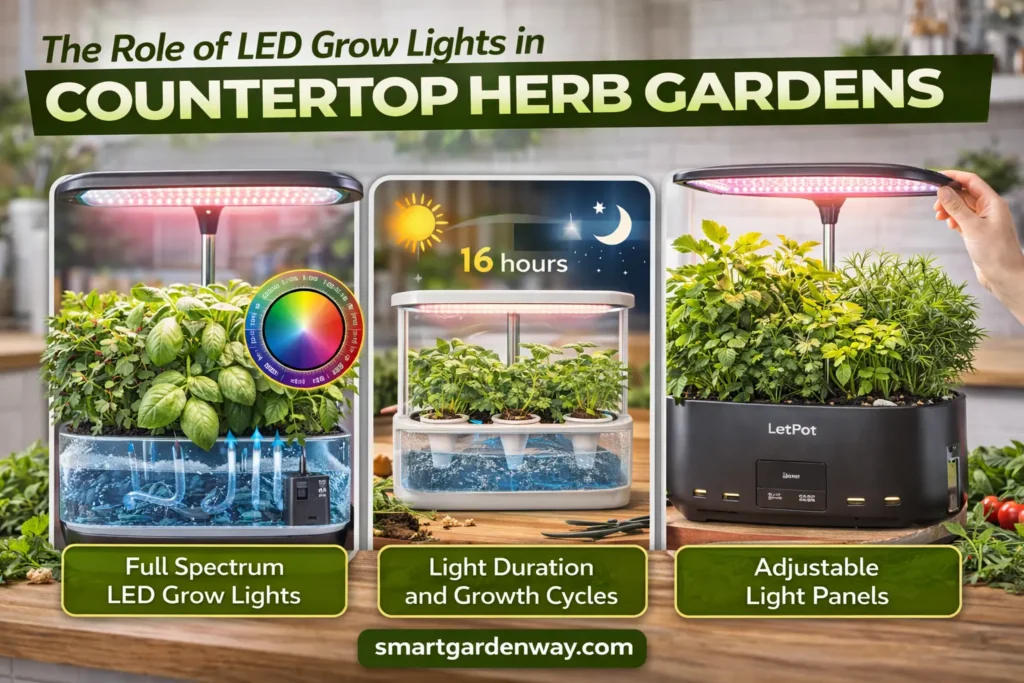
Lighting is one of the most important elements in indoor gardening. Since indoor plants do not receive natural sunlight throughout the day, grow lights provide the energy plants need for photosynthesis.
Full Spectrum LED Grow Lights
Many countertop herb gardens use full spectrum LED grow lights. These lights are designed to replicate natural sunlight and support plant growth at different stages. Full spectrum lighting helps herbs develop strong leaves and maintain vibrant color.
LED grow lights are also energy efficient. Compared with traditional lighting systems, LEDs produce less heat and use less electricity while still providing sufficient light intensity for plants.
Light Duration and Growth Cycles
Indoor herb gardens often operate on lighting cycles. Many systems use built-in timers that automatically turn grow lights on and off according to plant needs. A common lighting cycle includes approximately sixteen hours of light followed by several hours of darkness.
These lighting schedules help mimic natural daylight patterns and support healthy plant development. Because the timer is automated, users do not need to manually manage lighting schedules.
Adjustable Light Panels
Some countertop herb gardens include adjustable light arms or light panels. These panels can be raised as plants grow taller. Adjusting the light height ensures that herbs receive consistent lighting without becoming overheated.
Best Countertop Herb Garden With Grow Light Systems
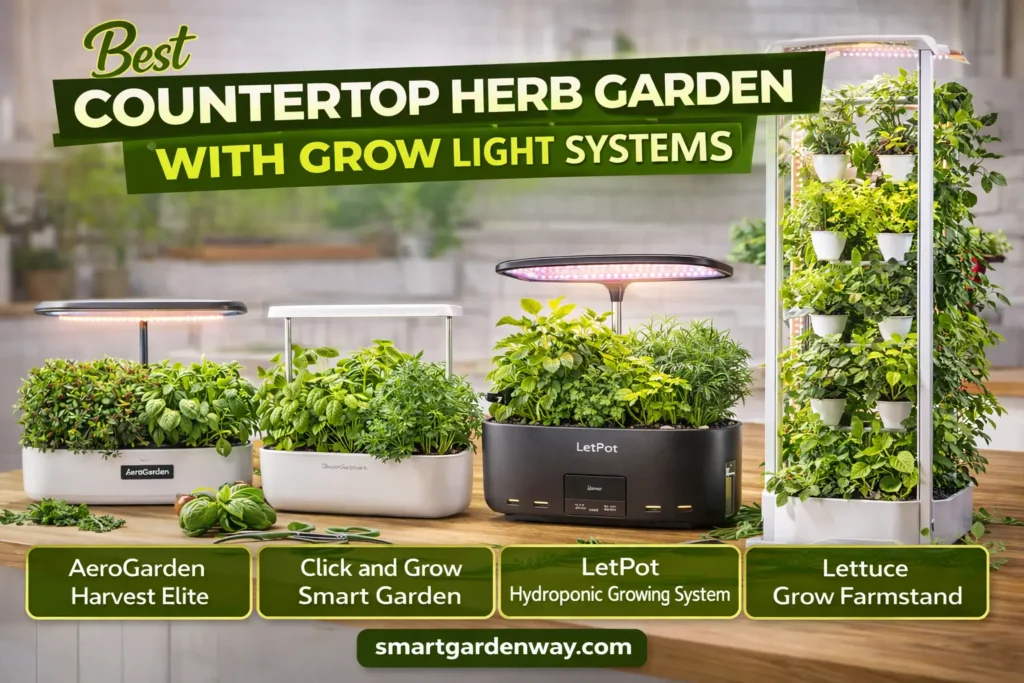
Several indoor gardening systems are commonly used for growing herbs indoors. Each system combines hydroponic technology with LED grow lights to support plant development.
AeroGarden Harvest Elite
The AeroGarden Harvest Elite is a popular indoor herb garden designed for countertop use. This hydroponic system includes LED grow lights, a water reservoir, and seed pods for growing herbs.
The system also features a digital display that provides reminders for adding water or plant food. Some models include a vacation mode that maintains lighting cycles while users are away.
Because the system uses hydroponic growing methods, herbs can germinate quickly and develop strong roots. Many users grow herbs such as basil, parsley, and thyme using this indoor garden.
Click and Grow Smart Garden
The Click and Grow Smart Garden is another indoor herb garden designed for countertop spaces. This system uses plant pods that contain seeds and growing medium, making it simple for beginners to start growing herbs.
The garden includes an adjustable grow light and a water reservoir that supports plant hydration. Because the system is compact, it fits easily on kitchen counters and windowsills.
Many households use this garden to grow herbs that can be harvested regularly for cooking.
LetPot Hydroponic Growing System
The LetPot hydroponic growing system is designed to grow multiple plants at the same time. Some versions include a ten-pod capacity, allowing users to grow several herbs or leafy greens simultaneously.
This indoor garden features LED grow lights and a circulating water pump. Some models also connect to a smartphone app that monitors water levels, lighting schedules, and plant growth.
Because the system supports multiple plant pods, it can grow herbs such as basil, parsley, cilantro, chives, and lettuce at the same time.
Gardyn Indoor Hydroponic Garden
Gardyn systems are larger indoor hydroponic gardens that allow plants to grow vertically. These systems include LED lighting and hydroponic growing technology to support indoor plant cultivation.
Vertical gardens maximize plant capacity by using height rather than countertop surface area. This design allows users to grow multiple plants in a relatively small indoor space.
Although Gardyn gardens are larger than typical countertop systems, they still function as indoor gardens with automated watering and lighting features.
Lettuce Grow Farmstand
The Lettuce Grow Farmstand is another hydroponic growing system designed to grow herbs and vegetables indoors. This vertical garden allows users to cultivate leafy greens and herbs using nutrient-rich water.
Because the system grows plants vertically, it can support multiple plant varieties simultaneously. Grow lights provide additional lighting to support plant development indoors.
Herbs Commonly Grown in Indoor Herb Gardens
Many herbs grow well in countertop herb gardens. These herbs are commonly used in cooking and adapt well to indoor growing environments.
Basil
Basil is one of the most popular herbs for indoor gardens. It grows quickly in hydroponic systems and thrives under LED grow lights. Fresh basil leaves are often used in pasta dishes and herb-based recipes.
Parsley
Parsley grows well in indoor gardens and produces steady harvests. Because parsley plants grow compactly, they are suitable for small countertop systems.
Mint
Mint is another herb commonly grown indoors. It grows vigorously in hydroponic gardens and can be harvested regularly for beverages and recipes.
Cilantro
Cilantro grows quickly in indoor gardens and is commonly used in cooking. Hydroponic systems support cilantro growth by providing consistent hydration and lighting.
Thyme and Chives
Thyme and chives are also well suited for indoor herb gardens. These herbs require minimal maintenance and grow steadily in hydroponic environments.
Benefits of Using the Best Countertop Herb Garden With Grow Light
Countertop herb gardens provide several advantages for indoor gardening.
Fresh Herbs Year-Round
One major benefit of indoor herb gardens is the ability to grow herbs throughout the year. Because lighting and watering are controlled, plants can grow consistently regardless of season.
Space Efficient Gardening
Countertop herb gardens are designed for compact spaces. Many systems fit easily on kitchen counters, desks, or windowsills, making them suitable for apartments and small homes.
Simplified Plant Care
Many indoor gardens include automated features that simplify plant care. Water reservoirs reduce the need for daily watering, while lighting timers manage grow light schedules automatically.
Educational and Enjoyable Experience
Growing herbs indoors can also be an enjoyable experience. Watching plants germinate and grow provides a sense of satisfaction and encourages people to cook with fresh ingredients.
Setting Up a Countertop Herb Garden
Setting up a countertop herb garden usually involves several simple steps.
Choosing the Location
Indoor gardens are often placed on kitchen counters, windowsills, or small shelves. Selecting a stable location ensures the system remains balanced and accessible for maintenance.
Filling the Water Reservoir
Most hydroponic systems require users to fill a water reservoir before planting. This reservoir supplies water and nutrients to plant roots.
Installing Seed Pods
Seed pods are placed into designated slots within the garden system. Once installed, the seeds begin germinating as they receive water and light.
Adjusting the Grow Light
After planting, the grow light should be positioned above the seed pods. As plants grow taller, the light panel can be raised to maintain optimal distance from the leaves.
Maintaining Indoor Herb Gardens
Maintaining a countertop herb garden involves several routine tasks that support plant health.
Monitoring Water Levels
Water reservoirs should be checked regularly to ensure plants receive sufficient hydration. Many systems provide reminders when water levels become low.
Adding Nutrient Solutions
Hydroponic systems rely on nutrient solutions to support plant growth. Adding plant nutrients periodically ensures herbs receive essential minerals.
Trimming and Harvesting Herbs
Regular harvesting encourages herbs to produce new growth. Trimming leaves also helps maintain plant shape and prevents overcrowding.
Cleaning the System
Indoor garden systems should be cleaned occasionally to prevent mineral buildup. Wiping the exterior and rinsing the reservoir helps maintain system performance.
Frequently Asked Questions About the Best Countertop Herb Garden With Grow Light
What herbs grow best under grow lights?
Many herbs grow very well under LED grow lights in a countertop herb garden. Herbs such as basil, parsley, cilantro, mint, thyme, and chives adapt easily to indoor environments with controlled lighting. Hydroponic systems like the AeroGarden Harvest Elite, Click & Grow Smart Garden, and LetPot Hydroponic Growing System provide the light and nutrient conditions these herbs need to grow quickly. With full spectrum grow lights and proper watering, these herbs can produce fresh leaves regularly for cooking throughout the year.
Can I grow herbs inside with a grow light?
Yes, herbs can grow successfully indoors using a grow light and a hydroponic indoor garden system. Grow lights replicate natural sunlight and provide the energy plants need for photosynthesis. Indoor herb gardens such as the Click & Grow Smart Garden or AeroGarden Harvest Elite use LED grow lights and circulating water systems to support plant growth indoors. These systems allow herbs to grow year-round even in homes without direct sunlight.
What herbs can I grow on my kitchen counter?
A countertop herb garden can grow several culinary herbs commonly used in cooking. Popular options include basil, parsley, mint, cilantro, thyme, sage, and chives. These herbs grow well in compact indoor gardens with LED grow lights and hydroponic seed pods. Because countertop herb gardens are small and efficient, they are ideal for kitchens, apartments, and small living spaces where traditional gardening may not be possible.
What vegetables grow well under grow lights?
Several small vegetables and leafy greens grow well under LED grow lights in indoor gardens. Plants such as lettuce, microgreens, leafy greens, and small tomato varieties are commonly grown in hydroponic systems. Indoor garden systems like Gardyn Indoor Hydroponic Garden and Lettuce Grow Farmstand allow users to grow vegetables and herbs indoors using controlled lighting and nutrient-rich water.
How many hours of grow light do herbs need each day?
Most herbs require 14 to 16 hours of grow light daily for healthy growth. Many countertop herb gardens include built-in timers that automatically control lighting cycles. These timers simulate natural daylight patterns by providing consistent light exposure followed by a rest period for plants.
Do countertop herb gardens use soil?
Many modern countertop herb gardens use hydroponic systems, which means plants grow in nutrient-rich water instead of soil. Hydroponic growing allows plant roots to absorb nutrients directly and often leads to faster growth compared with traditional soil herb pots.
How long does it take for herbs to grow in an indoor herb garden?
Most herbs begin germinating within one to two weeks in hydroponic indoor gardens. Herbs such as basil, parsley, and cilantro typically produce harvestable leaves within a few weeks when grown with LED grow lights and consistent watering.
Are countertop herb gardens good for beginners?
Yes, many countertop herb gardens are designed specifically for beginners. Systems such as the Click & Grow Smart Garden and AeroGarden Harvest Elite include features like pre-seeded pods, water reminders, adjustable grow lights, and automatic watering systems, making indoor gardening easier to manage.
Where should I place a countertop herb garden in my home?
A countertop herb garden is commonly placed on kitchen counters, windowsills, desks, or shelves where it can remain stable and accessible. Even though these systems include grow lights, placing them in a bright indoor area can help support plant growth and improve overall garden visibility.
What are the benefits of using the best countertop herb garden with grow light?
Using the best countertop herb garden with grow light offers several advantages. These systems allow herbs to grow year-round, require minimal maintenance, and support small-space gardening. Hydroponic indoor gardens also provide quick access to fresh herbs for cooking and help maintain consistent plant growth through controlled lighting and nutrient circulation.
Conclusion
The best countertop herb garden with grow light offers an efficient way to grow fresh herbs indoors throughout the year. By combining hydroponic systems with LED grow lights, these indoor gardens provide the essential conditions plants need for steady growth. Systems such as the AeroGarden Harvest Elite, Click and Grow Smart Garden, LetPot Hydroponic Growing System, Gardyn Indoor Hydroponic Garden, and Lettuce Grow Farmstand demonstrate how indoor gardening technology has evolved to support convenient herb cultivation.
Countertop herb gardens are especially valuable for people living in small spaces or apartments where outdoor gardening may not be possible. These systems simplify plant care through automated watering, lighting schedules, and nutrient circulation. Herbs such as basil, parsley, mint, cilantro, thyme, and chives grow well in these environments and can be harvested regularly for cooking.
With proper placement, maintenance, and lighting, indoor herb gardens can produce fresh herbs consistently. Whether used for culinary purposes or as a decorative kitchen feature, a countertop herb garden with grow light provides an accessible and rewarding way to experience indoor gardening.