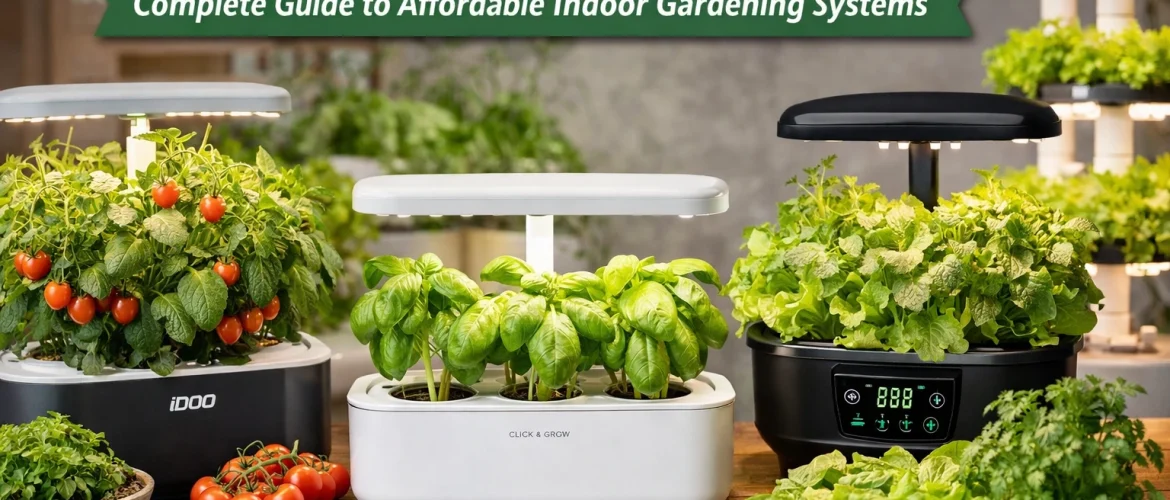
Indoor gardening has become increasingly popular as more people want fresh herbs, vegetables, and microgreens without needing outdoor space. If you live in an apartment, have limited yard space, or simply want to grow plants year-round, choosing the best smart garden under $100 can transform your kitchen or countertop into a productive indoor garden. Smart indoor gardens combine hydroponic growing systems, LED grow lights, seed pods, water reservoirs, and automated watering systems to grow herbs and leafy greens indoors with minimal effort.
Many modern smart hydroponic gardens use soil-free technology where plant roots grow in nutrient-rich water while adjustable LED lighting provides the energy plants need for photosynthesis. These systems are designed to grow basil, lettuce, parsley, thyme, spinach, tomatoes, and microgreens even in small spaces such as kitchens, countertops, or windowsills.
In this comprehensive guide, we will explore how smart gardens work, what features matter when choosing one, and review some of the most popular indoor systems like Click & Grow Smart Garden 3, AeroGarden Sprout, iDOO Hydroponics Growing System, Ahopegarden Hydroponic Garden, and Moistenland Hydroponics System. By the end, you will clearly understand how to choose the best smart garden under $100 for growing fresh herbs and vegetables indoors.
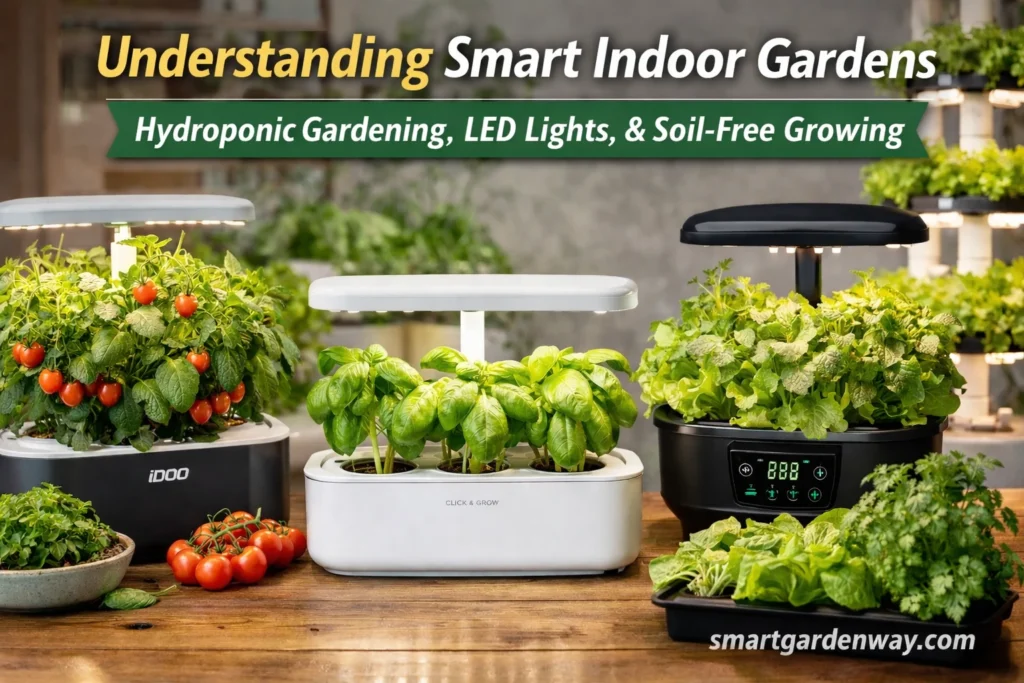
Understanding Smart Indoor Gardens
Smart indoor gardens are automated gardening systems designed to grow plants indoors using hydroponic technology, LED grow lights, and seed pod systems. These gardens are built for convenience, allowing people to grow herbs and vegetables without soil or traditional outdoor gardening.
Unlike traditional gardening, hydroponic indoor gardens rely on nutrient solutions and water reservoirs rather than soil. Plant roots absorb nutrients directly from water while LED lighting simulates sunlight, helping plants grow faster and more consistently.
How Hydroponic Gardening Works
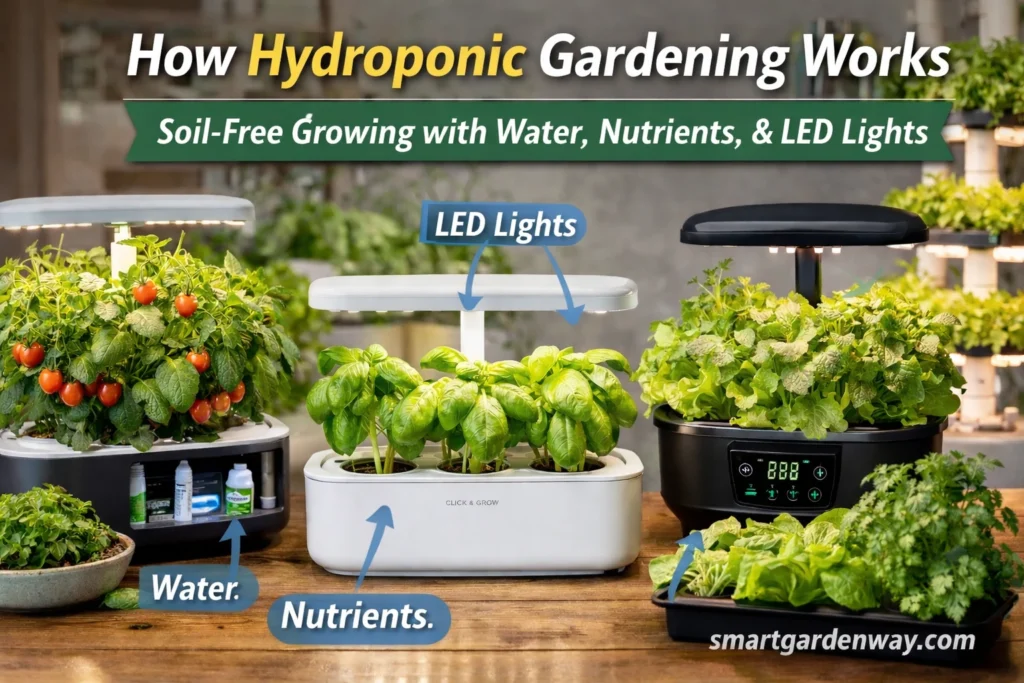
Hydroponic gardening is a soil-free growing method where plants receive nutrients through water rather than soil. This technique has become the foundation for many indoor gardening systems because it allows plants to grow faster and requires less maintenance.
In a typical hydroponic indoor garden, plants grow in seed pods or grow baskets placed inside a water reservoir. A small pump circulates water and nutrients, ensuring that plant roots receive consistent moisture and minerals. Adjustable LED grow lights provide the necessary light spectrum that plants require for healthy growth.
Hydroponic systems are particularly effective for growing herbs and leafy greens such as basil, parsley, lettuce, thyme, spinach, and microgreens. Many indoor gardeners also grow tomatoes, strawberries, and small vegetables using these systems.
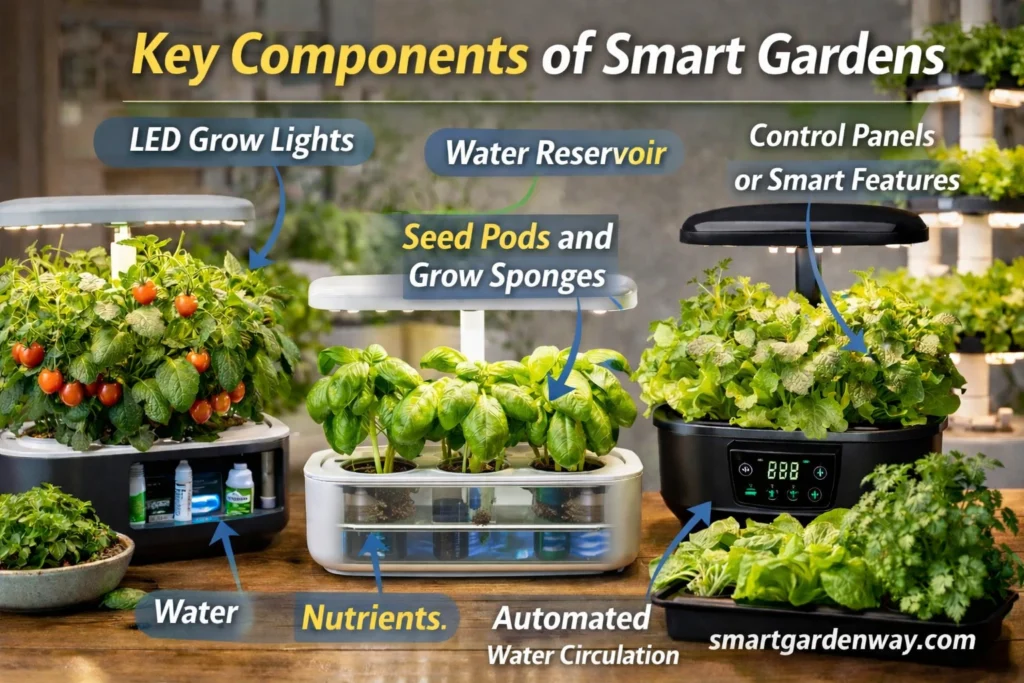
Key Components of Smart Gardens
Most smart indoor gardens share several essential components that make them efficient and beginner-friendly.
LED Grow Lights
LED grow lights provide the artificial sunlight plants need indoors. Many smart gardens include full-spectrum LED lights with adjustable height, allowing plants to grow at different stages while receiving optimal light.
Water Reservoir
The water tank stores nutrient-rich water used for hydroponic growth. Some systems include a water level indicator or automated reminders to help users refill the reservoir when needed.
Seed Pods and Grow Sponges
Seed pods contain seeds and growing medium such as plant sponges or grow baskets. These pods simplify planting and ensure proper spacing for each plant.
Automated Water Circulation
Some smart gardens include pumps that circulate water and nutrients through the system. This helps deliver oxygen and nutrients to plant roots.
Control Panels or Smart Features
Advanced systems may include touchscreen control panels, LCD displays, or smartphone connectivity to monitor lighting cycles and watering schedules.
These components work together to create a simple and efficient indoor growing environment.
Why Choose the Best Smart Garden Under $100
Affordable indoor gardening systems make it possible for beginners to grow herbs and vegetables without investing in expensive equipment. Choosing the best smart garden under $100 allows you to experiment with hydroponic gardening while keeping costs low.
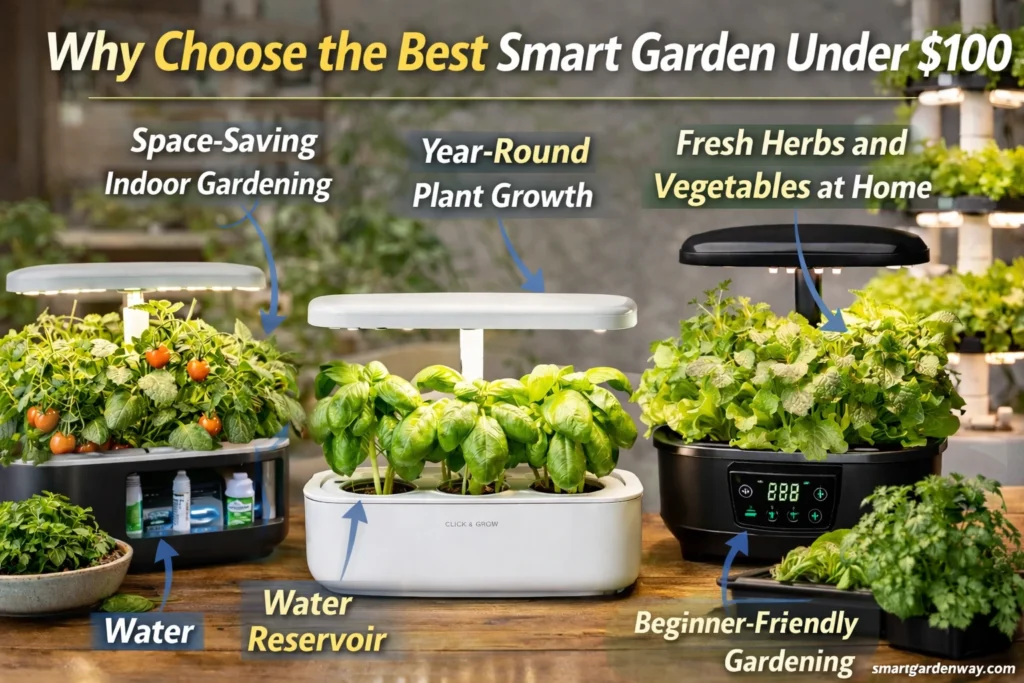
Space-Saving Indoor Gardening
Many smart gardens are designed for countertops, kitchen spaces, and windowsills, making them perfect for apartments or homes with limited outdoor space. Compact systems like the Click & Grow Smart Garden 3 or AeroGarden Sprout fit easily on kitchen counters while still producing fresh herbs.
Year-Round Plant Growth
Indoor gardens allow plants to grow regardless of outdoor weather conditions. With the help of LED grow lights and controlled watering systems, herbs and vegetables can grow through winter months or in low-light environments.
Fresh Herbs and Vegetables at Home
Smart gardens allow you to grow fresh herbs for cooking. Many indoor gardeners grow basil, cilantro, thyme, parsley, lettuce, and microgreens directly in their kitchens, ensuring fresh ingredients are always available.
Beginner-Friendly Gardening
Hydroponic indoor gardens simplify gardening by automating many processes. Instead of managing soil, sunlight, and watering schedules manually, the system handles most of the work.
These advantages make affordable smart gardens ideal for beginners and experienced gardeners alike.
Features to Look for in the Best Smart Garden Under $100
Choosing the right indoor garden requires understanding the features that influence plant growth and ease of use.
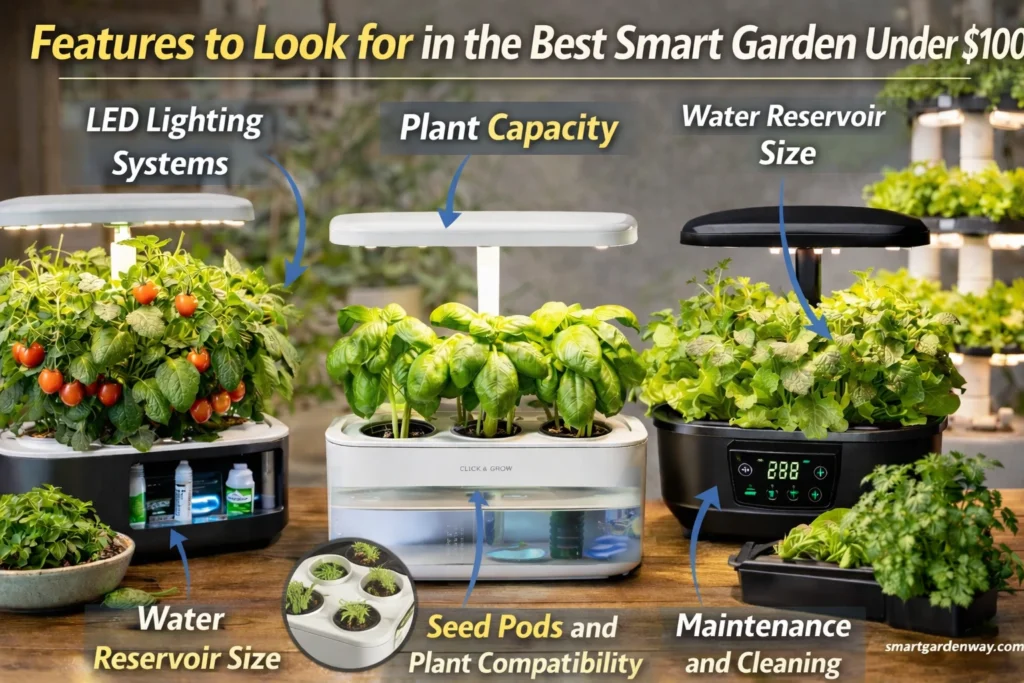
LED Lighting Systems
LED grow lights are one of the most important components of any indoor garden. Quality systems provide full-spectrum LED lighting designed to simulate natural sunlight.
Many systems include adjustable light arms or light hoods that allow the light to move upward as plants grow. This helps maintain proper lighting distance during different growth stages.
Plant Capacity
Different smart gardens support varying numbers of plants. Some systems grow three plants, while others support nine to twelve plant pods.
Plant capacity determines how many herbs or vegetables can grow simultaneously. Larger systems may require more maintenance but provide higher yields.
Water Reservoir Size
The water reservoir determines how often the system requires refilling. Systems with larger tanks can operate longer without maintenance.
Some smart gardens include water level indicators or automated reminders to alert users when water levels drop.
Seed Pods and Plant Compatibility
Most smart gardens use pre-seeded pods or compatible grow sponges that simplify planting. These pods often contain seeds, nutrients, and growing medium designed for hydroponic environments.
Many systems allow users to plant their own seeds as well, expanding the variety of plants that can grow indoors.
Maintenance and Cleaning
Indoor gardens should be easy to maintain. Some systems require occasional tank cleaning, root trimming, or nutrient refilling, while others are almost maintenance-free.
Systems with removable components are usually easier to clean and maintain over time.
Best Smart Garden Under $100: Top Indoor Gardening Systems
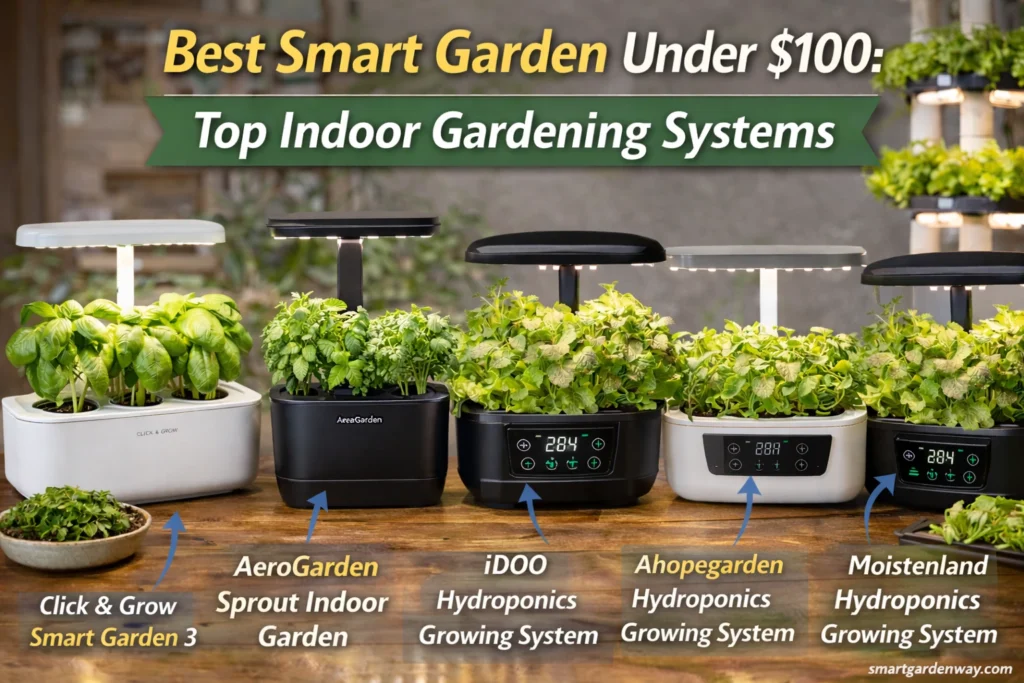
Several indoor gardening systems offer reliable hydroponic growing technology while remaining affordable. Below are some of the most popular options available for beginners.
Click & Grow Smart Garden 3
The Click & Grow Smart Garden 3 is one of the most popular compact indoor gardens designed for beginners. This system uses pre-seeded plant pods and energy-efficient LED grow lights to grow herbs indoors with minimal effort.
The garden includes space for three plant pods, making it ideal for growing herbs such as basil, mint, parsley, or chives. The built-in water reservoir provides enough moisture for several weeks of plant growth.
The system’s design emphasizes simplicity. Users only need to insert seed pods, add water, and plug in the garden. The LED lighting automatically provides the necessary light cycle for plant growth.
Because of its compact size and automated watering design, the Click & Grow Smart Garden 3 is frequently recommended as a beginner-friendly smart garden.
AeroGarden Sprout Indoor Garden
The AeroGarden Sprout Indoor Garden is another well-known hydroponic system designed for small indoor spaces. This garden supports three plants and includes LED lighting and hydroponic nutrients.
AeroGarden systems are known for their seed pod kits, which contain herbs and vegetables ready for planting. Popular pod varieties include basil, parsley, thyme, and lettuce.
The AeroGarden Sprout also features a water reservoir and pump that circulates nutrient-rich water through plant roots. This system helps plants grow faster compared to traditional soil gardening.
Because of its simple design and hydroponic growing technology, the AeroGarden Sprout is often considered one of the easiest smart gardens for beginners.
iDOO Hydroponics Growing System
The iDOO Hydroponics Growing System is a larger indoor garden designed to grow multiple plants simultaneously. Many versions of this system support twelve plant pods, allowing users to grow herbs and vegetables together.
The garden includes LED grow lights with adjustable height, ensuring plants receive proper lighting as they grow. The water reservoir and pump circulate nutrient solution to maintain healthy plant roots.
The iDOO system is capable of growing a variety of plants, including lettuce, basil, tomatoes, strawberries, and microgreens.
Its larger capacity makes it ideal for people who want to grow multiple herbs or vegetables indoors at once.
Ahopegarden Hydroponics Growing System
The Ahopegarden Hydroponics Growing System is another affordable indoor gardening solution designed for hydroponic plant growth. This system includes LED grow lights, planting pods, and a water reservoir.
One notable feature is the LCD touch panel, which allows users to control lighting cycles and monitor plant growth settings. The adjustable lighting system helps accommodate taller plants during later growth stages.
Ahopegarden systems often support twelve plant pods, providing enough capacity for growing herbs, leafy greens, and vegetables simultaneously.
The system is designed for countertop gardening and works well in kitchens, living rooms, or indoor growing spaces.
Moistenland Hydroponics Growing System
The Moistenland Hydroponics Growing System is another popular option for people looking for the best smart garden under $100. This system includes LED grow lights, hydroponic plant pods, and automated watering technology.
The Moistenland garden is commonly used to grow herbs such as basil, cilantro, parsley, and thyme, as well as leafy greens like lettuce.
Many users choose this system because it offers reliable hydroponic technology at an affordable price while remaining easy to operate.
What Can You Grow in a Smart Indoor Garden
Smart indoor gardens support a wide variety of plants, especially herbs and leafy vegetables.
Herbs
Herbs are among the most common plants grown in indoor gardens because they grow quickly and require relatively little space. Popular herbs include:
- Basil
- Parsley
- Thyme
- Rosemary
- Mint
- Cilantro
These herbs are widely used in cooking and thrive in hydroponic growing environments.
Leafy Greens
Leafy greens grow quickly and are ideal for indoor gardens. Many smart garden users grow:
- Lettuce
- Kale
- Spinach
- Arugula
These vegetables can be harvested multiple times as they regrow after cutting.
Microgreens
Microgreens are small seedlings harvested early in the plant growth cycle. They are often grown in indoor gardens because they grow quickly and provide high nutritional value.
Popular microgreens include broccoli, radish, mustard, and sunflower sprouts.
Small Vegetables and Fruits
Some indoor gardeners grow small vegetables or fruits such as:
- Cherry tomatoes
- Strawberries
- Peppers
These plants may require stronger lighting and larger systems but can still grow indoors with hydroponic technology.
Maintenance Tips for Indoor Smart Gardens
Even though smart gardens automate many processes, basic maintenance is still necessary for healthy plant growth.
Water and Nutrient Monitoring
Hydroponic gardens rely on nutrient-rich water. Users should check the water reservoir regularly and refill it when levels drop.
Light Adjustments
Adjustable LED grow lights should move upward as plants grow to ensure they receive proper light exposure.
Root Maintenance
Some plants may develop large root systems over time. Occasionally trimming roots helps maintain healthy water circulation.
Cleaning the System
Cleaning the water tank and components periodically helps prevent algae buildup and ensures long-term system performance.
Frequently Asked Questions About the Best Smart Garden Under $100
What is the best smart garden under $100?
The best smart garden under $100 is typically a compact hydroponic indoor garden system that includes LED grow lights, seed pods, and a water reservoir. Popular affordable systems include the Click & Grow Smart Garden 3, AeroGarden Sprout, iDOO Hydroponics Growing System, and Ahopegarden Hydroponic Garden, which are designed for growing herbs and leafy greens indoors.
How does a smart indoor garden work?
A smart indoor garden uses a hydroponic growing system where plants grow in nutrient-rich water instead of soil. These systems usually include LED grow lights, plant pods, grow sponges, and a water circulation pump that delivers nutrients directly to plant roots. The controlled environment allows herbs and vegetables to grow indoors throughout the year.
What plants can you grow in a smart garden under $100?
Most indoor hydroponic gardens are designed to grow herbs, leafy greens, and microgreens. Common plants grown in smart gardens include basil, parsley, thyme, mint, lettuce, kale, spinach, cilantro, and microgreens. Some systems can also grow cherry tomatoes, strawberries, and small peppers.
Do smart gardens require a lot of maintenance?
Smart indoor gardens are designed to be low maintenance. Most systems only require adding water to the reservoir, occasional nutrient refills, and basic cleaning of the water tank. Some smart gardens also include water level indicators and automatic lighting cycles, making them easy for beginners.
Are hydroponic smart gardens better than soil gardening?
Hydroponic smart gardens can grow plants faster because roots receive direct access to water and nutrients. They also eliminate common soil issues such as pests, mold, and inconsistent watering. For indoor environments, hydroponic systems with LED grow lights and automated watering systems often produce more consistent plant growth.
How much electricity does a smart indoor garden use?
Most smart indoor gardens use energy-efficient LED grow lights, which consume relatively little electricity. These lights usually run for 12 to 16 hours per day to simulate sunlight, but the energy usage is similar to a small household lamp.
How long does it take for plants to grow in a smart garden?
Many herbs and leafy greens begin germinating within 7 to 14 days in hydroponic indoor gardens. Plants like basil, lettuce, and microgreens can often be harvested within 3 to 5 weeks, depending on the growing conditions and plant type.
Can beginners use a smart garden system?
Yes, smart gardens are specifically designed for beginners. Most systems use pre-seeded pods, automated lighting cycles, and water reservoirs to simplify the growing process. Users typically only need to insert the seed pods, add water, and plug in the system.
Conclusion
Indoor gardening has evolved dramatically with the introduction of automated hydroponic systems, making it easier than ever to grow fresh herbs and vegetables at home. Choosing the best smart garden under $100 allows beginners to experience the benefits of hydroponic gardening without investing in expensive equipment. Modern smart gardens combine LED grow lights, water reservoirs, seed pods, and automated watering systems to create a controlled environment where plants can thrive indoors.
Popular systems such as Click & Grow Smart Garden 3, AeroGarden Sprout, iDOO Hydroponics Growing System, Ahopegarden Hydroponic Garden, and Moistenland Hydroponics System provide reliable indoor growing technology while remaining affordable. These gardens make it possible to grow herbs like basil, parsley, thyme, and mint, as well as leafy greens and microgreens, directly on kitchen countertops.
Whether you want fresh ingredients for cooking or simply enjoy growing plants indoors, smart gardens offer a practical solution for year-round gardening. By selecting the right system and maintaining proper lighting and watering conditions, anyone can successfully grow plants indoors using the best smart garden under $100.