
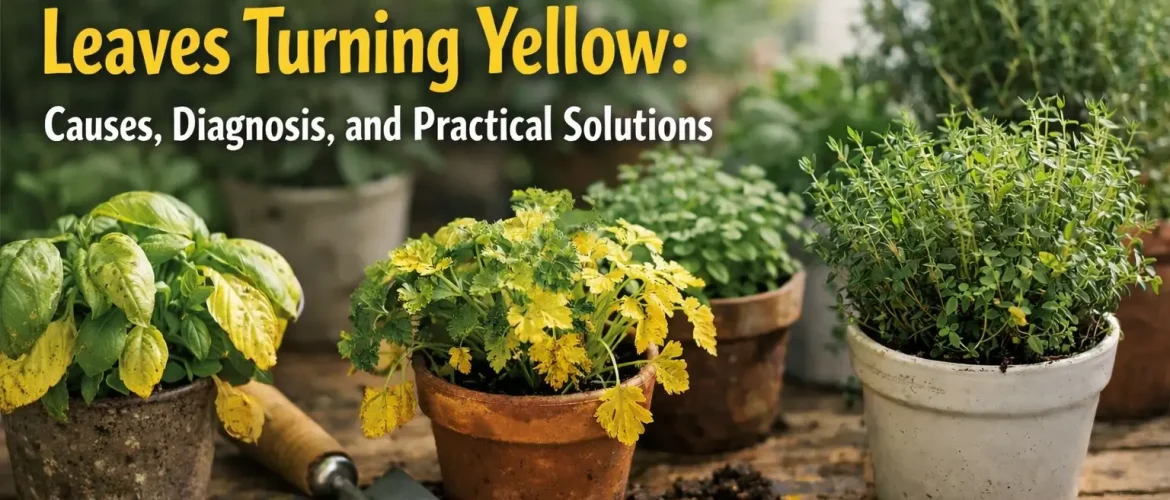
Indoor herb gardens bring fresh flavors and greenery into kitchens and homes, but many growers eventually notice a worrying symptom: indoor herb garden leaves turning yellow. Yellowing leaves usually indicate that something in the plant’s environment or care routine is out of balance. Whether herbs are growing in containers on a sunny windowsill or under grow lights, yellow foliage often signals issues related to watering practices, soil moisture, nutrient deficiencies, lighting conditions, temperature stress, pests, or natural plant aging.
When indoor herb garden leaves turning yellow begins to appear, it does not always mean the plant is dying. In many cases, herbs such as basil, mint, thyme, rosemary, sage, and parsley simply respond to environmental stress or adjustments in growing conditions. Identifying the exact cause allows gardeners to correct plant care practices and restore healthy green foliage.
In this comprehensive guide, we will explore the most common reasons behind indoor herb garden leaves turning yellow, how to diagnose plant problems accurately, and the practical steps needed to restore plant vitality and improve herb care.
Understanding Why Indoor Herb Garden Leaves Turning Yellow Happens
Yellowing foliage in herbs and houseplants is often linked to a condition known as chlorosis, where leaves lose their natural green pigment. Chlorosis occurs when plants cannot produce enough chlorophyll due to environmental stress, nutrient imbalance, or root issues.
When an indoor herb garden leaves turning yellow problem appears, it typically reflects underlying plant stress. Herb plants rely on proper soil moisture, nutrient availability, oxygen around roots, and sufficient light exposure to maintain healthy growth. If any of these conditions change, the plant responds with visible symptoms.
Yellow leaves can develop slowly or appear suddenly depending on the cause. For example, environmental factors like temperature fluctuations or reduced sunlight may lead to gradual yellowing, while overwatering or root damage may cause rapid discoloration.
Understanding this early warning signal is essential because yellow foliage often appears before more severe plant damage occurs. By recognizing these signs, gardeners can diagnose plant problems early and restore optimal growing conditions for their herbs.
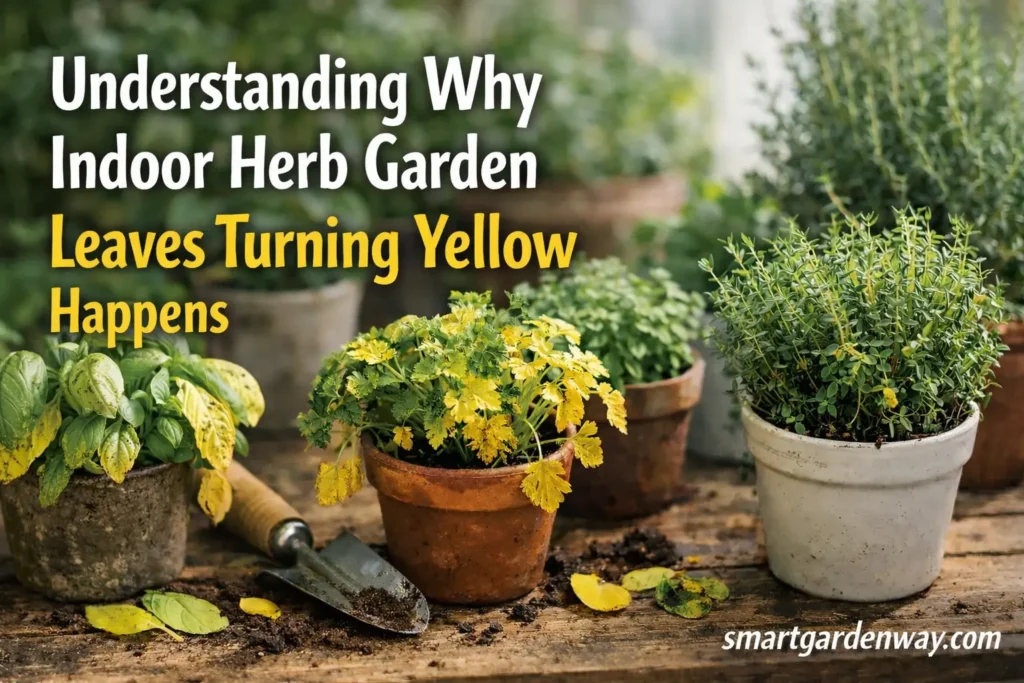
1. Moisture Stress and Watering Problems
How Overwatering Causes Indoor Herb Garden Leaves Turning Yellow
One of the most common reasons for indoor herb garden leaves turning yellow is overwatering. Many indoor herbs grow in containers, and excessive watering can cause soil to remain constantly wet. When soil becomes waterlogged, oxygen levels around plant roots decrease significantly.
Roots require oxygen to absorb nutrients effectively. In saturated soil, roots struggle to deliver nutrients to leaves, which can lead to yellow foliage. Over time, excessive moisture may even cause root rot, further weakening the plant.
Waterlogged soil can also encourage fungal growth and harmful microorganisms. These conditions damage root systems and disrupt nutrient uptake. As a result, herb leaves begin turning pale yellow before eventually falling off.
Underwatering and Soil Dryness
While too much water is a common issue, underwatering can also lead to indoor herb garden leaves turning yellow. When soil becomes excessively dry, plants cannot absorb the moisture necessary for maintaining healthy tissues.
Dry soil causes dehydration stress, leading to yellow or crispy leaves. In severe cases, herbs may develop shriveled foliage that eventually turns brown.
Indoor herbs often require balanced watering schedules. If watering is inconsistent alternating between overly wet soil and extremely dry conditions plants experience moisture stress, which frequently results in yellow leaves.
Finding the Right Watering Balance
Maintaining balanced soil moisture is essential for preventing indoor herb garden leaves turning yellow. Soil should remain moist but never soggy. Many gardeners use the “top inch soil test,” where watering occurs only after the top layer of soil begins to dry.
Consistent watering helps roots remain healthy while allowing proper oxygen circulation in the soil. When moisture levels are balanced, herb plants regain their vibrant green color and healthy growth patterns.
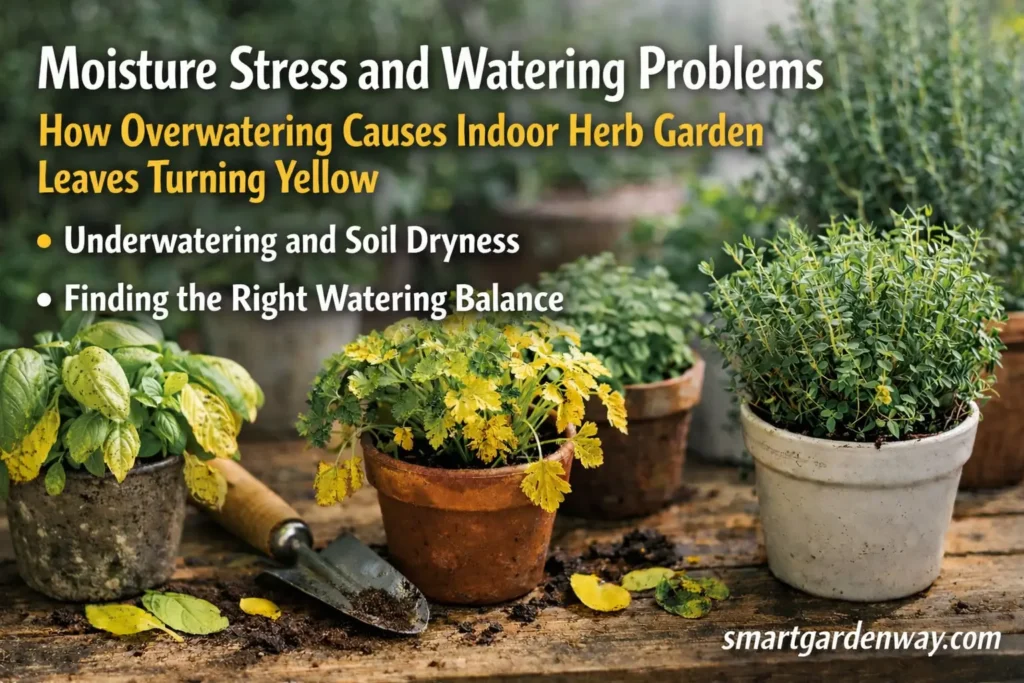
2. Poor Drainage and Root Problems
How Drainage Affects Indoor Herb Garden Leaves Turning Yellow
Drainage plays a critical role in preventing indoor herb garden leaves turning yellow. Even if watering frequency is appropriate, poor drainage can trap excess water in containers.
Pots without drainage holes or compacted soil mixtures may retain water longer than necessary. This trapped moisture prevents roots from breathing and encourages root damage.
Proper drainage allows water to move through soil while maintaining balanced moisture levels. Without adequate drainage, herbs may develop weak roots and yellow leaves due to limited oxygen availability.
Compacted Soil and Root Damage
Compacted soil can also contribute to indoor herb garden leaves turning yellow. When soil particles compress tightly, they reduce airflow around roots. This condition limits oxygen availability and interferes with nutrient absorption.
Roots in compacted soil struggle to grow and expand, leading to weakened plants. Over time, herb leaves begin turning yellow because the root system cannot deliver essential nutrients effectively.
Repotting herbs in well-draining soil mixtures can help restore healthy root conditions and prevent further leaf discoloration.
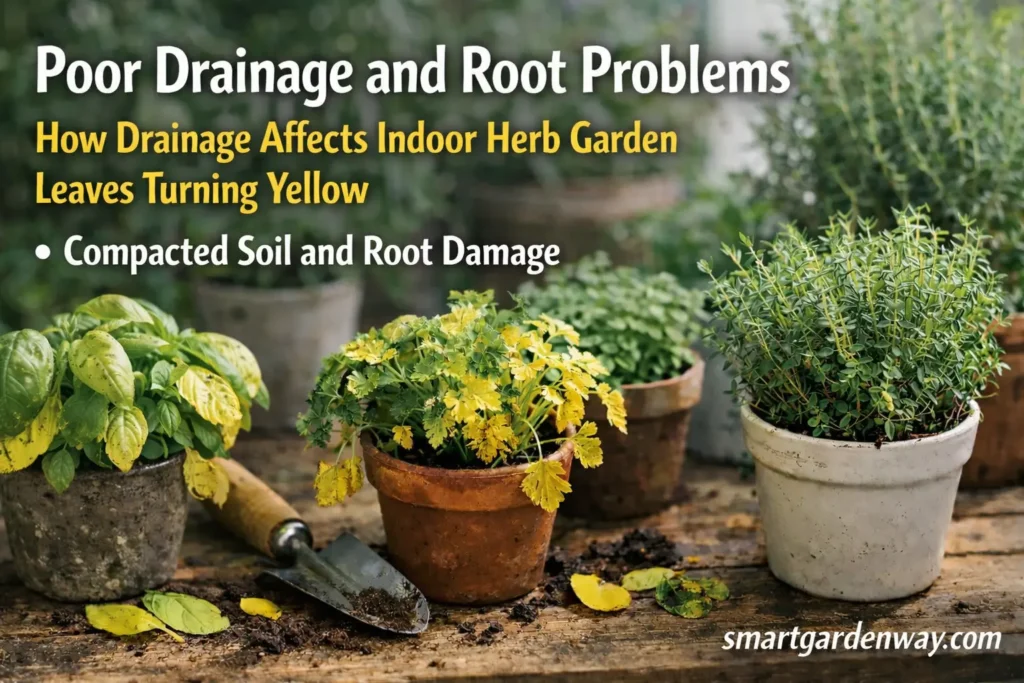
3. Nutrient Deficiencies in Indoor Herbs
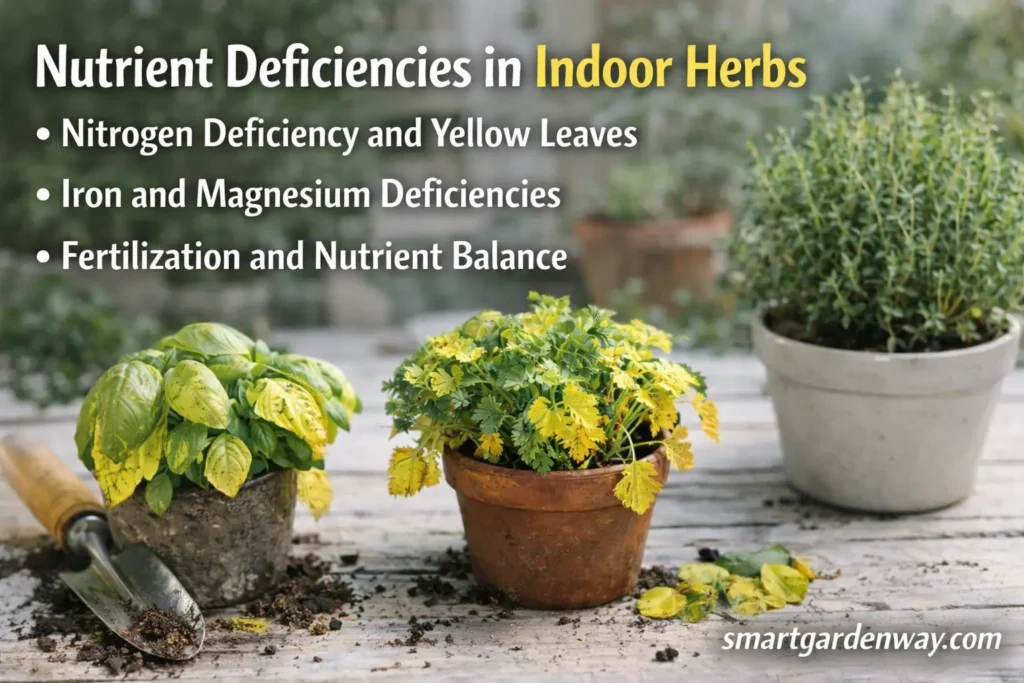
Nitrogen Deficiency and Yellow Leaves
Another major reason for indoor herb garden leaves turning yellow is nutrient deficiency. Plants rely on essential nutrients such as nitrogen, potassium, magnesium, iron, and sulfur for healthy growth.
Nitrogen deficiency is particularly common in indoor herbs. When nitrogen levels are insufficient, older leaves often turn pale yellow first. This happens because nitrogen supports chlorophyll production, which gives leaves their green color.
Without enough nitrogen, plants cannot produce adequate chlorophyll, leading to yellow foliage.
Iron and Magnesium Deficiencies
In some cases, indoor herb garden leaves turning yellow occurs due to iron or magnesium deficiency. These nutrient problems often appear as yellow areas between leaf veins while the veins remain green.
Iron deficiency frequently affects younger leaves, while magnesium deficiency may begin with older foliage. These nutrient imbalances typically occur when soil pH prevents plants from absorbing available nutrients.
Fertilization and Nutrient Balance
Providing balanced fertilizer can help prevent indoor herb garden leaves turning yellow caused by nutrient shortages. Indoor herbs often benefit from gentle feeding during their growing season.
Balanced plant food supplies nutrients necessary for strong plant growth, vibrant leaves, and healthy root development.
4. Lighting Conditions and Sunlight Exposure
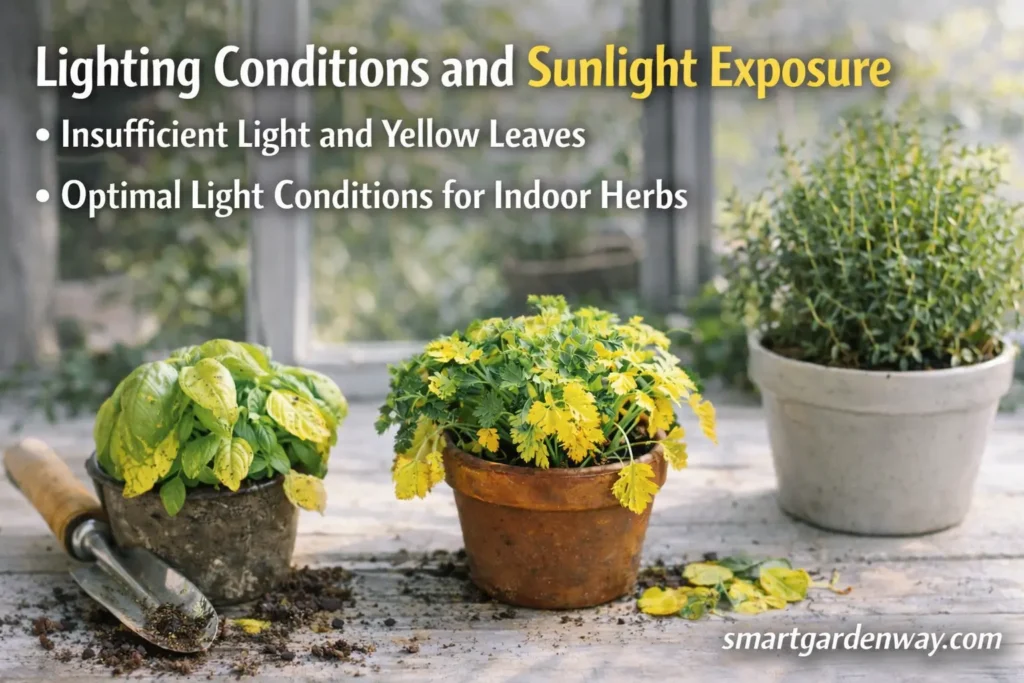
Insufficient Light and Yellow Leaves
Light exposure plays an essential role in herb growth. When plants do not receive enough sunlight, indoor herb garden leaves turning yellow may occur.
Herbs require light for photosynthesis, the process that converts sunlight into energy. Without sufficient light, plants cannot produce the energy needed for healthy foliage.
Low light conditions often cause yellowing on lower leaves first, particularly on the side of the plant facing away from the window.
Optimal Light Conditions for Indoor Herbs
Many indoor herbs thrive when placed near bright windows or under full spectrum grow lights. Locations such as a south facing window provide strong natural sunlight that supports healthy growth.
When herbs receive adequate light exposure, they maintain vibrant green foliage and produce strong stems.
Grow lights can also support herb gardens in apartments or homes where natural sunlight is limited.
5. Temperature Stress and Environmental Changes
Temperature Fluctuations and Plant Stress
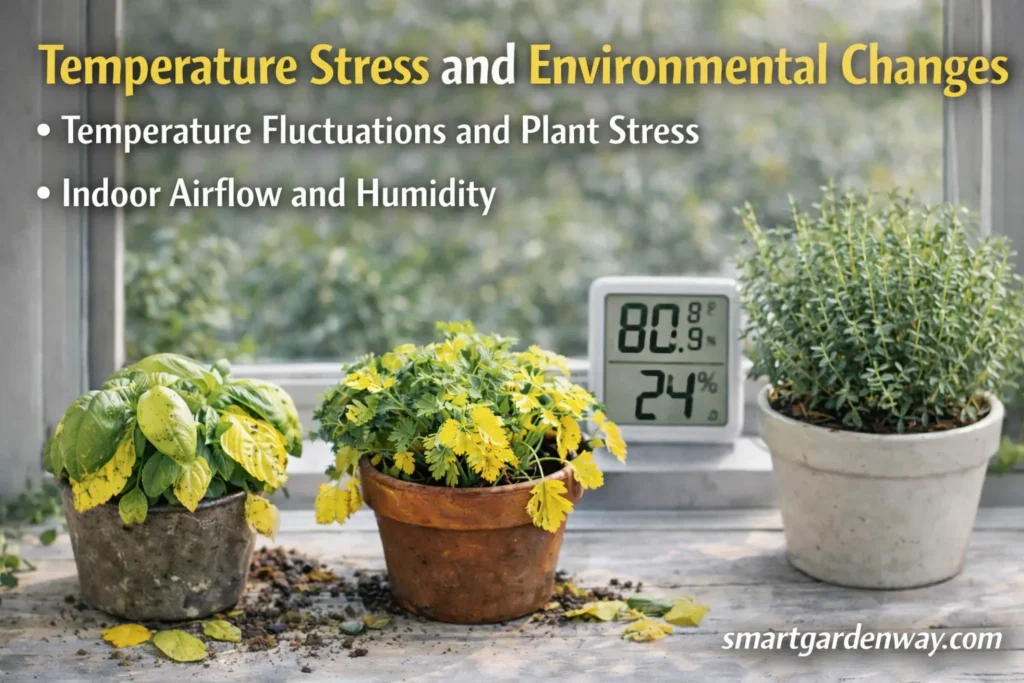
Temperature changes can significantly affect herb health. When temperatures fluctuate too quickly, indoor herb garden leaves turning yellow may occur.
Herbs generally prefer stable indoor temperatures around moderate levels. Sudden exposure to hot air vents, cold drafts, or air conditioning units can create environmental stress.
Temperature stress disrupts normal plant processes, causing leaves to turn yellow before dropping off.
Indoor Airflow and Humidity
Indoor environments often have lower humidity levels than outdoor gardens. Dry air combined with limited airflow can affect plant health.
Proper airflow helps regulate soil moisture and leaf temperature, reducing the risk of fungal growth and moisture stress.
6. Natural Aging and Leaf Shedding
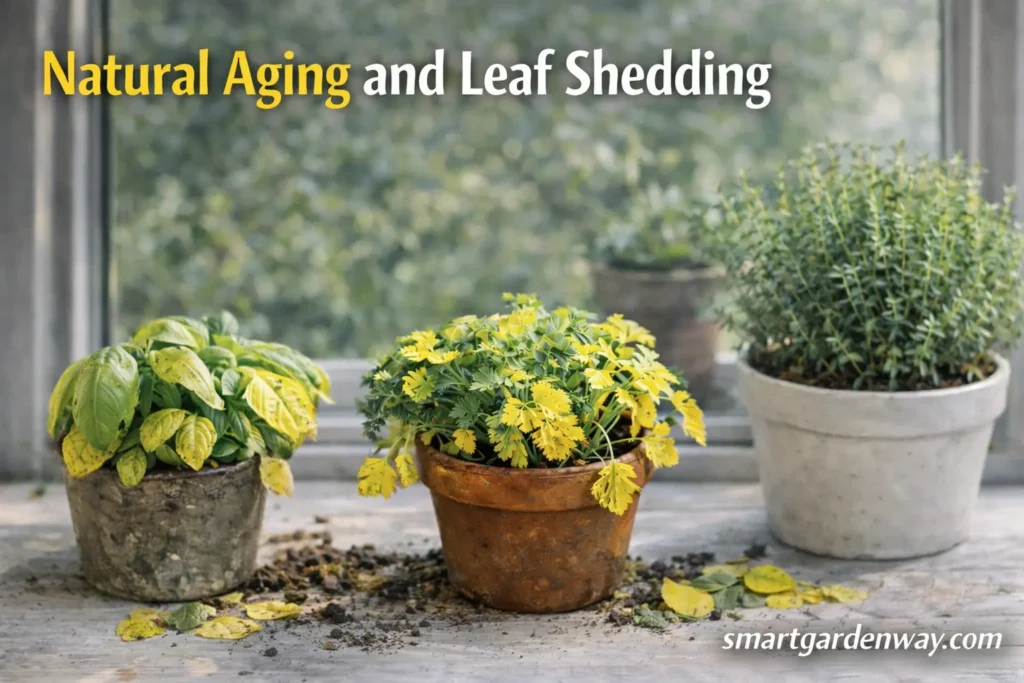
Not every instance of indoor herb garden leaves turning yellow signals a serious problem. In many cases, plants naturally shed older leaves as part of their growth cycle.
Lower leaves on herb plants often receive less light and gradually turn yellow before falling off. This process allows plants to redirect energy toward newer growth.
Pruning yellow leaves can help plants conserve energy and maintain healthy growth.
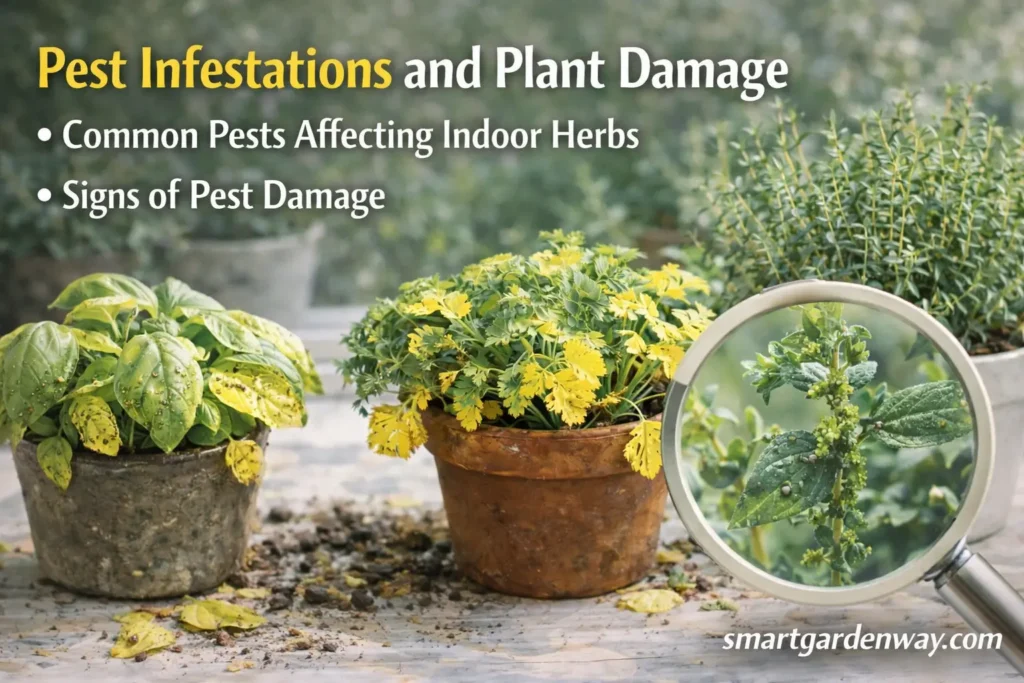
7. Pest Infestations and Plant Damage
Common Pests Affecting Indoor Herbs
Pests can also cause indoor herb garden leaves turning yellow. Insects such as aphids and spider mites feed on plant sap, which weakens leaves and causes discoloration.
Sap-feeding pests remove essential nutrients from plant tissues, leaving behind yellow spots or fading foliage.
Signs of Pest Damage
Herb leaves affected by pests may display small yellow spots, curling edges, or sticky residue. Severe infestations may eventually cause leaf drop.
Early pest detection allows gardeners to control infestations before significant plant damage occurs.
8. Plant Diseases and Viral Infections
Although less common, plant diseases can sometimes cause indoor herb garden leaves turning yellow. Viral infections may produce blotchy yellow patches or distorted leaves.
Fungal diseases may develop when excessive moisture accumulates in soil or on foliage. These pathogens interfere with plant health and disrupt nutrient absorption.
Maintaining good airflow, balanced watering, and proper sanitation helps reduce disease risk.

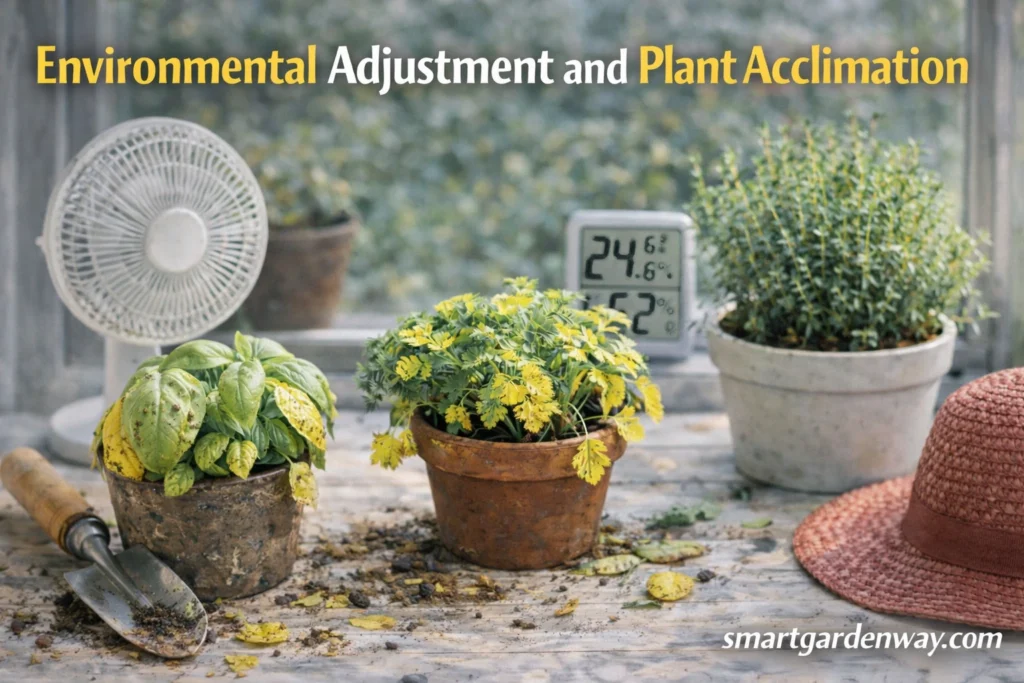
9. Environmental Adjustment and Plant Acclimation
Plants often require time to adjust when moving between environments. If herbs are brought indoors after growing outside, indoor herb garden leaves turning yellow may appear during the transition period.
This adjustment phase occurs because indoor lighting, temperature, and humidity differ from outdoor conditions. Plants gradually adapt by shedding some leaves and redirecting energy toward new growth.
With proper care, most herbs recover once they acclimate to their new environment.
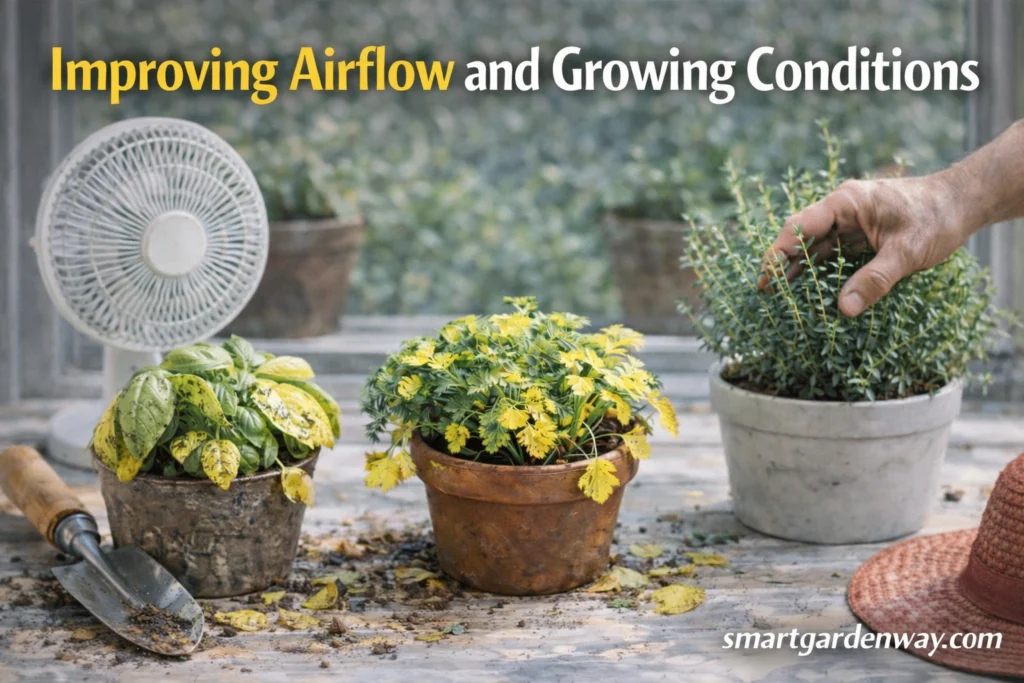
10. Improving Airflow and Growing Conditions
Indoor herbs thrive when their environment supports healthy growth. Adequate airflow reduces humidity buildup around leaves and prevents moisture-related problems.
Proper spacing between containers also allows leaves to dry after watering and reduces the risk of fungal issues.
Balanced growing conditions help maintain strong plants and reduce the chances of indoor herb garden leaves turning yellow.
Frequently Asked Questions
Why does yellowing of leaves occur due to deficiency?
Yellowing of leaves is often related to nutrient deficiency in plants. When herbs or houseplants lack essential nutrients such as nitrogen, iron, magnesium, or sulfur, the leaves may begin turning yellow because the plant cannot produce enough chlorophyll. Nitrogen deficiency commonly causes older leaves to turn pale yellow first, while iron deficiency usually affects younger leaves. If an indoor herb garden leaves turning yellow problem appears, checking soil nutrients and fertilization practices can help restore plant health.
How can you fix yellow leaves on indoor plants?
To fix yellow leaves on indoor plants, it is important to first identify the cause of the problem. Common reasons include overwatering, underwatering, poor drainage, insufficient light, and nutrient deficiencies. Improving watering practices, ensuring pots have drainage holes, providing balanced fertilizer, and placing plants near bright sunlight or grow lights can help restore green foliage. Once the correct growing conditions are established, indoor herbs often recover and produce healthy leaves again.
Why are indoor plant leaves turning yellow?
Indoor plant leaves turning yellow usually indicate plant stress caused by environmental conditions. Factors such as improper watering, low light exposure, temperature fluctuations, or nutrient imbalance can interfere with plant health. When an indoor herb garden leaves turning yellow symptom appears, it often signals that the plant’s roots, soil moisture, or lighting conditions need adjustment. Identifying the underlying cause helps restore proper plant growth.
Is yellowing of leaves caused by deficiency of water?
Yes, yellowing of leaves can occur due to deficiency of water. When plants do not receive enough moisture, the soil becomes dry and roots cannot absorb the water required to support healthy leaves. This dehydration stress can cause leaves to turn yellow, wilt, or become crispy. Maintaining consistent soil moisture helps prevent underwatering problems and keeps indoor herbs healthy.
Why are plant leaves turning yellow at the tips?
Plant leaves turning yellow at the tips often indicate stress caused by watering issues, nutrient imbalance, or environmental conditions. Excess fertilizer, inconsistent watering, or high temperatures may cause leaf tips to discolor. In indoor herbs, yellow tips can appear when soil moisture fluctuates frequently or when nutrient levels become unbalanced.
Why are indoor plant leaves turning yellow and brown?
Indoor plant leaves turning yellow and brown typically occur when plants experience moisture stress or environmental damage. Overwatering may cause roots to weaken and leaves to turn yellow, while underwatering can make leaf edges dry and brown. Temperature changes, pest damage, and poor soil drainage may also contribute to discoloration in indoor plants.
Why are outdoor plant leaves turning yellow?
Outdoor plant leaves turning yellow may result from environmental stress, soil nutrient deficiencies, pests, or watering problems. Plants growing outdoors are exposed to fluctuating temperatures, changing sunlight conditions, and soil variations. When nutrient availability or moisture balance becomes disrupted, leaves may begin to lose their green color and turn yellow.
Why are plant leaves turning yellow and brown on the edges?
Plant leaves turning yellow and brown on the edges often indicate dehydration stress, nutrient imbalance, or excessive heat exposure. When plants do not receive consistent watering or when soil nutrients are insufficient, leaf edges may begin to discolor and dry out. Maintaining balanced watering schedules and providing appropriate plant nutrients can help prevent this issue.
Conclusion
Seeing indoor herb garden leaves turning yellow can be concerning, but this symptom usually serves as an early signal that something in the plant’s care routine needs adjustment. Yellow leaves commonly appear when herbs experience moisture stress, improper watering practices, poor drainage, nutrient deficiencies, insufficient light, temperature fluctuations, pest infestations, or environmental changes.
By carefully observing plant conditions and identifying the specific cause, gardeners can restore plant vitality and prevent further damage. Balanced soil moisture, proper drainage, adequate sunlight exposure, and appropriate fertilization are essential for maintaining healthy herb plants indoors.
Regular monitoring of plant health also helps detect pests, diseases, and environmental stress before they become severe problems. When care practices are adjusted correctly, most indoor herbs recover quickly and resume healthy growth.
Ultimately, maintaining stable growing conditions and understanding plant needs allows gardeners to prevent indoor herb garden leaves turning yellow while enjoying vibrant, productive herb gardens inside their homes.