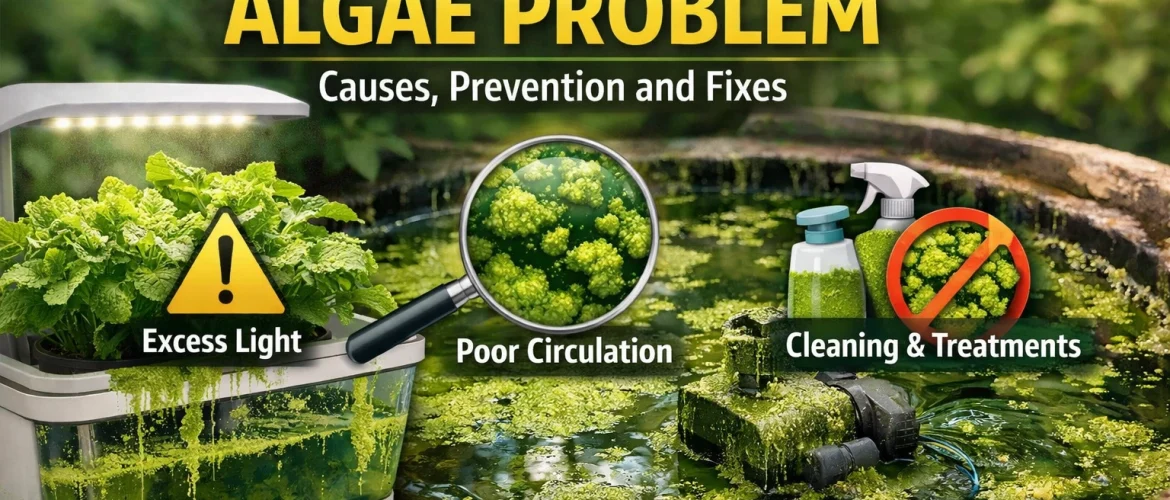
The smart garden algae problem is a common challenge for people using indoor hydroponic gardening systems such as AeroGarden or Click & Grow style smart gardens. These systems rely on nutrient-rich water, grow lights, and controlled indoor environments to grow plants without soil. However, the same conditions that help plants thrive can also create the perfect environment for algae growth. In hydroponic gardens, algae often appears as slimy green layers, floating strands in the nutrient solution, or green buildup around grow deck holes, plant pods, or rock wool cubes.
Algae grows naturally in environments where light, water, nutrients, and warm temperatures are present. Indoor hydroponic systems often provide these exact conditions. When nutrient solutions containing elements such as nitrogen, phosphorous, and micronutrients are exposed to light, algae spores can multiply quickly. Over time, this can lead to algae buildup in the water reservoir, pump system, growing medium, or nutrient containers.
Although algae is not always directly harmful to plants, it can cause several problems in smart gardens. Algae can compete with plants for nutrients, reduce oxygen levels in the water, clog pumps and filters, and create slimy surfaces around plant pods. Because of this, gardeners need to understand why algae forms and how to manage it effectively.
This guide explains the smart garden algae problem, its causes, the conditions that allow algae to grow, and the most effective methods for removing and preventing algae in hydroponic indoor gardens.
What Is the Smart Garden Algae Problem?
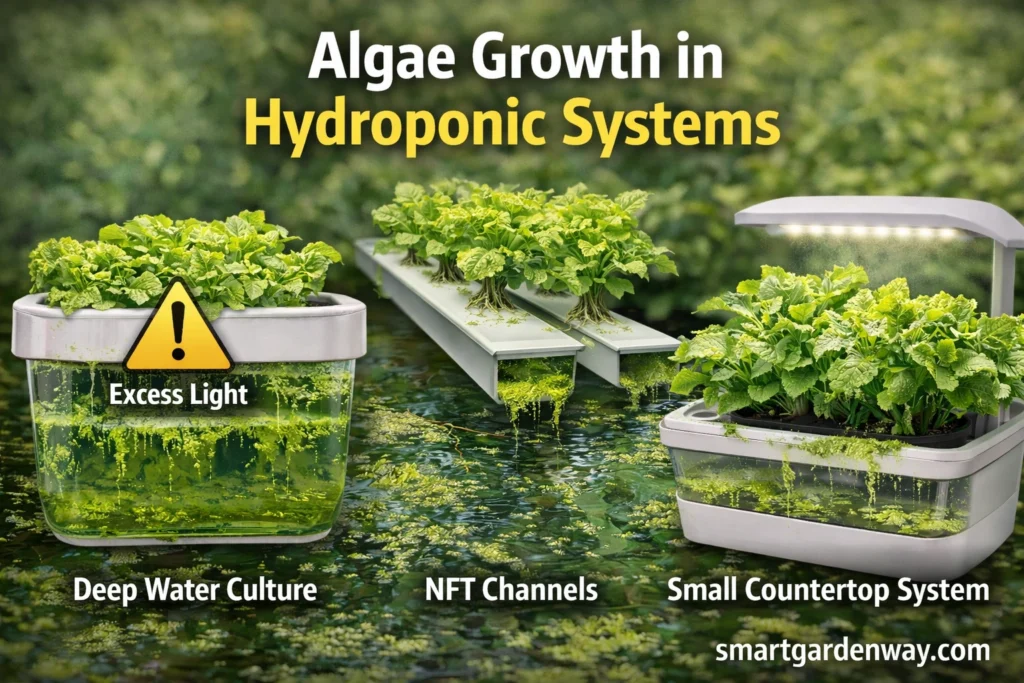
Algae Growth in Hydroponic Systems
Algae are microscopic organisms capable of converting nutrients into energy using sunlight. These organisms exist naturally in aquatic environments such as ponds, aquariums, and hydroponic systems. In indoor smart gardens, algae typically develops when nutrient-rich water is exposed to light.
Hydroponic systems use nutrient solutions containing nitrogen, phosphorous, carbon, and other micronutrients to support plant growth. These nutrients circulate through the system, feeding plant roots. However, algae also uses these nutrients as a food source. When the nutrient solution receives light from grow lights, algae spores begin to grow and spread across moist surfaces.
In many hydroponic systems, algae appears in places such as:
- Plant pods
- Rock wool growing medium
- Water reservoirs or bowls
- Grow deck openings
- Nutrient solution containers
The algae may appear as slimy green coatings, fuzzy patches, or floating strands drifting in the water.
Why Algae Appears in Smart Gardens
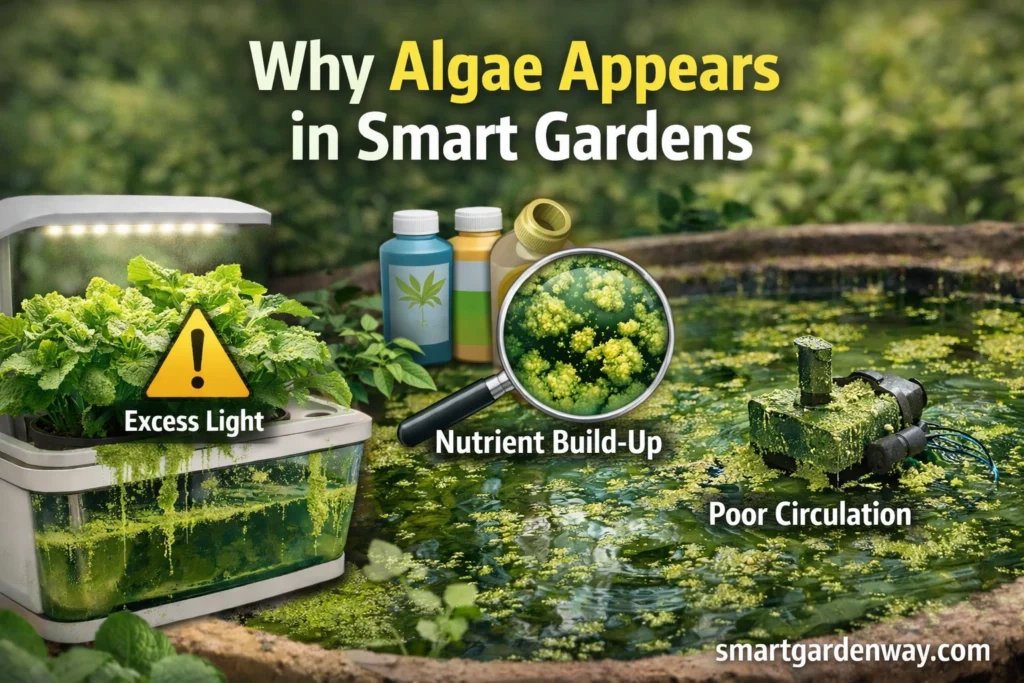
The smart garden algae problem occurs because hydroponic systems contain all the environmental factors required for algae growth. These systems combine water, nutrients, warmth, and light, which create ideal conditions for microorganisms.
Another reason algae develops in smart gardens is the presence of exposed wet growing mediums. Many hydroponic systems use rock wool cubes or plant pods. When the top of the growing medium remains wet and exposed to light, algae can easily form on the surface.
In addition, hydroponic systems often operate under LED grow lights for around sixteen hours per day, followed by eight hours of darkness. While this lighting schedule promotes healthy plant growth, it also provides the energy algae needs to grow.
Conditions That Cause the Smart Garden Algae Problem
Understanding the environmental factors that allow algae to grow is the first step in preventing the smart garden algae problem.
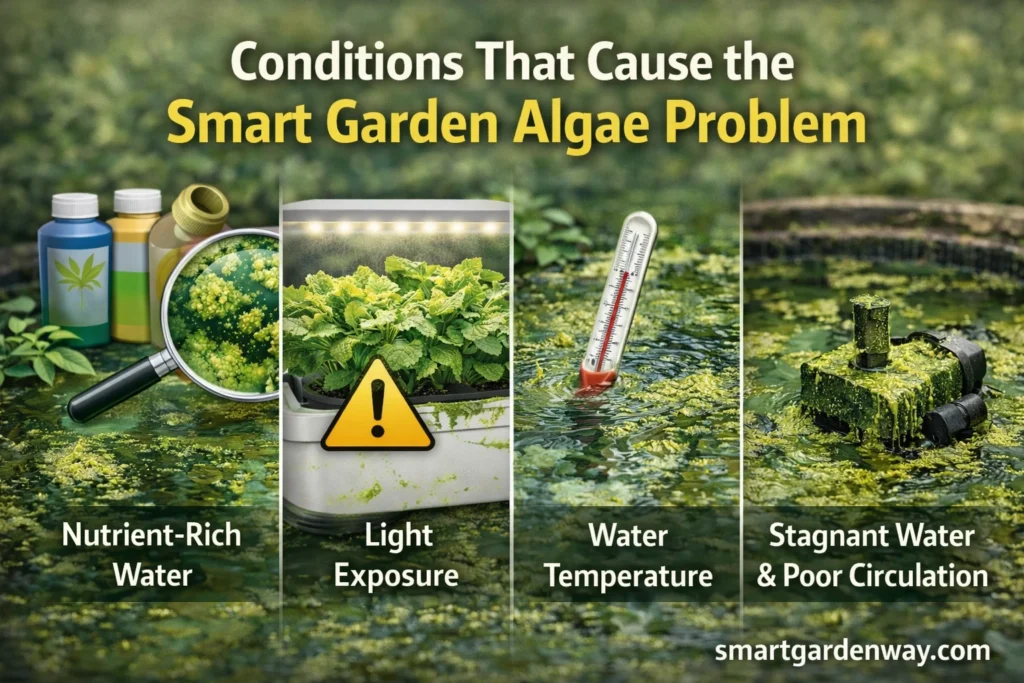
1. Nutrient-Rich Water
Hydroponic gardening relies heavily on nutrient solutions. These solutions contain essential plant nutrients such as:
- Nitrogen
- Phosphorous
- Carbon
- Micronutrients
These nutrients are designed to support plant growth, but algae also uses them as a food source. When excess nutrients accumulate in the water reservoir, algae growth becomes more likely.
In hydroponic systems, nutrient solutions circulate continuously through pumps and water reservoirs. If the system is not cleaned regularly, nutrients may accumulate and support algae growth.
2. Light Exposure
Light is one of the most important factors influencing algae development. Algae requires light to perform photosynthesis, which allows it to convert nutrients into energy.
Hydroponic gardens typically use LED grow lights to simulate sunlight. When this light reaches the nutrient solution or exposed growing medium, algae spores can begin to grow. This is why algae often forms on rock wool cubes or around grow deck holes, where moisture and light combine.
3. Water Temperature
Water temperature also affects algae growth. Algae tends to grow most rapidly when temperatures range between 20°C and 30°C. These temperatures are also ideal for hydroponic plant growth, which is why algae growth can be difficult to avoid in indoor gardens.
Warm nutrient solutions create an environment where microorganisms multiply quickly. If water circulation is limited, algae spores can settle and begin forming colonies.
4. Stagnant Water and Poor Circulation
Water circulation plays a crucial role in hydroponic systems. Pumps and aerators help move water and oxygen through the nutrient reservoir. However, if water becomes stagnant, algae spores can settle and grow more easily.
Poor circulation may occur when pumps become clogged by debris or algae buildup. When circulation slows down, the water becomes less oxygenated and algae can grow more quickly.
Signs of Algae in Smart Gardens
Recognizing the early signs of algae can help gardeners address the smart garden algae problem before it becomes severe.
Slimy Green Layers
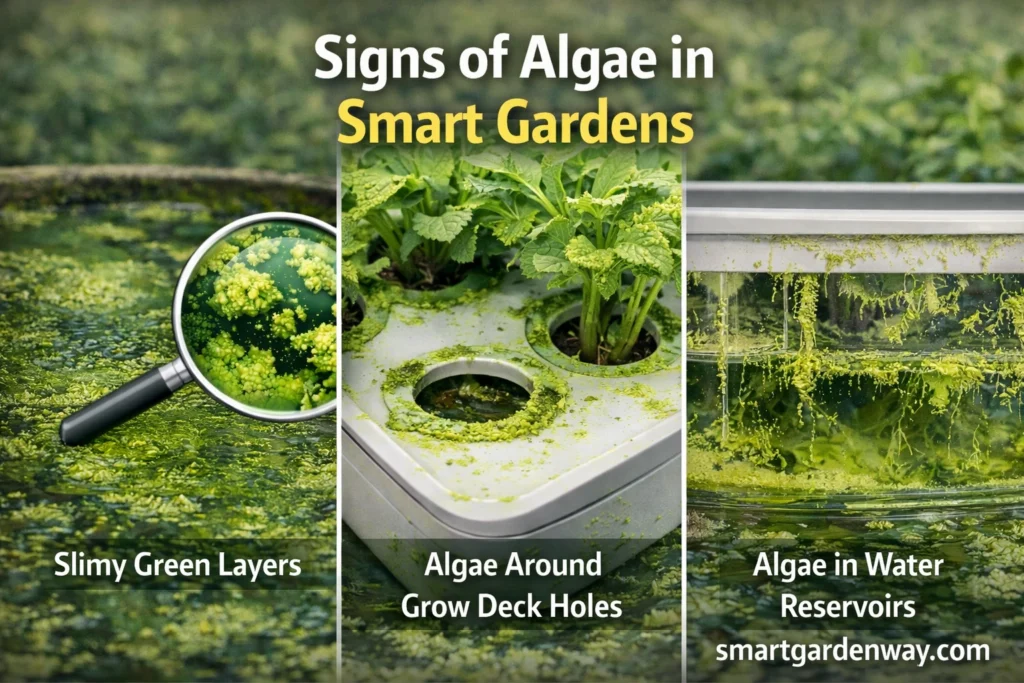
One of the most noticeable signs of algae is the presence of slimy green surfaces on hydroponic components. This slime often forms on the top of rock wool cubes or plant pods where moisture remains present.
The slime may appear as a gel-like layer covering the growing medium. In some cases, it can also develop along the sides of the water reservoir.
Algae Around Grow Deck Holes
Hydroponic systems such as AeroGarden often contain a grow deck with holes for plant pods. These holes allow plant roots to reach the nutrient solution below.
When water splashes around the edges of these openings, moisture accumulates and creates a surface where algae can grow. Over time, gardeners may notice green buildup around the edges of the grow deck holes.
Algae in Water Reservoirs
Another sign of algae is green or cloudy water in the reservoir. Algae particles may float in the water or form thin strands drifting through the nutrient solution.
If algae grows inside the reservoir, it may eventually spread to other parts of the hydroponic system.
Problems Caused by the Smart Garden Algae Problem
Although algae is often harmless in small amounts, excessive algae growth can cause several issues in hydroponic gardens.
Oxygen Reduction
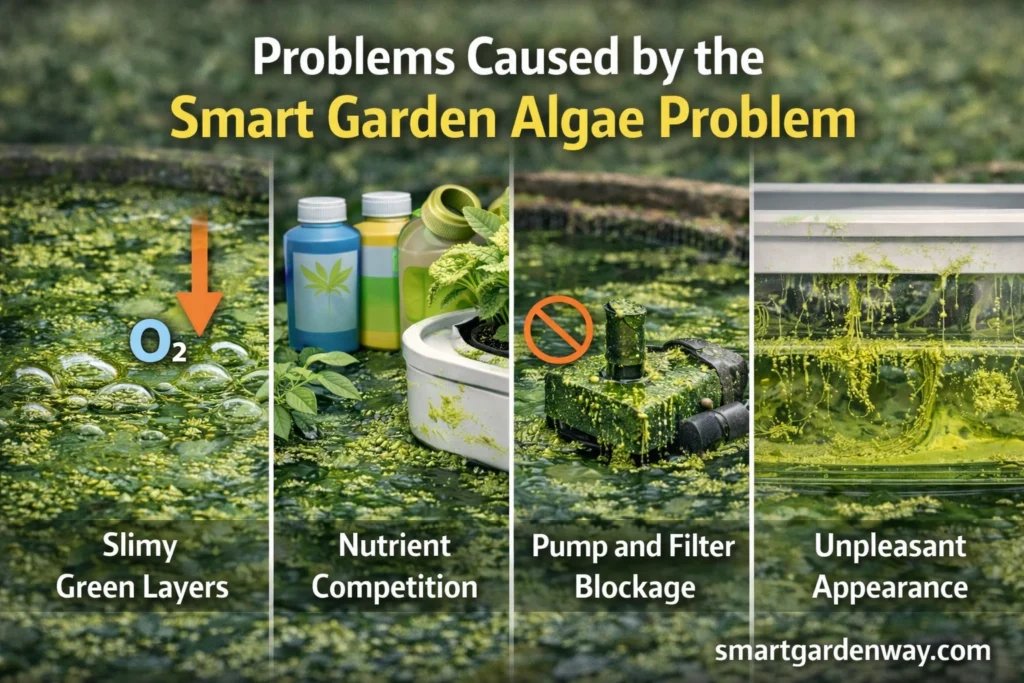
In hydroponic systems, plant roots rely on oxygen dissolved in the nutrient solution. When algae grows excessively, it can reduce oxygen levels in the water.
Lower oxygen levels can affect root health and slow plant growth.
Nutrient Competition
Algae consumes nutrients from the hydroponic solution. These nutrients include nitrogen and other elements required for plant development.
When algae absorbs these nutrients, plants may receive fewer resources for stem growth and foliage development.
Pump and Filter Blockage
Algae can accumulate in pumps, filters, and tubing. Over time, this buildup may clog mechanical components and reduce water circulation.
When circulation is reduced, the hydroponic system becomes less efficient and plants may not receive enough oxygen and nutrients.
Unpleasant Appearance
Another issue caused by algae is aesthetic. Indoor gardens are often placed in kitchens or living spaces, and algae buildup can make the system look dirty or poorly maintained.
How to Remove Algae From Smart Gardens
Addressing the smart garden algae problem requires both cleaning and system maintenance.
Cleaning the Reservoir
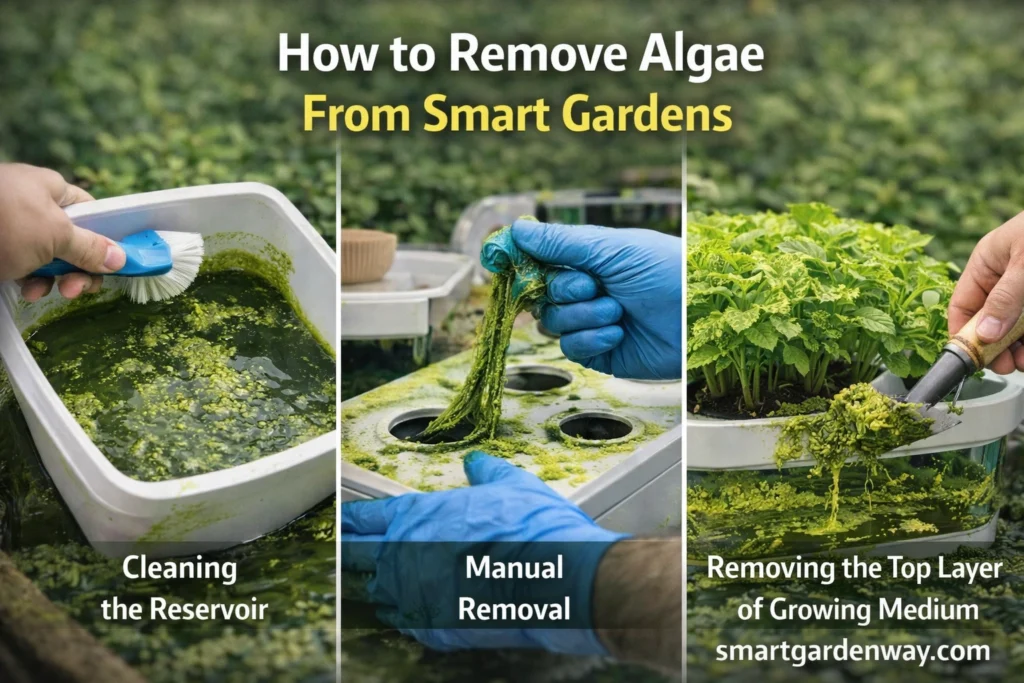
One of the most common ways to remove algae is by cleaning the hydroponic reservoir. Many hydroponic systems recommend using distilled white vinegar or chlorine bleach solutions to disinfect the water bowl.
The cleaning process typically involves filling the reservoir with water and the cleaning solution, then allowing the pump or aerator to circulate the liquid for several minutes. Afterward, the reservoir should be rinsed thoroughly with fresh water.
Manual Removal
Algae can also be removed manually from surfaces. Gardeners may gently scrape or wipe algae from rock wool cubes, plant pods, or grow deck surfaces.
In pond systems, algae may be removed using nets or brushes, but in hydroponic systems, simple cleaning tools or cloths are usually sufficient.
Removing the Top Layer of Growing Medium
If algae forms on the surface of the growing medium, gardeners sometimes remove a small portion of the top layer. Removing this layer eliminates algae colonies that have formed on the surface.
Preventing the Smart Garden Algae Problem
While removing algae is important, preventing algae growth is even more effective.
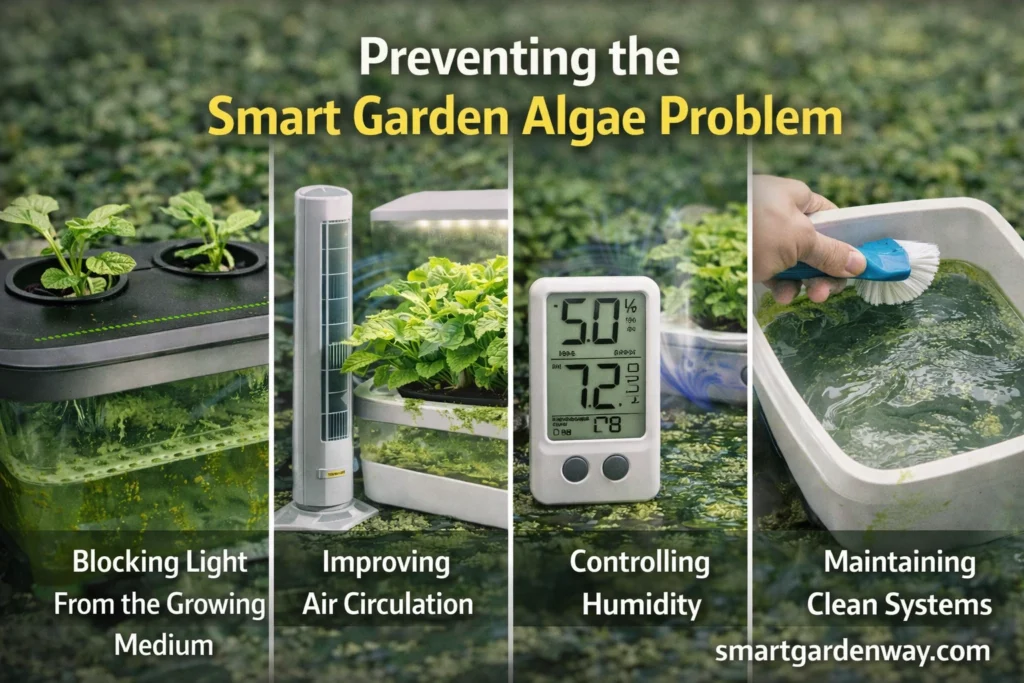
Blocking Light From the Growing Medium
Algae cannot grow without light. One of the most effective ways to prevent algae is by blocking light from reaching the nutrient solution and growing medium.
Some gardeners cover the top of plant pods with aluminum foil or specially designed covers to prevent light exposure.
Improving Air Circulation
Airflow helps reduce moisture buildup around plants. Indoor gardeners often use oscillating fans or ventilation systems to keep air moving around hydroponic plants.
Steady airflow helps dry surfaces and prevents conditions that support algae and mold growth.
Controlling Humidity
Humidity also affects algae growth. Indoor gardens typically maintain humidity levels around 45–50 percent.
Growers often use hygrometers and dehumidifiers to monitor and control humidity in grow rooms.
Maintaining Clean Systems
Regular cleaning is one of the most important practices for preventing algae. Hydroponic systems should be cleaned periodically to remove debris such as dead leaves, spilled nutrient solution, and dust.
Clean reservoirs, pumps, and grow decks help prevent algae from gaining a foothold.
Natural Methods to Control Algae
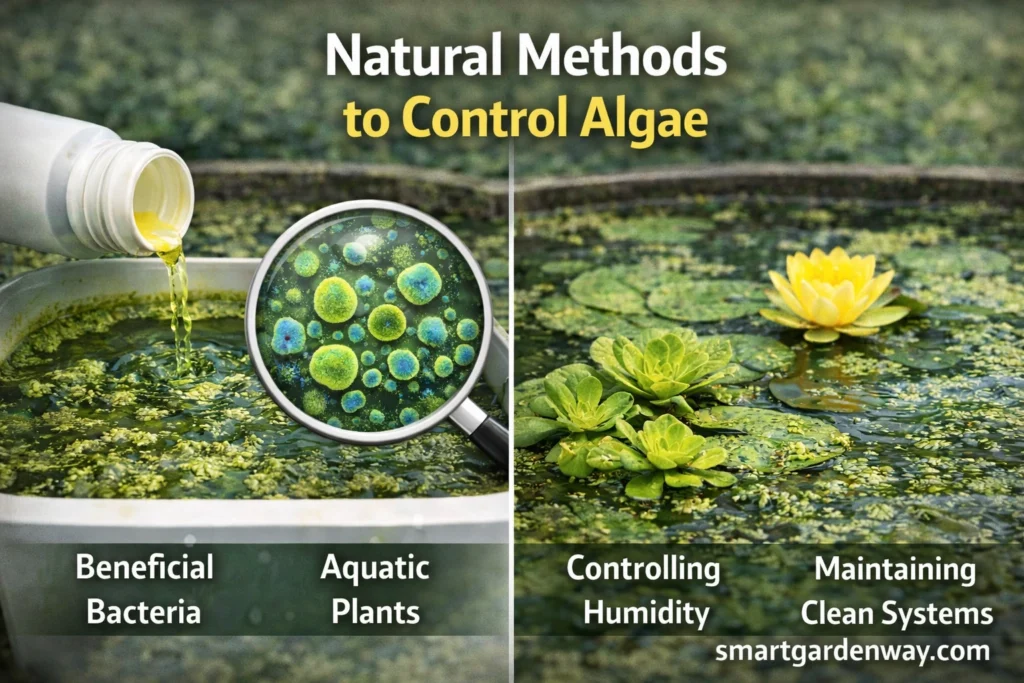
Beneficial Bacteria
Beneficial bacteria help break down organic waste such as fish waste, leaves, and uneaten food in aquatic systems. By reducing organic waste, beneficial bacteria limit the nutrients available for algae.
Aquatic Plants
In natural water systems, plants compete with algae for nutrients. Plants such as floating plants, marginal plants, and submerged aquatic plants known as oxygenators absorb nutrients from the water and reduce algae growth.
Smart Garden Maintenance Routine
Maintaining a regular maintenance routine can help prevent algae from becoming a major issue.
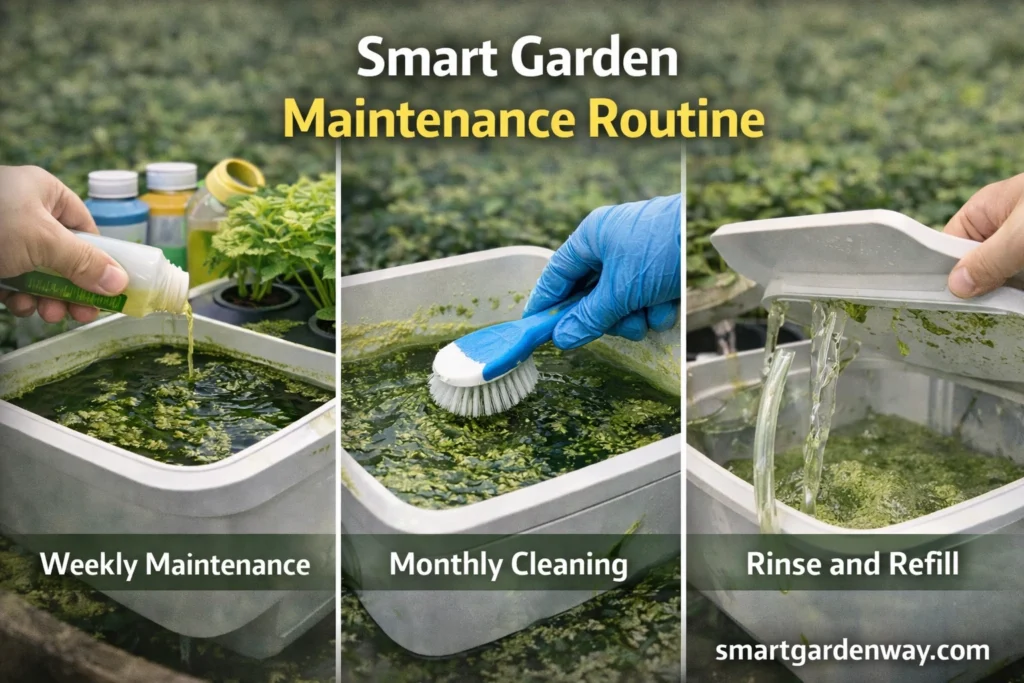
Weekly Maintenance
Weekly tasks often include checking water levels, monitoring nutrient solution quality, and inspecting plant pods for algae buildup.
Monthly Cleaning
Monthly cleaning involves rinsing the reservoir and cleaning components such as pumps and grow decks.
Rinse and Refill
Many hydroponic systems recommend performing a rinse and refill every four to six weeks. This process involves emptying the reservoir and replacing the nutrient solution with fresh water and plant food.
Frequently Asked Questions
How to stop algae from growing on plants?
Algae can grow on plants in hydroponic and smart garden systems when light, moisture, and nutrient-rich water combine. To stop algae from growing on plants, gardeners should block light from reaching the growing medium and nutrient solution, because algae relies on light to produce energy. Covering exposed areas of rock wool cubes or plant pods can help prevent algae growth. Improving airflow with a small fan or ventilation system can also reduce moisture buildup around plants. Maintaining balanced nutrient solutions containing nitrogen and phosphorous and cleaning the hydroponic system regularly will further limit algae development.
How to clean a smart garden?
Cleaning a smart garden involves removing algae, mineral buildup, and debris from the hydroponic system. Start by emptying the water reservoir or bowl, then fill it with a cleaning solution made from distilled white vinegar or a diluted chlorine bleach mixture. Run the pump or aerator for several minutes so the solution circulates through the system. Afterward, rinse the reservoir thoroughly with clean water. Surfaces such as the grow deck, plant pod openings, and nutrient containers should also be wiped clean to remove residue and algae buildup.
How to stop algae growth in AeroGarden?
Algae growth in AeroGarden systems usually occurs when light reaches the nutrient solution in the water bowl or around grow deck holes. To stop algae growth, keep the system clean and perform regular rinse and refill cycles every few weeks. Blocking light from reaching the nutrient solution is also important. Some gardeners cover exposed areas of the plant pods or growing medium to prevent algae from receiving light. Maintaining good water circulation through the pump system and cleaning the reservoir regularly will also help prevent algae from developing.
How to remove algae from a hydroponic system?
Removing algae from a hydroponic system typically involves both cleaning and manual removal. First, empty the nutrient reservoir and rinse the system. Then clean the reservoir using a vinegar or diluted bleach solution, allowing the liquid to circulate through the pump and tubing. Any algae growing on rock wool cubes, plant pods, or grow decks can be gently wiped or scraped off. After cleaning, refill the system with fresh water and nutrient solution. Maintaining regular cleaning routines and blocking light from the nutrient solution can help prevent algae from returning.
Conclusion
The smart garden algae problem is a natural but manageable challenge in hydroponic indoor gardening. Because smart gardens rely on nutrient-rich water, LED grow lights, and warm indoor conditions, algae can easily develop when moisture and light reach the growing medium or nutrient reservoir. While small amounts of algae are usually harmless, excessive algae growth can reduce oxygen levels in the water, compete with plants for nutrients, clog pumps, and create an unsightly appearance in indoor gardens.
Fortunately, gardeners can manage algae effectively through proper maintenance and environmental control. Preventing algae growth often involves blocking light from nutrient solutions, improving air circulation, controlling humidity levels, and cleaning hydroponic systems regularly. Simple practices such as covering plant pods, rinsing reservoirs, and maintaining clean equipment can significantly reduce algae buildup.
By understanding the conditions that cause algae growth and implementing consistent maintenance routines, indoor gardeners can maintain healthy plants and efficient hydroponic systems. With proper care, the smart garden algae problem can be controlled, allowing smart gardens to produce thriving herbs, vegetables, and plants without the interference of unwanted algae.