
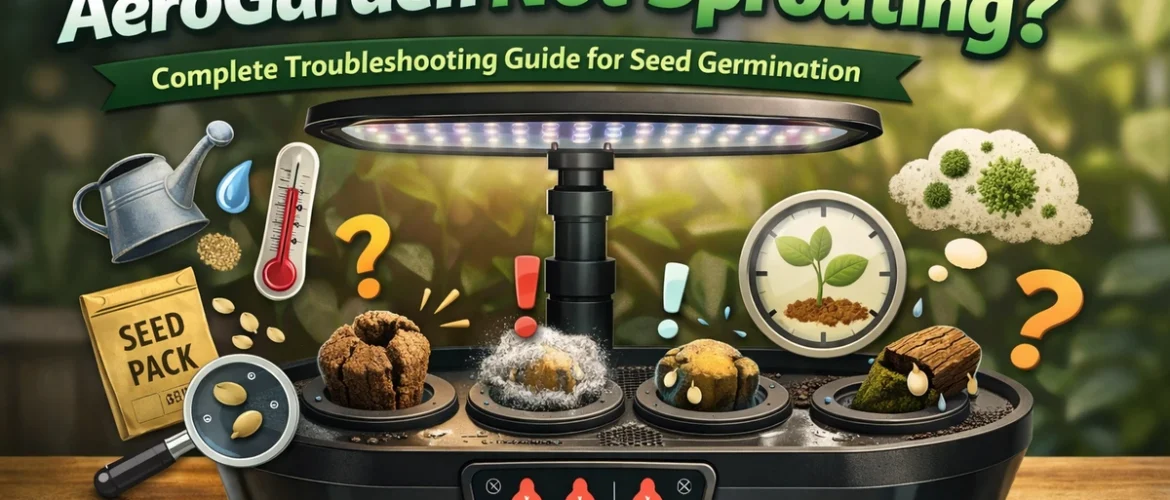
Growing plants in a hydroponic system like AeroGarden is designed to be simple and efficient. The system provides constant moisture, oxygenated water, warmth from LED grow lights, and mineral nutrients, which together create ideal conditions for seed germination. However, many gardeners still ask the same question: why is my aerogarden not sprouting?
In most cases, the issue is related to germination conditions, seed pods, lighting, nutrients, or moisture levels. Seeds typically germinate within 5–15 days, but if the environment is not balanced, seeds may fail to sprout, grow slowly, or develop mold. Problems can include insufficient lighting, excessive moisture, incorrect nutrient strength, mold growth on grow sponges, or seed germination temperature issues.
This guide explains the most common reasons why an AeroGarden is not sprouting, using real troubleshooting insights from growers, seed starting guides, and hydroponic discussions. By understanding how seed pods, grow sponges, lighting, water reservoirs, plant food, and germination timelines work together, you can quickly identify what is preventing your seeds from sprouting and restore the ideal environment for healthy seedlings.
Understanding How Seeds Germinate in an AeroGarden
The Basic Process of AeroGarden Seed Germination
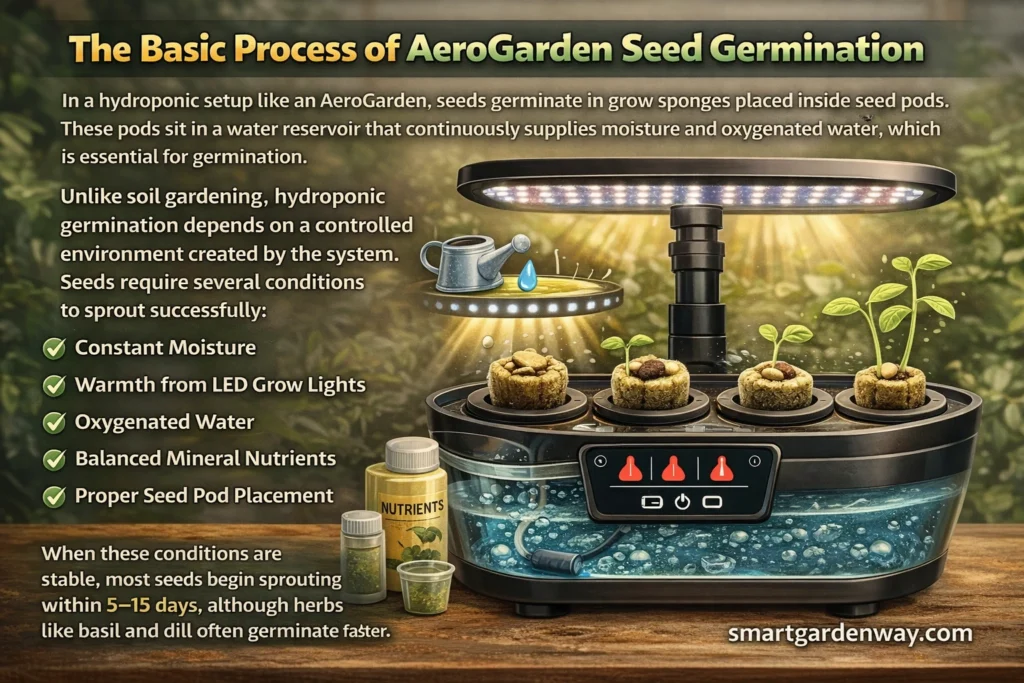
In a hydroponic setup like an AeroGarden, seeds germinate in grow sponges placed inside seed pods. These pods sit in a water reservoir that continuously supplies moisture and oxygenated water, which is essential for germination.
Unlike soil gardening, hydroponic germination depends on a controlled environment created by the system. Seeds require several conditions to sprout successfully:
- Constant moisture
- Warmth from LED grow lights
- Oxygenated water
- Balanced mineral nutrients
- Proper seed pod placement
When these conditions are stable, most seeds begin sprouting within 5–15 days, although herbs like basil and dill often germinate faster.
Germination Time and Expected Sprouting Period
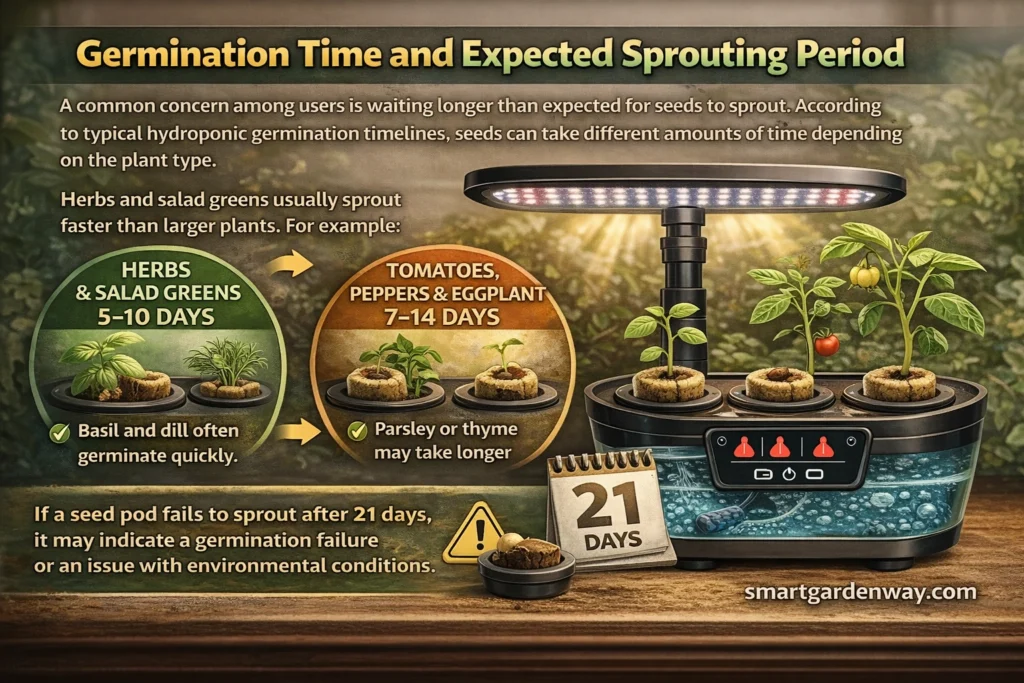
A common concern among users is waiting longer than expected for seeds to sprout. According to typical hydroponic germination timelines, seeds can take different amounts of time depending on the plant type.
Herbs and salad greens usually sprout faster than larger plants. For example:
- Basil and dill often germinate quickly.
- Parsley or thyme may take longer.
- Tomatoes, peppers, and eggplant sometimes require more time to establish seedlings.
If a seed pod fails to sprout after 21 days, it may indicate a germination failure or an issue with environmental conditions.
Why Is My AeroGarden Not Sprouting? Common Causes Explained
1. Insufficient Lighting or Incorrect Light Position
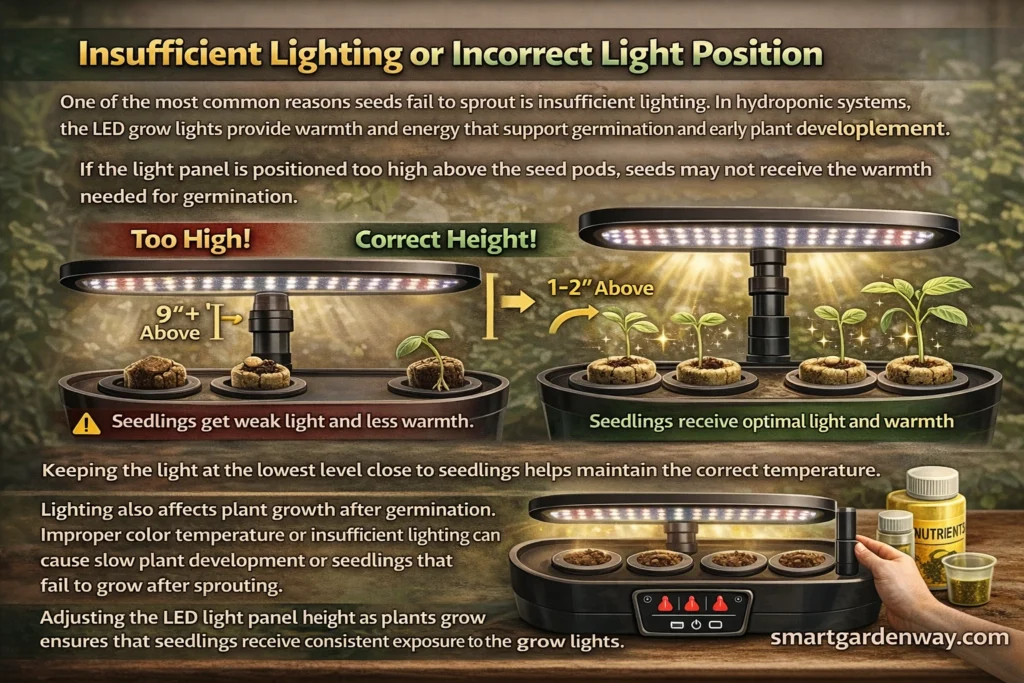
One of the most common reasons seeds fail to sprout is insufficient lighting. In hydroponic systems, the LED grow lights provide warmth and energy that support germination and early plant development.
If the light panel is positioned too high above the seed pods, seeds may not receive the warmth needed for germination. Keeping the light at the lowest level close to seedlings helps maintain the correct temperature.
Lighting also affects plant growth after germination. Improper color temperature or insufficient lighting can cause slow plant development or seedlings that fail to grow after sprouting.
Adjusting the LED light panel height as plants grow ensures that seedlings receive consistent exposure to the grow lights.
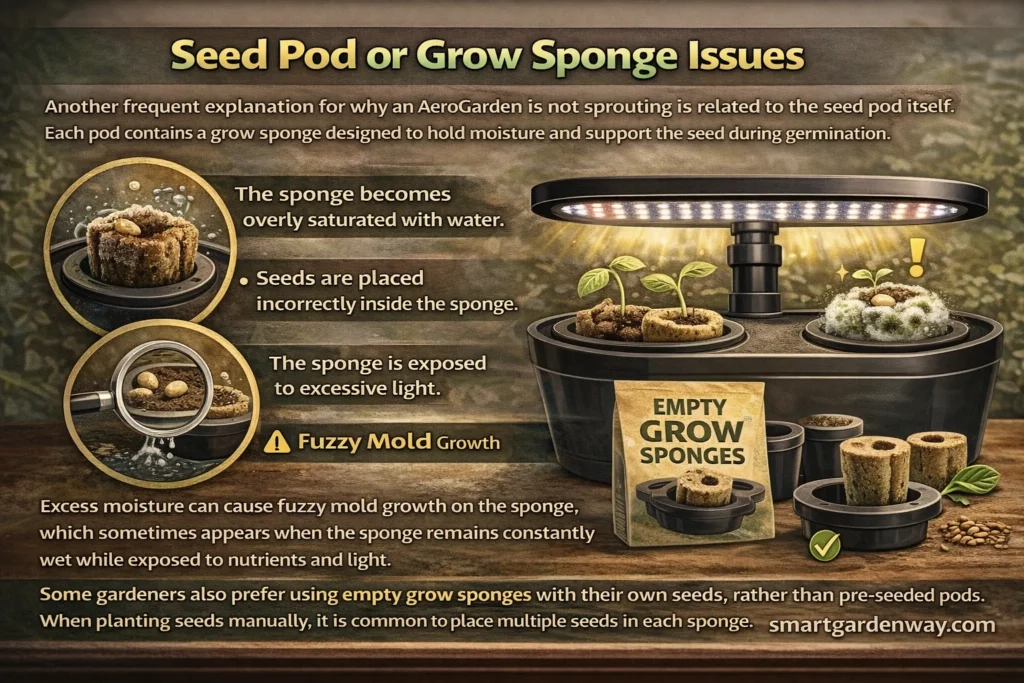
Seed Pod or Grow Sponge Issues
Another frequent explanation for why an AeroGarden is not sprouting is related to the seed pod itself. Each pod contains a grow sponge designed to hold moisture and support the seed during germination.
Problems may occur if:
- The sponge becomes overly saturated with water.
- Seeds are placed incorrectly inside the sponge.
- The sponge is exposed to excessive light.
Excess moisture can cause fuzzy mold growth on the sponge, which sometimes appears when the sponge remains constantly wet while exposed to nutrients and light.
Some gardeners also prefer using empty grow sponges with their own seeds, rather than pre-seeded pods. When planting seeds manually, it is common to place multiple seeds in each sponge to increase the chances of successful germination.
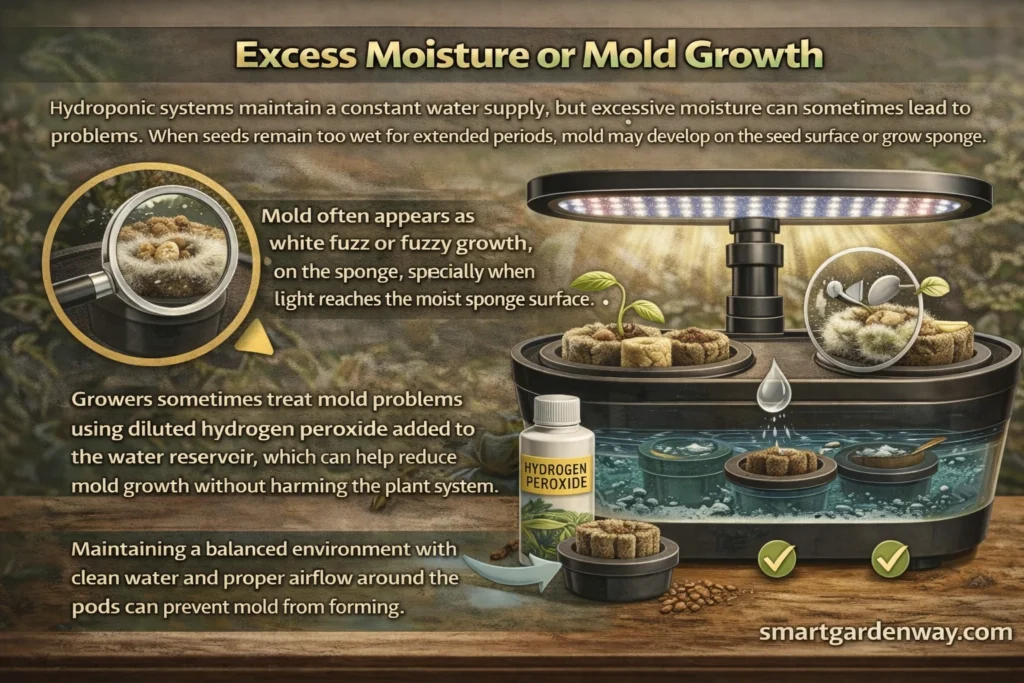
Excess Moisture or Mold Growth
Hydroponic systems maintain a constant water supply, but excessive moisture can sometimes lead to problems. When seeds remain too wet for extended periods, mold may develop on the seed surface or grow sponge.
Mold often appears as white fuzz or fuzzy growth on the sponge, especially when light reaches the moist sponge surface.
Growers sometimes treat mold problems using diluted hydrogen peroxide added to the water reservoir, which can help reduce mold growth without harming the plant system.
Maintaining a balanced environment with clean water and proper airflow around the pods can prevent mold from forming.
2. Nutrient Problems That Prevent Seeds from Sprouting
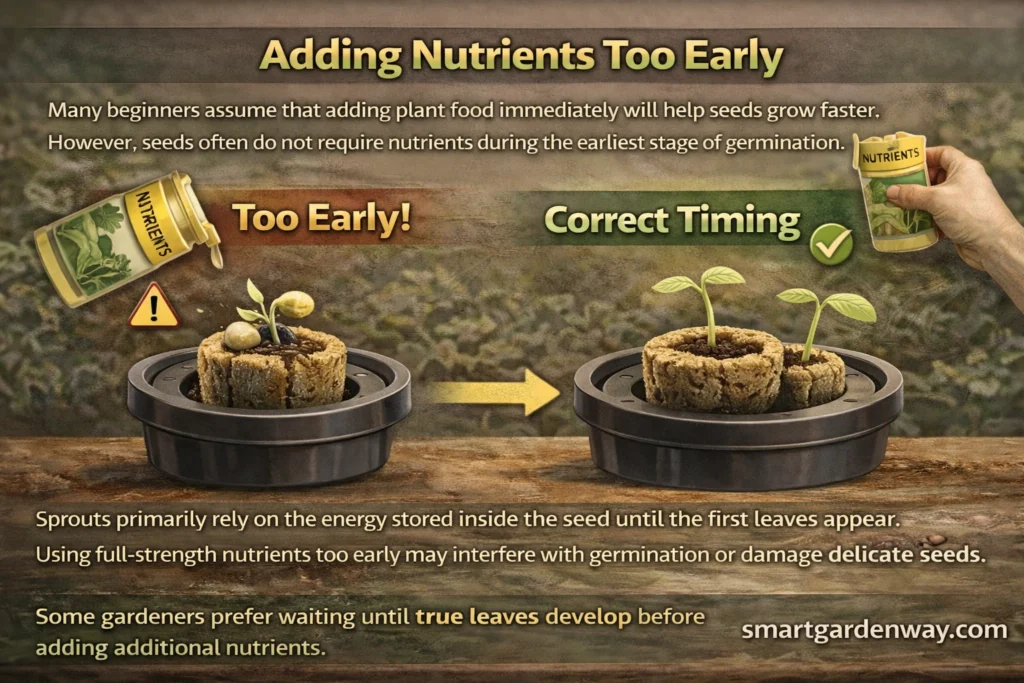
Adding Nutrients Too Early
Many beginners assume that adding plant food immediately will help seeds grow faster. However, seeds often do not require nutrients during the earliest stage of germination.
Sprouts primarily rely on the energy stored inside the seed until the first leaves appear. Using full-strength nutrients too early may interfere with germination or damage delicate seeds.
Some gardeners prefer waiting until true leaves develop before adding additional nutrients.
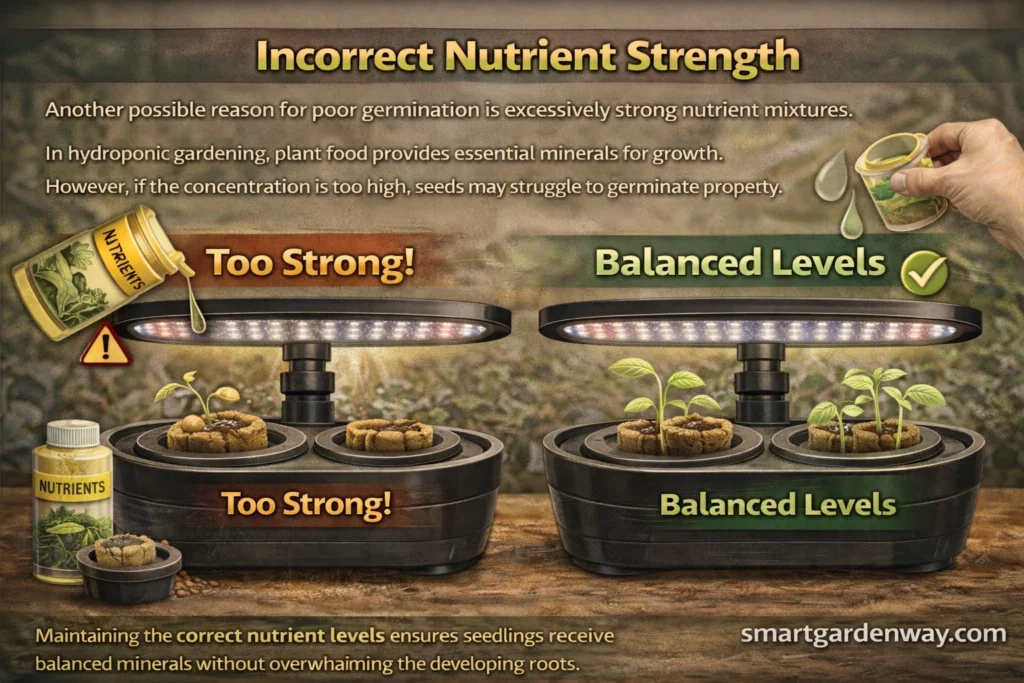
Incorrect Nutrient Strength
Another possible reason for poor germination is excessively strong nutrient mixtures.
In hydroponic gardening, plant food provides essential minerals for growth. However, if the concentration is too high, seeds may struggle to germinate properly.
Maintaining the correct nutrient levels ensures seedlings receive balanced minerals without overwhelming the developing roots.
3. Water Reservoir and Moisture Conditions
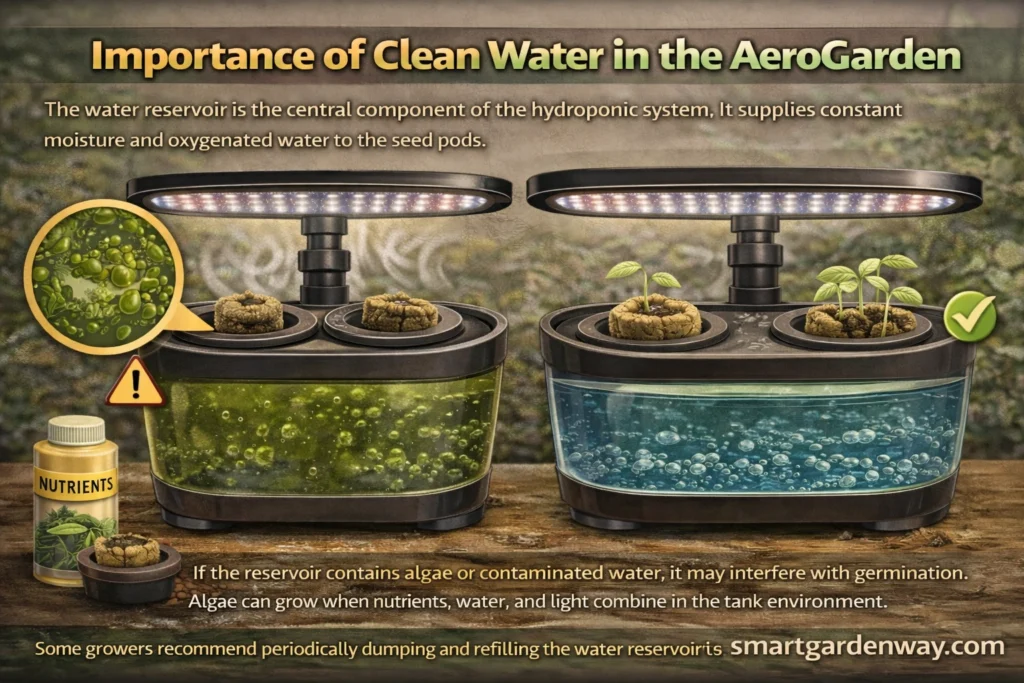
Importance of Clean Water in the AeroGarden
The water reservoir is the central component of the hydroponic system. It supplies constant moisture and oxygenated water to the seed pods.
If the reservoir contains algae or contaminated water, it may interfere with germination. Algae can grow when nutrients, water, and light combine in the tank environment.
Some growers recommend periodically dumping and refilling the water reservoir to maintain clean water conditions.
Proper Water Level and Reservoir Maintenance
Another overlooked factor is the water level. The system usually includes a fill line indicator to show the correct reservoir level.
Maintaining water at the recommended level ensures that the grow sponges remain moist without becoming oversaturated.
4. Germination Temperature and Environmental Conditions
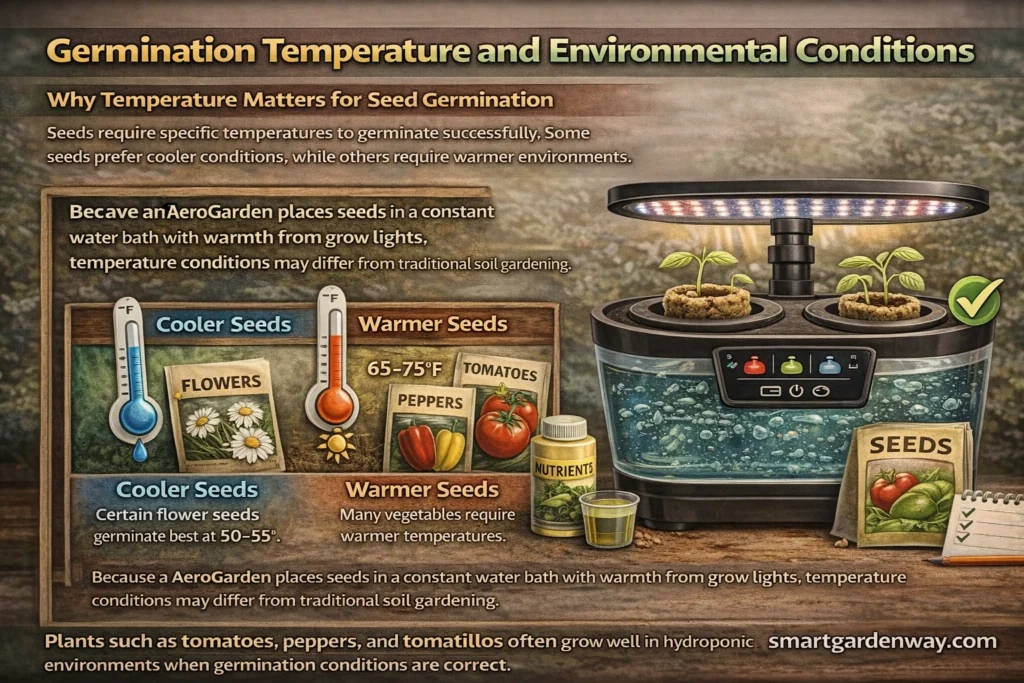
Why Temperature Matters for Seed Germination
Seeds require specific temperatures to germinate successfully. Some seeds prefer cooler conditions, while others require warmer environments.
For example, certain flower seeds germinate best at 50–55 degrees, while many vegetables require warmer temperatures.
Because an AeroGarden places seeds in a constant water bath with warmth from grow lights, temperature conditions may differ from traditional soil gardening.
Matching Seeds with the Correct Germination Conditions
Seed packets usually provide instructions about germination timing and temperature preferences. Checking these guidelines can help determine whether seeds are suitable for hydroponic germination.
Plants such as tomatoes, peppers, and tomatillos often grow well in hydroponic environments when germination conditions are correct.
5. Seed Quality and Seed Type
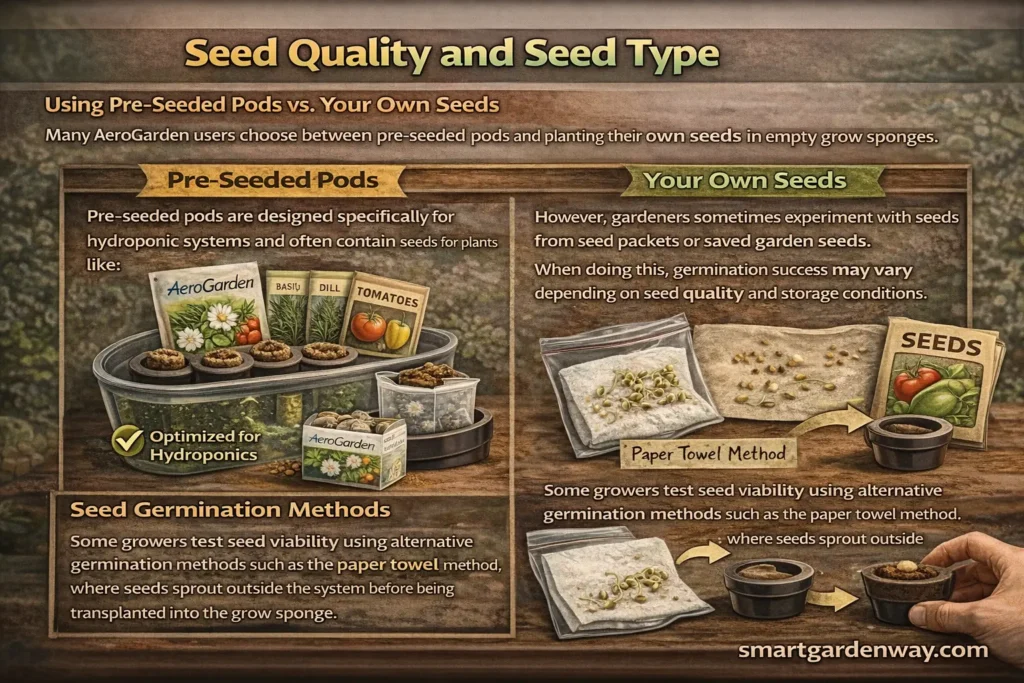
Using Pre-Seeded Pods vs. Your Own Seeds
Many AeroGarden users choose between pre-seeded pods and planting their own seeds in empty grow sponges.
Pre-seeded pods are designed specifically for hydroponic systems and often contain seeds for plants like:
- basil
- dill
- thyme
- salad greens
- cherry tomatoes
However, gardeners sometimes experiment with seeds from seed packets or saved garden seeds. When doing this, germination success may vary depending on seed quality and storage conditions.
Seed Germination Methods
Some growers test seed viability using alternative germination methods such as the paper towel method, where seeds sprout outside the system before being transplanted into the grow sponge.
This approach can help determine whether seeds are capable of germinating before placing them in the hydroponic system.
6. Slow Growth or No Growth After Germination
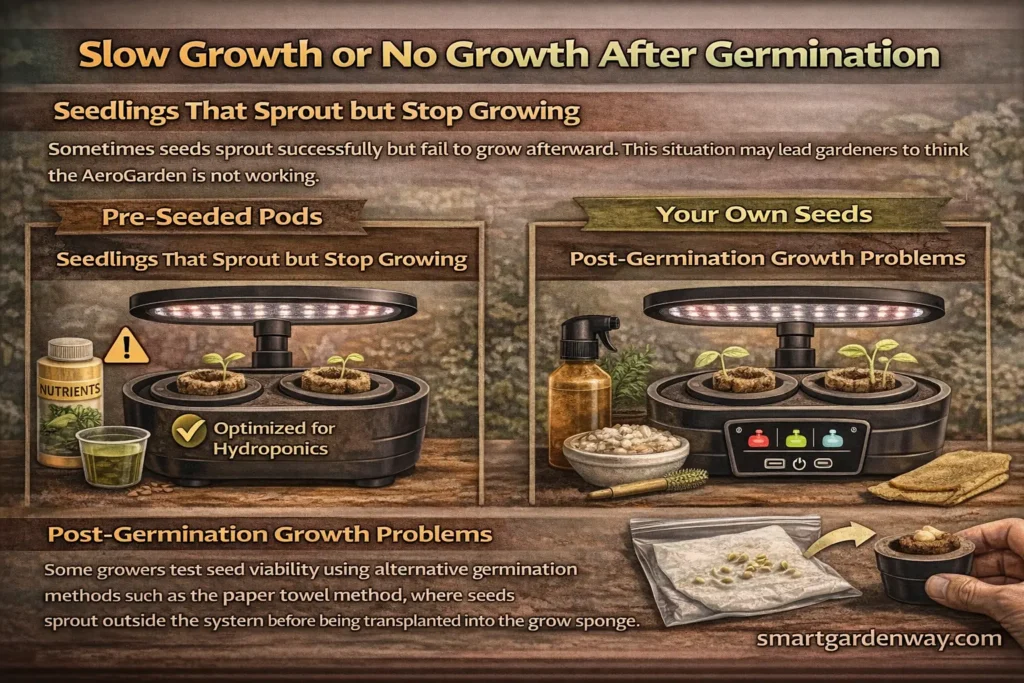
Seedlings That Sprout but Stop Growing
Sometimes seeds sprout successfully but fail to grow afterward. This situation may lead gardeners to think the AeroGarden is not working.
Common reasons for seedlings stopping growth after sprouting include:
- insufficient lighting
- improper nutrient levels
- environmental stress
If seedlings appear healthy but remain small, adjusting lighting and nutrient conditions may help restore growth.
Post-Germination Growth Problems
Seedlings may also stall after germination if the system was recently cleaned or adjusted. Some users report slow growth after deep cleaning the unit, although this usually resolves once environmental conditions stabilize.
7 Common Fixes If Your AeroGarden Is Not Sprouting
If you are wondering why is my aerogarden not sprouting, the issue is usually related to germination conditions such as lighting, seed pods, nutrients, moisture levels, or environmental factors. Seeds in an AeroGarden typically germinate within 5–15 days, but small mistakes in setup can delay or prevent sprouting.
Below are seven common fixes that help restore proper germination conditions in your hydroponic system.
1. Lower the LED Grow Lights Closer to the Seed Pods
Lighting plays an important role in germination because seeds benefit from the warmth produced by LED grow lights. If the light panel is positioned too high above the pods, seeds may not receive enough warmth.
Lower the LED light panel so it sits closer to the seed pods during the germination stage. As seedlings grow, gradually raise the light to maintain proper spacing.
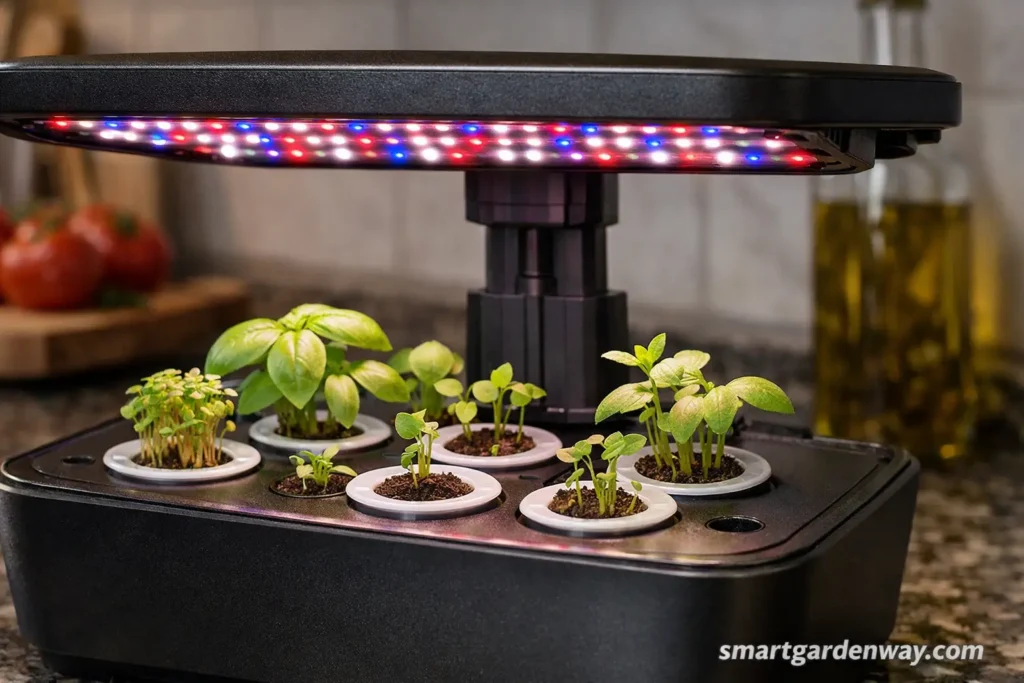
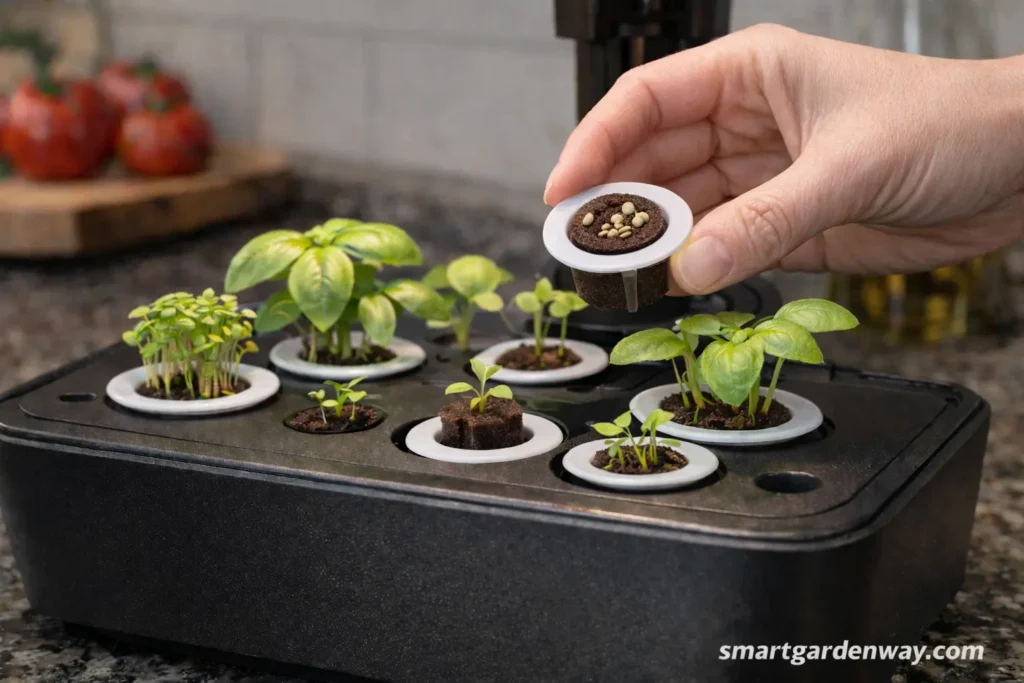
2. Check the Grow Sponge and Seed Pod Placement
Seeds sprout inside grow sponges placed in AeroGarden seed pods, and improper placement can prevent germination.
Make sure:
- Seeds are properly inserted into the sponge opening
- The sponge stays moist
- The pod is seated correctly in the growing deck
Some growers also place multiple seeds in one sponge to improve germination success.
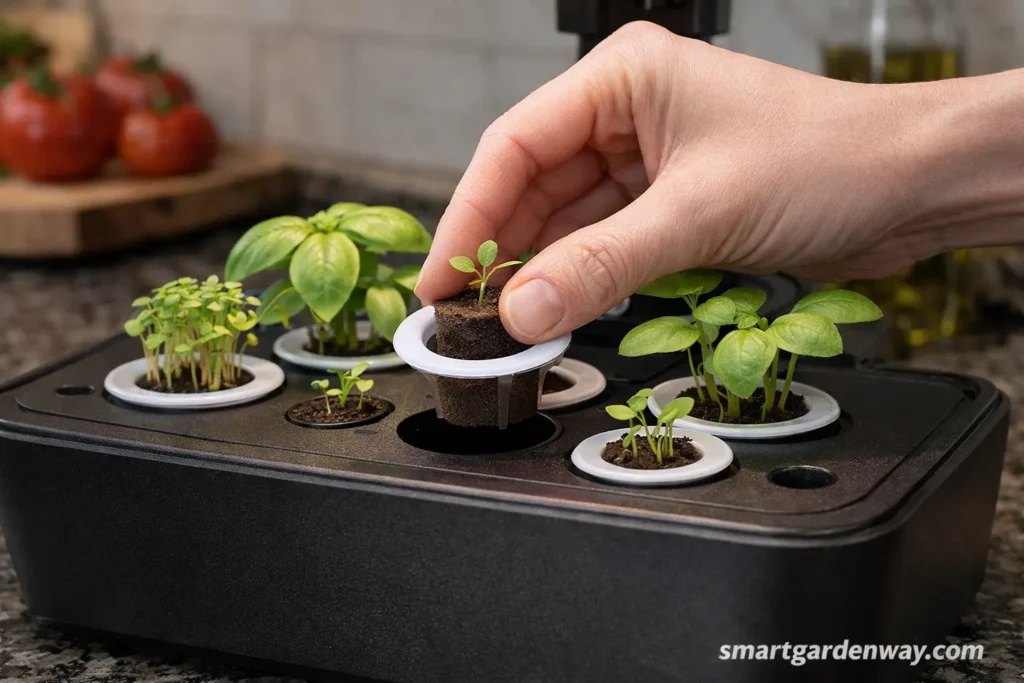
3. Avoid Adding Full-Strength Nutrients Too Early
Seeds do not require strong nutrients during the earliest stage of germination. Sprouts rely on the stored energy inside the seed until the first leaves appear.
Using full-strength plant food too early may interfere with germination. Many gardeners wait until true leaves develop before increasing nutrient levels in the water reservoir.
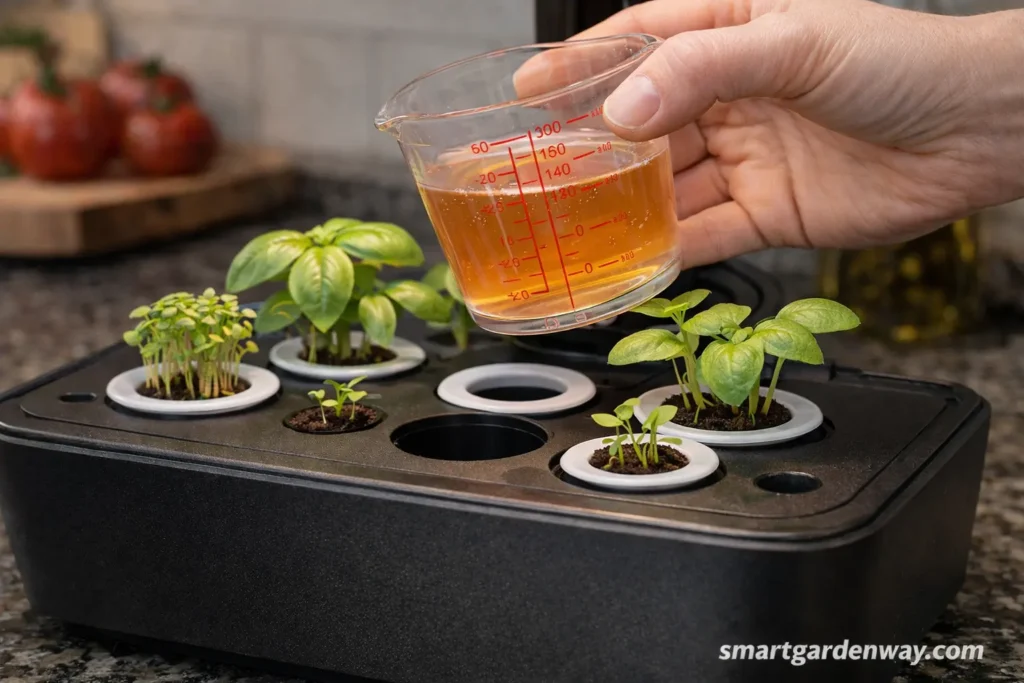
4. Maintain Clean Water in the Reservoir
The water reservoir supplies constant moisture and oxygenated water to the seed pods. If algae or contaminants develop in the tank, it may affect germination.
Keeping the reservoir clean and occasionally refilling it with fresh water can help maintain healthy growing conditions for seeds.
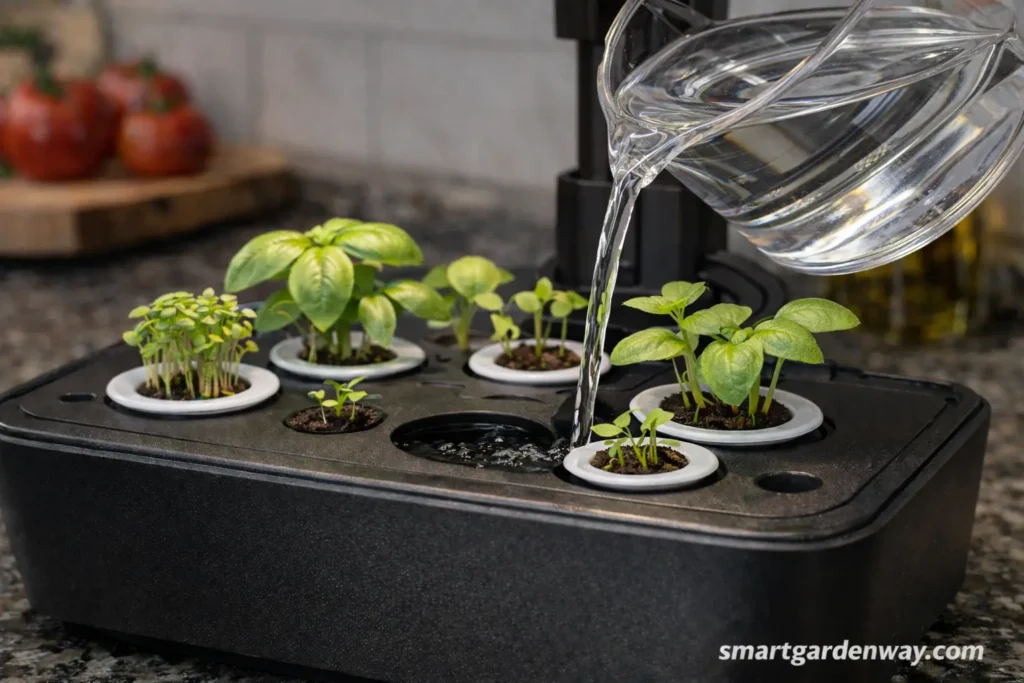
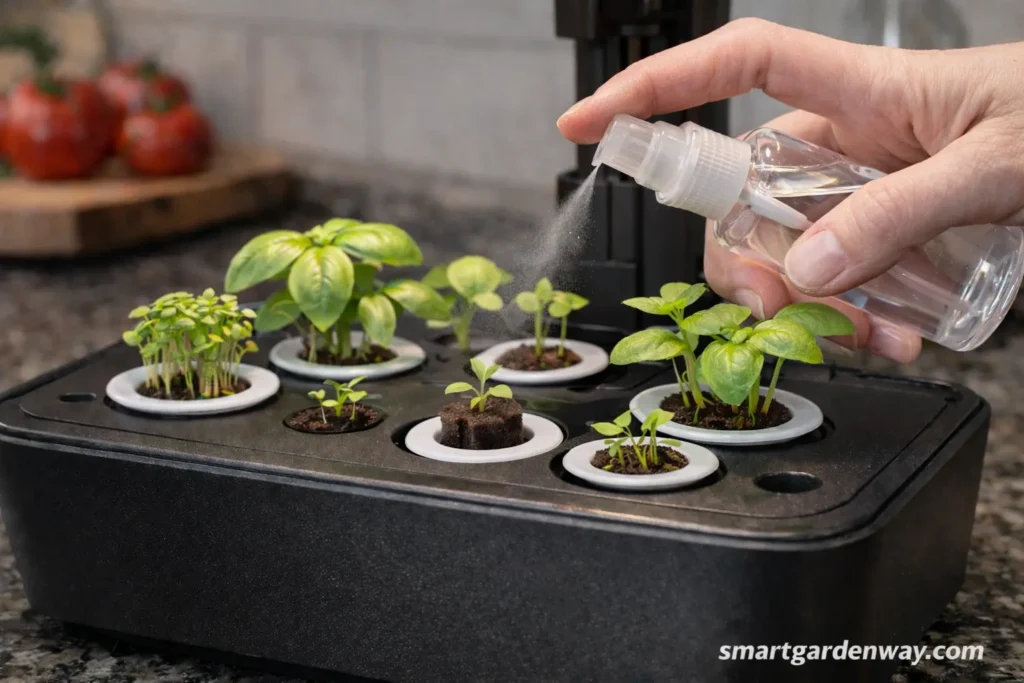
5. Prevent Mold on the Grow Sponges
Excess moisture combined with light exposure can sometimes lead to fuzzy mold growth on grow sponges.
This can occur when:
- the sponge is constantly wet
- nutrients are present
- light reaches the sponge surface
Some gardeners reduce mold using diluted hydrogen peroxide added to the water reservoir.
6. Use High-Quality Seeds or Replace Old Pods
Sometimes the reason why an AeroGarden is not sprouting is simply poor seed quality.
Seeds that are old or improperly stored may fail to germinate. If a pod has not sprouted after about 21 days, replacing the seed pod or trying fresh seeds can often solve the problem.
7. Be Patient With Germination Time
Not all seeds germinate at the same speed. Herbs such as basil and dill often sprout quickly, while plants like parsley or thyme may take longer.
Seeds in an AeroGarden usually germinate within 5–15 days, but some varieties may require additional time before sprouts appear.
Proper Setup for Starting Seeds in an AeroGarden
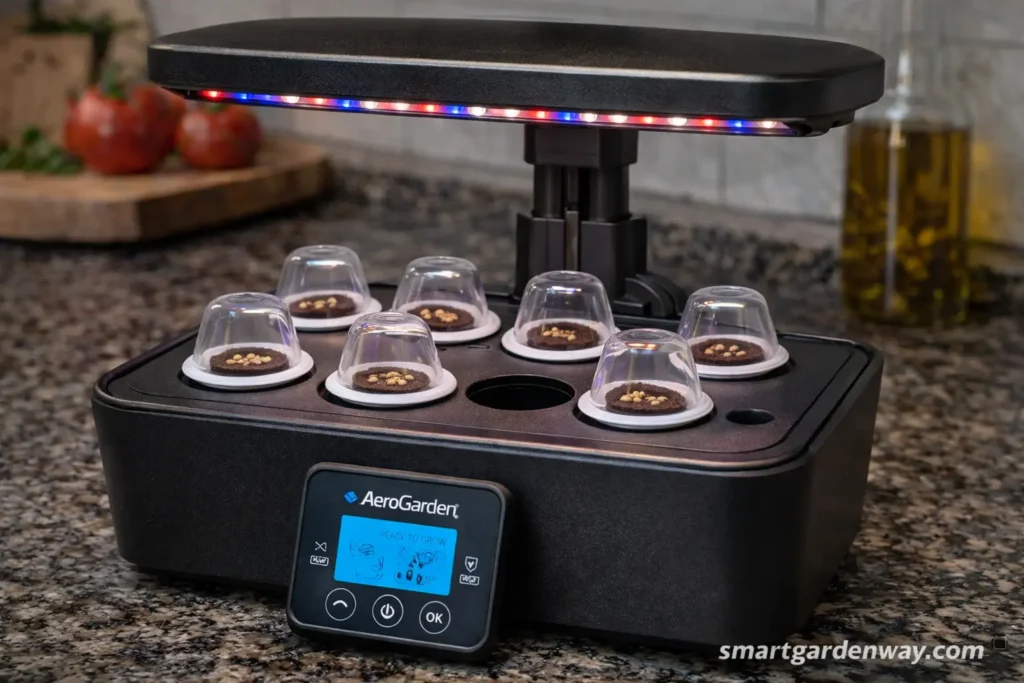
Using a Seed Starting Deck
Certain models support a seed starting deck, which allows gardeners to start many seeds at once before transplanting them outdoors.
A typical seed starting process involves:
- Inserting the seed starting deck into the system.
- Filling the water reservoir to the fill line.
- Allowing grow sponges to soak before planting seeds.
- Placing seeds into the sponge openings.
Seeds in this environment may germinate within 1–3 days, depending on the plant type.
Advantages of Hydroponic Seed Starting
Hydroponic seed starting offers several benefits compared with soil gardening:
- consistent growing conditions
- efficient use of space
- faster seedling development
Because the system maintains constant moisture and light exposure, many gardeners find hydroponic seed starting more reliable than traditional methods.
Maintenance Tips to Prevent Germination Problems
Cleaning the AeroGarden System
Routine cleaning helps prevent issues that may interfere with seed growth. Some gardeners occasionally clean the unit using bleach solution or diluted hydrogen peroxide.
Cleaning helps remove algae or mold buildup that may affect the water reservoir or grow sponges.
Monitoring Light Height and Plant Growth
As plants grow, the LED light panel should be raised gradually to maintain the correct distance between the lights and plants.
Keeping the light too high during germination may reduce warmth and slow seed sprouting.
Frequently Asked Questions
What do I do if my seeds don’t sprout?
If seeds do not sprout within the expected germination period, check the seed pods, grow sponge moisture, lighting position, and water reservoir conditions. Seeds generally germinate within 5–15 days, but some plants may take longer. If a seed pod fails to sprout after 21 days, replacing the pod or testing new seeds may help resolve the issue.
Why are my sprouts not sprouting?
Sprouts may fail to appear due to insufficient lighting, excessive moisture, mold growth, incorrect nutrient levels, or poor seed quality. Maintaining constant moisture, oxygenated water, and warmth from LED grow lights is essential for successful germination.
Why is my aerogarden not sprouting after a week?
In many cases, waiting longer may be necessary. While some seeds germinate quickly, others may take up to two weeks or more. Ensure that the light panel is positioned close to the seed pods, the water reservoir is filled properly, and nutrients are not too strong during early germination.
How long does it take for AeroGarden seeds to sprout?
Most seeds in an AeroGarden germinate within 5–15 days under proper conditions. Herbs such as basil and dill often sprout faster, while plants like parsley or thyme may take longer. The system provides constant moisture, oxygenated water, and warmth from LED grow lights, which usually speeds up germination compared to soil gardening.
Can too much water stop AeroGarden seeds from sprouting?
Yes, excessive moisture can sometimes prevent seeds from sprouting. While AeroGarden systems keep grow sponges moist, seeds that remain too wet for long periods may develop mold or fuzzy growth on the sponge. Maintaining a balanced water level in the water reservoir and ensuring the sponge is not exposed to excessive light can help prevent this issue.
Do AeroGarden seeds need nutrients to germinate?
Seeds usually do not need nutrients during early germination. Most seeds rely on the energy stored inside the seed until the first leaves appear. Adding full-strength plant food too early may interfere with germination. Many growers wait until true leaves develop before increasing nutrient levels in the system.
Why do my AeroGarden pods grow mold instead of sprouts?
Mold on seed pods often occurs when moisture, nutrients, and light combine on the grow sponge surface. This can create a damp environment where mold develops before seeds sprout. Some gardeners reduce mold by cleaning the system and occasionally using diluted hydrogen peroxide in the water reservoir.
Should the AeroGarden lights be close to the seed pods?
Yes. During germination, the LED grow lights should be positioned close to the seed pods. The lights provide warmth that supports germination and early plant development. As seedlings grow, the light panel should be raised gradually to maintain proper distance.
Why do my AeroGarden seeds sprout but stop growing?
Sometimes seeds germinate successfully but the seedlings stop growing afterward. This can occur because of insufficient lighting, incorrect nutrient strength, or environmental stress. Adjusting the light height, nutrient levels, and water conditions can help restore healthy growth.
Can I use my own seeds in AeroGarden grow sponges?
Yes, many gardeners use empty grow sponges and plant their own seeds instead of pre-seeded pods. When doing this, growers often place multiple seeds in each sponge to improve germination success. Seed quality and storage conditions can affect how well seeds sprout in hydroponic systems.
What should I do if a seed pod hasn’t sprouted after 21 days?
If a seed pod does not sprout after about three weeks, it may indicate a germination failure. At this point, you can replace the pod, try new seeds, or test seed viability using another germination method such as the paper towel method before replanting.
Can lighting problems cause slow sprouting in AeroGarden?
Yes. Insufficient lighting or incorrect light positioning can slow germination and plant growth. Seeds rely on the warmth produced by the LED grow lights, and if the lights are too far away, germination may take longer than expected.
Does seed type affect germination speed in an AeroGarden?
Different seeds germinate at different speeds. Herbs like basil and dill often sprout quickly, while seeds such as parsley or thyme may require more time. Vegetables like tomatoes, peppers, and eggplant may also have slightly longer germination periods depending on environmental conditions.
Conclusion
If you are wondering why is my aerogarden not sprouting, the issue usually comes down to a few key factors: lighting, moisture balance, nutrient levels, seed quality, or environmental conditions. Seeds require constant moisture, oxygenated water, warmth from LED grow lights, and balanced mineral nutrients to germinate successfully. When one of these elements is disrupted, germination may slow down or stop entirely.
Fortunately, most germination problems are easy to correct. Checking the seed pods, grow sponges, water reservoir, and light position often reveals the root cause. Ensuring the reservoir contains clean water, maintaining proper nutrient strength, and preventing mold buildup can significantly improve germination success. It is also important to remember that different seeds germinate at different speeds, so patience is sometimes required.
By understanding how hydroponic seed germination works and maintaining the right growing conditions, you can transform your AeroGarden into a reliable system for producing healthy herbs, vegetables, and seedlings year-round.