
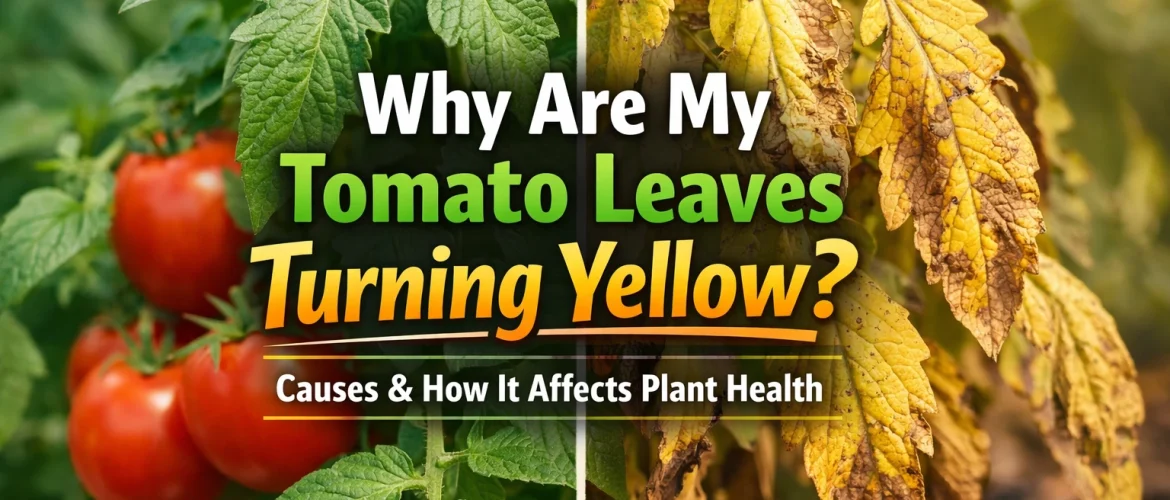
Tomato plants are the most common home gardening plants, either you are a beginner gardener or experienced one you will not miss tomatoes in your garden beds. Every second seasoned gardner is stuck in a tomato plant and thinking why are my tomato leaves turning yellow? It can be any reason: environmental stress, growing conditions, pests attack and lack of fertilizers. For the healthy growth of tomato plant nutrient balance is very important, it supports their growth and fruiting.
Usually tomato leaves turn yellow and it is not a big problem most of the time, but sometimes it can be damaging. We can face many tomato plant problems and seeing yellow leaves on tomato plants we eventually become worried regarding our plant health. But don’t worry we got your back, let’s discuss common reasons in detail and find a solution to prevent them turning yellow.
Is It Normal for Tomato Leaves to Turn Yellow?
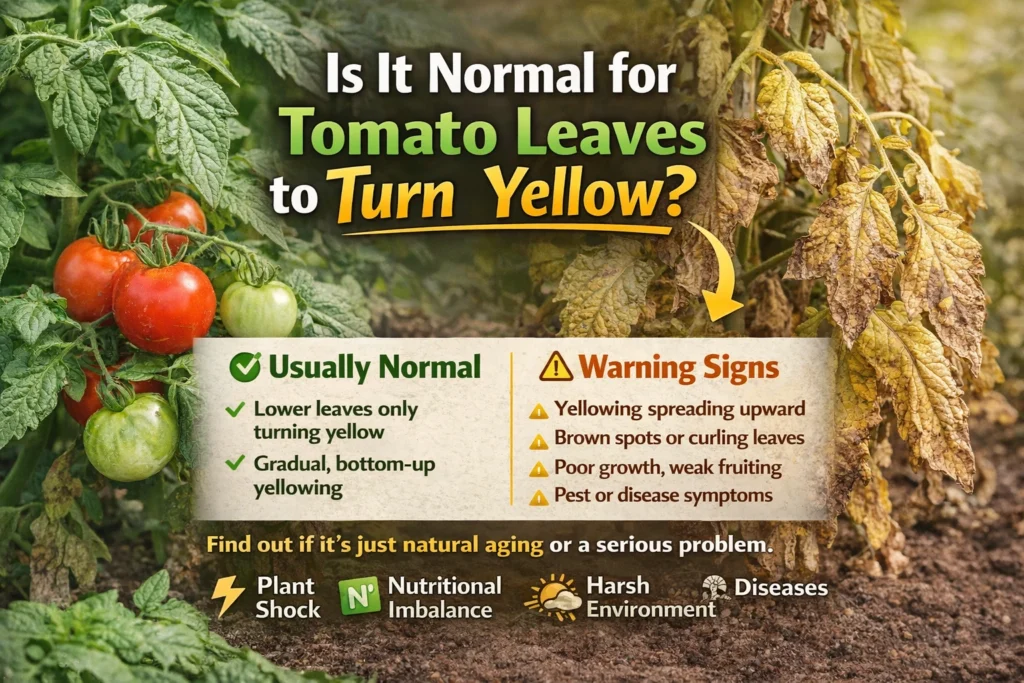
Most of the time turning lower leaves yellow is a plant aging process in the natural growth cycle.
It is up to us to find out whether tomato leaves yellowing naturally or the yellow tomato leaves normal. Shading process also turns leaves yellow but widely spread yellowing can be cause of
Plant shock, nutritional imbalance, harsh growing environment and many diseases.
Common Reasons Tomato Leaves Turn Yellow
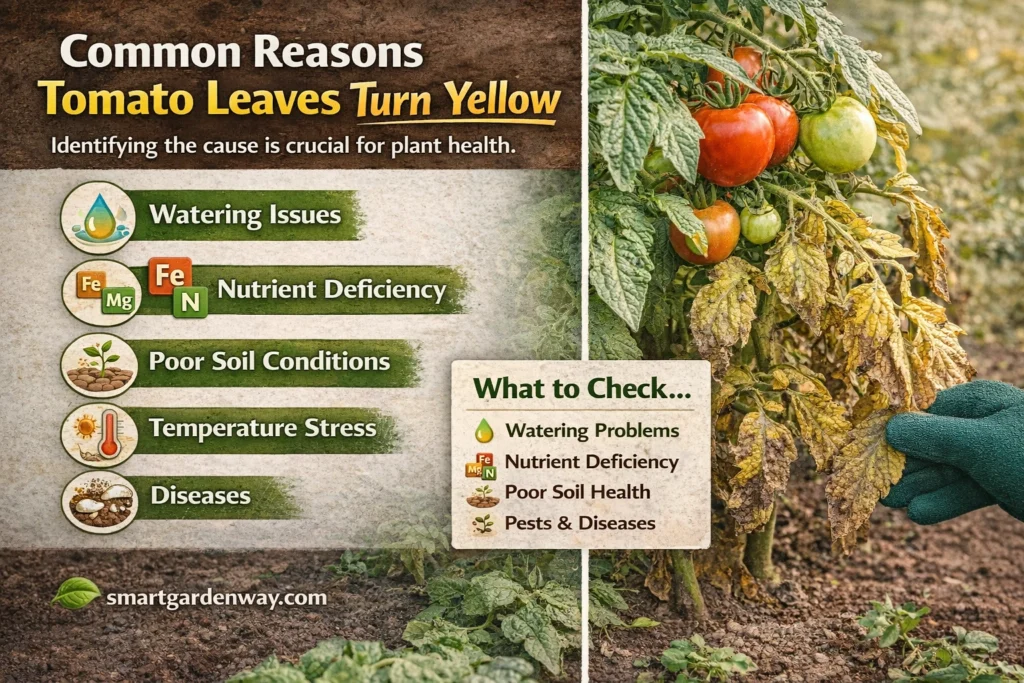
Turning tomato leaves yellow can be caused by many possible reasons, but finding out actually causing them to turn yellow is most important for plant health. The most common reason to turn tomato leaves yellow is nutrient deficiency like iron, magnesium and nitrogen which directly influence leaf growth and color.
Watering issues are also a prominent factor to affect plant leaves over and under watering can force leaves to turn yellow and dry respectively.
Poor soil condition, temperature stress and diseases also play vital roles in destroying plant leaves’ health and ultimately the plant itself.
Overwatering or Poor Drainage
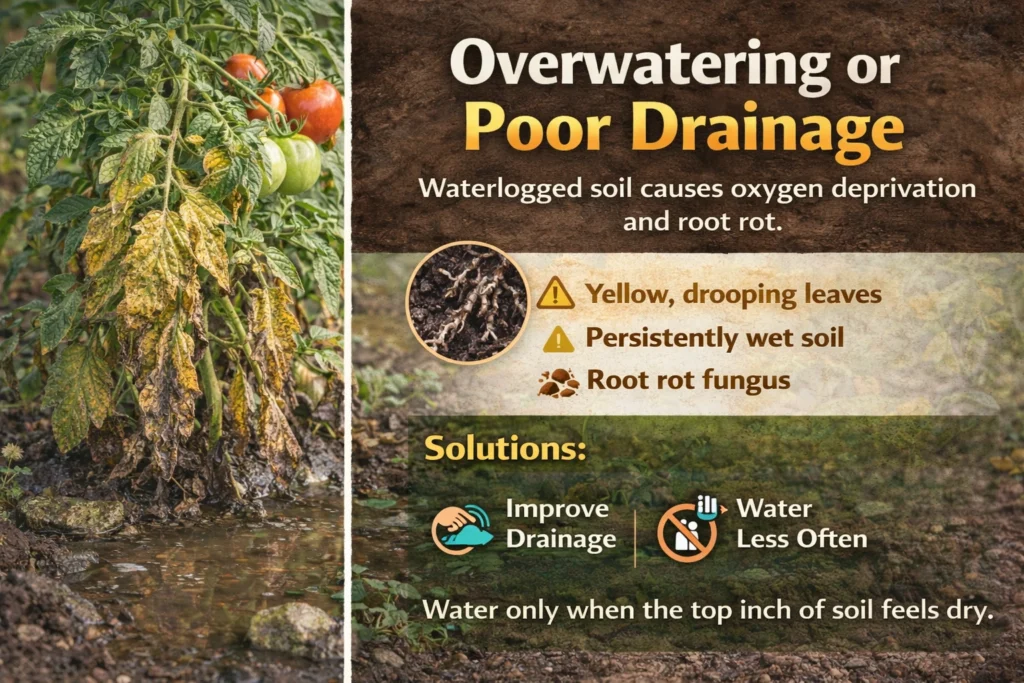
One of the most common reasons tomato plants struggle is overwatering or poor drainage, which leads to waterlogged soil and deprives roots of essential root oxygen. When soil stays constantly wet, the roots cannot breathe properly, weakening the plant and reducing nutrient absorption. This often results in yellow leaves from overwatering, especially on the lower foliage. If the problem persists, it can lead to root rot, a serious fungal condition that damages the root system and further stresses the plant. Many gardeners notice that overwatered tomato plants appear droopy despite having plenty of moisture in the soil, a clear sign that drainage needs improvement. Ensuring well-draining soil and watering only when the top layer feels dry can prevent these issues and keep tomato plants healthy.
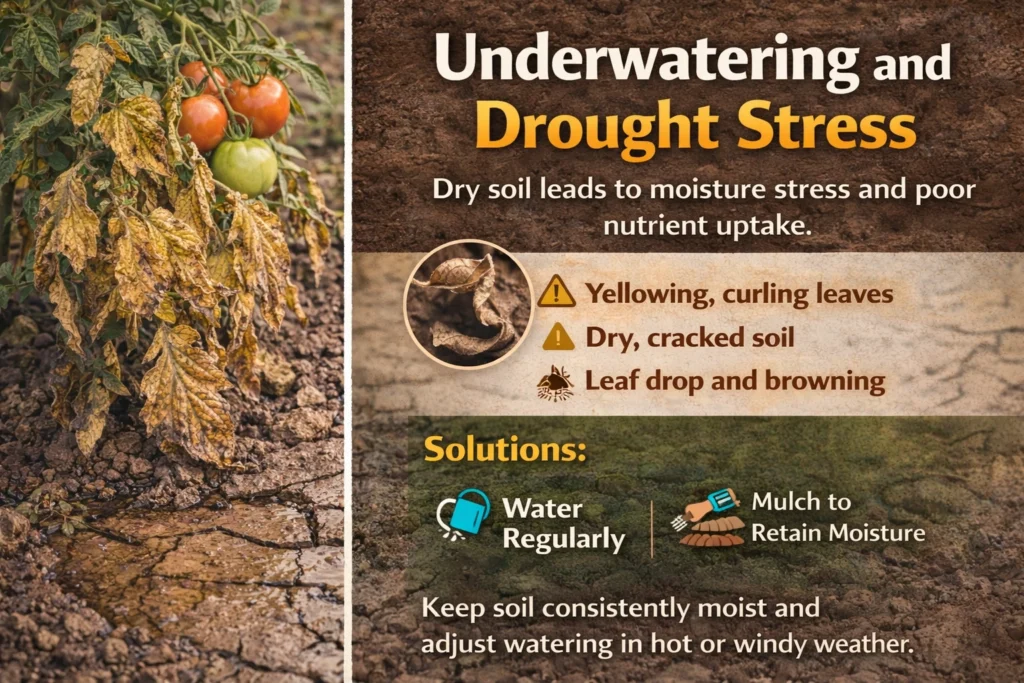
Underwatering and Drought Stress
Underwatering and drought stress can cause significant moisture stress in tomato plants, especially when the soil remains consistently dry for extended periods. Without adequate water, roots are unable to transport nutrients efficiently, leading to wilting and weakened growth. As a result, underwater tomato plants often develop tomato leaves that turn yellow and dry, starting from the lower leaves and progressing upward. Prolonged drought conditions can also cause leaf edges to curl, become brittle, and eventually drop off. Maintaining evenly moist soil and adjusting watering frequency during hot or windy weather helps reduce stress and keeps tomato plants productive.
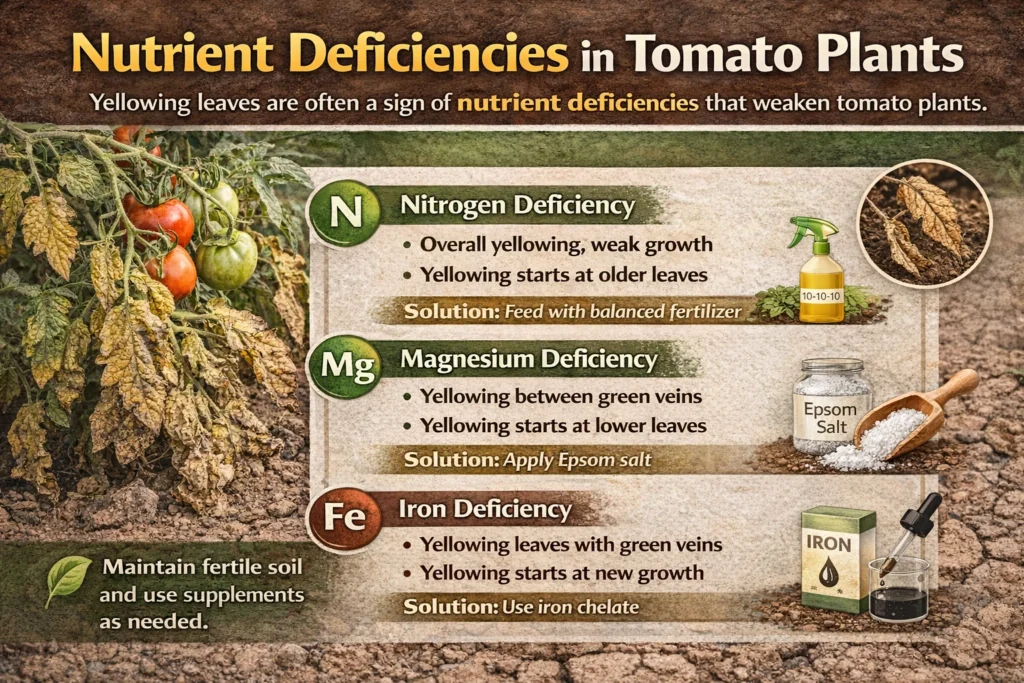
Nutrient Deficiencies in Tomato Plants
When you see yellow tomato leaves, nutrient deficiency can be the prominent cause and it is difficult to find out which one is deficient. Plant nutrition is the most important factor for plant growth and development. If there is little nutrient imbalance you will be seeing negative health effects on tomato plants. Nutrient deficiency can be caused by any reason like less fertile soil, fertilizers problem, harsh conditions for tomato plants making nutrient uptake difficult. Below are some important nutrients explained with their effect of deficiency on plants and possible solutions to make plants get them.
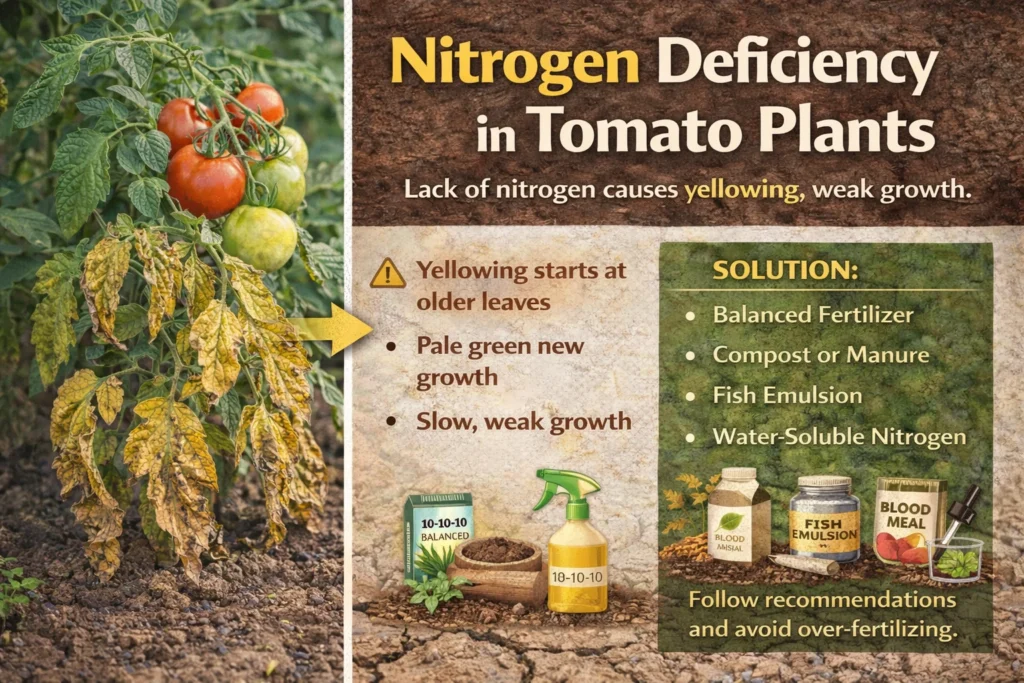
Nitrogen Deficiency in Tomato Plants
Nitrogen deficiency in tomato plants is one of the most common nutrient-related causes of yellowing foliage. When tomato plants are lacking nitrogen, the problem usually appears first as older leaves yellowing, while newer growth remains light in color. This leads to pale green foliage, slow plant growth, and overall poor vegetative growth, as nitrogen is essential for leaf development and chlorophyll production. Gardeners often notice yellow tomato leaves from nitrogen deficiency spreading upward if the issue is not corrected.
Solution: To fix nitrogen deficiency in tomato leaves, apply a balanced fertilizer or a nitrogen-rich amendment such as compost, well-rotted manure, fish emulsion, or blood meal. For quicker results, a water-soluble nitrogen fertilizer can help restore leaf color. Always follow recommended application rates and avoid over-fertilizing, as excessive nitrogen can cause leafy growth at the expense of fruit production.
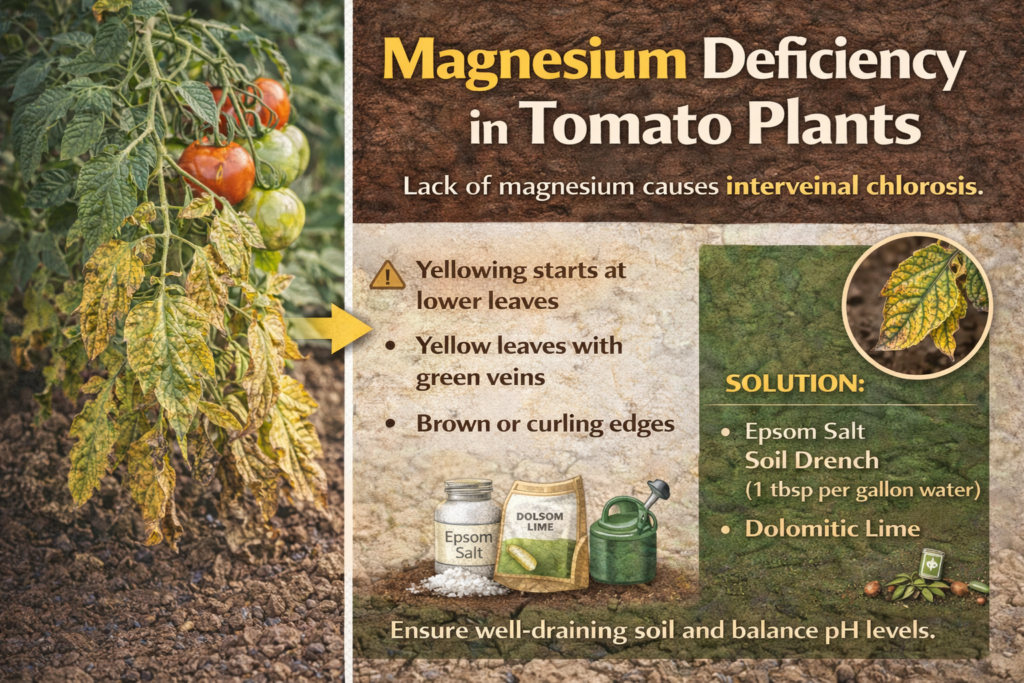
Magnesium Deficiency in Tomato Plants
Magnesium deficiency in tomato plants commonly shows up as lower leaf discoloration, making it easier to distinguish from other nutrient problems. With magnesium deficiency, tomato leaves develop interveinal chlorosis, where the leaf tissue turns yellow but the leaf veins remain green. This pattern leads to yellow leaves with green veins in tomatoes, a classic visual symptom that worsens over time. Because magnesium plays a critical role in chlorophyll production, this shortage causes photosynthesis disruption, reducing the plant’s ability to produce energy and support healthy growth. If left untreated, magnesium deficiency tomato leaves may curl, develop brown edges, and eventually drop off, weakening the overall plant.
Solution: To correct magnesium deficiency in tomato plants, apply Epsom salt (magnesium sulfate) by dissolving 1 tablespoon per gallon of water and using it as a soil drench or foliar spray. For longer-lasting results, incorporate dolomitic lime into the soil before planting or lightly top-dress around existing plants to improve magnesium levels and balance soil pH. Ensure the soil drains well and avoid excessive potassium or calcium fertilization, as these nutrients can interfere with magnesium uptake. With proper treatment, yellow leaves with green veins in tomatoes should begin to regain healthy color within a few weeks.
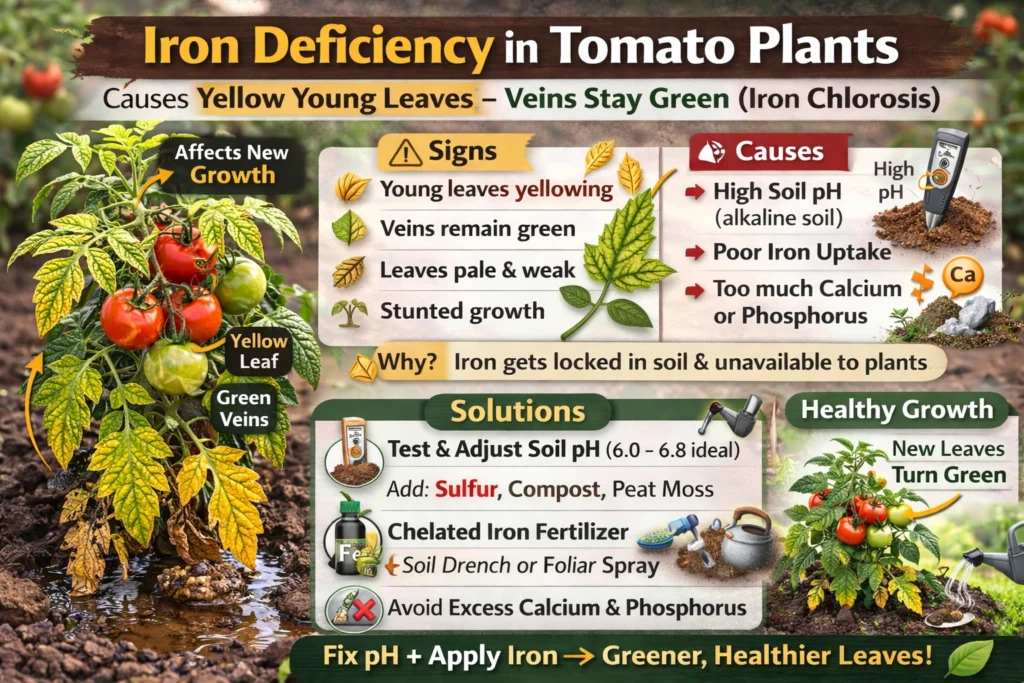
Iron Deficiency in Tomato Plants
Iron deficiency in tomato plants is a common micronutrient deficiency that primarily affects new growth. One of the earliest signs is young leaves yellowing while the veins often stay green, a condition known as iron chlorosis in tomatoes. This problem usually occurs due to limited iron uptake rather than a lack of iron in the soil itself. High soil pH or excessive calcium can bind iron, making it unavailable to the plant. As a result, gardeners often notice yellow young leaves on tomato plants becoming pale and weak, which can slow overall growth and reduce fruit production. Recognizing iron deficiency tomato leaves early helps prevent long-term stress and nutrient imbalance.
Solution: To correct iron deficiency in tomato plants, first test and adjust the soil pH, as high soil pH is the most common cause of poor iron availability. Lowering the pH slightly by adding elemental sulfur, peat moss, or compost can improve iron uptake over time. For faster results, apply a chelated iron fertilizer as a soil drench or foliar spray, which is effective even in alkaline soils. Avoid over-fertilizing with phosphorus or calcium, as these can further limit iron absorption. With proper treatment, iron chlorosis in tomatoes should begin to improve as new growth emerges greener and healthier.
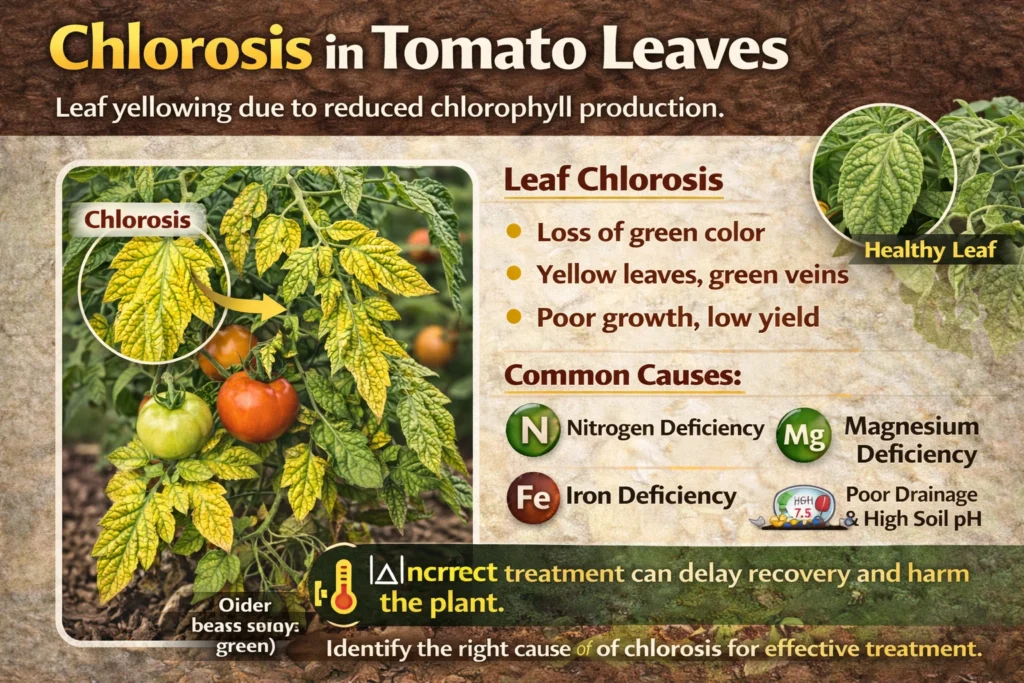
Chlorosis in Tomato Leaves
Chlorosis in tomato leaves refers to a condition where leaves lose their healthy green color due to reduced chlorophyll production. This visible leaf yellowing pattern can affect either older or younger leaves, depending on the underlying issue. In most cases, chlorosis is linked to nutrient-related stress, such as deficiencies in nitrogen, magnesium, or iron, though poor drainage, root damage, and high soil pH can also contribute. As yellowing leaves from chlorophyll loss worsen, plants may experience slower growth, weaker stems, and reduced fruit yield. Understanding tomato leaf chlorosis causes is essential for accurate diagnosis, since treating the wrong deficiency can delay recovery and further stress the plant.
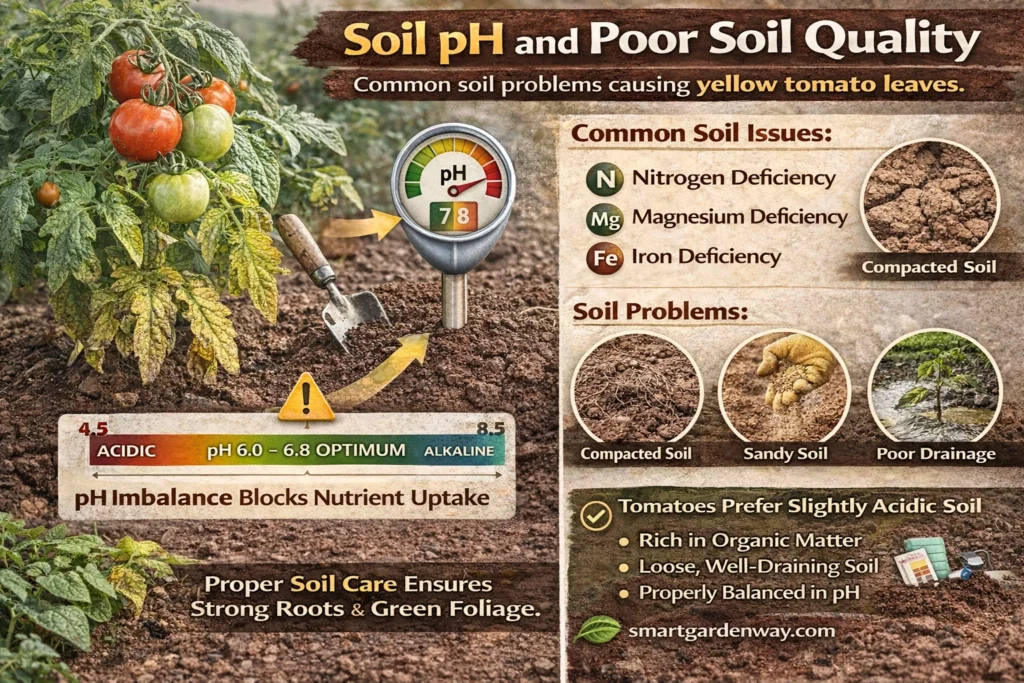
Soil pH and Poor Soil Quality
Soil pH and poor soil quality play a major role in plant health and are common soil problems causing yellow tomato leaves. A soil pH imbalance can prevent proper nutrient uptake, even when nutrients are present in the soil. Tomatoes prefer slightly acidic soil (around pH 6.0–6.8), and levels outside this range can lock out essential elements like nitrogen, magnesium, and iron. In addition, weak soil structure such as compacted, sandy, or poorly draining soil can restrict root growth and limit oxygen availability. Choosing the best soil for tomato plants, which is well-draining, rich in organic matter, and properly balanced in pH, helps ensure strong roots, steady nutrient absorption, and vibrant green foliage.
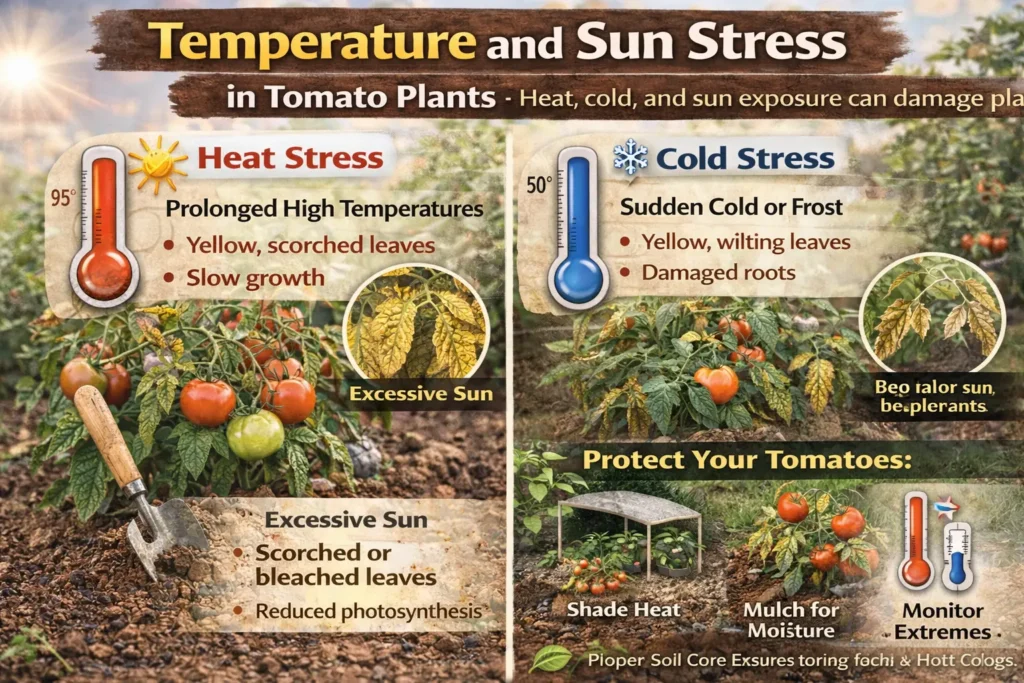
Temperature and Sun Stress
Temperature and sun stress can significantly affect tomato plant health and often cause tomato leaves yellow in heat or under sudden temperature changes. Heat stress from prolonged high temperatures can slow growth, scorch leaves, and lead to yellowing, while sudden cold spells or cold shock can damage young shoots and roots. Excessive sun exposure may also bleach leaves and create stress patterns that reduce photosynthesis. These conditions are common tomato plant stress symptoms that signal the need for protective measures such as shade cloths, mulching to retain soil moisture, and careful monitoring of temperature extremes to keep plants healthy and productive.
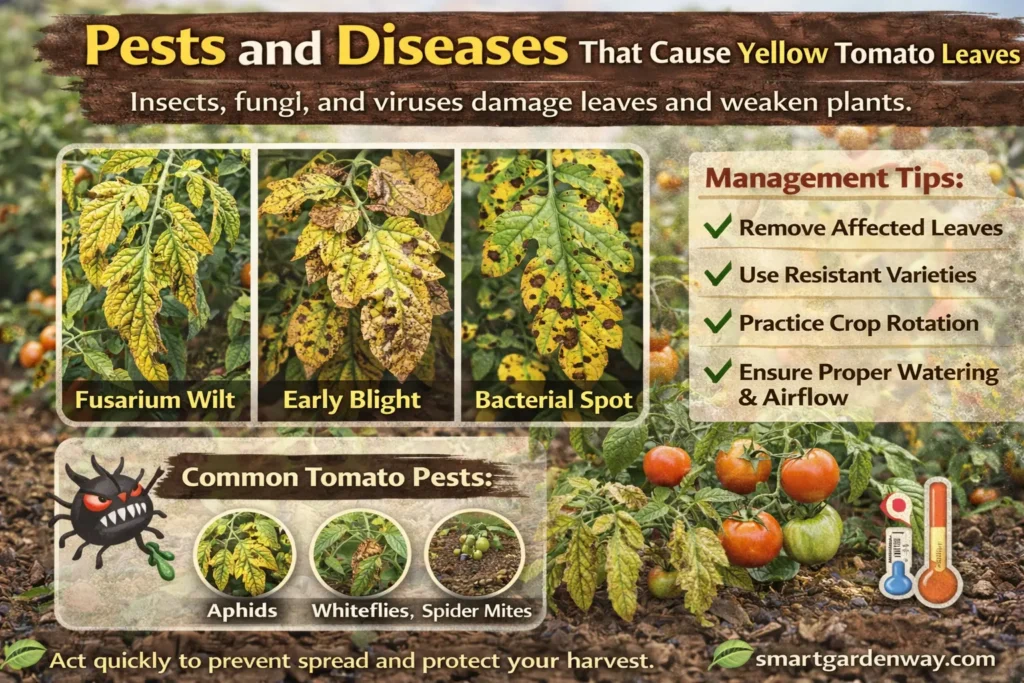
Pests and Diseases That Cause Yellow Tomato Leaves
Pests and diseases are major contributors to tomato leaf problems and can cause significant plant damage if left unchecked. Plant pathogens, including fungi, bacteria, and viruses, create disease pressure that often shows up as yellowing leaves, spotting, or wilting. Early recognition of these leaf symptoms is crucial, as many tomato plant diseases such as fusarium wilt, bacterial spot, or early blight spread quickly and reduce plant vigor and fruit yield. Effective management includes removing affected leaves, practicing crop rotation, using disease-resistant varieties, and maintaining proper watering and airflow to minimize the risk of infection.
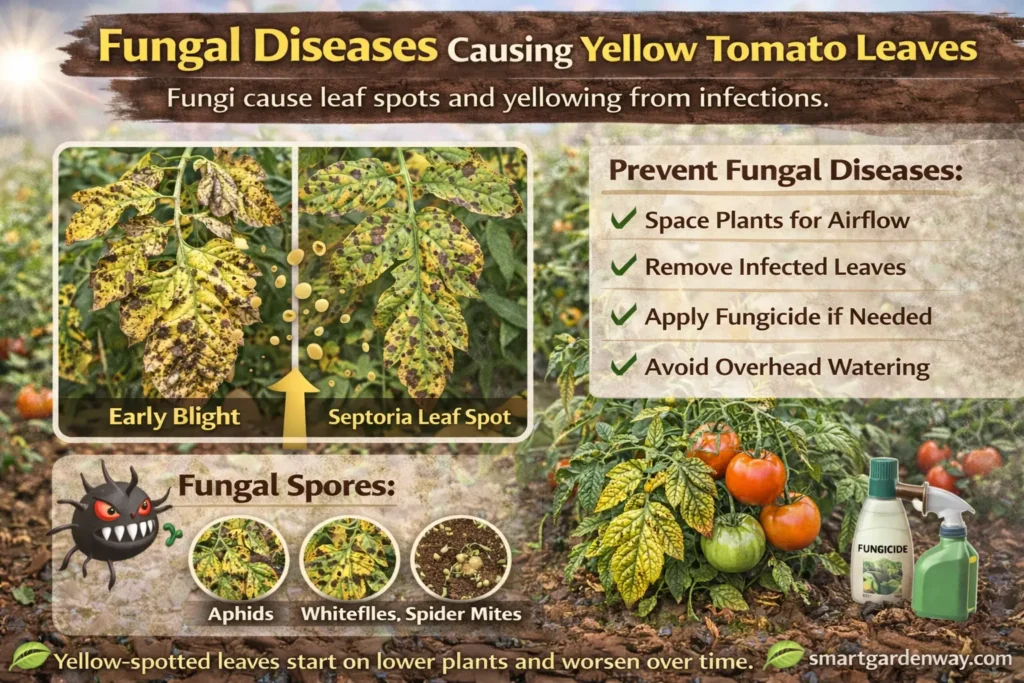
Fungal Diseases Causing Yellow Tomato Leaves
Fungal diseases are among the most common causes of yellow leaves from tomato fungus. Conditions such as early blight and septoria leaf spot create leaf spotting and often lead to tomato leaf disease yellowing, especially under moist conditions that favor fungal growth. These pathogens reproduce through spore spread, rapidly infecting healthy leaves and weakening the plant. Gardeners frequently notice fungal disease yellow tomato leaves starting on the lower foliage and progressing upward if untreated. Preventive measures include proper spacing for airflow, removing infected leaves, applying fungicides when necessary, and avoiding overhead watering to reduce prolonged leaf wetness.
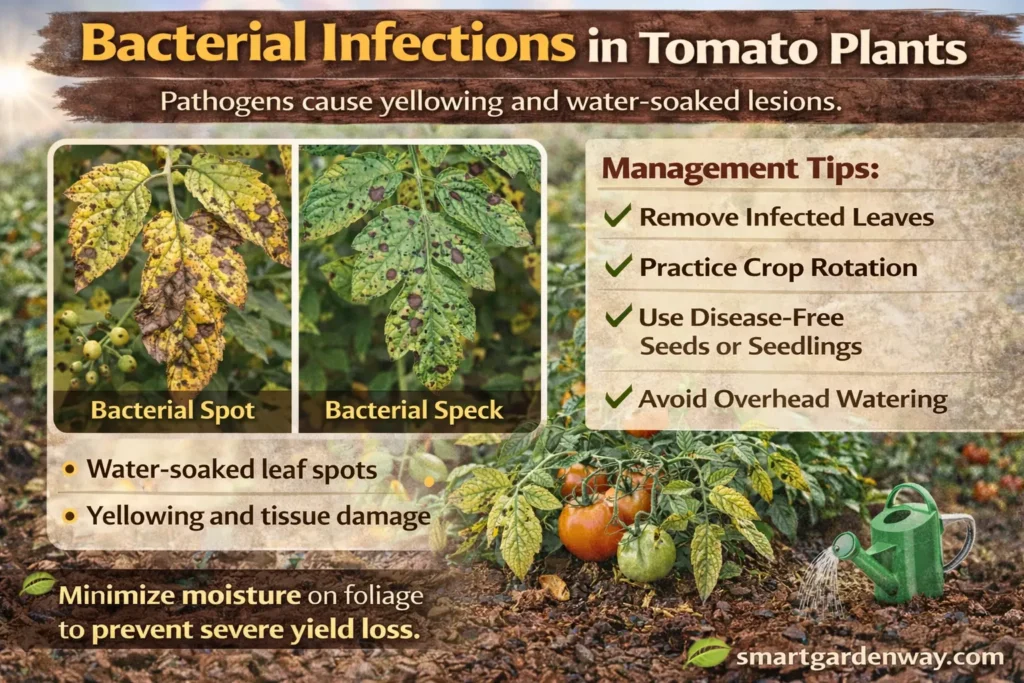
Bacterial Infections in Tomato Plants
Bacterial infections can cause serious tomato leaf yellowing disease and reduce plant vigor. Common pathogens include bacterial spot and bacterial speck, which produce water-soaked lesions on leaves that eventually lead to leaf tissue damage and yellowing. These infections often start on older leaves and can spread rapidly in warm, wet conditions, resulting in yellow tomato leaves from bacterial infection. Managing bacterial diseases involves removing and destroying infected leaves, practicing crop rotation, using disease-free seeds or seedlings, and avoiding overhead watering to minimize moisture on foliage. Early detection of bacterial disease in tomato leaves is essential to prevent severe yield loss.
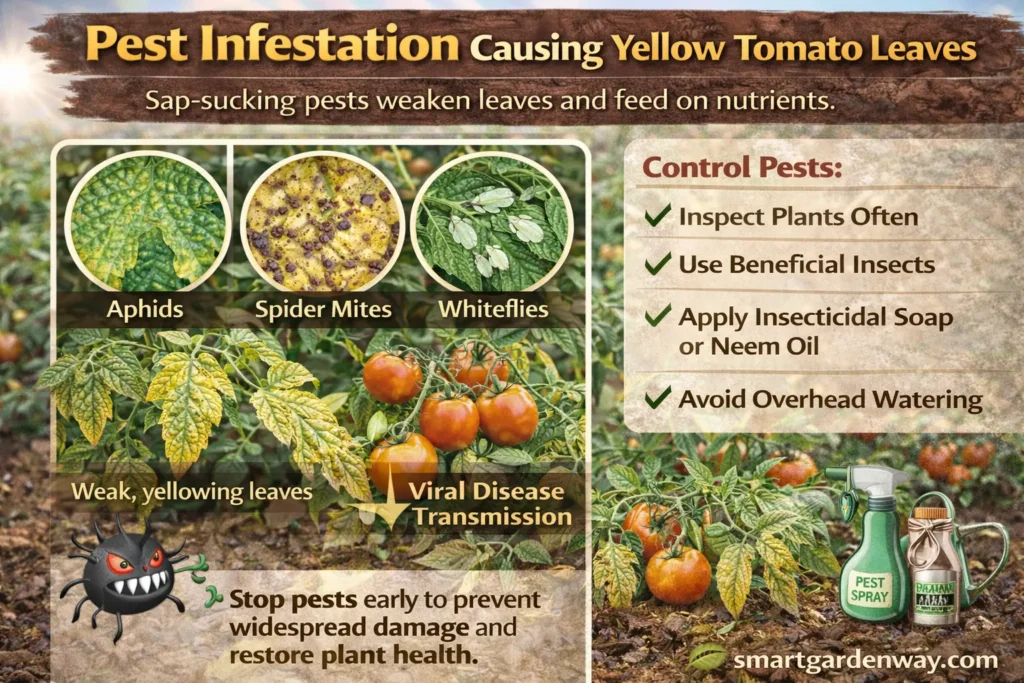
Pest Infestation Causing Yellow Tomato Leaves
Pest infestation is a common reason for tomato leaves yellow from pests. Sap-sucking insects such as aphids, spider mites, and whiteflies feed on the plant’s nutrients, weakening leaves and causing pests causing yellow tomato leaves. These insects can stunt growth, deform new shoots, and sometimes transmit viral diseases that worsen insects eating tomato leaves. Early detection is key, regularly inspecting plants and controlling pests through natural predators, insecticidal soaps, or neem oil can help prevent widespread damage and restore plant health.
How to Fix Yellow Leaves on Tomato Plants
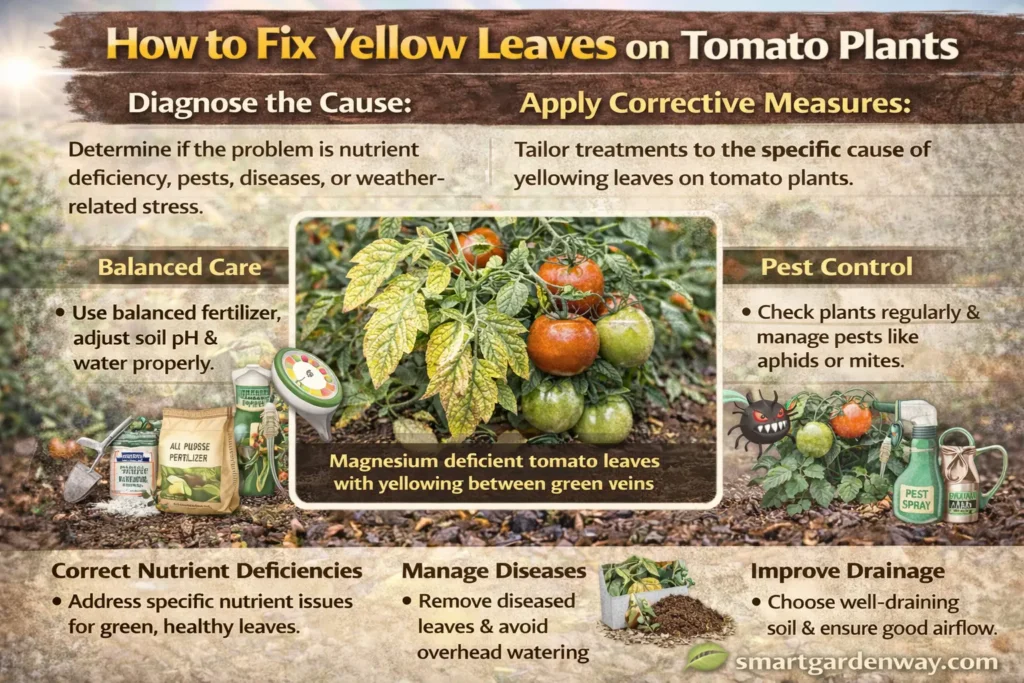
Knowing how to fix yellow tomato leaves requires a combination of corrective measures and attentive care. First, identify the underlying cause whether it’s nutrient deficiency, pest infestation, fungal or bacterial disease, or environmental stress like overwatering or temperature extremes. Once diagnosed, apply the appropriate treatment, such as adjusting soil pH, providing balanced care with fertilizers and proper watering, controlling pests, or improving drainage and airflow. Timely intervention encourages plant recovery, helping tomato leaves regain healthy green color and ensuring strong growth and fruit production. Regular monitoring and preventive practices also help treat yellow leaves on tomato plants before serious damage occurs.
When to Worry About Yellow Tomato Leaves
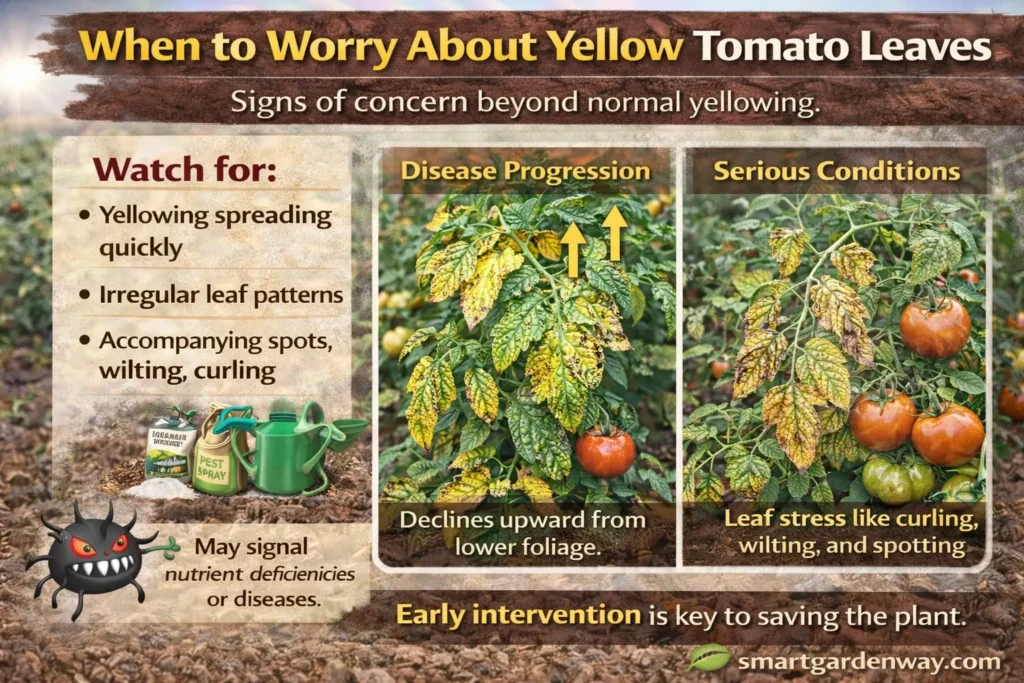
While some yellowing of tomato leaves is normal, it’s important to know when to worry about yellow tomato leaves. Watch for disease progression, where yellowing spreads rapidly from lower to upper leaves, or when the leaf spread pattern appears irregular and accompanied by spots, wilting, or curling. These signs may indicate serious issues such as nutrient deficiencies, fungal or bacterial infections, or pest infestations. If left untreated, such conditions can lead to plant decline and reduced fruit production. Gardeners should be alert to yellow tomato leaves spreading quickly or other dying tomato plant signs, as early intervention is crucial to save the plant.
How to Prevent Tomato Leaves from Turning Yellow
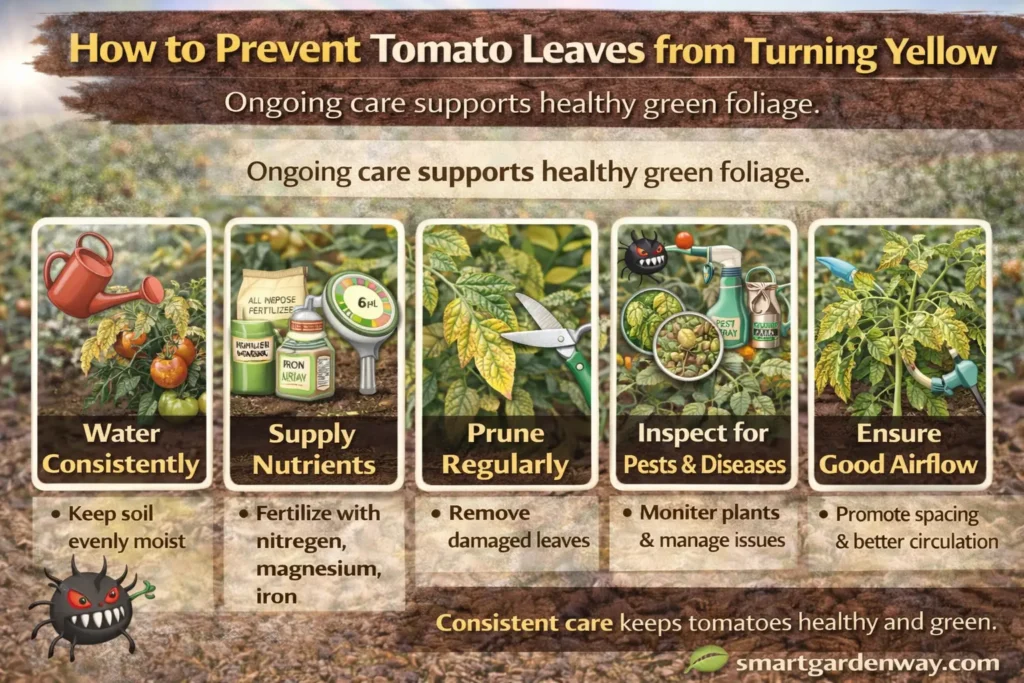
The best way to prevent yellow tomato leaves is through proactive care and regular plant maintenance. Ensure consistent watering, keeping the soil evenly moist without waterlogging, and provide proper fertilization to supply essential nutrients like nitrogen, magnesium, and iron. Regularly prune and remove damaged leaves, monitor for pests and diseases, and maintain good airflow around plants to reduce stress. By following these steps, gardeners can keep tomato plants healthy, minimize nutrient-related stress, and maintain vibrant green foliage throughout the growing season.
FAQs About Yellow Tomato Leaves
Q1: Why are my tomato leaves turning yellow and brown?
Yellow and brown leaves usually indicate nutrient deficiencies, water stress, pests, or disease. Brown edges often appear with drought stress or sun scorch, while yellowing can result from nitrogen, magnesium, or iron deficiency. Identifying the underlying cause is key to treating the problem and restoring healthy growth.
Q2: Should I remove yellow leaves from tomato plants?
Yes, removing yellow or damaged leaves can help prevent disease spread and improve airflow around the plant. Only remove leaves that are fully yellow or diseased. Healthy yellowing leaves may still recover if the underlying issue, such as nutrient imbalance or water stress, is corrected.
Q3: Can tomatoes recover from yellow leaves?
Tomatoes can recover if the cause of yellowing is addressed promptly. Correcting nutrient deficiencies, adjusting watering, controlling pests, or treating diseases allows plants to produce new healthy foliage. Early intervention improves plant vigor and fruit yield, while prolonged stress may limit recovery.
Q4: Do yellow leaves mean my tomato plant is dying?
Not necessarily. Yellow leaves are often a warning sign rather than a death sentence. Monitoring leaf spread patterns, disease progression, and plant vigor helps determine severity. With proper care, nutrients, water, and pest or disease management most tomato plants can bounce back.
Conclusion
Proper care is essential to stop tomato leaves from turning yellow and ensure healthy tomato growth. By identifying the underlying causes, whether nutrient deficiencies, water stress, pests, diseases, or environmental factors, gardeners can apply targeted corrective measures to restore plant vigor. Consistent proper plant care, including balanced fertilization, regular watering, good soil management, and timely pest and disease control, helps tomato plants recover from yellowing leaves and thrive. Preventive practices, such as maintaining optimal soil pH, monitoring for early signs of stress, and pruning damaged foliage, support long-term prevention and minimize recurring issues. Following these steps allows gardeners to maintain healthy tomato plants, maximize fruit production, and enjoy a thriving garden season after season. Ultimately, attentive care and proactive monitoring are the keys to keeping tomato plants lush, green, and productive.