
If you’re wondering How to hang frames without nails, the short answer is this: you can securely mount picture frames, artwork, photos, and even heavy objects using adhesive picture hanging strips, Command™ Strips, wall-friendly picture hangers, Push’ums Drywall Hooks, Stick’ums Drywall Anchors, hook and loop tape, French cleats, pegboards, ceiling systems, STAS picture hanging systems, or even by leaning frames creatively all without drilling holes or leaving visible nail damage. Whether you live in a rented apartment, want to avoid damaging drywall, or simply prefer flexible picture hanging systems that allow easy rearranging, there are reliable damage-free hanging solutions available.
This complete guide brings together every major method, tool, system, and frequently asked concern discussed across leading resources from Command™ Strips and adhesive tapes to STAS rail systems and HangNailz hardware so you can choose the right approach for your wall surface, frame weight, and décor style.
Why People Want to Hang Frames Without Nails
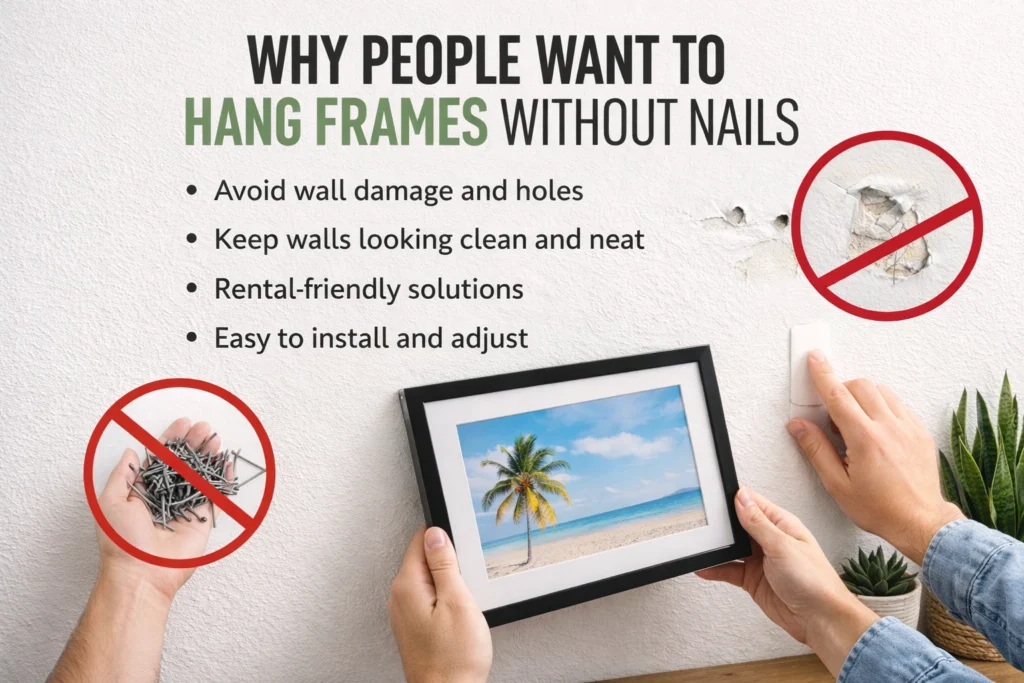
Avoiding nail holes isn’t just about convenience. Many people search for damage-free hanging options because:
- They live in rented homes or apartments where drilling isn’t allowed.
- They want to avoid cracked plaster, damaged paint, or sticky residue.
- They frequently rearrange décor and need flexible positioning.
- They want no tools required.
- They prefer wall-safe solutions that remove cleanly.
Traditional nails and screws can leave permanent holes in drywall. Even small nails may require spackle or repainting. Modern adhesive and rail-based systems allow you to hang picture frames without drills, without hammering, and without leaving visible wall damage.
Understanding Wall Types Before Choosing a Method
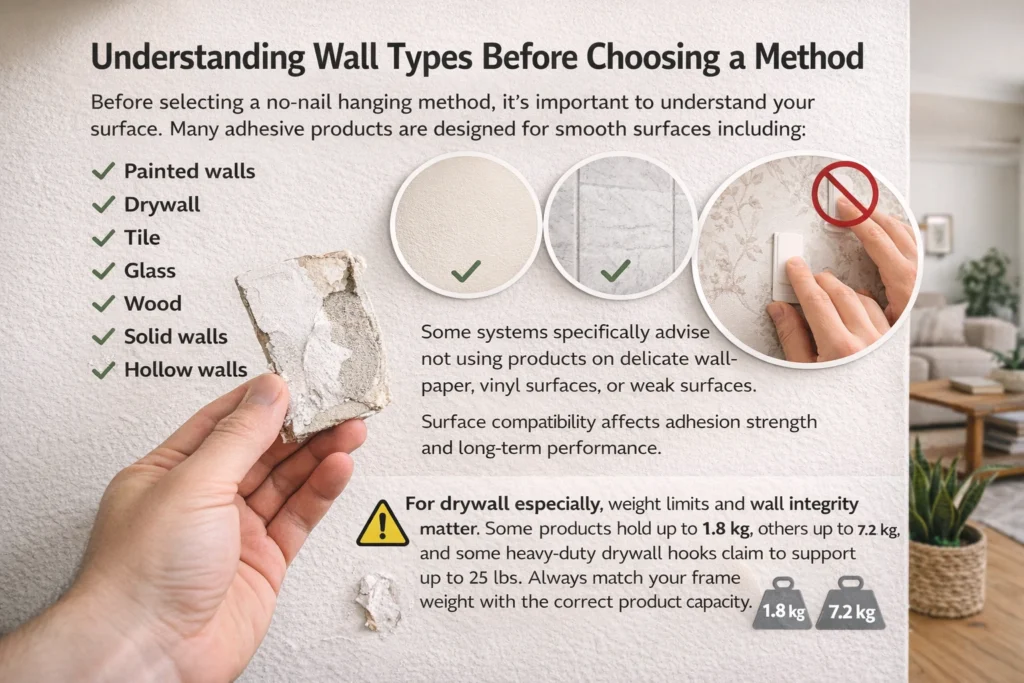
Before selecting a no-nail hanging method, it’s important to understand your surface. Many adhesive products are designed for smooth surfaces including:
- Painted walls
- Drywall
- Tile
- Glass
- Wood
- Solid walls
- Hollow walls
Some systems specifically advise not using products on delicate wallpaper, vinyl surfaces, or weak surfaces. Surface compatibility affects adhesion strength and long-term performance.
For drywall especially, weight limits and wall integrity matter. Some products hold up to 1.8 kg, others up to 7.2 kg, and some heavy-duty drywall hooks claim to support up to 25 lbs. Always match your frame weight with the correct product capacity.
1. Adhesive-Based Solutions for Hanging Frames Without Nails
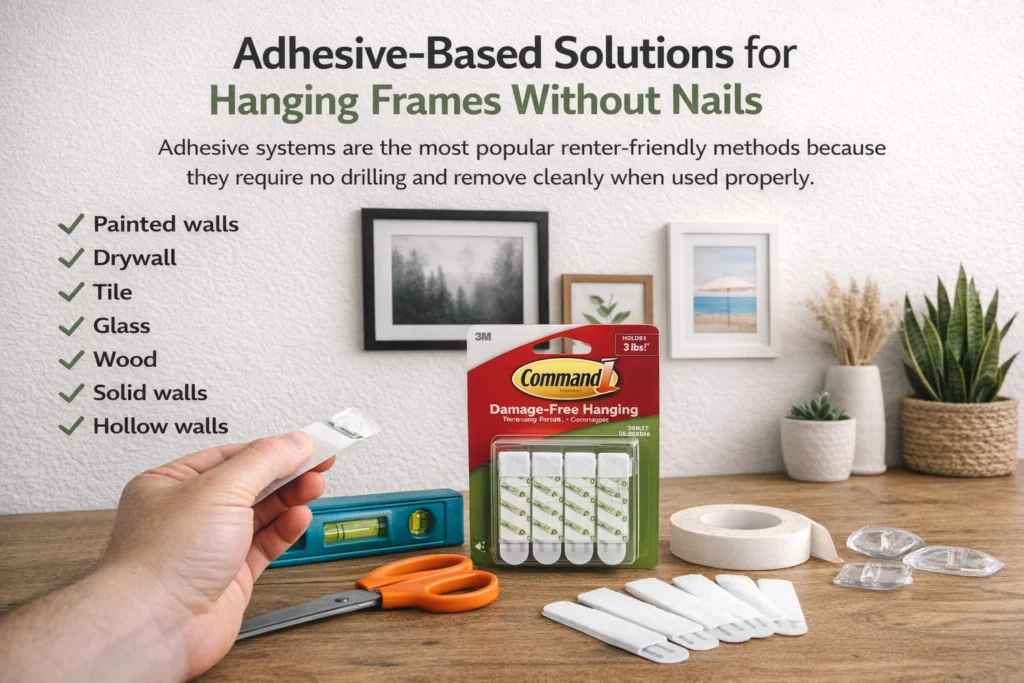
Adhesive systems are the most popular renter-friendly methods because they require no drilling and remove cleanly when used properly.
2. Command™ Picture Hanging Strips
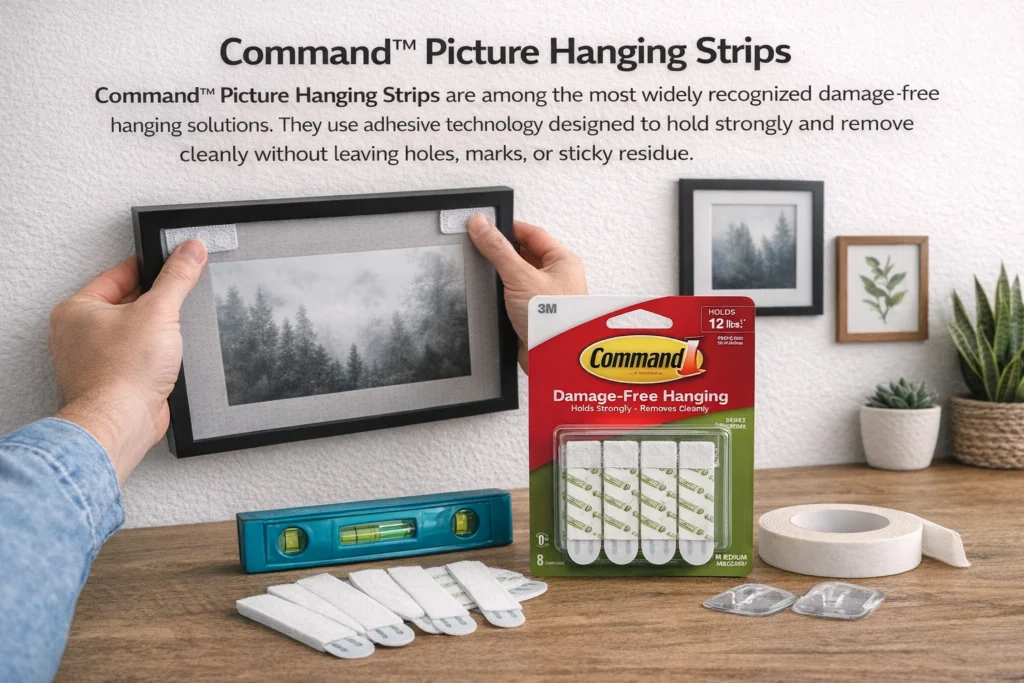
Command™ Picture Hanging Strips are among the most widely recognized damage-free hanging solutions. They use adhesive technology designed to hold strongly and remove cleanly without leaving holes, marks, or sticky residue.
How They Work
The strips press together until they click and lock in place. One side attaches to the frame, and the other adheres to the wall. After pressing firmly for 30 seconds and waiting about one hour for the adhesive bond to build strong adhesion, the frame can be mounted securely.
To remove, you pull the tab straight down slowly stretching up to several centimeters for damage-free removal.
Weight and Size Options
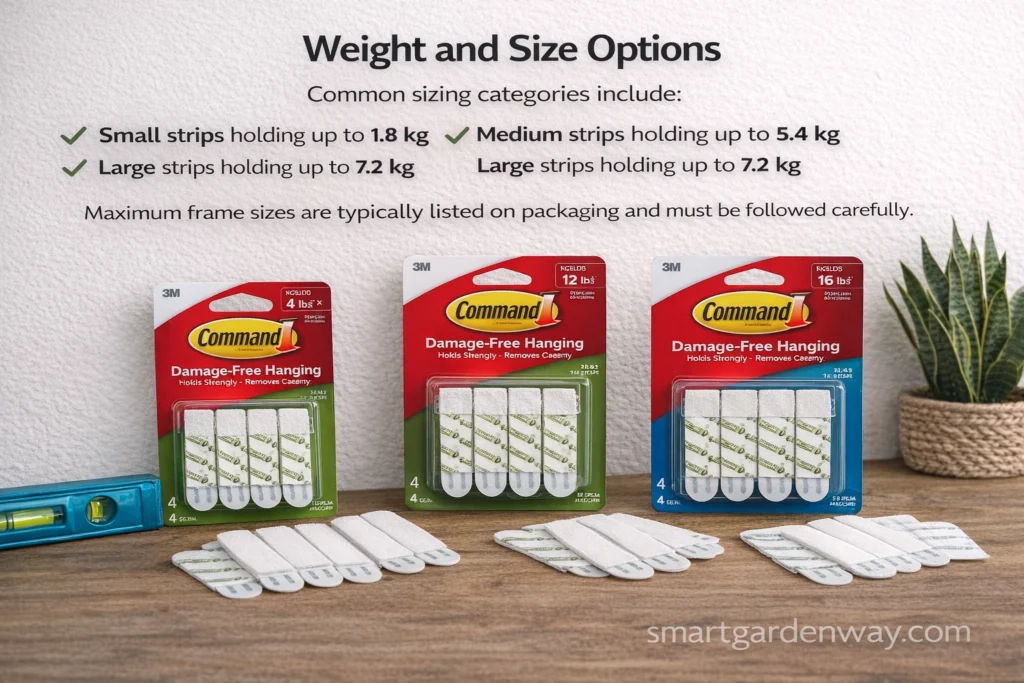
Common sizing categories include:
- Small strips holding up to 1.8 kg
- Medium strips holding up to 5.4 kg
- Large strips holding up to 7.2 kg
Maximum frame sizes are typically listed on packaging and must be followed carefully.
When to Use Command™ Strips
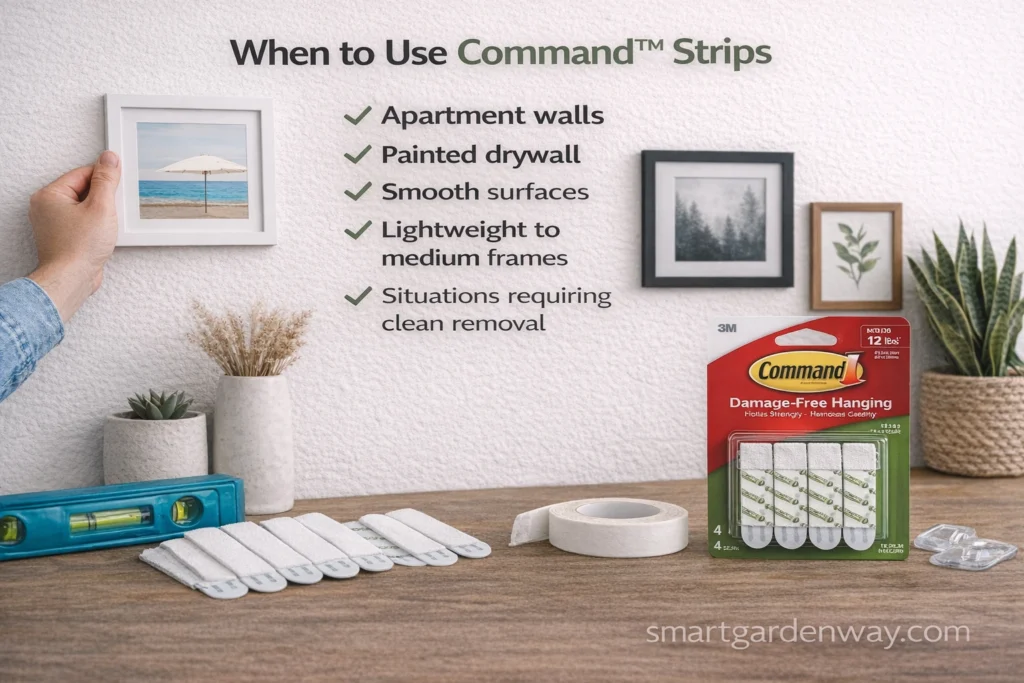
- Apartment walls
- Painted drywall
- Smooth surfaces
- Lightweight to medium frames
- Situations requiring clean removal
Heavy-Duty Command™ Strips
For heavier frames, heavy-duty Command™ Strips or Command™ XL Heavyweight Picture Hanging Strips are designed for greater weight capacity.
These are recommended for heavier décor but must still follow package weight limits. Even heavy-duty strips can fail if used on incompatible surfaces or overloaded.
Command™ Hooks
Command™ Hooks work well when frames have hanging wires or sawtooth hangers. Adhesive hooks attach to the wall, and the frame wire rests on the hook.
They’re useful for:
- Lightweight frames
- Hanging wires
- Temporary displays
3. Adhesive Tapes and Double-Sided Tape
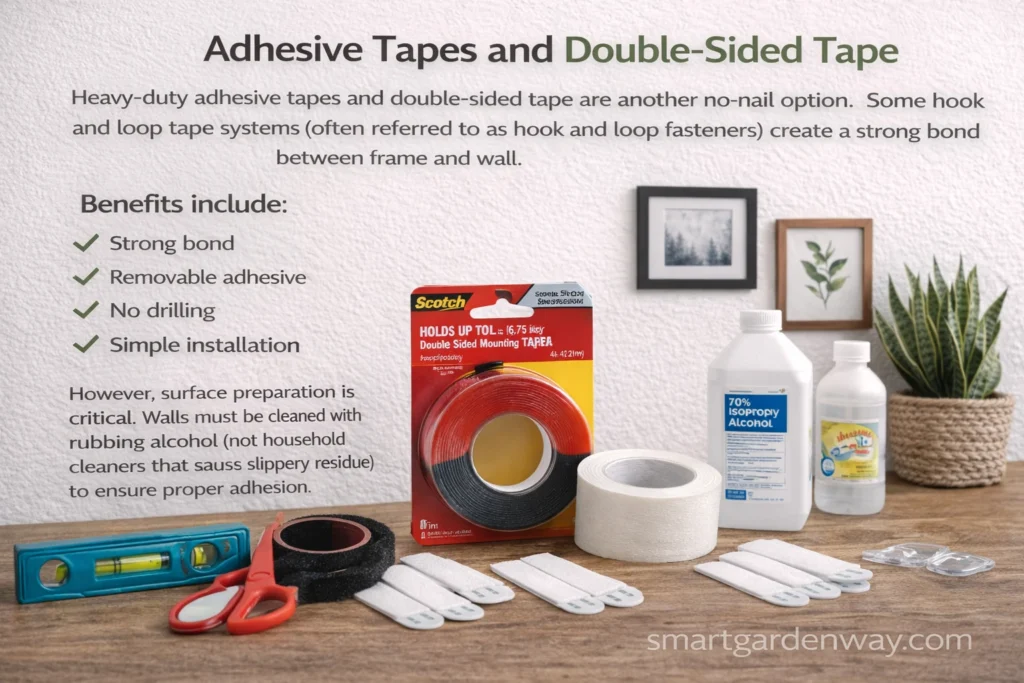
Heavy-duty adhesive tapes and double-sided tape are another no-nail option. Some hook and loop tape systems (often referred to as hook and loop fasteners) create a strong bond between frame and wall.
Benefits include:
- Strong bond
- Removable adhesive
- No drilling
- Simple installation
However, surface preparation is critical. Walls must be cleaned with rubbing alcohol (not household cleaners that leave slippery residue) to ensure proper adhesion.
4. Drywall Hook Systems
Some solutions don’t rely purely on adhesive but instead use minimal wall penetration without traditional nails.
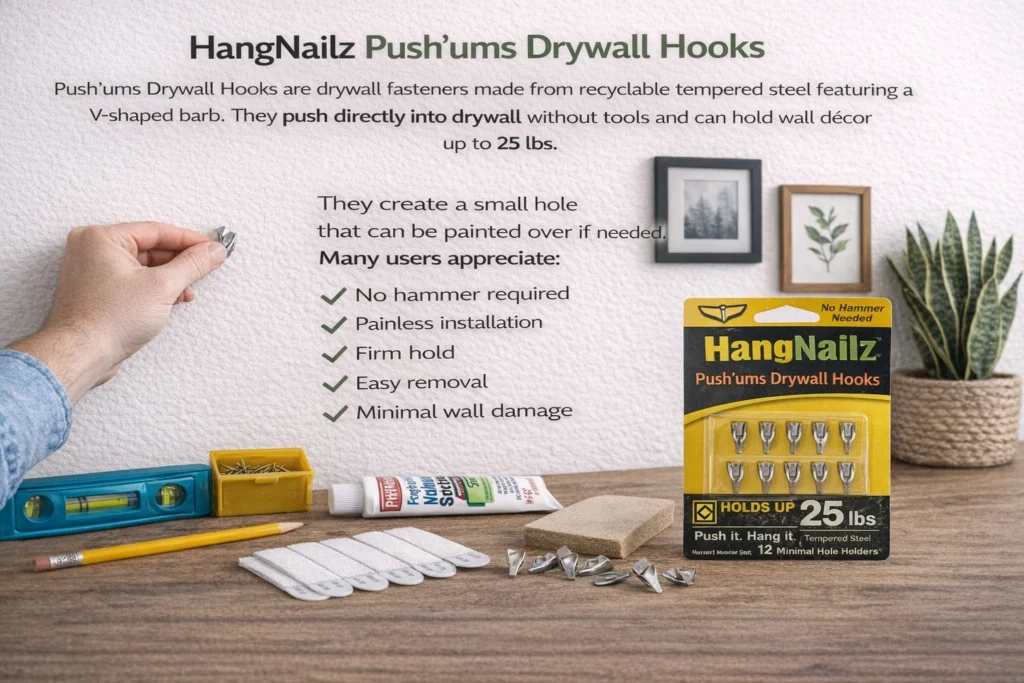
5. HangNailz Push’ums Drywall Hooks
Push’ums Drywall Hooks are drywall fasteners made from recyclable tempered steel featuring a V-shaped barb. They push directly into drywall without tools and can hold wall décor up to 25 lbs.
They create a small hole that can be painted over if needed. Many users appreciate:
- No hammer required
- Painless installation
- Firm hold
- Easy removal
- Minimal wall damage
6. Stick’ums Drywall Anchors
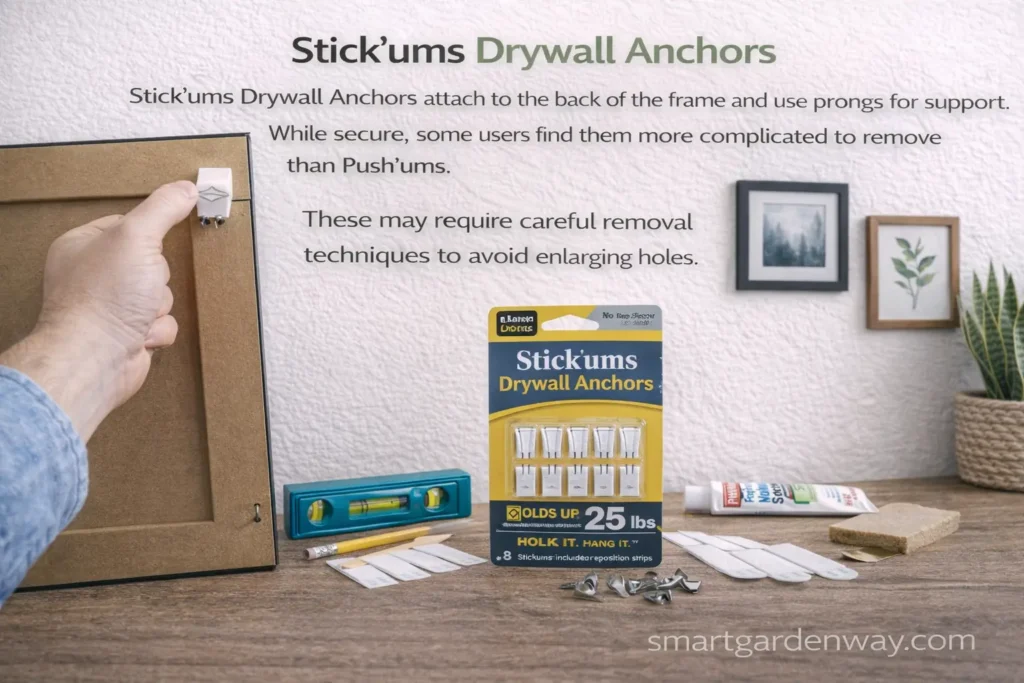
Stick’ums Drywall Anchors attach to the back of the frame and use prongs for support. While secure, some users find them more complicated to remove than Push’ums.
These may require careful removal techniques to avoid enlarging holes.
7. Press-In Hooks
Press-in hooks function similarly. They create tiny holes and often require minor spackle afterward but are less invasive than screws.
Mechanical Hardware Without Traditional Nails
Some systems technically use hardware but avoid standard nail holes.
8. French Cleats
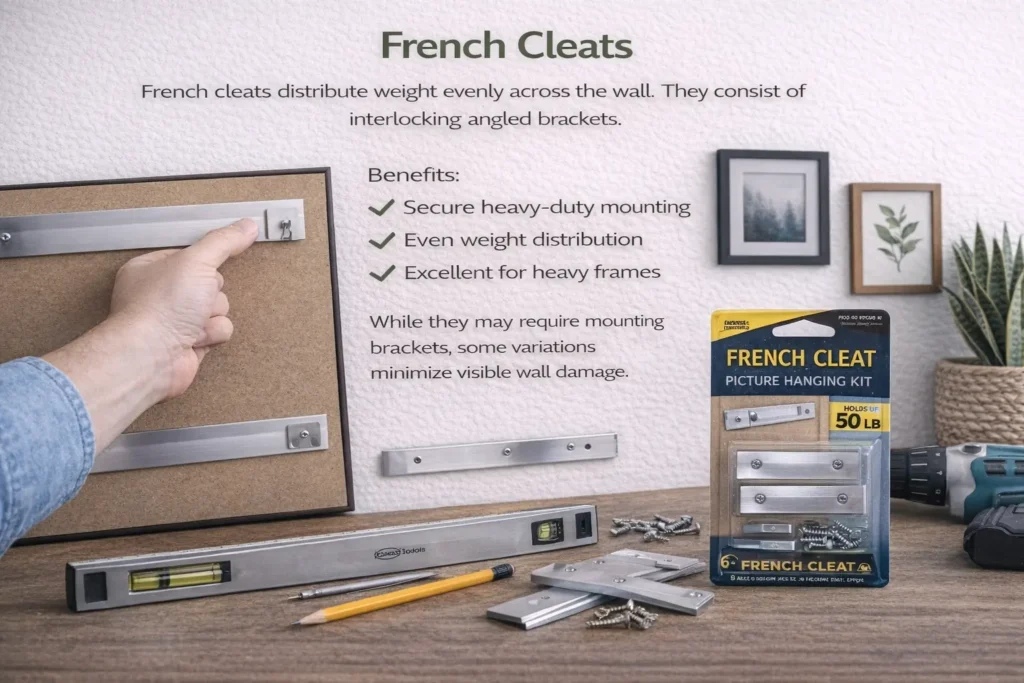
French cleats distribute weight evenly across the wall. They consist of interlocking angled brackets.
Benefits:
- Secure heavy-duty mounting
- Even weight distribution
- Excellent for heavy frames
While they may require mounting brackets, some variations minimize visible wall damage.
9. Sawtooth Hangers
Sawtooth hangers attach to the back of frames and can rest on adhesive hooks or drywall hooks. They provide stable alignment for medium-weight frames.
10. Hanging Wires
Picture wire combined with ceiling hooks or adhesive hooks creates overhead hanging options.
11. Creative No-Nail Display Methods
Not every method requires attaching frames directly to the wall.
12. Lean Your Framed Art
The wall lean method involves leaning frames against the wall, on the floor, on shelves, or on mantles.
Benefits:
- No wall contact
- Ideal for oversized frames
- Casual display style
- Easy rearranging
13. Use Your Mantle
Layered artwork on a fireplace mantle allows decorative styling without wall damage.
14. Bookshelf Displays
Placing framed art on bookshelves provides a flexible, renter-friendly display.
15. Easels
Freestanding art on a tabletop easel or floor easel avoids wall mounting entirely.
16. Clip Displays
Using clips, binder clips, or clip systems allows hanging lightweight artwork creatively.
Ceiling and Rail Systems
17. Hang Pictures From the Ceiling
Ceiling-mounted hooks or molding systems allow frames to hang from above.
18. Picture Rail Molding
Some homes include picture rail molding, allowing suspended frames without wall drilling.
19. STAS Picture Hanging Systems
STAS picture hanging systems use aluminum picture rails mounted once, allowing cords and hooks to slide for flexible positioning.
Features include:
- Install once and rearrange anytime
- Hook cords into the picture rail
- Slide picture hooks
- Hang multiple picture frames
- Flexible hanging system
- No repeated wall damage
Products include:
- STAS minirail
- STAS cliprail pro
- STAS cliprail max
- STAS j-rail max
- STAS multirail
20. Pegboards and Cork Walls
Install a Pegboard
Pegboards create customizable hanging systems. Hooks can be repositioned easily, making them ideal for creative wall décor.
Install a Cork Wall
A cork wall allows you to pin artwork directly without damaging drywall. Particularly useful for photos and lightweight frames.
Step-by-Step Guide: How to Hang Frames Without Nails
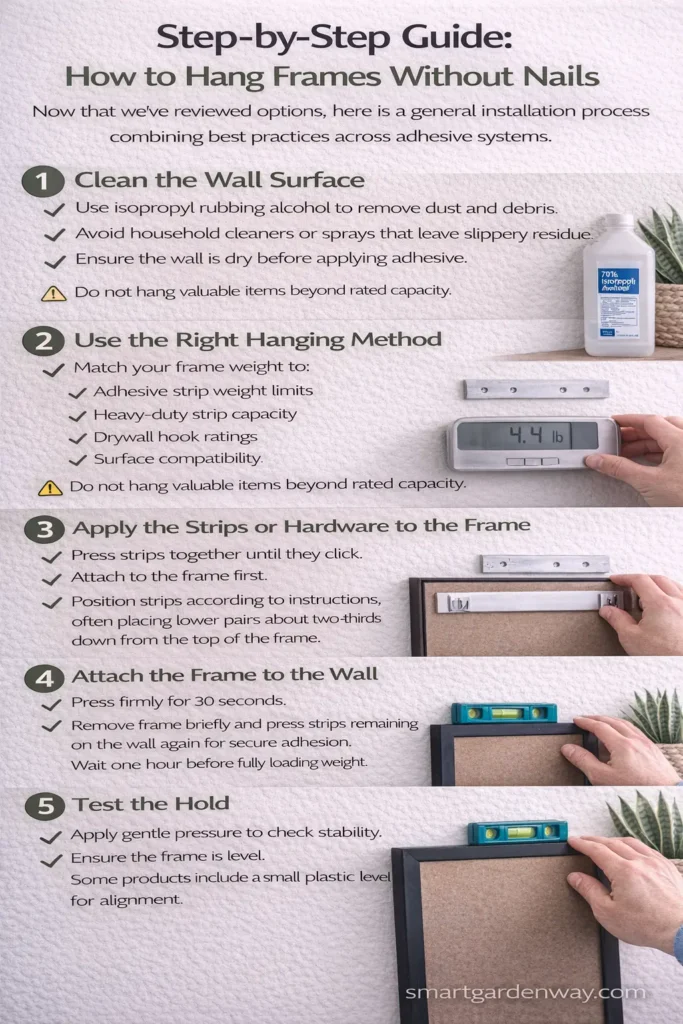
Now that we’ve reviewed options, here is a general installation process combining best practices across adhesive systems.
Step 1: Clean the Wall Surface
Use isopropyl rubbing alcohol to remove dust and debris. Avoid household cleaners or sprays that leave slippery residue.
Ensure the wall is dry before applying adhesive.
Step 2: Use the Right Hanging Method
Match your frame weight to:
- Adhesive strip weight limits
- Heavy-duty strip capacity
- Drywall hook ratings
- Surface compatibility
Do not hang valuable items beyond rated capacity.
Step 3: Apply the Strips or Hardware to the Frame
Press strips together until they click. Attach to the frame first.
Position strips according to instructions, often placing lower pairs about two-thirds down from the top of the frame.
Step 4: Attach the Frame to the Wall
Press firmly for 30 seconds. Remove frame briefly and press strips remaining on the wall again for secure adhesion. Wait one hour before fully loading weight.
Step 5: Test the Hold
Apply gentle pressure to check stability. Ensure the frame is level. Some products include a small plastic level for alignment.
Frequently Asked Questions
What is the safest way to hang a heavy picture?
For heavy pictures, consider heavy-duty Command™ Strips, Push’ums Drywall Hooks, or French cleats. Always check weight capacity and drywall condition.
How heavy can a picture be on drywall?
Weight capacity varies. Some strips hold up to 7.2 kg. Some drywall hooks claim up to 25 lbs. Always follow manufacturer instructions.
Do Command™ Strips really work for heavy pictures?
They work when weight limits and surface instructions are followed. Frames falling often result from improper installation or exceeding limits.
Can I hang frames without damaging wallpaper?
Most adhesive systems advise against delicate wallpaper. Consider rail systems or leaning methods instead.
How can I hang frames in an apartment without using nails?
Use adhesive strips, hook and loop tape, removable hooks, pegboards, or STAS rail systems.
Comparing Costs and Value
Some systems like HangNailz Push’ums may cost around $1.99 per unit, while Stick’ums may cost more. Command™ Strips vary by size. Rail systems involve higher upfront installation but allow endless rearranging.
Cost comparison should consider:
- Price per pack
- Long-term wall damage savings
- Ease of rearranging décor
- Surface repair avoidance
Final Advice for Damage-Free Hanging
- Follow manufacturer instructions carefully.
- Respect weight limitations.
- Avoid hanging over beds.
- Wait recommended bonding time.
- Pull adhesive tabs straight down for removal.
- Use proper alignment tools.
- Consider surface type before applying adhesive.
Conclusion: Choosing the Right Nail-Free Hanging Method
Learning How to hang frames without nails opens up a wide range of renter-friendly, damage-free, and flexible decorating possibilities. From adhesive picture hanging strips and heavy-duty Command™ Strips to Push’ums Drywall Hooks, hook and loop tape, French cleats, pegboards, ceiling systems, and STAS picture hanging systems, there is a solution for nearly every wall surface and frame weight. Lightweight frames may only require removable adhesive strips, while heavier artwork might benefit from drywall hook systems or weight-distributing cleats. Creative options like leaning frames, using mantles, bookshelves, or easels allow stylish displays without attaching anything to the wall at all. The key is matching the right hanging method to your surface type, frame weight, and flexibility needs. By preparing the wall properly, respecting weight limits, and following installation instructions carefully, you can hang frames securely, rearrange décor effortlessly, and avoid the frustration of nail holes, cracked plaster, or damaged paint all while keeping your walls intact.