
Garlic is one of the easiest and most rewarding crops you can grow in a garden. If you are wondering when to plant garlic, the simple answer is that garlic is usually planted in the fall, typically between September and November, before the ground freezes so the cloves can develop roots before winter and resume growth in early spring.
Gardeners plant garlic several weeks before winter because garlic requires a period of cold temperatures to develop large bulbs and strong cloves. When planted at the right time, garlic establishes roots, stays dormant during winter, and begins active growth again in spring before it is harvested in early summer.
Understanding when to plant garlic, how garlic grows underground, and how to properly prepare garlic cloves for planting can help gardeners produce larger bulbs and stronger harvests. This guide explains the best planting time, soil preparation, spacing, garlic varieties, planting methods, winter care, and harvesting practices so you can grow garlic successfully in your vegetable garden.
Understanding Garlic and How It Grows
Garlic is part of the Allium family, which includes onions, shallots, leeks, scallions, and chives. Like other allium crops, garlic grows underground and develops bulbs made up of multiple cloves covered by papery skins. Gardeners grow garlic by planting individual cloves taken from a garlic bulb.
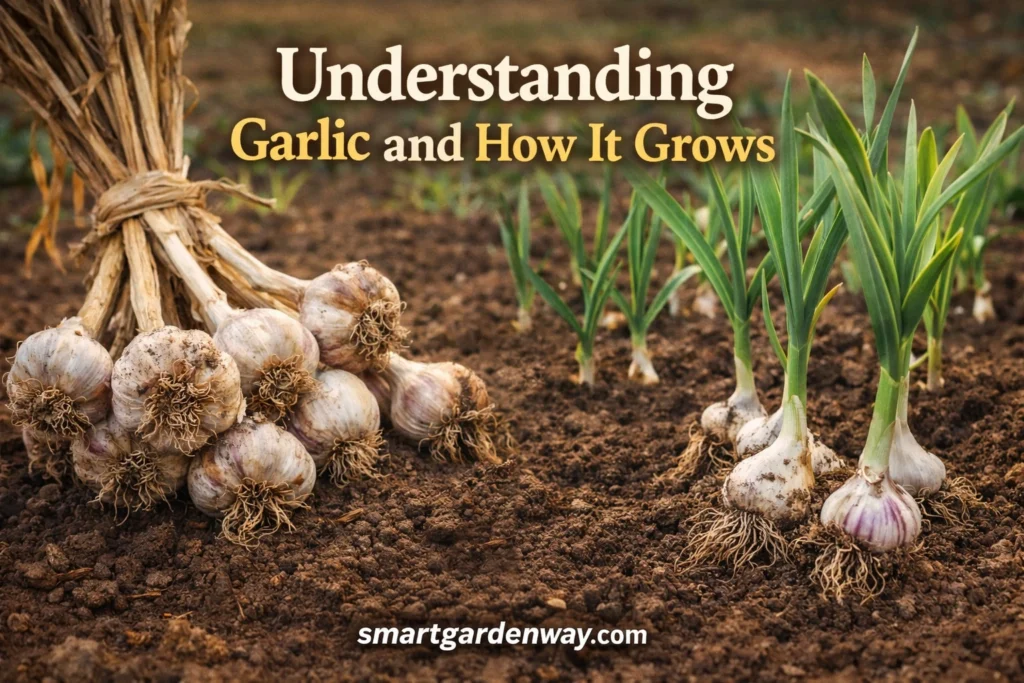
Unlike many other vegetable crops, garlic follows a unique growing cycle. When planted in fall, the cloves develop roots and begin early growth before winter arrives. As temperatures drop, garlic enters a dormant period underground. When spring temperatures begin to warm, garlic resumes active growth and produces leaves, stems, and eventually mature bulbs.
The reason garlic is commonly planted in autumn is because the crop requires exposure to cold temperatures. This cold period allows the bulb to divide and form multiple cloves, resulting in the full garlic heads harvested during summer.
Garlic is considered an easy crop for gardeners because it requires minimal care once established. When planted correctly in well-drained soil and exposed to sunlight, garlic plants develop strong roots and produce large bulbs by the end of the growing season.
Why the Right Timing Matters When to Plant Garlic
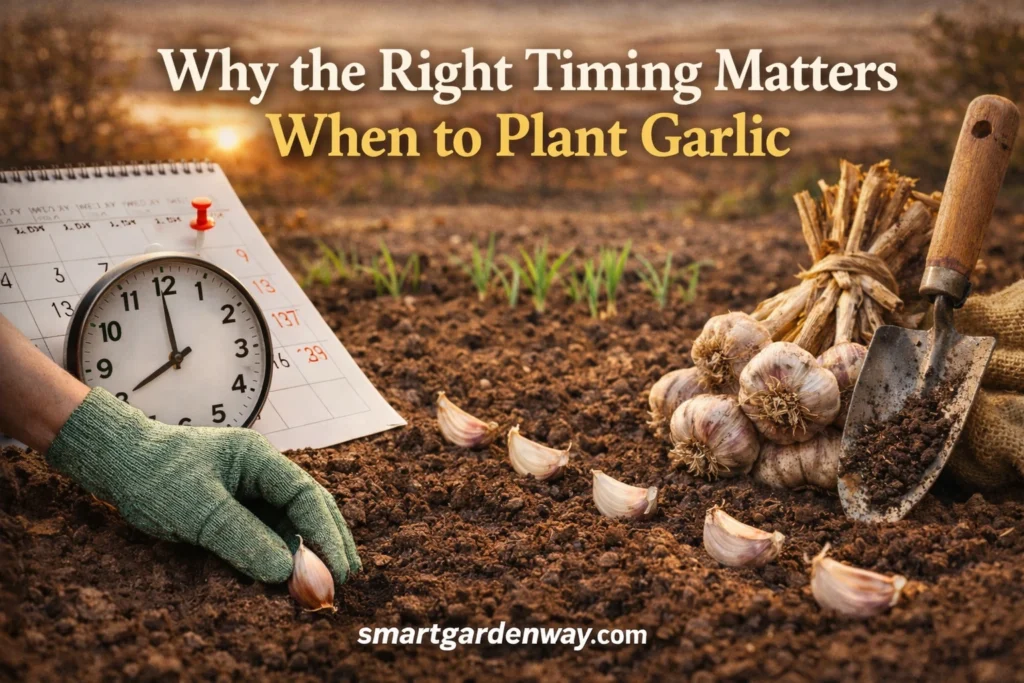
Knowing when to plant garlic plays a major role in determining the final bulb size and harvest quality. Planting garlic too early may cause the cloves to sprout too much before winter, which can expose young shoots to frost damage. Planting too late may prevent the cloves from developing roots before the soil freezes.
Most gardeners plant garlic in fall because fall-planted garlic produces larger bulbs and stronger root systems. The cloves grow roots before winter arrives, which allows the plant to establish itself in the soil. During winter, the plant remains dormant underground while the soil temperature stays cold.
When spring arrives, garlic resumes growth quickly and produces leaves that help feed the developing bulb. Because the roots are already established, the plant is able to use spring moisture and nutrients efficiently. This process leads to larger bulbs compared with garlic planted in spring.
In areas with colder climates, gardeners often plant garlic several weeks after the first fall frost but before the soil freezes. This timing allows roots to grow while preventing early sprouting.
Best Time of Year When to Plant Garlic
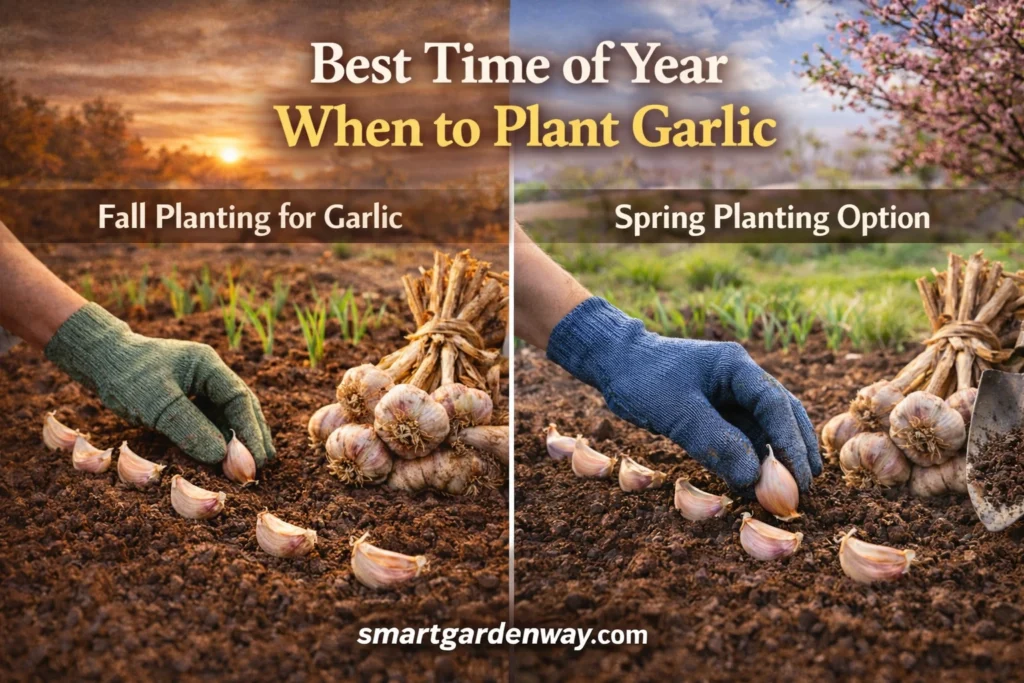
Fall Planting for Garlic
For most gardeners, fall is the ideal time for garlic planting. Many gardeners plant garlic between October and early November, although the exact timing depends on the local climate and frost schedule.
Planting garlic during this time allows the cloves to begin root growth while soil temperatures remain cool but not frozen. Garlic requires a chilling period during winter to properly form bulbs in the following growing season.
Fall planting also allows the crop to take advantage of winter moisture and early spring growth. By the time spring arrives, the plant already has a developed root system and can quickly produce leaves and stems.
Spring Planting Option
Although fall planting is the preferred method, garlic can also be planted in early spring. However, spring planting may produce smaller bulbs because the cloves receive less exposure to cold temperatures.
In some cases, gardeners store garlic bulbs in a refrigerator for several weeks before planting in spring. This cold treatment helps mimic the natural winter conditions that garlic requires for bulb formation.
When planting garlic in spring, it is important to plant the cloves as early as possible in the season so the bulbs have enough time to develop before harvest.
Understanding Garlic Varieties
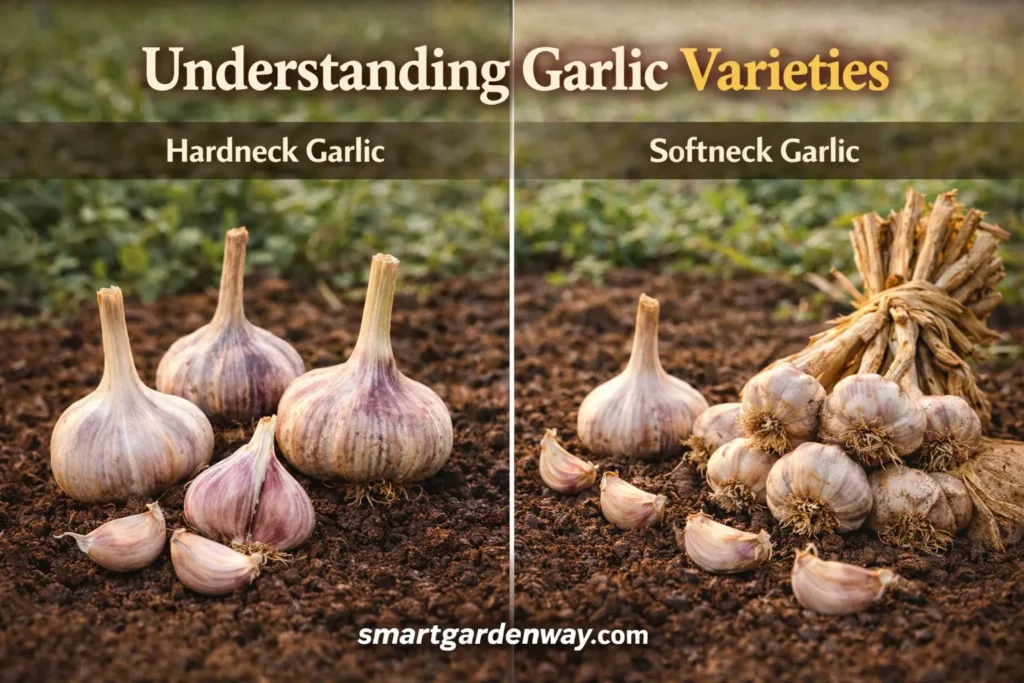
Garlic generally falls into two main categories: hardneck garlic and softneck garlic. Each type grows slightly differently and may perform better in certain climates.
Hardneck Garlic
Hardneck garlic produces a stiff flower stalk known as a scape. These scapes are edible and often harvested before the bulb matures. Hardneck varieties are known for their strong flavor and are commonly grown in colder climates.
Hardneck garlic is well suited to regions with cold winters because it tolerates lower temperatures. The scapes appear during the growing season and are often removed to help the plant direct energy toward bulb development.
Softneck Garlic
Softneck garlic is the type most commonly found in grocery stores. These plants produce flexible stalks that can be braided for storage. Softneck varieties tend to store longer than hardneck garlic and are better suited for warmer climates.
Because softneck garlic does not produce scapes, the plant directs more energy toward bulb production throughout the growing season.
Selecting Garlic for Planting
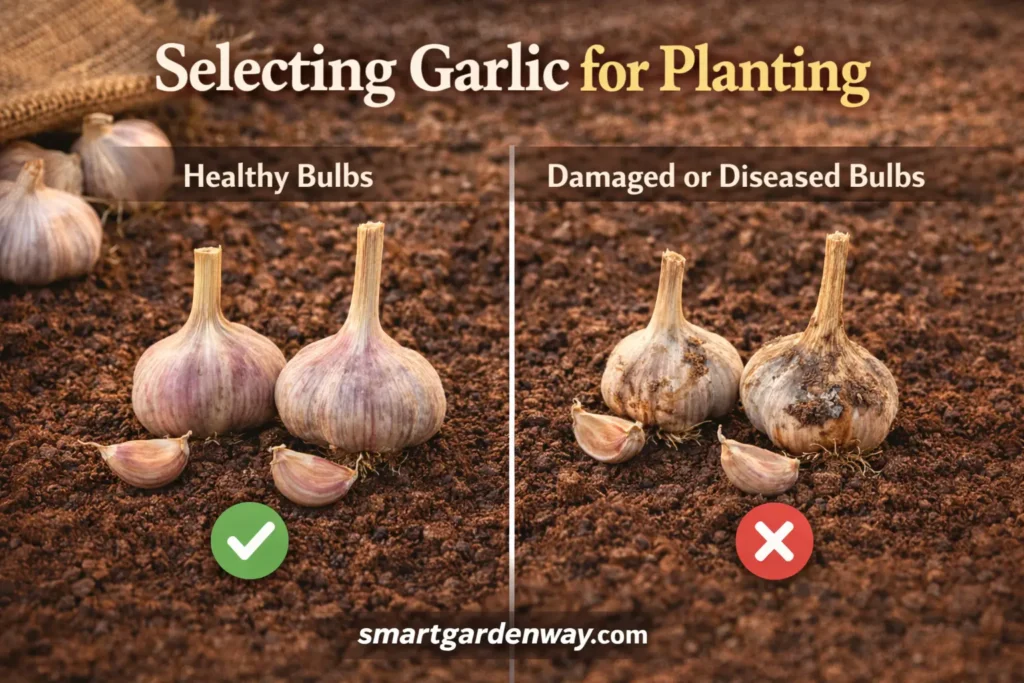
Choosing high-quality garlic bulbs is important for a successful harvest. Gardeners typically plant seed garlic, which refers to bulbs specifically grown for planting rather than cooking.
Healthy seed garlic bulbs should be firm, plump, and free from damage. Larger cloves often produce larger garlic bulbs, so many gardeners select the biggest cloves from each bulb for planting.
Some gardeners obtain seed garlic from garden centers, seed companies, or local farmers markets. Purchasing garlic from reputable sources helps ensure that the bulbs are disease-free and suitable for planting.
Garlic bulbs purchased from grocery stores are sometimes treated to prevent sprouting, which may affect their ability to grow properly in the garden.
Preparing Soil Before Planting Garlic
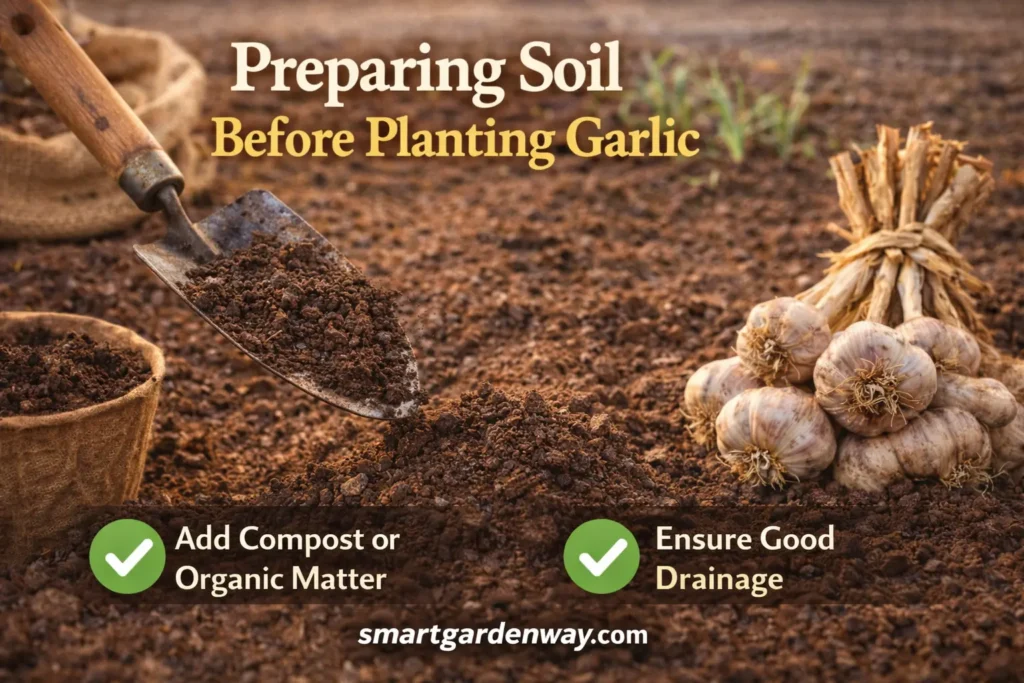
Garlic grows best in well-drained soil with plenty of organic matter. Good soil structure allows the roots to develop easily and prevents moisture from collecting around the bulbs.
Gardeners often prepare the planting area by adding compost or rotted manure to the soil. Organic matter improves soil fertility and helps maintain moisture levels while still allowing proper drainage.
Loosening the soil before planting also improves air circulation around the roots. Garlic does not grow well in compacted soil because the bulbs need space to expand as they develop.
Raised garden beds are sometimes used for garlic because they provide better drainage and improved soil structure.
How to Plant Garlic Cloves
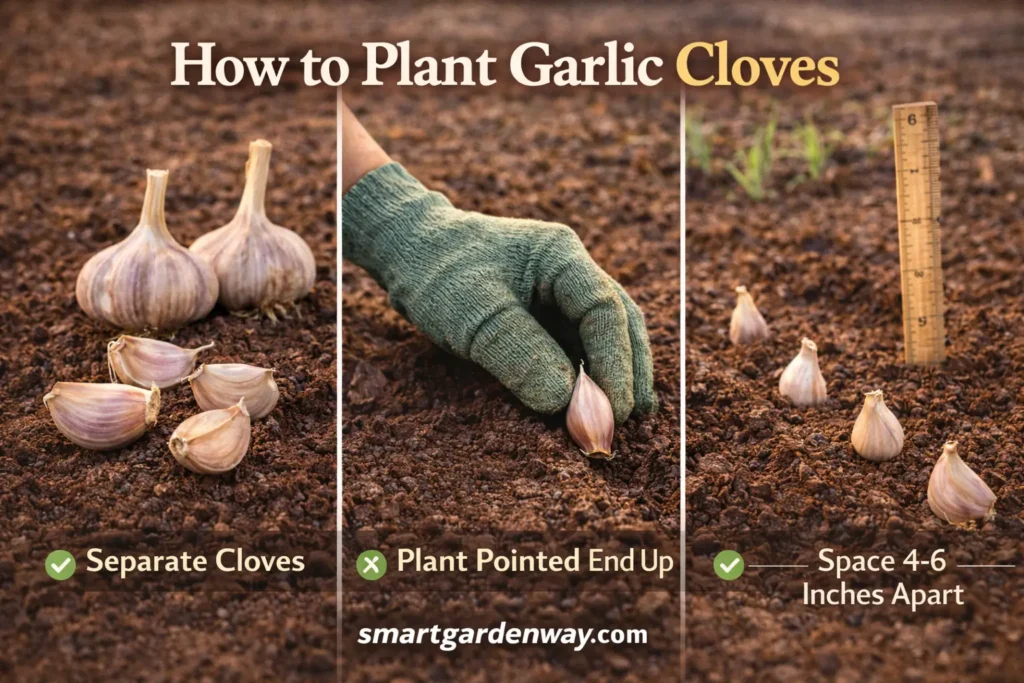
Planting garlic involves separating the cloves from a garlic bulb and planting them individually in the soil. The cloves should be separated just before planting to prevent them from drying out.
Each clove is planted with the pointed end facing upward and the root side facing downward. This orientation allows the plant to grow upward while the roots anchor the plant in the soil.
Cloves are typically planted several inches deep to protect them from winter temperature changes. Gardeners often plant cloves a few inches apart so that each plant has enough space to develop a full bulb.
Rows of garlic are commonly spaced about a foot apart to allow room for maintenance and weed control during the growing season.
After planting, the cloves are covered with soil and watered lightly to help settle the soil around the roots.
Using Mulch to Protect Garlic Plants
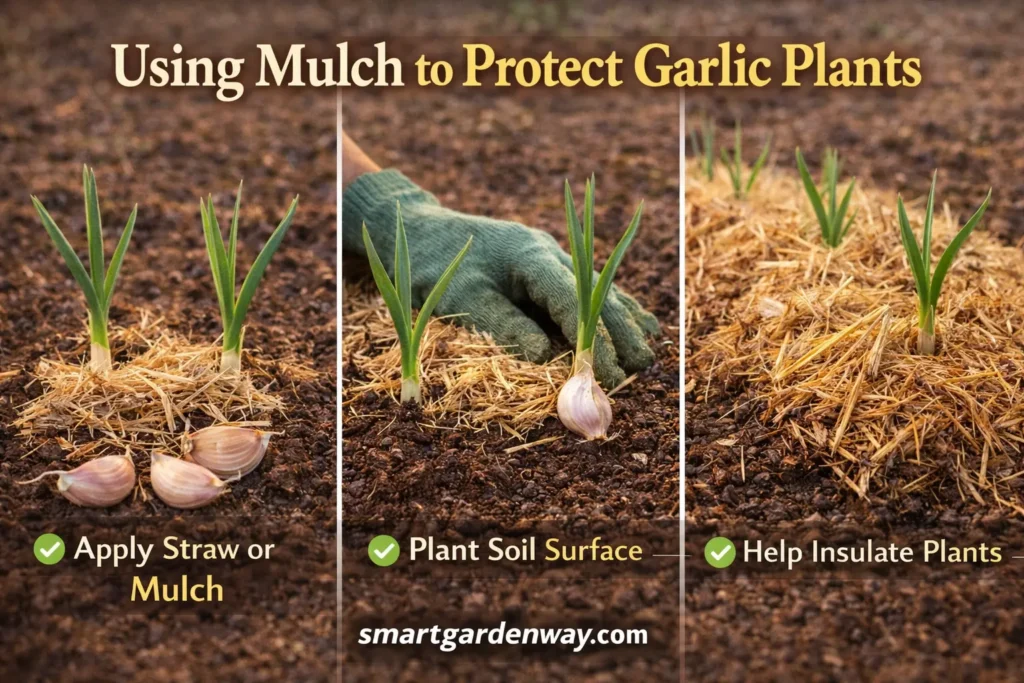
Mulching is an important step after planting garlic in fall. A layer of organic mulch helps protect the cloves during winter and regulates soil temperature.
Materials commonly used for mulch include straw, dried leaves, or other organic garden materials. This layer of mulch also helps retain soil moisture and suppress weed growth.
During winter, mulch acts as insulation and helps prevent repeated freezing and thawing cycles that could damage the garlic cloves.
When spring arrives and temperatures begin to rise, gardeners may gently move the mulch aside to allow sunlight and air circulation around the growing plants.
Garlic Care During the Growing Season
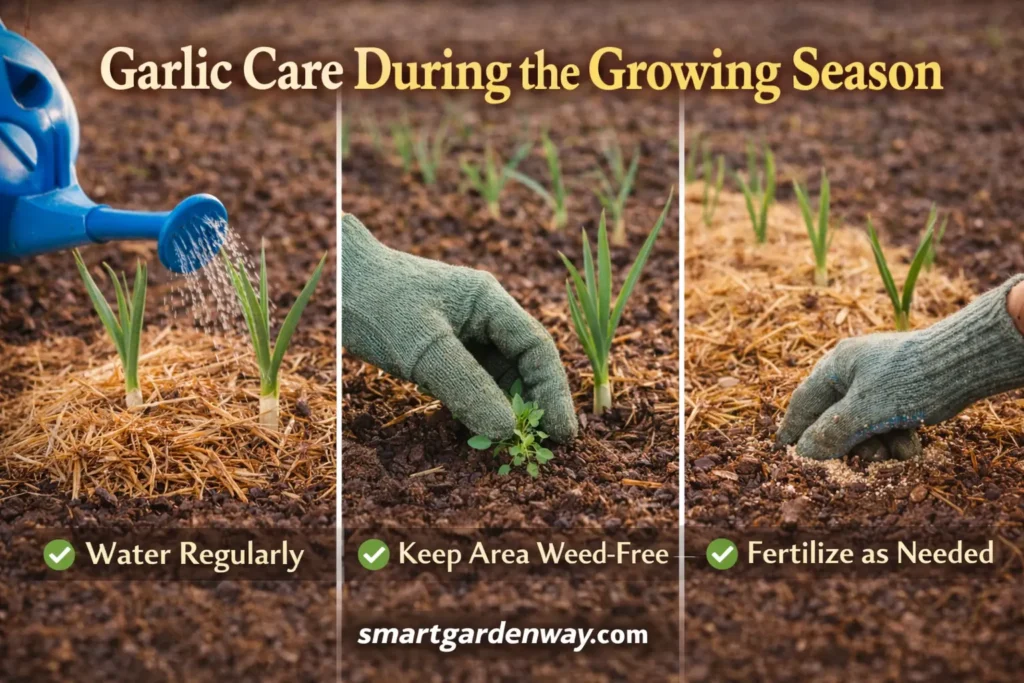
Once spring arrives, garlic begins active growth and produces green shoots that emerge from the soil. During this period, the plants require moderate moisture and occasional fertilization.
Garlic plants have relatively shallow roots, so weed control is important. Removing weeds prevents competition for nutrients and allows the garlic plants to grow more efficiently.
Some gardeners apply additional fertilizer in early spring to support leaf development and bulb growth. Healthy leaves help feed the bulb through photosynthesis during the growing season.
Maintaining even soil moisture is also important during spring growth. However, excessive moisture may cause bulb rot, so well-drained soil remains essential.
Garlic Scapes and Their Role in Plant Growth
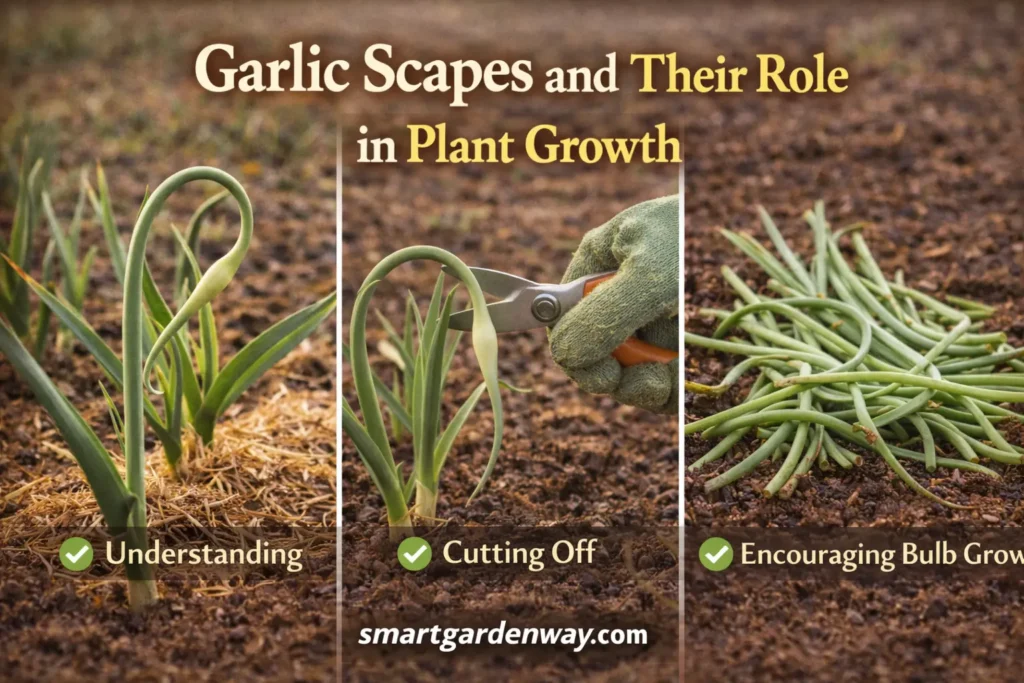
Hardneck garlic produces a curling flower stalk known as a garlic scape. These scapes typically appear during late spring or early summer.
Many gardeners remove the scapes once they begin to curl. Removing the scapes allows the plant to redirect energy toward bulb development rather than flower production.
Garlic scapes are edible and are often used in cooking. They have a mild garlic flavor and can be used in salads, stir-fries, soups, and other dishes.
Signs That Garlic Is Ready for Harvest
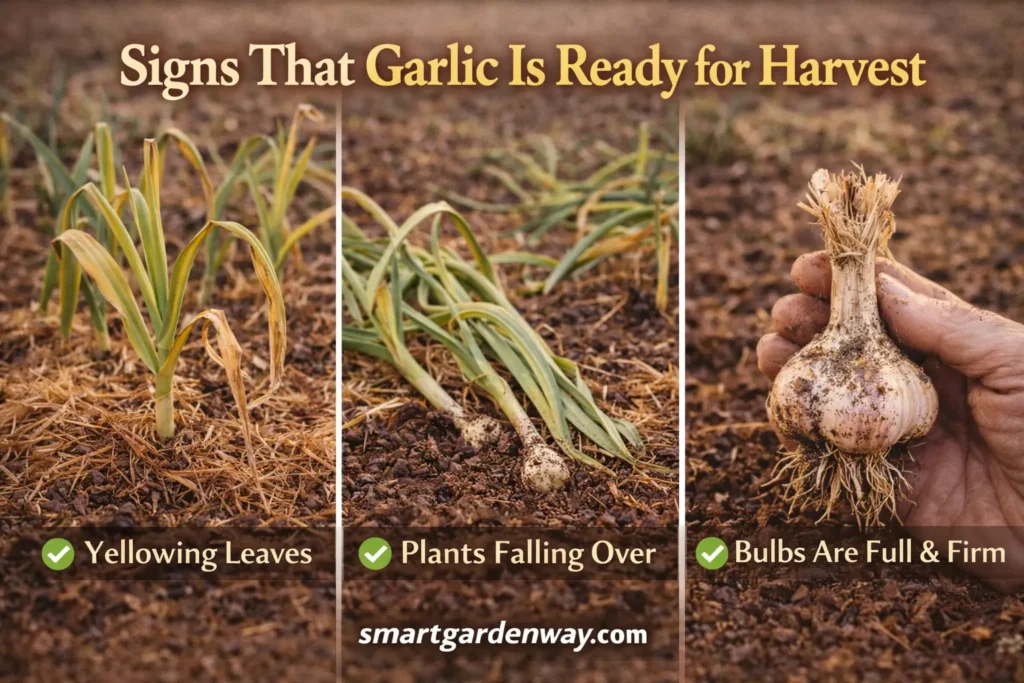
Garlic is usually ready for harvest in early to mid-summer. One of the most common signs that garlic bulbs are mature is when the lower leaves begin to turn brown while the upper leaves remain green.
As the leaves dry and die back, the bulbs continue developing underground. Harvesting garlic too early may result in smaller bulbs, while waiting too long may cause the bulbs to split.
Gardeners typically loosen the soil around the plant and gently lift the bulbs from the ground. Pulling the garlic carefully helps prevent damage to the bulbs and roots.
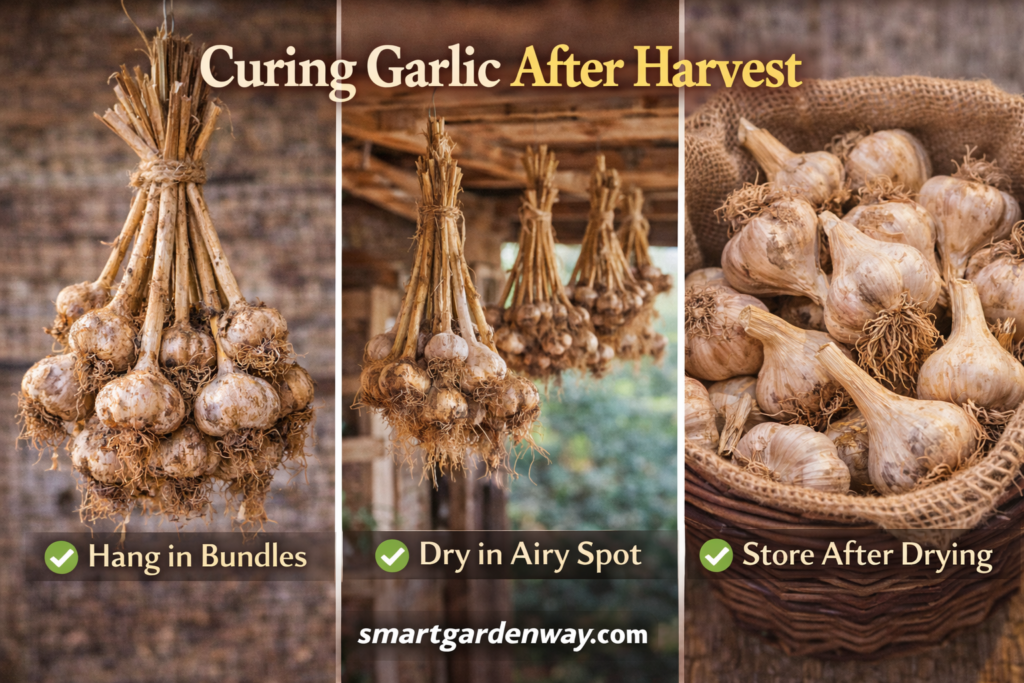
Curing Garlic After Harvest
After harvesting garlic, the bulbs need time to dry and cure before storage. Curing allows the outer skins to dry and protects the cloves inside the bulb.
Freshly harvested garlic is often placed in a dry location with good air circulation. Some gardeners hang garlic plants or place them on screens so air can circulate around the bulbs.
During curing, the stems and leaves gradually dry while the papery skins tighten around the bulb. Once the bulbs are fully cured, they can be trimmed and stored.
Proper curing helps garlic remain usable for several months when stored in cool, dry conditions.
Crop Rotation and Disease Prevention
Crop rotation is an important practice for maintaining healthy garlic plants. Garlic should not be planted repeatedly in the same location where other members of the onion family have recently grown.
Rotating crops helps reduce the risk of soil-borne diseases and pests that may affect garlic plants. Many gardeners rotate garlic with other vegetable crops to maintain soil health and prevent disease buildup.
Frequently Asked Questions About When to Plant Garlic
What is the best month to plant garlic?
The best month to plant garlic is usually October, although the exact timing depends on your climate. Garlic is typically planted in fall several weeks before the ground freezes so the cloves can develop roots before winter. Many gardeners plant garlic between October and early November because soil temperatures are cool but not frozen. Planting garlic during this period allows the cloves to establish roots, remain dormant during winter, and begin strong growth in spring.
How long does it take to grow garlic?
Garlic usually takes about 8 to 9 months to grow from planting to harvest. When garlic cloves are planted in fall, they begin developing roots before winter. The plants stay dormant during cold winter months and resume growth in spring when temperatures warm. Garlic bulbs typically mature and are ready for harvest in early to mid-summer, often around June or July depending on climate conditions.
What should you not plant garlic next to?
Garlic should not be planted near certain crops that may compete for nutrients or interfere with growth. Some gardeners avoid planting garlic near beans or peas because these crops may not grow well beside strong allium plants. Garlic is also usually rotated away from other onion family crops such as onions, leeks, and shallots in the same garden bed to reduce the risk of pests and diseases affecting the plants.
Can garlic be planted in spring instead of fall?
Yes, garlic can be planted in spring, but fall planting generally produces larger bulbs. Garlic requires a period of cold temperatures to develop proper bulb formation. If garlic is planted in spring, gardeners sometimes place the bulbs in a refrigerator for several weeks to simulate the cold conditions normally experienced during winter.
How deep should garlic cloves be planted?
Garlic cloves are typically planted several inches deep in the soil. Planting cloves at this depth protects them from temperature changes and helps keep them stable during winter. The clove should be placed with the pointed end facing upward and the root side down so the plant grows correctly.
How far apart should garlic cloves be planted?
Garlic cloves are usually spaced about 4 to 6 inches apart in garden beds. Rows of garlic are often spaced about 12 inches apart to provide enough room for growth and easy maintenance. Proper spacing allows each garlic plant to develop a full bulb without competing for nutrients or sunlight.
Why is garlic planted in the fall?
Garlic is planted in fall because the crop requires cold winter temperatures to develop properly. The cloves begin growing roots in cool soil during fall and then remain dormant through winter. When temperatures warm in spring, the plants resume growth and begin forming bulbs. This natural cycle leads to larger and healthier garlic bulbs.
When is garlic ready to harvest?
Garlic is usually ready for harvest when the lower leaves begin to turn brown and die back while some upper leaves remain green. This stage typically occurs in early to mid-summer. Gardeners carefully loosen the soil and lift the bulbs from the ground to avoid damaging the garlic.
Do garlic plants need full sun?
Yes, garlic grows best in full sun conditions. Most garlic plants require several hours of direct sunlight each day to develop healthy leaves and bulbs. Adequate sunlight helps the plant produce energy that supports bulb development during the growing season.
What type of soil is best for growing garlic?
Garlic grows best in loose, well-drained soil rich in organic matter. Soil amended with compost or rotted manure helps improve fertility and drainage. Proper soil conditions allow garlic roots to develop easily and prevent excess moisture that may cause bulb rot.
Conclusion
Knowing when to plant garlic is the key to growing strong plants and producing large bulbs in your garden. Most gardeners achieve the best results by planting garlic in the fall several weeks before the ground freezes. This timing allows the cloves to establish roots before winter while still benefiting from the cold temperatures required for proper bulb formation.
Once planted, garlic requires relatively little maintenance. Providing well-drained soil, sunlight, and proper spacing allows the plants to develop healthy roots and foliage throughout the growing season. Mulching protects the cloves during winter, while spring care helps support leaf growth and bulb development. Removing scapes from hardneck varieties and monitoring plant maturity further improves harvest quality.
By understanding the natural growth cycle of garlic and planting at the correct time, gardeners can consistently produce flavorful bulbs year after year. Whether you are growing garlic for cooking, storage, or seed, proper timing and care will ensure a successful harvest in your vegetable garden.