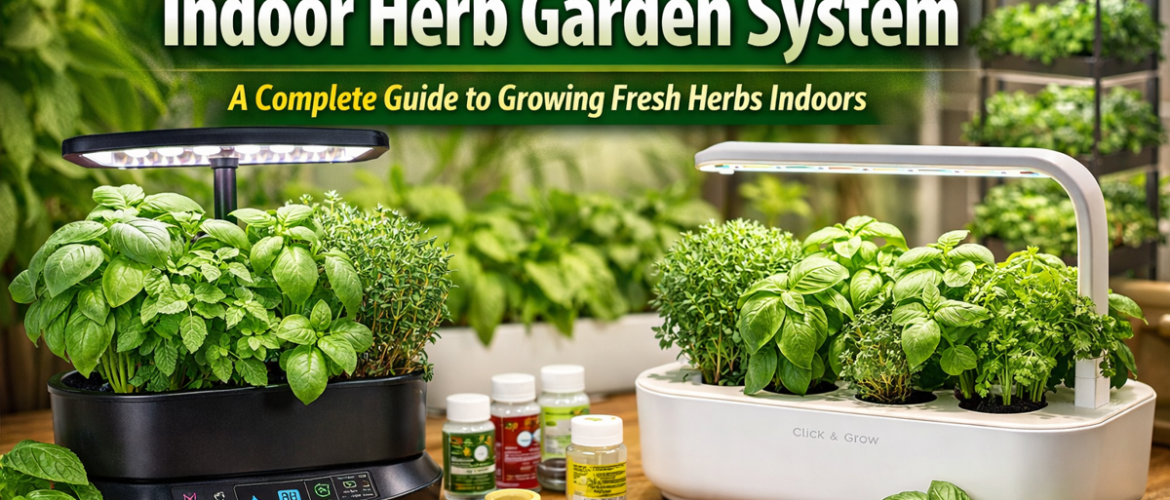
Indoor gardening has become increasingly popular as people look for ways to grow fresh food without relying on outdoor space. A low maintenance indoor herb garden system allows you to grow herbs such as basil, mint, parsley, thyme, and cilantro directly in your home using modern indoor gardening systems, hydroponic growing technology, LED grow lights, and plant pods. These systems are designed to simplify the process of growing herbs indoors by automating many tasks such as watering, lighting, and nutrient delivery.
Whether placed on a kitchen counter, windowsill, or small indoor space, an indoor herb garden can provide fresh herbs year-round for cooking, salads, pasta sauce, and roasted dishes. Many systems such as those from Click & Grow, AeroGarden, Rise Gardens, Gardyn, and Lettuce Grow use hydroponic growing systems, seed pods, and automated watering systems to make indoor gardening simple for beginners. In this comprehensive guide, we will explore how a low maintenance indoor herb garden system works, the essential components involved, the best herbs to grow indoors, and how to maintain a thriving indoor herb garden with minimal effort.
What Is a Low Maintenance Indoor Herb Garden System?
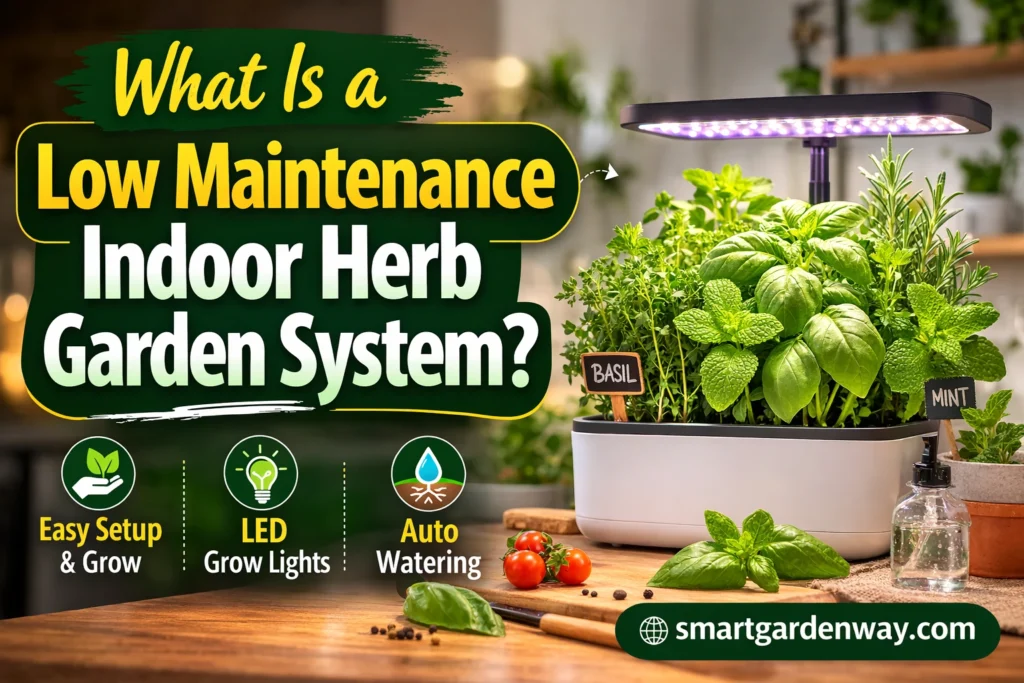
A low maintenance indoor herb garden system is an indoor gardening setup designed to grow herbs and small plants indoors using automated technology and efficient growing methods. These systems typically use hydroponic gardening systems, LED grow lights, water reservoirs, plant pods, and nutrient solutions to support plant growth without traditional outdoor gardening.
Indoor herb gardens allow users to grow herbs indoors regardless of outdoor conditions. With proper lighting, temperature, humidity, and watering routines, herbs can thrive year-round in a controlled indoor environment. Modern indoor garden kits often include features such as automatic timers, grow lights, seed pods, hydroponic nutrients, and passive watering systems, reducing the amount of daily care required.
The goal of a low maintenance indoor herb garden system is to provide an efficient way to grow fresh herbs indoors with minimal manual work. Once the system is set up, users usually only need to add water occasionally and harvest herbs as they grow.
Why Choose a Low Maintenance Indoor Herb Garden System?
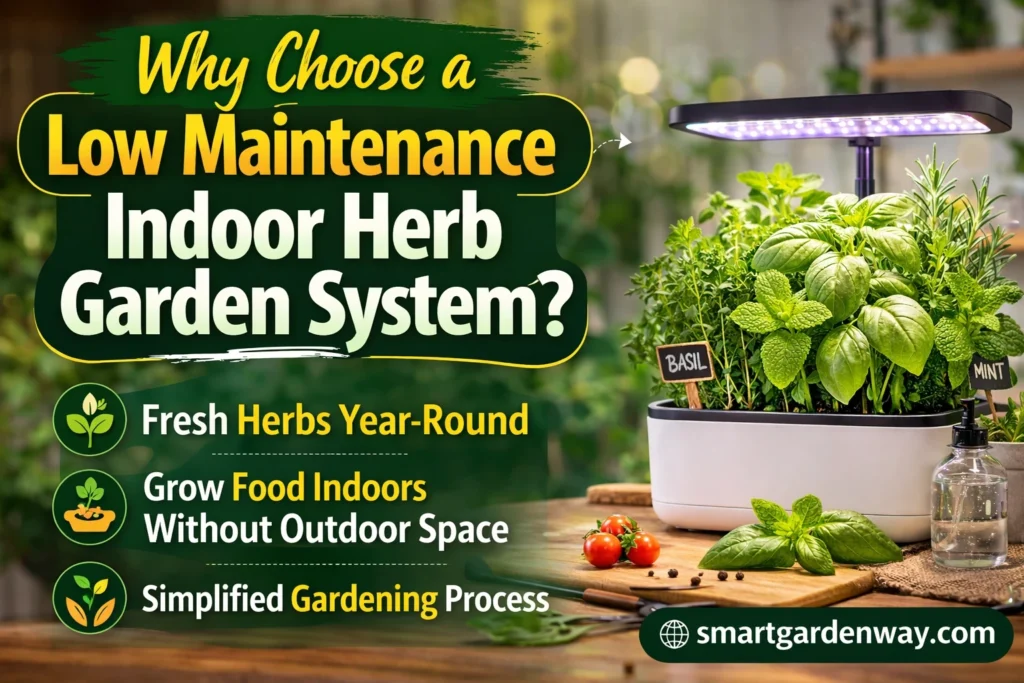
Indoor herb gardens provide several advantages compared to traditional gardening methods. Many people use them to grow herbs and vegetables indoors because they offer a convenient solution for urban living, apartments, or homes without outdoor gardens.
Fresh Herbs Year-Round
One of the main benefits of a low maintenance indoor herb garden system is the ability to harvest fresh herbs throughout the year. Unlike outdoor gardens that depend on seasons and weather conditions, indoor gardens provide a controlled environment where herbs can grow consistently.
Herbs such as basil, mint, thyme, oregano, parsley, and cilantro are commonly grown indoors because they adapt well to indoor conditions and require relatively small growing spaces.
Grow Food Indoors Without Outdoor Space
Indoor gardening systems allow people to grow herbs even if they live in apartments or homes without a yard. Compact systems designed for countertops or small indoor spaces make it possible to grow herbs directly in kitchens or living areas.
Many indoor garden systems are designed for kitchen counters or windowsills, providing easy access to fresh herbs while cooking.
Simplified Gardening Process
A low maintenance indoor herb garden system simplifies the growing process by incorporating automated features such as:
- Automated watering systems
- LED grow lights with timers
- Seed pods with nutrients
- Hydroponic growing systems
These features reduce the need for daily plant care while still supporting healthy plant growth.
How a Low Maintenance Indoor Herb Garden System Works
Most indoor herb garden systems rely on hydroponic technology and controlled lighting to support plant growth indoors.
Hydroponic Growing System
Many modern indoor herb gardens use a hydroponic growing system, which means plants grow in water enriched with nutrients rather than soil. In hydroponic systems, plant roots are placed in a nutrient-rich water solution that supplies essential nutrients directly to the plant.
Hydroponic systems are popular in indoor gardens because they support faster plant growth and allow plants to grow without soil.
Seed Pods and Plant Pods
Indoor garden kits often include seed pods or plant pods that contain seeds and growing medium. These pods are placed in the garden system, where they receive water, nutrients, and light.
Plant pods simplify the growing process because they eliminate the need to measure soil or nutrients manually.
LED Grow Lights
Since indoor plants may not receive enough natural sunlight, indoor herb gardens typically include LED grow lights. These lights provide the light spectrum needed for photosynthesis, helping herbs grow indoors even in low-light environments.
Many systems include automatic lighting cycles that provide a specific number of hours of light each day.
Water Reservoir and Circulation System
Indoor herb garden systems usually include a water reservoir that stores water and nutrients for plant growth. Some systems also use a circulating pump to keep water moving and oxygenated.
Maintaining proper water levels ensures plants receive consistent hydration.
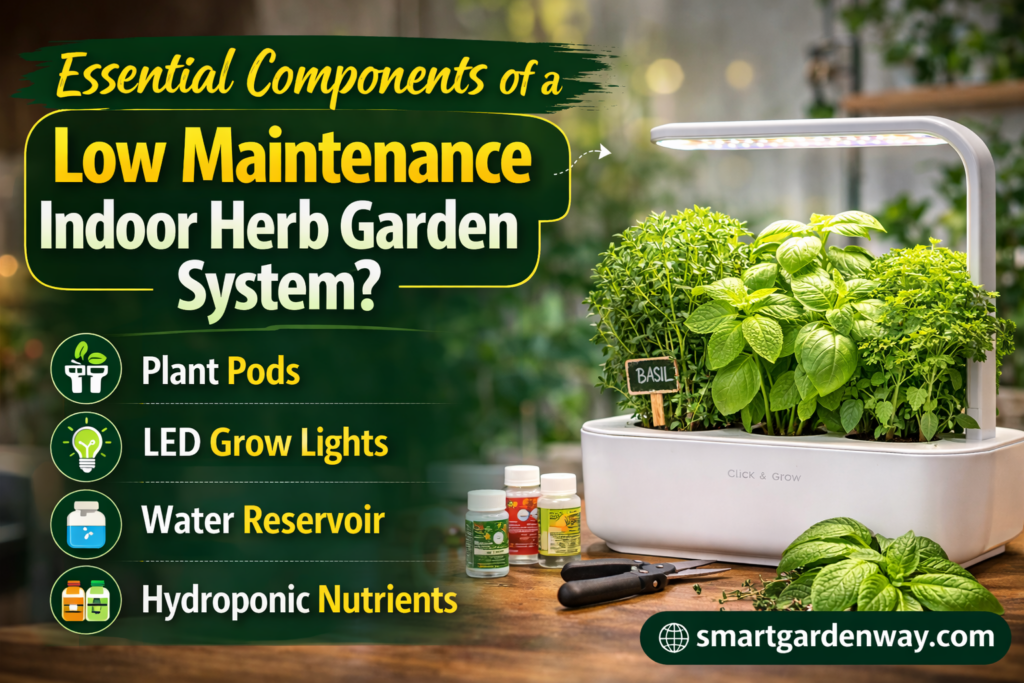
Essential Components of a Low Maintenance Indoor Herb Garden System
Several components work together to support plant growth in an indoor herb garden system.
Plant Pods or Seed Pods
Seed pods contain seeds and growing medium designed for indoor hydroponic gardens. These pods are easy to insert into the garden system and usually contain nutrients needed for early plant growth.
LED Lighting System
The LED lighting system provides the artificial sunlight needed for photosynthesis. These lights are designed to support plant growth by delivering specific wavelengths of light.
Some indoor gardens include adjustable grow lights that can be raised as plants grow taller.
Water Reservoir
The water reservoir holds water and nutrients for the plants. Many systems include a visual water indicator that helps users monitor water levels.
Hydroponic Nutrients
Plants grown in hydroponic systems require nutrient solutions instead of soil nutrients. These nutrients provide minerals that support plant growth.
Automated Timer and Controls
Indoor herb gardens often include timers that regulate lighting cycles and watering schedules. Some smart garden systems also provide notifications when water or nutrients need to be added.
Best Herbs to Grow in a Low Maintenance Indoor Herb Garden System
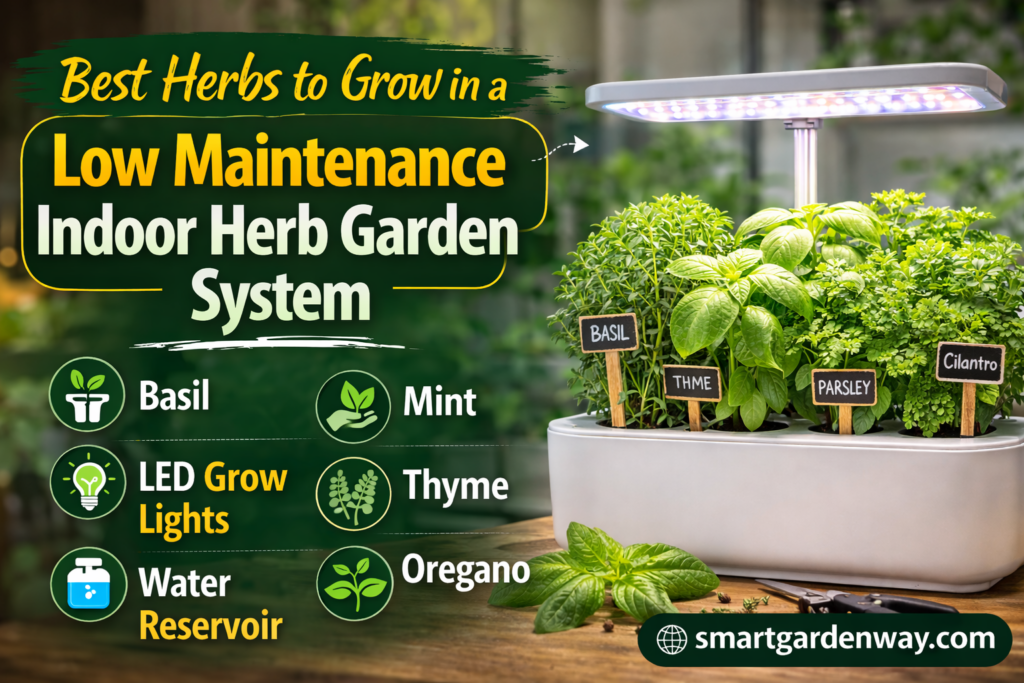
Many herbs grow well indoors because they require minimal space and adapt well to controlled environments.
Basil
Basil is one of the most popular herbs grown in indoor herb gardens. It grows quickly and produces flavorful leaves used in pasta sauce, salads, and Mediterranean dishes.
Mint
Mint grows easily indoors and can be harvested regularly. It is often used in beverages, desserts, and cooking.
Parsley
Parsley is commonly grown in indoor herb gardens and adds flavor to many dishes. It grows well in hydroponic systems and requires moderate light.
Thyme
Thyme is a hardy herb that adapts well to indoor growing conditions. It is often used in roasted dishes and sauces.
Oregano
Oregano is another herb that thrives indoors and is frequently used in Italian cooking.
Setting Up a Low Maintenance Indoor Herb Garden System
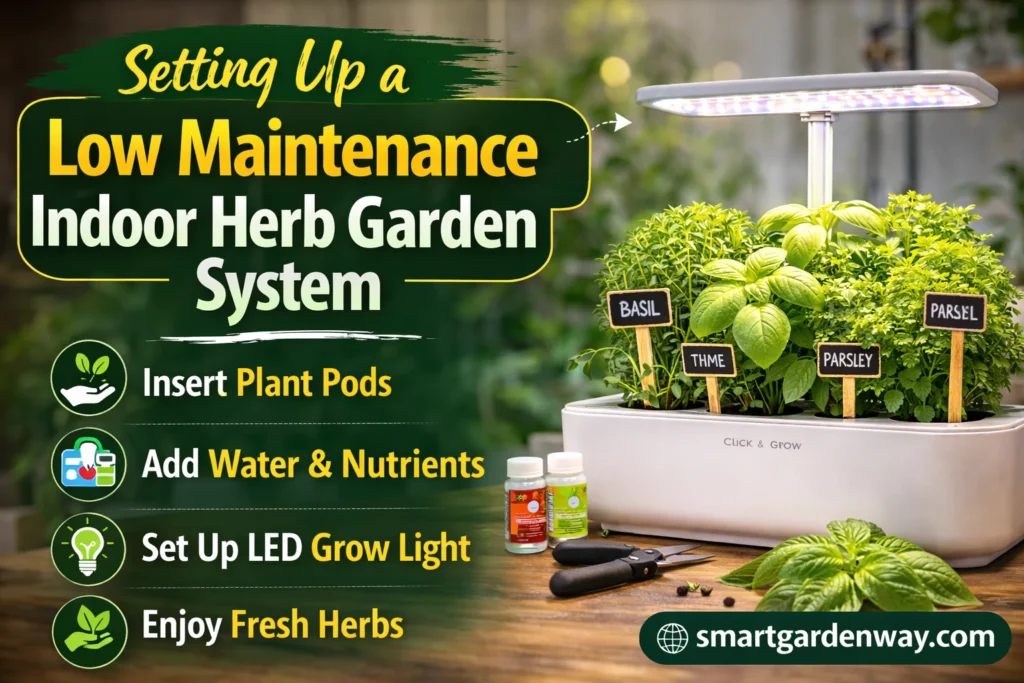
Setting up an indoor herb garden is relatively simple when using a modern indoor gardening system.
Step 1: Insert Plant Pods
The first step is placing the seed pods or plant pods into the garden system. Each pod contains seeds and growing medium designed for indoor hydroponic gardens.
Step 2: Add Water and Nutrients
After inserting the pods, the next step is filling the water reservoir with water and adding hydroponic nutrients if required.
Step 3: Activate the LED Grow Lights
Once the garden is set up, the LED grow lights can be turned on. Many systems include automatic timers that control lighting cycles.
Step 4: Monitor Plant Growth
Plants typically begin sprouting within several days depending on the herb variety.
Maintaining a Low Maintenance Indoor Herb Garden System
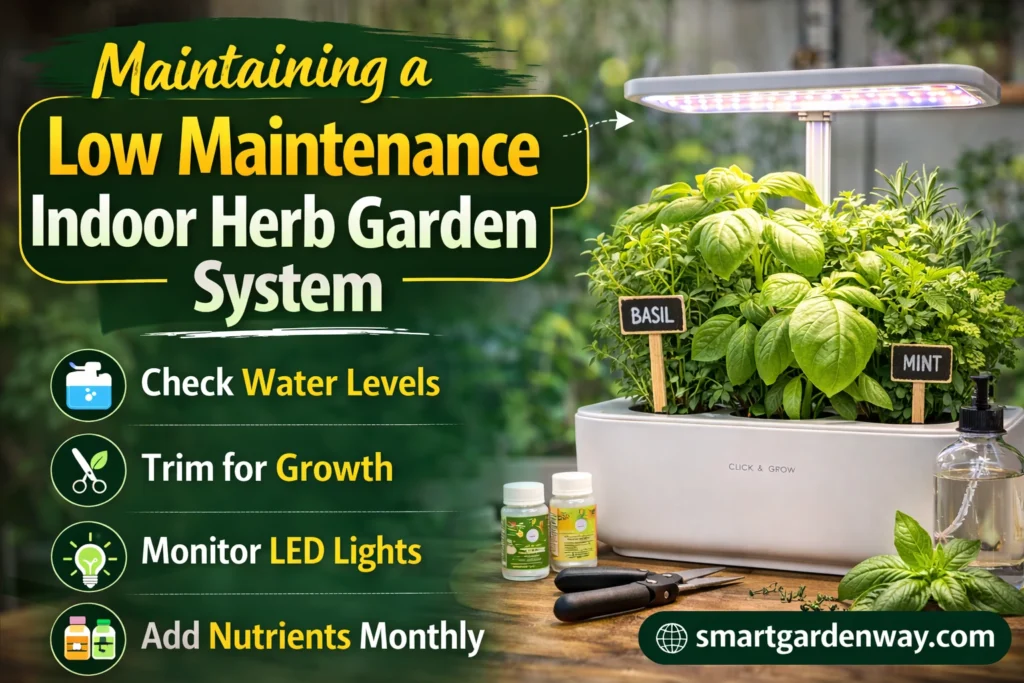
Although indoor herb gardens require less work than traditional gardens, some basic maintenance is still necessary.
Monitoring Water Levels
Water levels should be checked periodically to ensure plants receive enough hydration.
Maintaining Lighting Schedules
Plants typically require 12 to 16 hours of light per day. Many indoor gardens automatically regulate lighting schedules.
Pruning and Harvesting Herbs
Regular pruning encourages healthy plant growth and helps herbs produce new leaves.
Maintaining Temperature and Humidity
Indoor herbs grow best in moderate temperatures and balanced humidity levels.
Smart Indoor Gardening Technology
Modern indoor herb garden systems often include smart features that improve plant care.
Automated Watering Systems
Automated watering systems ensure plants receive consistent hydration without manual watering.
Sensors and Monitoring Systems
Some indoor gardens include sensors that monitor water levels, nutrients, and lighting conditions.
Mobile Apps for Plant Care
Certain smart garden systems connect to mobile apps that provide reminders and plant care tips.
Expanding an Indoor Herb Garden
As gardeners become more experienced, they may want to expand their indoor herb gardens.
Vertical Gardening Systems
Vertical gardening systems allow users to grow multiple plants in a compact space.
Hydroponic Towers
Hydroponic towers use vertical structures to support plant growth and maximize indoor space.
Growing Additional Plants
In addition to herbs, many indoor gardens can grow vegetables and leafy greens such as lettuce, spinach, and kale.
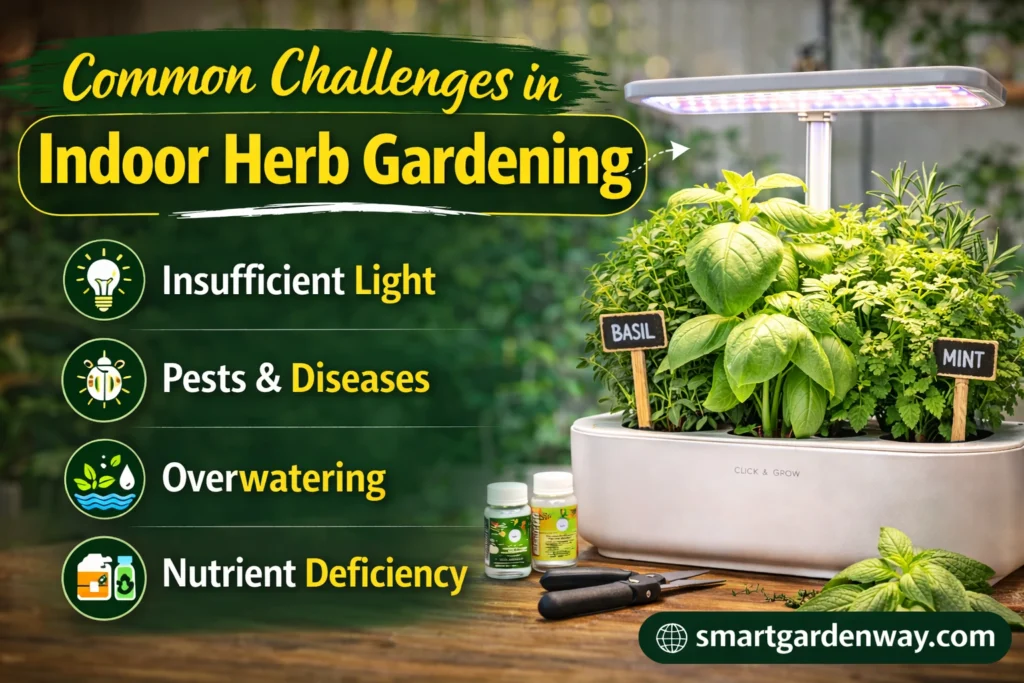
Common Challenges in Indoor Herb Gardening
Indoor herb gardening can present a few challenges, but most issues are easy to manage.
Insufficient Light
Plants may struggle if they do not receive enough light. LED grow lights help ensure proper lighting conditions.
Overwatering
Monitoring water levels helps prevent root rot and other water-related issues.
Pest Issues
Although indoor gardens experience fewer pests than outdoor gardens, occasional pest problems may still occur.
Choosing the Right Low Maintenance Indoor Herb Garden System
When selecting an indoor herb garden system, several factors should be considered.
Garden Size
Some systems are designed for small countertops, while others support larger vertical gardens.
Number of Plant Pods
Different systems support different numbers of plant pods, ranging from a few plants to larger multi-plant setups.
Lighting Features
Adjustable LED grow lights can support different stages of plant growth.
Smart Technology
Some indoor gardens include app connectivity and automated controls.
Frequently Asked Questions
What is the best indoor grow system for herbs?
The best indoor grow system for herbs is usually a hydroponic indoor herb garden system with LED grow lights, seed pods, and automated watering. Systems from brands like Click & Grow and AeroGarden help herbs grow in nutrient-rich water with minimal maintenance. These systems support growing fresh herbs indoors year-round.
What are the best low maintenance herbs for indoors?
Some of the best herbs for a low maintenance indoor herb garden system include basil, mint, parsley, thyme, oregano, and cilantro. These herbs adapt well to indoor environments with LED grow lights and hydroponic systems and can be harvested regularly.
How do you maintain an indoor herb garden?
Maintaining an indoor herb garden mainly involves checking the water reservoir, maintaining LED grow light cycles, and pruning herbs regularly. Hydroponic systems and smart indoor gardens automate watering and lighting, making the garden easier to manage.
Which herbs are the most low maintenance to grow?
Low maintenance herbs include basil, mint, thyme, parsley, and oregano because they grow quickly and adapt well to indoor conditions. These herbs are commonly grown in indoor herb garden kits and seed pods used in hydroponic gardening systems.
Conclusion
A low maintenance indoor herb garden system provides a convenient way to grow fresh herbs indoors without the complexity of traditional gardening. By using modern technologies such as hydroponic growing systems, LED grow lights, plant pods, automated watering systems, and nutrient solutions, these systems allow herbs to grow efficiently in small indoor spaces.
Whether placed on a kitchen counter or integrated into a larger indoor gardening setup, an indoor herb garden can provide continuous access to herbs such as basil, mint, parsley, thyme, and oregano. Systems from brands like Click & Grow, AeroGarden, Rise Gardens, Gardyn, and Lettuce Grow demonstrate how indoor gardening technology can simplify the process of growing herbs indoors.
With proper lighting, consistent watering, and occasional pruning, an indoor herb garden can remain productive throughout the year. For anyone interested in growing herbs at home with minimal effort, investing in a low maintenance indoor herb garden system can be an effective way to enjoy fresh herbs and homegrown flavors all year long.