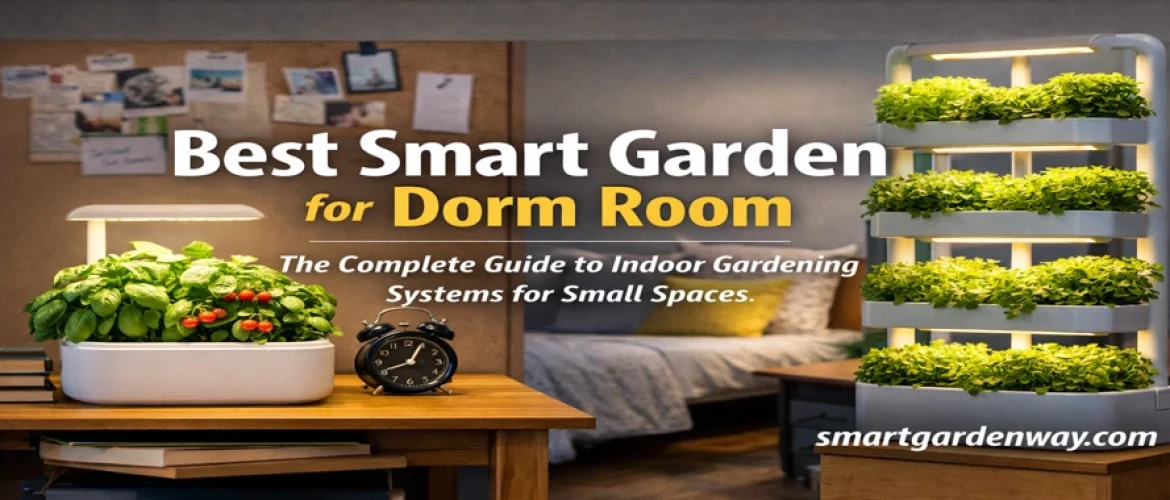
Living in a dorm room no longer means giving up on growing your own fresh herbs, vegetables, or salad greens. The best smart garden for dorm room setups are specifically designed for small indoor spaces, countertop placement, and beginner-friendly use, making indoor gardening accessible even without outdoor space. Modern indoor gardening systems combine hydroponic technology, LED grow lights, self-watering systems, and automated light cycles to create an environment where plants can grow efficiently year-round.
With the rise of smart gardens, hydroponic growing systems, and indoor gardening kits, students can now enjoy fresh produce, herbs, and vegetables directly in their dorm rooms. Whether you are interested in growing basil, mint, lettuce, or even tomatoes, these systems provide a simple and effective way to maaintain a low-maintenance indoor garden. This guide explores everything you need to know about choosing, using, and maximizing the best smart garden for dorm room living, using insights and terminology drawn directly from tested indoor gardening systems.
Understanding What Makes the Best Smart Garden for Dorm Room Living
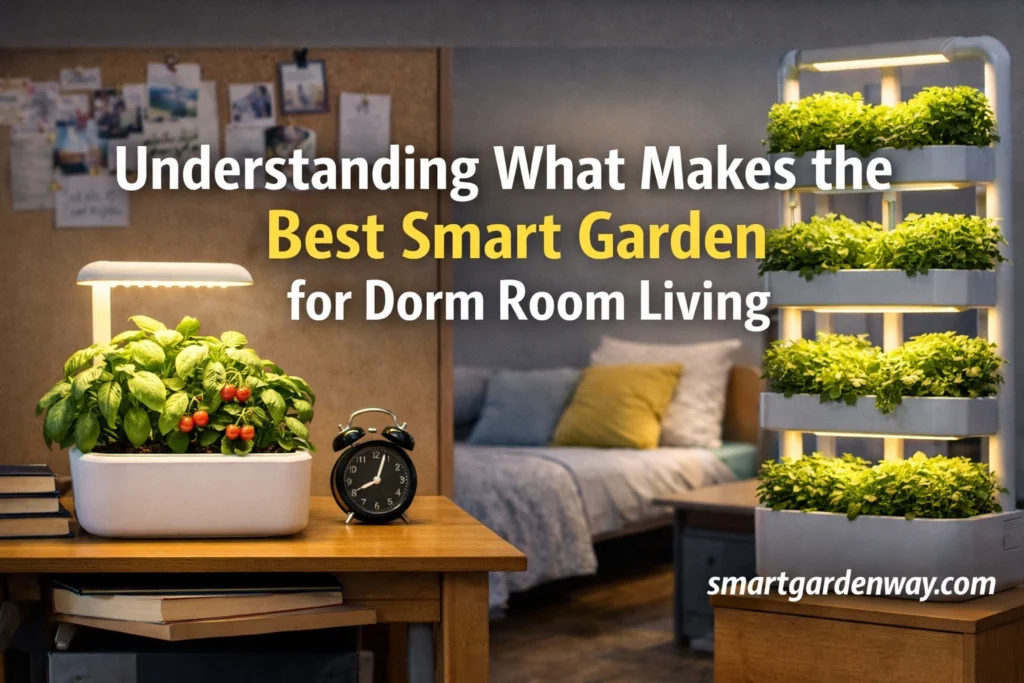
The concept of a smart garden revolves around a self-contained indoor gardening system that integrates hydroponic growing technology, built-in LED grow lights, and automated watering systems. These systems are engineered to eliminate traditional gardening challenges such as soil management, inconsistent sunlight, and manual watering.
How Indoor Smart Gardens Work in Small Spaces
Indoor smart gardens typically rely on soil-free hydroponic systems, where plants grow in a nutrient-rich water solution instead of soil. This process ensures consistent water flow, fast germination, and efficient plant growth, making it ideal for dorm environments where conditions are not always optimal for traditional gardening.
Most systems include a water reservoir or water tank, which supplies nutrients directly to plant roots. The inclusion of full-spectrum LED grow lights allows plants to receive the light they need, even in low-light environments or rooms without direct sunlight. Automated features such as timers, sensors, and light cycles ensure that plants receive the correct amount of light and hydration without constant monitoring.
Why Smart Gardens Are Ideal for Dorm Rooms
Dorm rooms are often characterized by limited space, shared living arrangements, and restricted access to natural light. The best smart garden for dorm room use is specifically designed to address these limitations. Compact systems are created for countertop placement, windowsill gardening, or small vertical setups, ensuring they fit seamlessly into tight living spaces.
Additionally, many systems are built for users who don’t have a green thumb, offering pre-seeded pods, automated watering, and simple setup processes. This makes them accessible to beginners who want to grow plants without prior gardening experience.
Types of Indoor Gardening Systems Suitable for Dorm Rooms
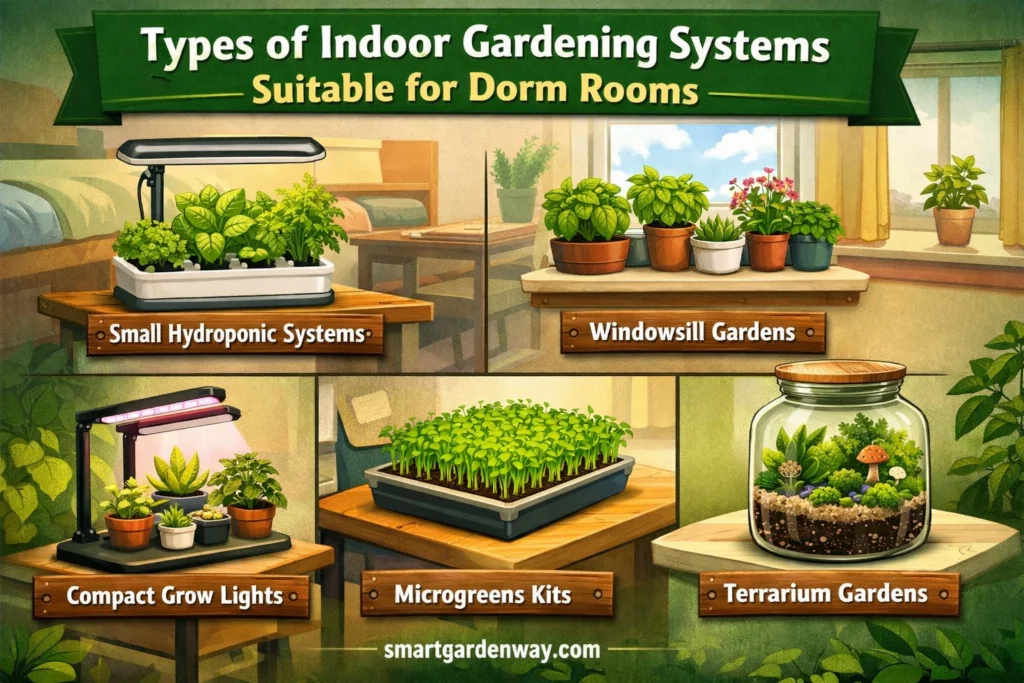
When selecting the best smart garden for dorm room use, it is important to understand the different types of indoor gardening systems available. Each type offers unique benefits depending on space, budget, and desired plant variety.
Hydroponic Indoor Gardening Systems
Hydroponic systems are among the most common indoor gardening solutions. These systems use water-based growing methods, nutrient solutions, and LED grow lights to cultivate plants. Because they eliminate the need for soil, they are often cleaner and more efficient, making them ideal for dorm environments.
Hydroponic systems are known for fast germination, consistent plant growth, and the ability to grow herbs and vegetables year-round. They also reduce issues related to pests and soil maintenance.
Smart Gardens With Seed Pods
Many indoor gardening systems utilize self-contained seed pods or pre-seeded pods, which include seeds, nutrients, and growing medium. These pods simplify the planting process and ensure consistent results. Systems like these are particularly suitable for beginners, as they require minimal setup and maintenance.
The use of seed pods also allows users to grow a variety of plants, including herbs, salad greens, and flowers, without needing to manage soil or nutrients manually.
Vertical Indoor Gardens for Maximum Space Efficiency
Vertical gardening systems are designed to maximize plant capacity in small spaces. These systems use stacked or upright designs, allowing users to grow more plants without increasing their footprint. Vertical systems are especially useful in dorm rooms where floor space is limited but vertical space is available.
These systems often include features such as self-watering mechanisms, grow lights, and multiple plant levels, enabling efficient indoor gardening even in compact environments.
Top Indoor Gardening Systems for Dorm Rooms
Selecting the best smart garden for dorm room use involves understanding how different systems perform in real-world conditions. Several indoor gardening systems have been tested and evaluated for their performance, ease of use, and suitability for small spaces.
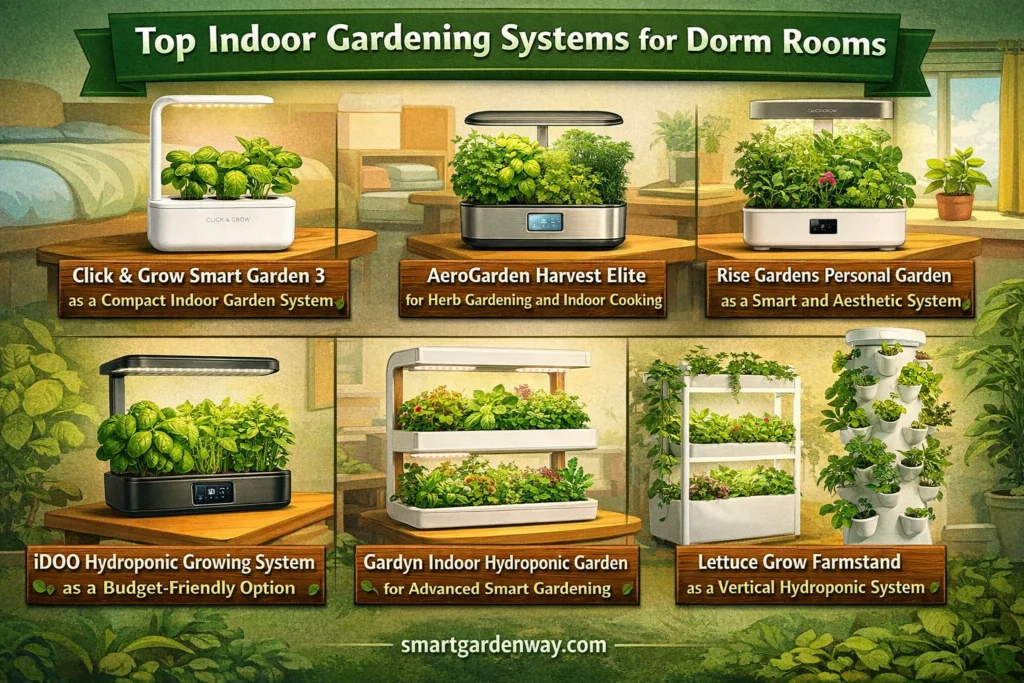
Click & Grow Smart Garden 3 as a Compact Indoor Garden System
The Click & Grow Smart Garden 3 is widely recognized as a compact system designed for small indoor spaces and countertop use. Its three-pod system allows users to grow herbs such as basil, mint, and chives, as well as salad greens and other small plants.
This system features a self-watering design, automatic light cycle, and adjustable light arms, making it a beginner-friendly option. The use of self-contained seed pods simplifies the growing process, ensuring that plants receive the necessary nutrients without manual intervention.
The compact size of this system makes it one of the most suitable options for dorm rooms, where space is often limited.
AeroGarden Harvest Elite for Herb Gardening and Indoor Cooking
The AeroGarden Harvest Elite is a hydroponic indoor gardening system designed for growing herbs and small vegetables. It includes features such as a digital display, water level sensor, and plant food reminders, which help maintain optimal growing conditions.
This system can grow up to six plants at a time and is particularly effective for cultivating herbs used in cooking. Its adjustable grow lights and automated watering system make it easy to manage, even for beginners.
Because of its moderate size and efficient design, it is well-suited for dorm rooms where users want to grow fresh herbs year-round.
iDOO Hydroponic Growing System as a Budget-Friendly Option
The iDOO Hydroponic Growing System is considered a budget indoor garden that offers strong performance at a lower cost. It features fast germination, customizable seed options, and a hydroponic growing system that supports a variety of plants.
This system is ideal for students who want an affordable way to start indoor gardening without sacrificing functionality. Its ease of use and efficient design make it a practical choice for dorm environments.
Gardyn Indoor Hydroponic Garden for Advanced Smart Gardening
The Gardyn Indoor Hydroponic Garden represents a more advanced approach to indoor gardening. This system uses a vertical design, sensors, cameras, and mobile app integration to provide a comprehensive smart gardening experience.
With the ability to grow up to 30 plants, this system is suitable for users who want to cultivate a larger variety of plants. Its self-monitoring capabilities and automated features reduce the need for manual maintenance, making it a convenient option for busy students.
However, due to its size, it may be better suited for dorm rooms with more available space.
Rise Gardens Personal Garden as a Smart and Aesthetic System
The Rise Gardens Personal Garden combines smart technology with aesthetic design, offering a hydroponic system that can grow between 8 and 36 plants. It includes features such as mobile app control, Wi-Fi compatibility, and automated nutrient delivery.
This system is ideal for users who want a visually appealing indoor garden with advanced functionality. Its ability to grow a wide range of plants makes it a versatile option for indoor gardening.
Lettuce Grow Farmstand as a Vertical Hydroponic System
The Lettuce Grow Farmstand is a vertical hydroponic garden designed to maximize plant capacity while maintaining a relatively small footprint. It features self-watering and self-fertilizing systems, grow lights, and multiple plant levels.
This system allows users to grow herbs, vegetables, and flowers, making it a comprehensive indoor gardening solution. Its design also makes it a statement piece, combining functionality with visual appeal.
Key Features to Consider When Choosing the Best Smart Garden for Dorm Room
Choosing the best smart garden for dorm room use involves evaluating several important features that impact performance, convenience, and suitability for small spaces.
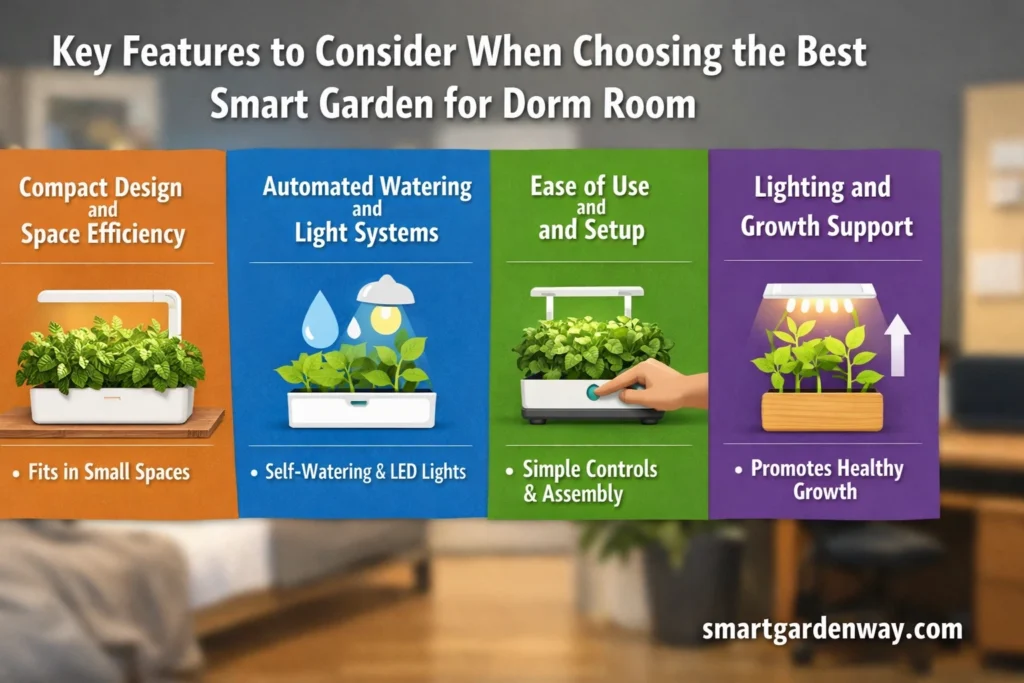
Compact Design and Space Efficiency
Dorm rooms require systems that can fit into limited spaces, making compact and vertical designs essential. Systems designed for countertop placement or small indoor areas are ideal for maximizing available space.
Automated Watering and Light Systems
Automation is a key feature of smart gardens. Systems that include self-watering mechanisms, automatic light cycles, and timers reduce the need for manual maintenance and ensure consistent plant growth.
Ease of Use and Setup
The best systems are designed to be beginner-friendly, with features such as pre-seeded pods, easy setup, and simple controls. These features make indoor gardening accessible to users with no prior experience.
Lighting and Growth Support
High-quality systems include full-spectrum LED grow lights and adjustable light heights, which are essential for supporting plant growth in indoor environments.
What You Can Grow in the Best Smart Garden for Dorm Room
One of the key benefits of indoor gardening systems is their versatility. Users can grow a wide range of plants, depending on the system and available space.
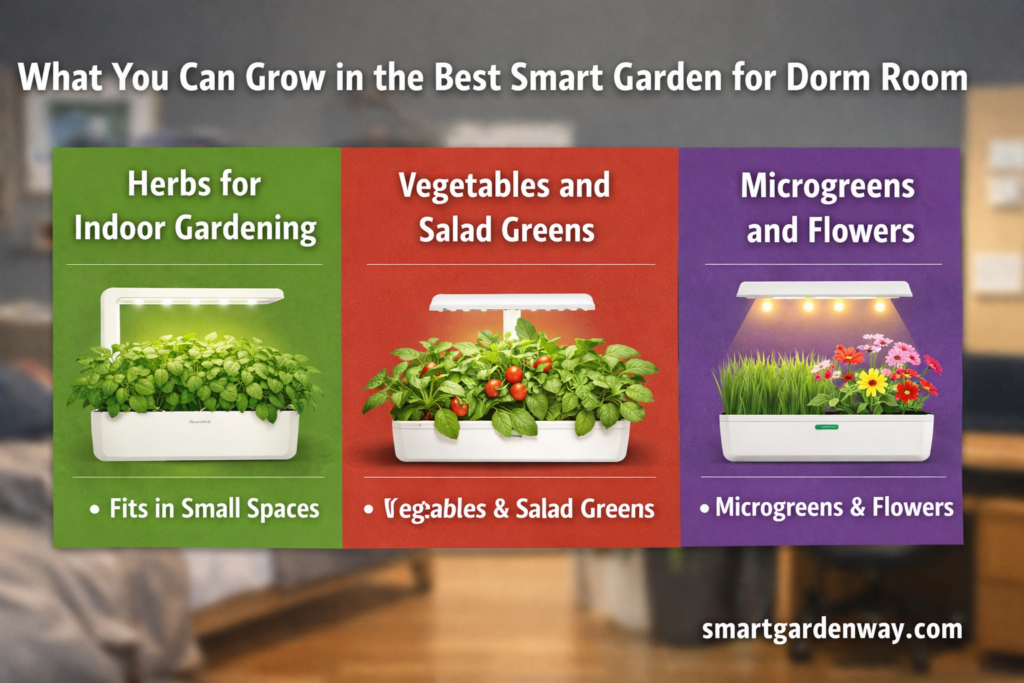
Herbs for Indoor Gardening
Common herbs that grow well indoors include basil, rosemary, thyme, oregano, mint, parsley, chives, dill, and sage. These herbs are commonly used in cooking and thrive in hydroponic systems.
Vegetables and Salad Greens
Indoor gardening systems can also support the growth of lettuce, salad greens, tomatoes, and peppers. These plants are well-suited to hydroponic environments and can be grown year-round.
Microgreens and Flowers
Some systems allow users to grow microgreens such as mustard, radish, and broccoli, as well as indoor flowers. These plants often have shorter growth cycles and can be harvested quickly.
How to Choose the Right System for Your Dorm Room
Selecting the best smart garden for dorm room use requires careful consideration of your specific needs and constraints.
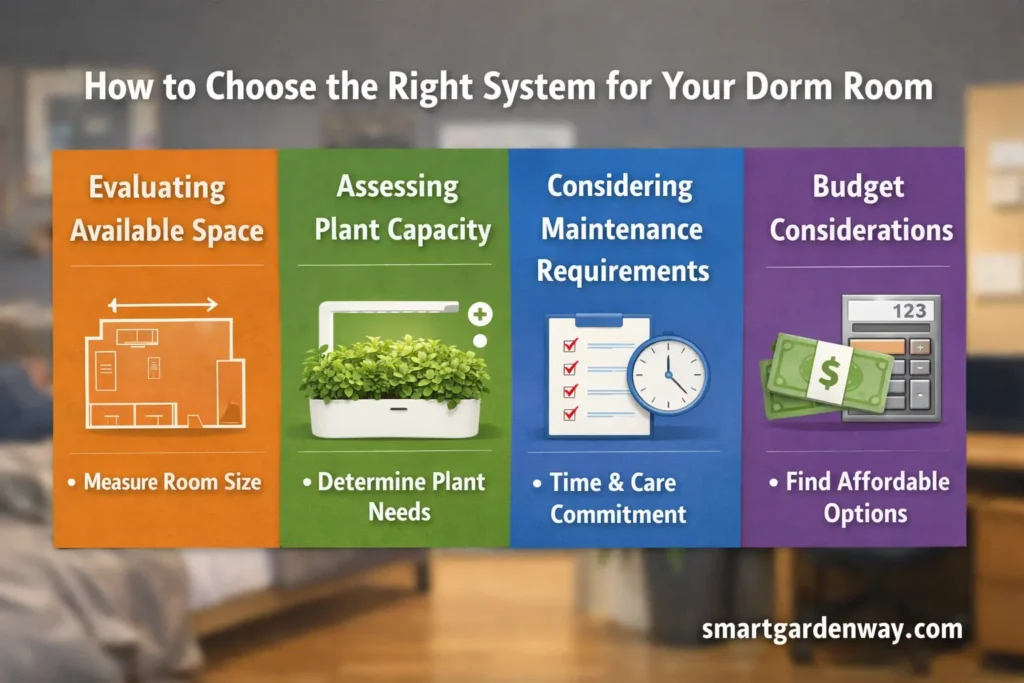
Evaluating Available Space
Consider the amount of space available in your dorm room. Compact systems are ideal for small spaces, while vertical systems can maximize plant capacity without increasing footprint.
Assessing Plant Capacity
Different systems offer varying levels of plant capacity, ranging from small systems that grow three plants to larger systems that can support over 30 plants.
Considering Maintenance Requirements
Look for systems that require low maintenance, easy cleaning, and simple refilling processes. Systems with automated features can significantly reduce the time required for upkeep.
Budget Considerations
Indoor gardening systems are available at different price points, from affordable options to premium smart gardens. Choosing a system that fits your budget while meeting your needs is essential.
Are Smart Gardens Worth It for Dorm Living?
Smart gardens offer several advantages for dorm living, including the ability to grow fresh herbs and vegetables without outdoor space. They provide a convenient way to maintain a connection to nature and enjoy fresh produce year-round.
However, it is important to consider factors such as initial cost, plant capacity, and the need for electricity. Despite these considerations, smart gardens are generally considered a valuable addition to dorm life, especially for those interested in indoor gardening.
Frequently Asked Questions About the Best Smart Garden for Dorm Room
What is the best indoor smart garden?
The best indoor smart garden depends on space, budget, and plant capacity, but popular options include systems like Click & Grow Smart Garden 3, AeroGarden Harvest Elite, and Gardyn Indoor Hydroponic Garden. Compact systems such as the Click & Grow Smart Garden 3 are ideal for small spaces and countertop use, while hydroponic systems like AeroGarden offer automated watering, LED grow lights, and digital controls for growing herbs and vegetables indoors. Larger systems like Gardyn or Rise Gardens provide vertical design, mobile app integration, and higher plant capacity, making them suitable for users who want to grow more plants in a single setup.
What plants are good for a dorm room?
Indoor smart gardens allow you to grow a variety of plants that thrive in hydroponic systems and low-light environments. The most common and successful plants include basil, mint, parsley, chives, thyme, rosemary, oregano, dill, and sage. These herbs grow quickly and are ideal for indoor cooking and fresh produce year-round. In addition to , you can grow salad greens, lettuce, tomatoes, peppers, and microgreens such as mustard, radish, and broccoli. These plants are well-suited for compact indoor gardening systems with LED grow lights and self-watering features.
Is an indoor hydroponic garden worth it?
An indoor hydroponic garden is considered worth it for dorm living because it allows you to grow fresh herbs and vegetables without outdoor space. These systems use soil-free hydroponic technology, automated watering, and full-spectrum LED grow lights, which makes plant growth more efficient and consistent. They are especially useful in dorm rooms where natural sunlight is limited and space is restricted. While there is an initial cost, the benefits of year-round gardening, fresh produce, and low maintenance make hydroponic systems a valuable investment for students interested in indoor gardening.
What is a smart indoor garden?
A smart indoor garden is a self-contained indoor gardening system that uses hydroponic growing technology, LED grow lights, and automated controls to grow plants indoors. These systems typically include a water reservoir, seed pods or pre-seeded pods, and sensors or timers that regulate light and water cycles. Smart gardens are designed to be easy to use and beginner-friendly, making them ideal for people who don’t have a green thumb. They allow users to grow herbs, vegetables, flowers, and microgreens efficiently in small indoor spaces such as dorm rooms.
What is the best smart garden for dorm room use?
The best smart garden for dorm room use is one that offers a compact design, easy setup, and low maintenance. Systems like the Click & Grow Smart Garden 3 and AeroGarden Harvest are popular because they are small, countertop-friendly, and beginner-friendly. These systems include features such as self-watering, automatic light cycles, and pre-seeded pods, which make them ideal for dorm environments. For those with more space, vertical systems like Gardyn or Lettuce Grow Farmstand provide higher plant capacity and advanced smart features.
How much space do you need for an indoor smart garden?
Most indoor smart gardens are designed for small indoor spaces, making them perfect for dorm rooms. Compact systems can fit on a desk, countertop, or windowsill, while larger systems may require a bit more floor space. Vertical systems are especially useful because they allow you to grow more plants without increasing the footprint. The amount of space required depends on the system, but many are specifically built for limited counter space and small apartments.
Do smart indoor gardens require sunlight?
Smart indoor gardens do not require natural sunlight because they use built-in LED grow lights to provide the light needed for plant growth. These full-spectrum grow lights simulate natural sunlight and allow plants to grow in low-light environments or rooms without windows. This makes them ideal for dorm rooms where access to sunlight may be limited.
Are indoor smart gardens easy to maintain?
Indoor smart gardens are designed to be low maintenance and easy to use. Most systems include automated watering, timers, and plant food reminders, which reduce the need for daily care. Maintenance typically involves refilling the water tank, adding nutrients, and occasional cleaning. Because of these features, smart gardens are suitable for beginners and busy students.
Can you grow vegetables in a dorm room smart garden?
Yes, many indoor gardening systems allow you to grow vegetables such as lettuce, tomatoes, and peppers, along with herbs and greens. Hydroponic systems are especially effective for growing vegetables because they provide consistent water, nutrients, and light. While smaller systems may have limited plant capacity, they can still produce fresh vegetables year-round in a dorm room setting.
How long does it take for plants to grow in a smart garden?
Growth time depends on the type of plant, but many indoor gardening systems support fast germination and quick growth cycles. Herbs and microgreens can often be harvested within a few weeks, while vegetables may take longer depending on the variety. The use of hydroponic systems, LED grow lights, and controlled environments helps speed up the growth process compared to traditional gardening.
Conclusion
The best smart garden for dorm room living provides a practical and efficient way to grow fresh herbs, vegetables, and plants in small indoor spaces. With features such as hydroponic systems, LED grow lights, self-watering mechanisms, and automated controls, these systems make indoor gardening accessible and enjoyable for beginners and experienced users alike.
Whether you choose a compact system like the Click & Grow Smart Garden 3, a hydroponic option like the AeroGarden Harvest Elite, or a vertical system like Gardyn or Lettuce Grow Farmstand, there is a solution for every dorm setup. These systems allow you to overcome the limitations of dorm living and enjoy the benefits of fresh produce and indoor gardening.
By selecting the right system and understanding how to use it effectively, you can create a thriving indoor garden that enhances your living space and supports a healthier, more sustainable lifestyle.