
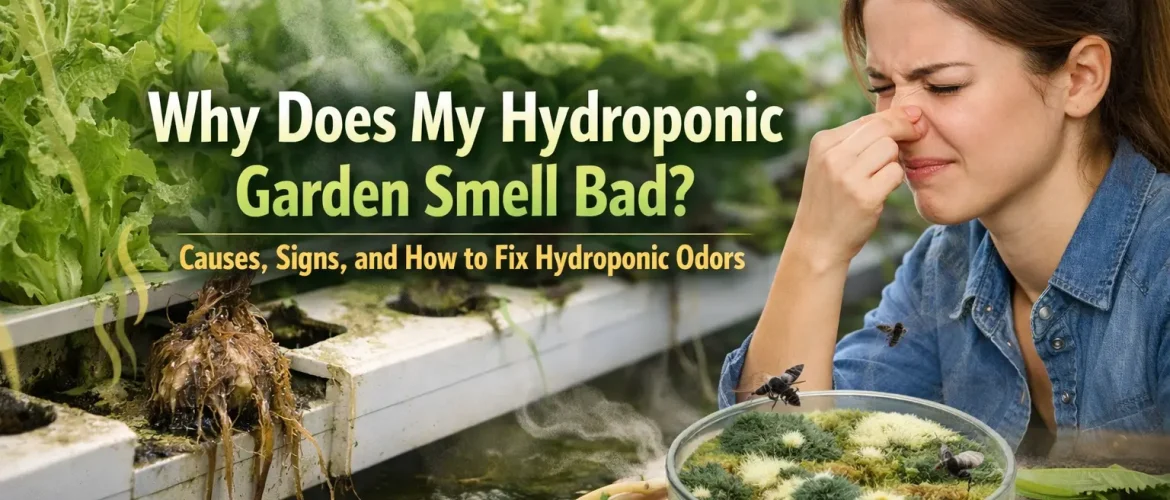
Hydroponic systems are designed to create a clean and controlled environment for plant growth, but sometimes growers notice an unpleasant smell coming from their setup. If you are wondering why does my hydroponic garden smell bad, the answer usually lies in problems such as anaerobic conditions, organic matter decomposition, microbial growth, poor water quality, nutrient imbalance, algae blooms, or root rot. In many cases, these issues develop when oxygen levels drop, organic materials accumulate, or the system becomes contaminated with bacteria and fungi.
A healthy hydroponic system should normally have clear water, healthy white roots, balanced nutrients, and a lightly earthy smell rather than a swampy odor. When the water begins to smell like rotten eggs, ammonia, or stagnant water, it often indicates microbial activity or decomposition occurring in the nutrient solution. Problems such as hydrogen sulfide production, ammonia buildup, and odor-producing bacteria are commonly associated with poor aeration or system maintenance.
Understanding why does my hydroponic garden smell bad is the first step toward fixing the problem. By identifying the causes of hydroponic odors and maintaining proper oxygenation, nutrient balance, system hygiene, and ventilation, growers can restore a healthy environment where plants thrive without unpleasant smells.
Understanding Why Does My Hydroponic Garden Smell Bad
Hydroponic gardens rely on nutrient solutions, water circulation, and microbial balance to support plant growth. When this balance is disrupted, the system can begin producing odors. Several factors contribute to hydroponic smells, including bacteria, decomposing organic matter, stagnant water, and poor oxygenation.
In a healthy system, beneficial microbes and aerobic bacteria help break down nutrients without producing foul smells. However, when anaerobic bacteria dominate, they begin releasing gases such as hydrogen sulfide and ammonia, which are responsible for strong odors.
Another factor influencing why a hydroponic garden smells bad is the presence of organic materials, plant debris, or uneaten nutrients. As these materials decompose in water, they create conditions where odor-producing bacteria multiply rapidly.
Hydroponic growers often notice these smells in situations such as:
- Cloudy or stagnant nutrient solution
- Slimy or brown plant roots
- Algae blooms in the reservoir
- Excess nutrients or poor filtration
Recognizing these signs early helps prevent serious problems such as root rot, microbial contamination, and nutrient instability.
Common Signs That a Hydroponic System Is Producing Odors
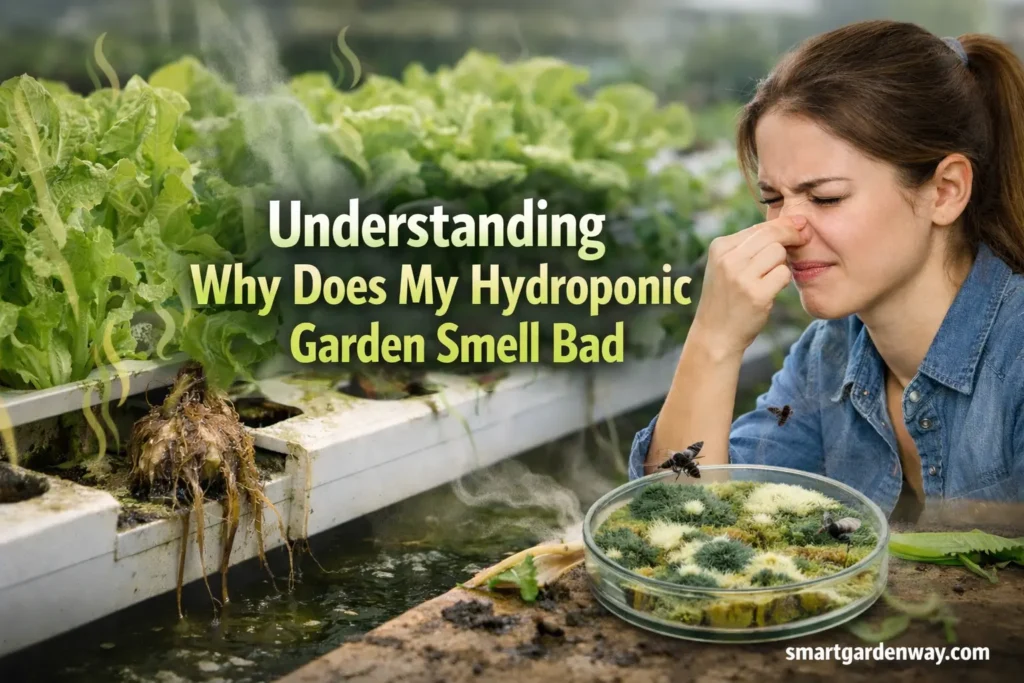
When investigating why does my hydroponic garden smell bad, growers should first observe the condition of their system. Several visual and environmental signals indicate that something is wrong.
Healthy hydroponic systems usually show clear water, steady bubbles from aeration, firm white roots, and upright plant growth. The smell is often described as fresh or lightly earthy rather than swampy or rotten.
However, when problems develop, growers may notice:
- Cloudy or discolored water
- Algae growth inside the reservoir
- Brown or slimy roots
- Stalled plant growth
- Strong sulfur or ammonia odor
Cloudy water often indicates suspended organic particles or microbial growth, while slimy roots may signal root rot caused by pathogens such as Pythium. Both of these conditions contribute to the unpleasant smell associated with unhealthy hydroponic systems.
Monitoring pH levels, EC or ppm readings, and water clarity can help detect problems before they escalate.
Anaerobic Conditions in Hydroponic Water
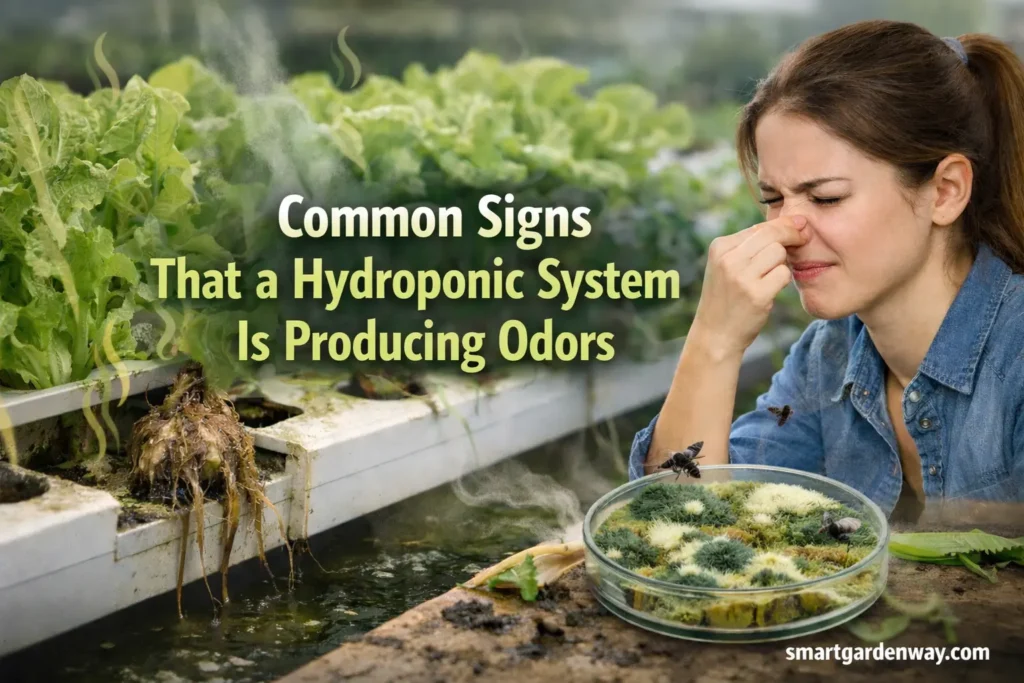
One of the most common answers to why does my hydroponic garden smell bad is the development of anaerobic conditions in the nutrient solution.
Anaerobic conditions occur when oxygen levels in the water drop too low, creating an environment where anaerobic bacteria thrive. These microorganisms break down organic matter without oxygen and release gases such as hydrogen sulfide, which produces the characteristic rotten egg smell.
Hydroponic systems rely on dissolved oxygen in the nutrient solution to maintain plant health and support beneficial microbes. When oxygen becomes depleted due to stagnant water, insufficient aeration, or excessive organic material, harmful bacteria begin to dominate.
Growers often encounter anaerobic conditions when:
- Air pumps or aeration systems are insufficient
- Water circulation is poor
- Organic matter accumulates in the reservoir
- The system contains stagnant zones
Using air pumps to produce bubbles and improve gas exchange helps increase oxygen levels and prevent anaerobic microbial activity.
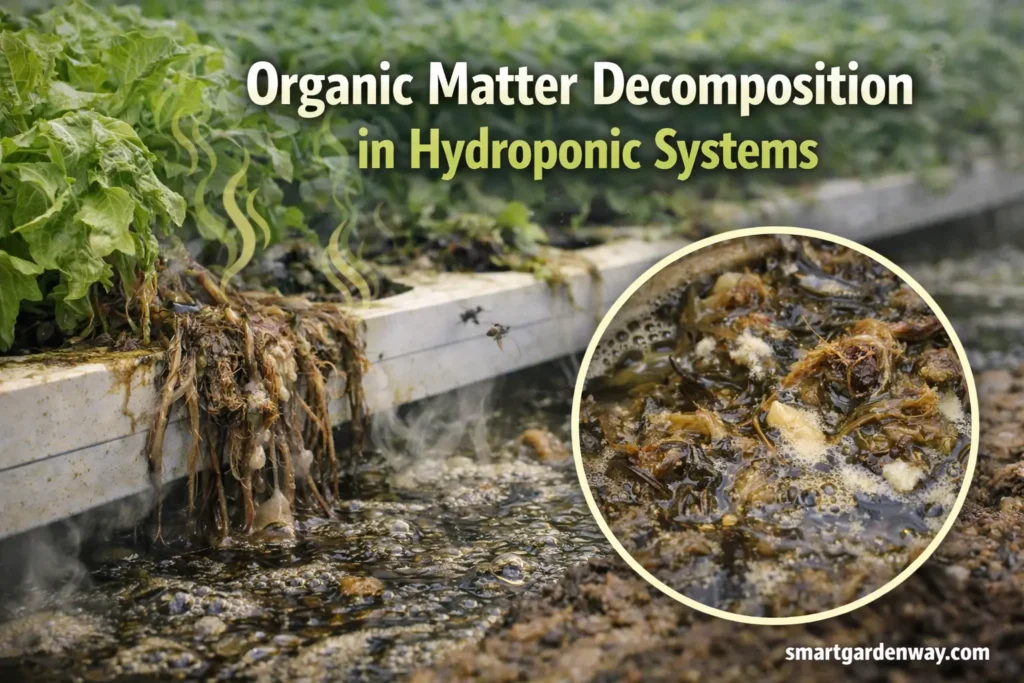
Organic Matter Decomposition in Hydroponic Systems
Another major cause of hydroponic odors is the decomposition of organic matter inside the system.
Organic materials such as uneaten fish feed, dead plant roots, organic growing mediums, or plant debris can accumulate in hydroponic reservoirs. Over time, bacteria break down these materials through decomposition.
During decomposition, microbes release organic compounds, ammonia, and hydrogen sulfide, which create strong unpleasant smells. If organic material accumulates excessively, it can lead to proliferation of odor-producing bacteria.
Some organic growing mediums commonly associated with odor issues include:
- Coco coir
- Peat moss
- Vermicast
When these materials remain wet in the nutrient solution, they provide an ideal environment for bacterial growth and microbial activity.
Replacing or cleaning growing mediums regularly and removing rotting plant material helps reduce odor problems.
Microbial Growth and Odor-Producing Bacteria
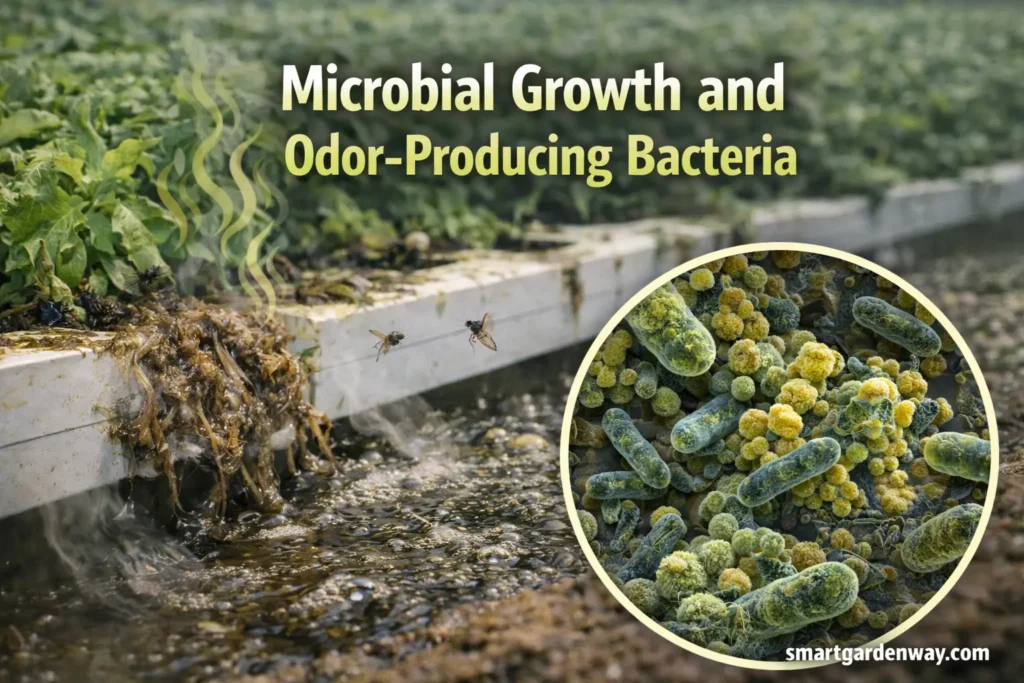
Microorganisms play an important role in hydroponic systems, but an imbalance between beneficial microbes and harmful bacteria can cause serious odor problems.
Beneficial bacteria, such as Bacillus species, support plant growth and maintain microbial balance in the nutrient solution. However, when harmful bacteria dominate, they produce odor-causing gases and compounds.
Odor-producing bacteria often thrive in conditions where:
- Oxygen levels are low
- Organic matter is abundant
- Water circulation is poor
- Nutrient solution is not replaced regularly
These bacteria break down organic material and release gases that create foul or swampy smells in hydroponic reservoirs.
Maintaining microbial balance by introducing beneficial microbes and ensuring proper oxygenation can help prevent the growth of odor-producing bacteria.
Algae Growth and Algal Bloom
Algae growth is another common reason growers ask why does my hydroponic garden smell bad.
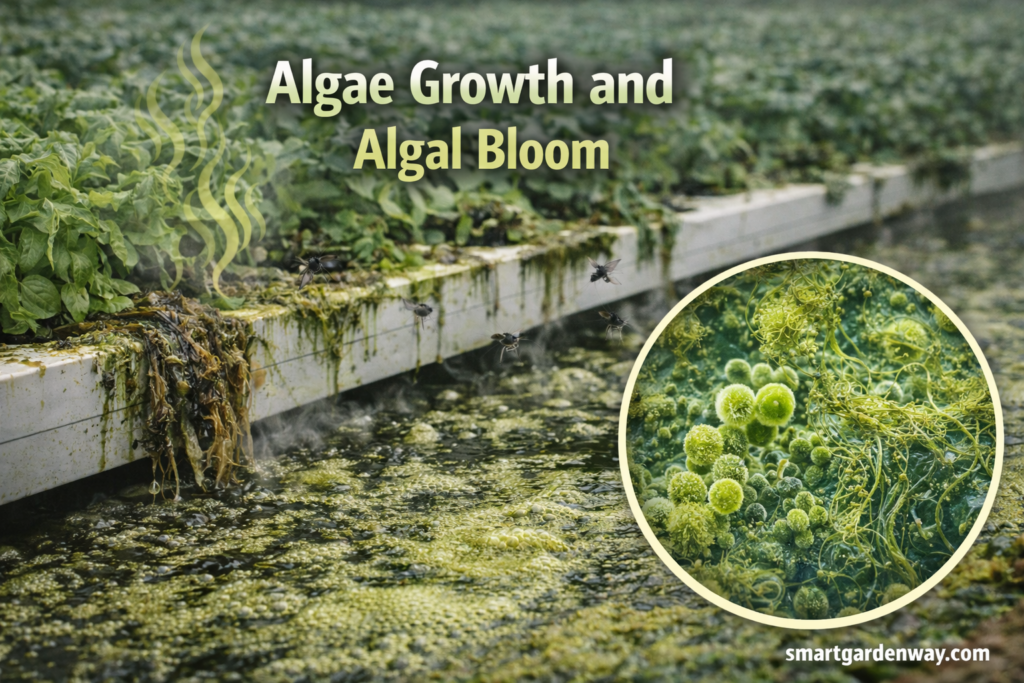
Algae develop when sunlight, nutrients, and warm water combine in hydroponic reservoirs. Once algae begin to grow, they multiply rapidly and form green or slimy layers inside the system.
Although algae themselves may produce a musty smell, the real problem occurs when algae die and decompose. This decomposition increases microbial activity and contributes to oxygen depletion and odor formation.
Algae blooms often occur when:
- The nutrient reservoir is exposed to light
- Water temperature becomes too warm
- Excess nutrients accumulate in the system
Blocking sunlight from entering the reservoir and maintaining proper water temperature helps reduce algae growth.
Root Rot and Pathogens in Hydroponic Systems
Root rot is another important factor when diagnosing why does my hydroponic garden smell bad.
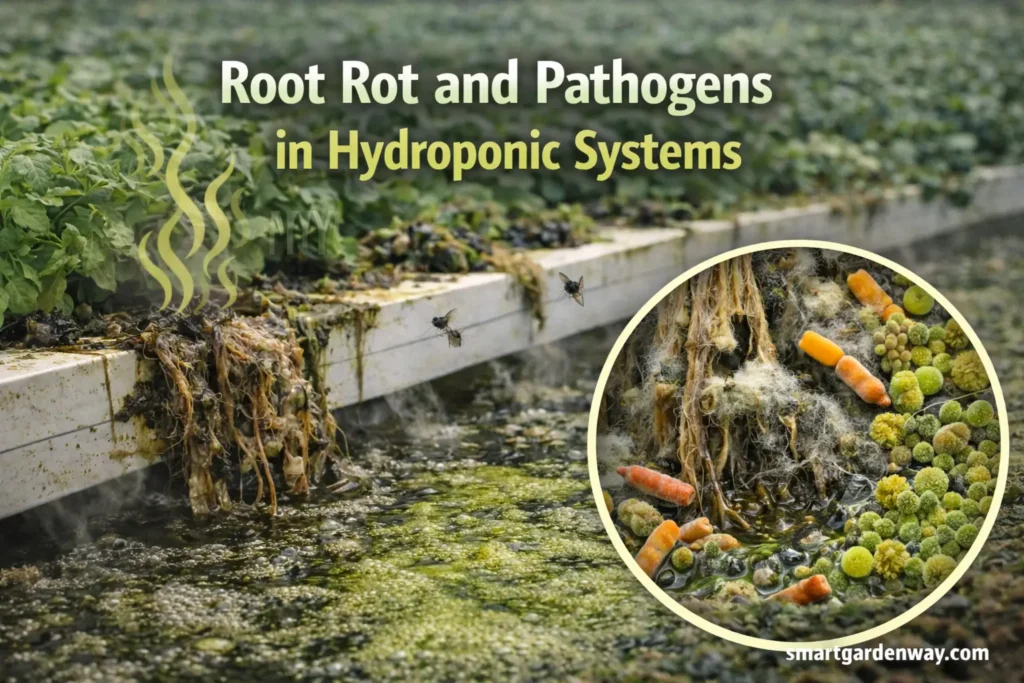
Root rot occurs when plant roots become infected by pathogens such as Pythium species, which thrive in oxygen-poor water conditions. Infected roots turn brown, slimy, and soft, producing a strong foul odor.
Healthy roots should appear white or cream colored and firm, with a fresh earthy smell. When roots begin to rot, the nutrient solution becomes contaminated with microorganisms and organic debris.
Root rot commonly develops when:
- Dissolved oxygen levels are low
- Water temperature becomes too high
- Nutrient solution remains unchanged for long periods
- Organic matter accumulates in the reservoir
Improving oxygenation, cleaning the system, and maintaining stable nutrient conditions helps prevent root rot infections.
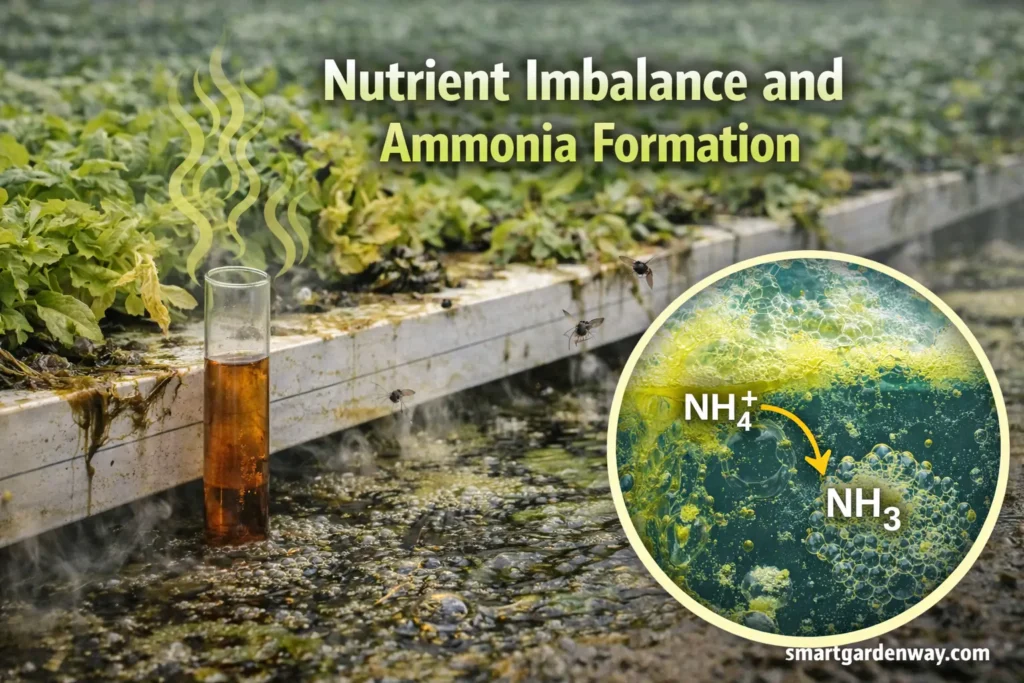
Nutrient Imbalance and Ammonia Formation
Hydroponic systems rely on a balanced nutrient solution containing elements such as nitrogen, phosphorus, and potassium. When nutrient levels become unstable, they can contribute to odor problems.
One example is the accumulation of ammonia or nitrogen compounds in the water. Excess ammonia often develops when fish waste, decomposing organic matter, or improper nutrient mixing occurs.
Ammonia has a strong pungent smell and indicates that the nutrient solution is out of balance.
Nutrient imbalances may occur due to:
- Overfeeding fish in aquaponic systems
- Excess fertilizer in the nutrient solution
- Inefficient nutrient uptake by plants
- Inadequate filtration
Regularly monitoring pH levels, nutrient concentration, and water chemistry helps prevent ammonia buildup and other odor issues.
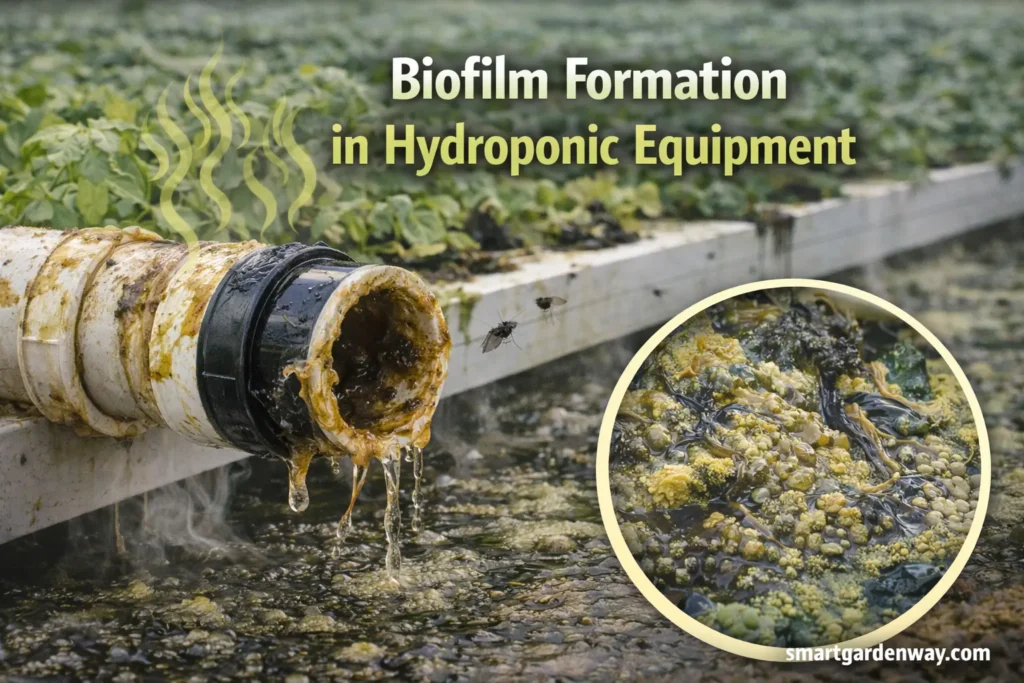
Biofilm Formation in Hydroponic Equipment
Biofilm is a layer of microbial colonies that attach to surfaces inside hydroponic systems, including pipes, reservoirs, and growing containers.
These microbial communities consist primarily of bacteria that form slimy coatings. As biofilm grows, it begins breaking down organic matter and releasing odor-causing compounds.
Biofilm formation can contribute to:
- Unpleasant smells in nutrient reservoirs
- Reduced water flow in pipes
- Increased bacterial contamination
Cleaning hydroponic equipment regularly and maintaining system hygiene prevents biofilm from forming.
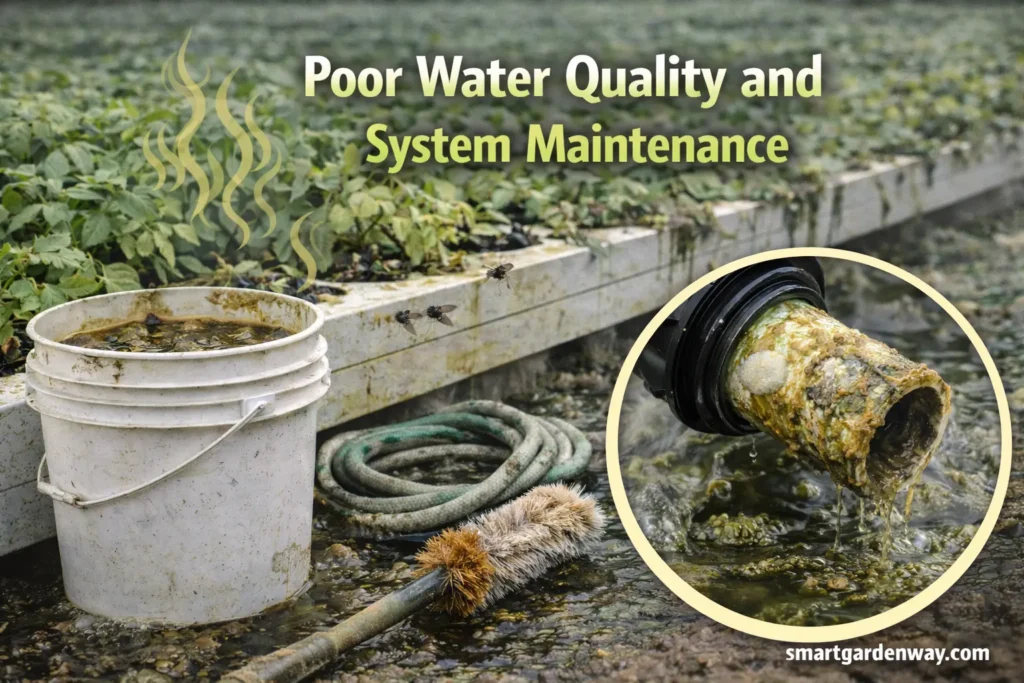
Poor Water Quality and System Maintenance
Water quality plays a critical role in determining whether a hydroponic system develops odors.
Poor water quality can result from pH fluctuations, excess nutrients, suspended particles, or microbial contamination. When these factors combine, they create conditions where bacteria thrive.
Growers often notice odor issues when the nutrient solution becomes cloudy, greenish, or filled with suspended particles. These signs indicate that the water is no longer stable.
Maintaining water quality requires:
- Replacing nutrient solution regularly
- Cleaning reservoirs and pumps
- Monitoring pH and nutrient levels
- Ensuring proper filtration
These practices help prevent the microbial growth that causes hydroponic odors.
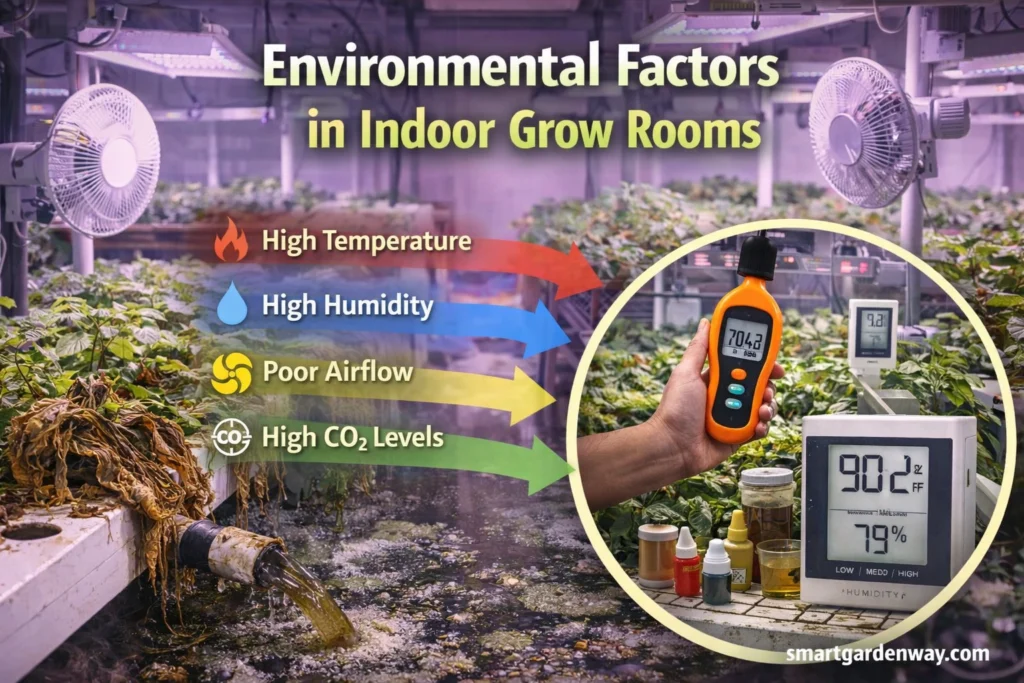
Environmental Factors in Indoor Grow Rooms
Sometimes the smell associated with hydroponic systems is not caused by the nutrient solution itself but by the grow room environment.
Indoor grow rooms can concentrate odors produced by:
- Plant aromas
- Nutrient solutions
- Humidity
- Organic matter
- Bacterial activity
In confined spaces, these smells accumulate and become stronger.
Proper ventilation systems, exhaust fans, and air circulation help disperse odors and maintain a balanced indoor environment.
Odor Control Systems for Hydroponic Grow Rooms
When addressing why does my hydroponic garden smell bad, many growers also consider odor control technologies designed for indoor gardens.
Several solutions are commonly used in hydroponic environments.
Carbon Filters
Carbon filters use activated carbon to trap odor-causing molecules in the air. Air is pushed through the carbon bed, where odors are removed before the air exits the ventilation system.
These filters are widely used in indoor growing because they effectively eliminate strong plant smells.
Exhaust Fans and Ventilation
Exhaust fans improve airflow by removing stale air from the grow room and replacing it with fresh air. This process helps disperse odors and maintain proper carbon dioxide levels for plant growth.
Odor Neutralizers and Gels
Odor neutralizing gels or crystals attract volatile organic compounds (VOCs) in the air. These compounds carry odors, and neutralizers trap or alter them to reduce smell.
Dry Vapor Odor Neutralization
Some odor removal systems use dry vapor technology infused with essential oils. The vapor interacts with odorous molecules in the air and neutralizes them without introducing additional moisture.
These technologies help control odor in hydroponic environments without disrupting the delicate balance of the system.
Maintaining Microbial Balance in Hydroponic Systems
Maintaining microbial balance is one of the most effective strategies for preventing hydroponic odors.
Healthy systems contain beneficial microbes and aerobic bacteria that break down nutrients efficiently without producing foul smells. When beneficial microbes dominate, they prevent harmful bacteria from colonizing the nutrient solution.
Growers often introduce microbial supplements containing beneficial bacteria to stabilize the system. Combined with proper oxygenation, these microbes help maintain a clean and odor-free hydroponic environment.
Frequently Asked Questions
Why does my hydroponic water smell bad?
Hydroponic water can smell bad when oxygen levels drop and anaerobic bacteria grow in the nutrient solution. Decomposing organic matter, root rot, algae growth, or nutrient imbalance can also produce odors like ammonia or rotten egg smells from hydrogen sulfide.
Do hydroponic gardens smell?
A healthy hydroponic garden usually has little to no smell and may have a light earthy scent. Strong odors typically appear when there is poor aeration, microbial growth, decomposing roots, or stagnant nutrient water.
How to remove smell from a hydroponic garden?
To remove hydroponic odors, clean the system, replace the nutrient solution, improve aeration with an air pump, and remove organic debris. Using proper ventilation or carbon filters in indoor grow rooms can also help control smells.
What are 5 disadvantages of hydroponics?
Some disadvantages of hydroponics include high setup costs, constant monitoring of pH and nutrients, risk of root diseases like Pythium, dependence on electricity for pumps, and system failure affecting plants quickly.
Conclusion
Understanding why does my hydroponic garden smell bad requires examining several aspects of the hydroponic system, including water quality, oxygen levels, microbial balance, and environmental conditions. In most cases, unpleasant odors are caused by anaerobic bacteria, decomposing organic matter, algae growth, root rot, nutrient imbalance, or poor system maintenance.
A healthy hydroponic system should maintain clear water, stable pH levels, balanced nutrients, and strong oxygenation. When these factors are properly managed, beneficial microbes dominate the environment, preventing the growth of odor-producing bacteria.
Regular maintenance practices such as cleaning reservoirs, replacing nutrient solutions, monitoring pH and EC levels, and removing organic debris are essential for keeping hydroponic systems functioning properly. Additionally, maintaining proper ventilation, carbon filtration, and airflow in indoor grow rooms helps control plant and nutrient odors.
By identifying the root cause of hydroponic smells and maintaining proper system balance, growers can restore a healthy growing environment where plants thrive without unpleasant odors.