

Keeping an AeroGarden system clean is essential for healthy plant growth, proper water circulation, and long-term performance. If you are wondering how to clean aerogarden pump, the process involves removing roots and debris, cleaning the pump components, circulating a cleaning solution such as vinegar or bleach through the reservoir, and then rinsing the system with clean water. The pump is responsible for circulating water and nutrients through the grow bowl and grow deck, so cleaning it regularly prevents root blockage, algae buildup, and mineral deposits that can clog the system. When the pump remains clean, water flow continues smoothly, allowing plants, grow sponges, and nutrients to function properly inside the hydroponic system. This guide explains the entire process of cleaning the AeroGarden pump, the grow bowl, and related components such as the pump filter, impeller, and water level float.
Understanding the AeroGarden Pump System
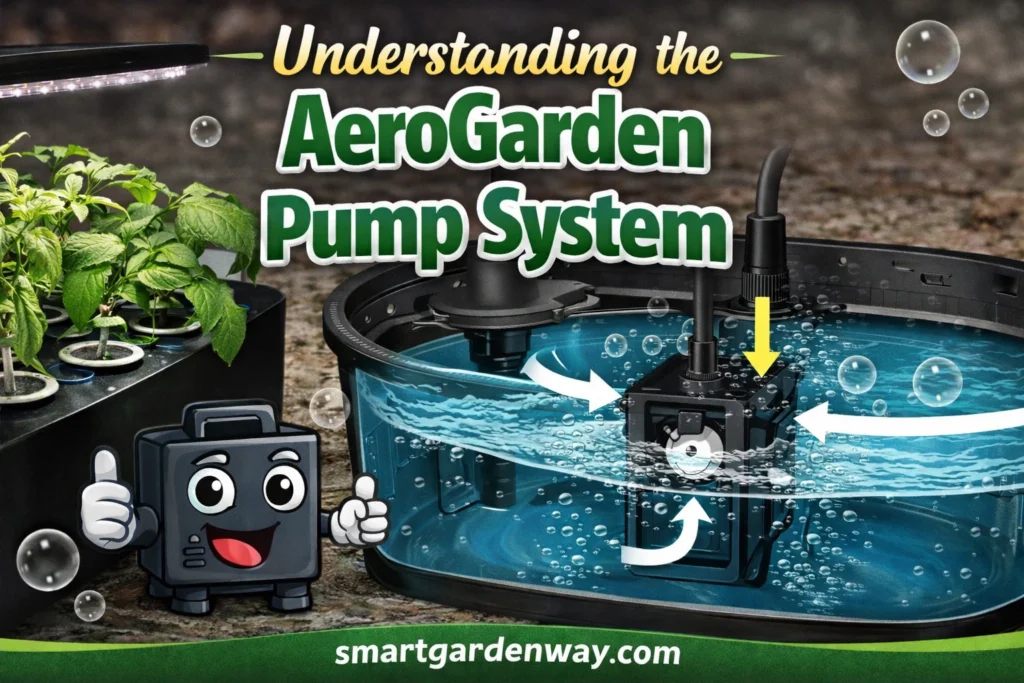
An AeroGarden is a hydroponic indoor gardening system designed to grow plants using water, nutrients, and light instead of soil. Inside the system are several key components that support plant growth and water circulation.
The water pump sits inside the grow bowl or reservoir and continuously circulates water and nutrients to plant roots. This movement allows roots to receive oxygen and nutrients, supporting healthy plant growth inside the grow deck. When the pump works correctly, water flows evenly through the system and prevents stagnation.
The pump also interacts with other components such as the grow deck, grow bowl, pump filter, and water level float. Each of these parts helps maintain water flow and prevent debris from entering the pump.
Over time, plant roots, algae, mineral deposits, and leftover nutrients can accumulate inside the pump housing and filter. When this buildup occurs, the pump may become clogged, causing poor water circulation or bubbling water inside the reservoir.
Because of this, learning how to clean aerogarden pump is an important part of maintaining the entire hydroponic system.
Why Cleaning the AeroGarden Pump Is Important
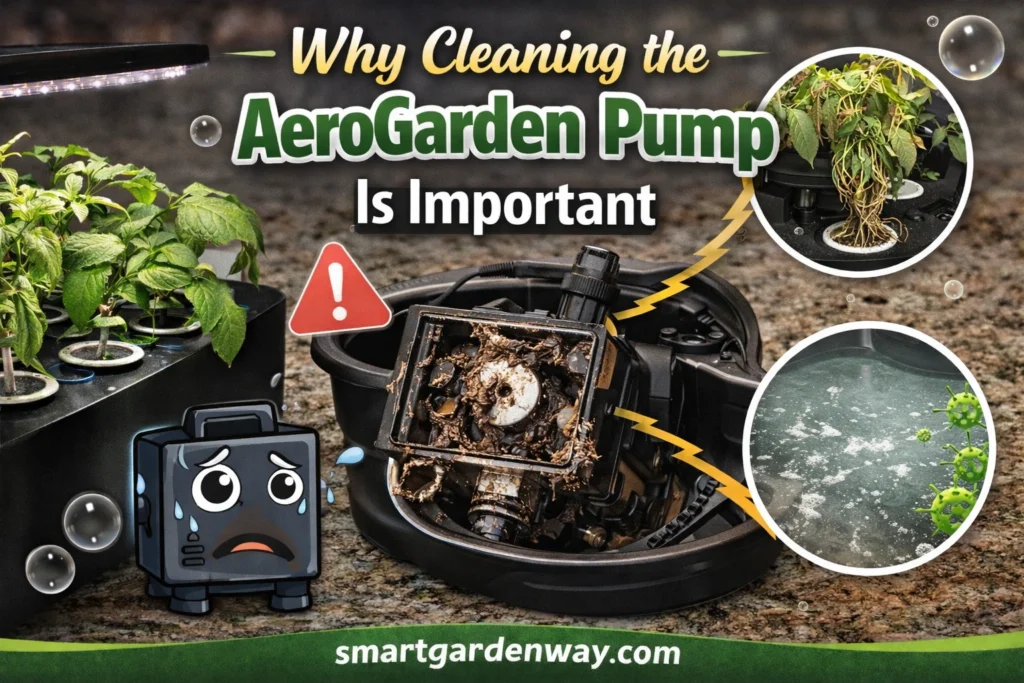
Cleaning the pump is necessary to maintain proper water circulation and ensure the hydroponic system continues working efficiently. Without regular maintenance, several problems can occur inside the reservoir and pump housing.
When plant roots grow through the grow deck and into the water bowl, they may reach the pump intake holes. These roots can block the pump filter and restrict water movement. As a result, the pump struggles to circulate nutrients to plants.
Mineral deposits from water and nutrients may also accumulate on the pump parts, especially the impeller, rotor magnet, and pump filter. This buildup slows the pump and can eventually stop it from working.
Algae and bacteria are also common in hydroponic systems. If the reservoir is not cleaned regularly, algae growth can appear on the grow bowl, grow deck, and inside the pump housing.
Regular cleaning helps prevent:
- Pump blockage caused by roots
- Algae buildup inside the grow bowl
- Mineral deposits from hard water
- Poor water circulation
- Unpleasant odors in the reservoir
A clean pump ensures that nutrients circulate properly and that plant roots receive oxygen and water.
Signs Your AeroGarden Pump Needs Cleaning
Before beginning the cleaning process, it is useful to recognize the signs that indicate the pump needs maintenance.
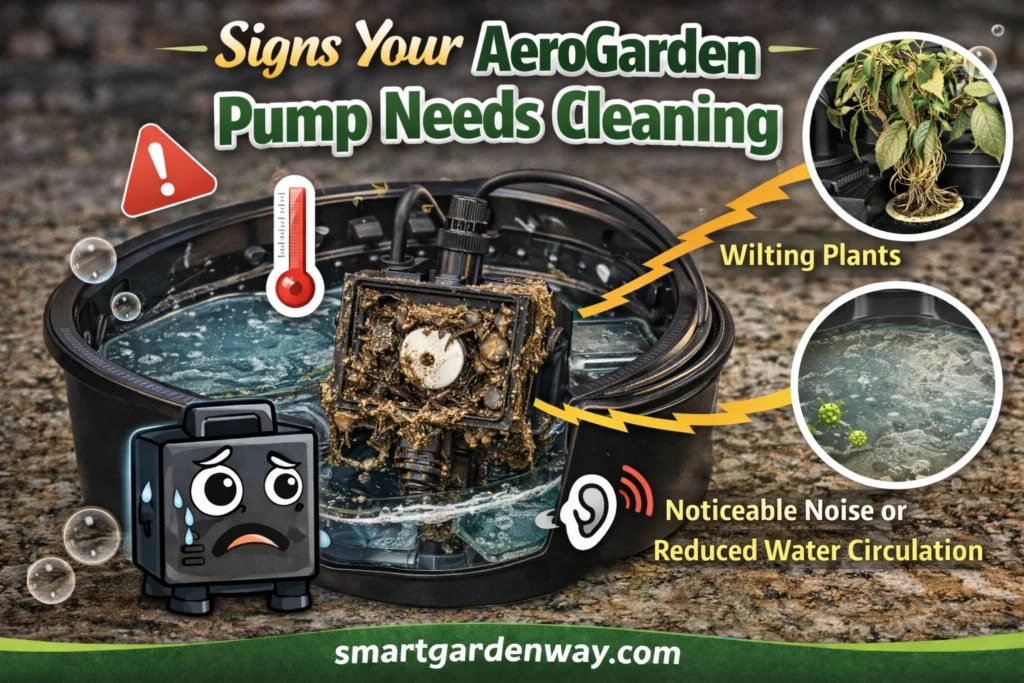
One of the most common signs is reduced water circulation. If water is not moving properly inside the grow bowl, the pump may be blocked by roots or debris.
Another sign is bubbling water inside the reservoir. This can occur when the pump intake is partially clogged or when the pump is not seated correctly in the housing.
You may also notice murky water, algae growth, or unpleasant smells in the reservoir. These issues indicate that cleaning and sanitizing are required.
Sometimes the pump becomes noisy or stops circulating water entirely. When this happens, it may be necessary to disassemble the pump and clean the internal parts such as the impeller and rotor magnet.
Recognizing these signs early makes it easier to maintain the system and prevent damage to the pump.
How Often Should You Clean the AeroGarden Pump
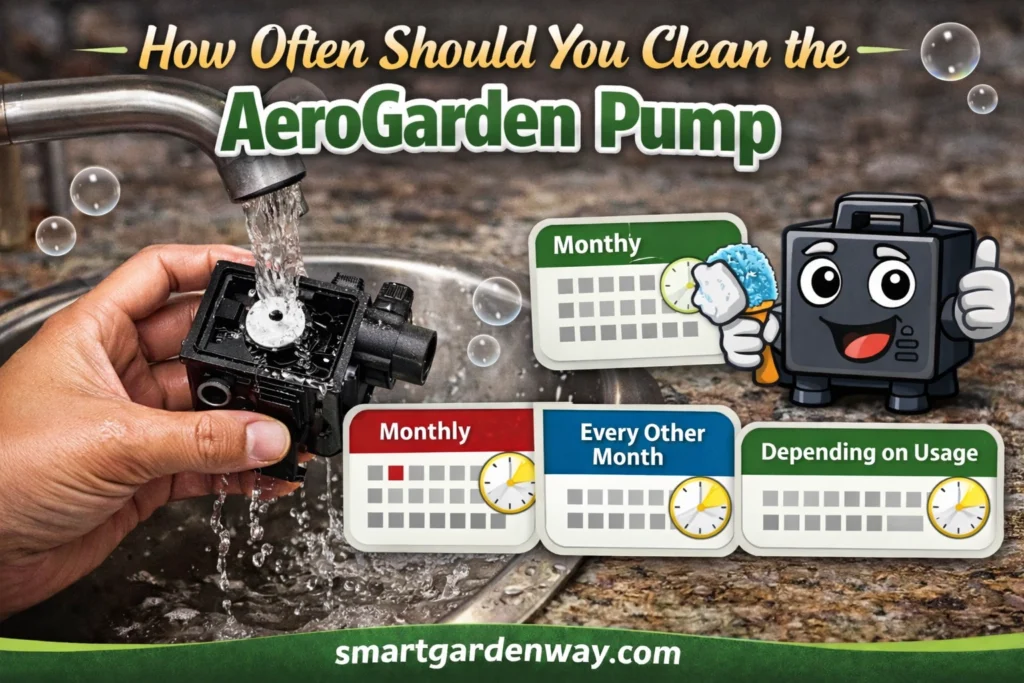
Most hydroponic systems benefit from regular cleaning every few weeks. Cleaning the pump between planting cycles is particularly important because roots and nutrients from the previous crop may remain inside the system.
A common cleaning schedule includes inspecting the pump and reservoir every two to three weeks. During this inspection, check the pump filter, grow deck, and reservoir for debris or root buildup.
A deeper cleaning should be performed when starting a new batch of plants or when replacing grow sponges and seeds. At this time, the pump, grow bowl, and grow deck can be sanitized using a cleaning solution.
Regular maintenance keeps the pump functioning properly and reduces the risk of root blockage or algae growth.
1. Preparing to Clean the AeroGarden Pump
Before starting the cleaning process, it is important to prepare the system and gather the necessary materials.
Begin by unplugging the AeroGarden and removing the grow deck from the reservoir. Carefully remove any seed pods, grow baskets, or grow sponges from the system.
Next, empty the water from the grow bowl. This allows access to the pump and other components inside the reservoir.
During preparation, you may notice plant roots extending into the water bowl. These roots should be removed carefully to prevent them from entering the pump.
Once the reservoir is empty and the grow deck is removed, the pump and pump filter can be accessed for cleaning.
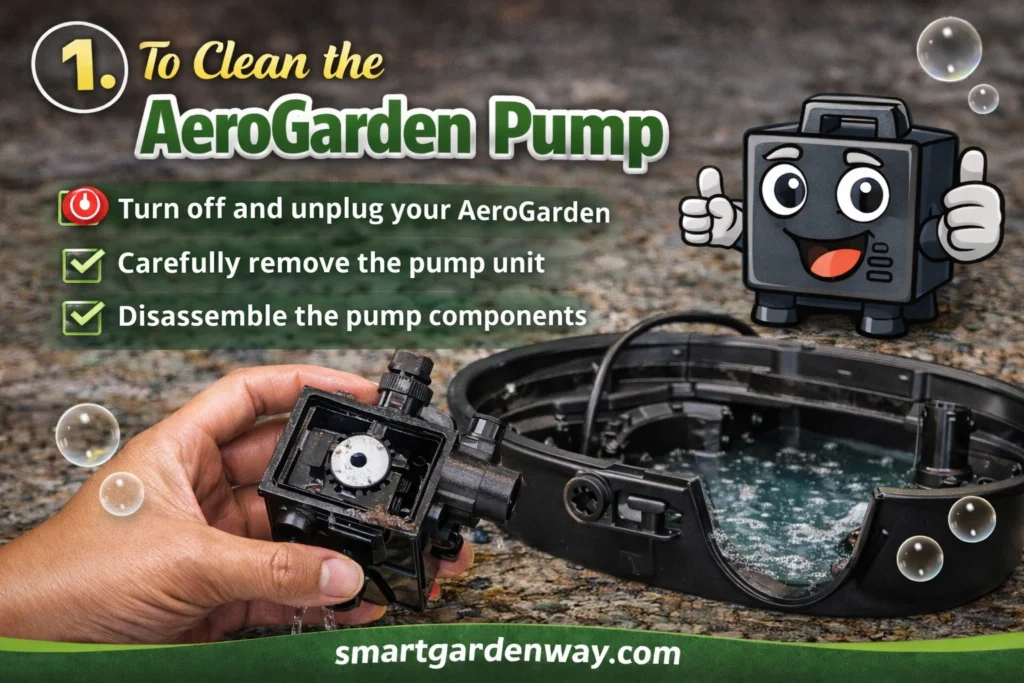
2. Removing the Pump From the Reservoir
The pump sits inside the grow bowl and is usually connected to the base of the reservoir. Removing it carefully allows access to the pump housing and internal components.
Start by locating the pump and gently pulling it out of the housing. Some pumps may have a connector or small plastic tab holding them in place.
When the pump is removed, inspect the surrounding area for roots or debris. Many AeroGarden pumps contain a small filter positioned in front of the intake holes. This filter prevents plant roots from entering the pump.
If roots have wrapped around the pump or filter, they should be removed before cleaning the internal components.
Removing the pump from the reservoir is the first major step in learning how to clean aerogarden pump effectively.
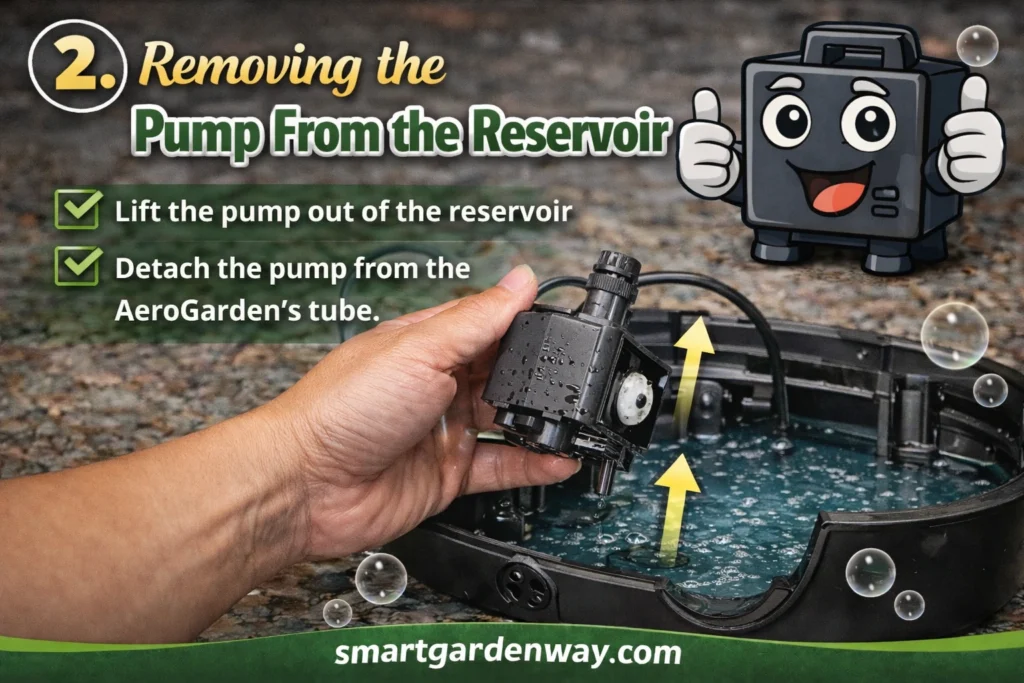
3. Removing Roots and Debris From the Pump
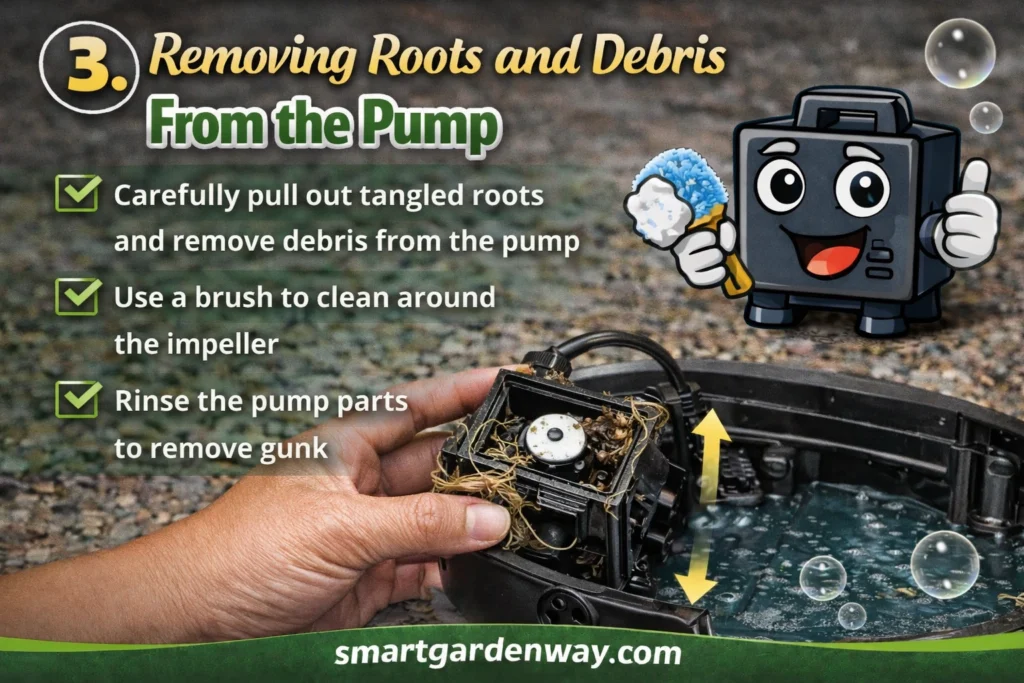
Plant roots often grow through the grow deck and reach the reservoir where the pump is located. When these roots wrap around the pump filter or intake holes, they restrict water flow.
Carefully remove the roots from the pump and surrounding area. This step may require patience because roots can become tangled around the filter and pump housing.
Removing the roots helps restore water circulation and prevents future blockages.
After removing visible debris, rinse the pump exterior under warm water. This helps remove loose particles and prepares the pump for deeper cleaning.
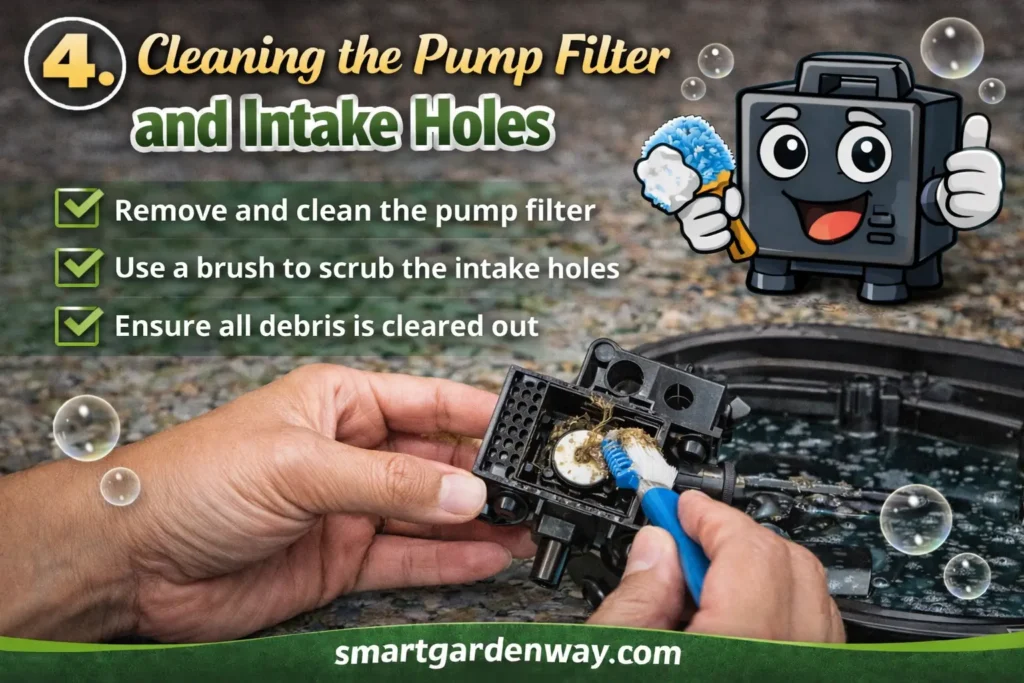
4. Cleaning the Pump Filter and Intake Holes
The pump filter plays an important role in protecting the internal pump components from debris and roots. Over time, the filter may become clogged with plant material or residue.
To clean the filter, remove it from the pump and rinse it under warm water. Any remaining roots or debris should be removed carefully.
Some filters can be rubbed gently against themselves to loosen residue. This step helps remove buildup without damaging the filter material.
The intake holes on the pump should also be inspected. These openings allow water to enter the pump and circulate through the hydroponic system. If they become blocked, water flow will decrease.
Cleaning the filter and intake holes ensures the pump can draw water properly from the reservoir.
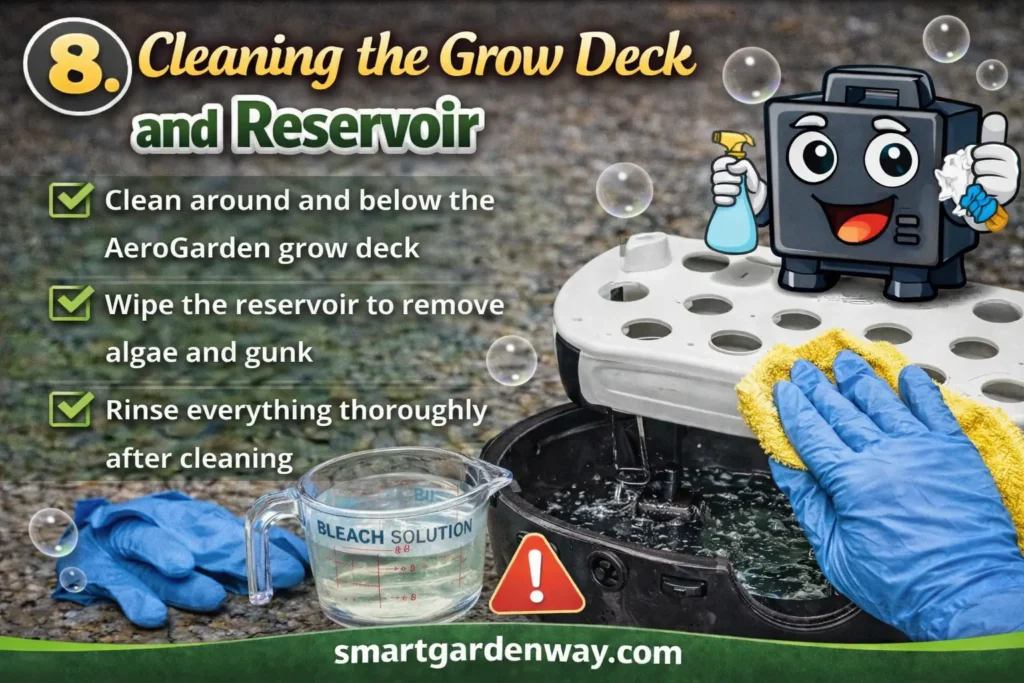
5. Cleaning Inside the Pump Housing
If the pump still appears dirty after cleaning the filter, it may be necessary to open the pump housing and clean the internal components.
Most pumps can be separated into two halves by locating a small notch or seam in the housing. Carefully separate these parts to access the interior.
Inside the pump you may find components such as the impeller and rotor magnet. These parts rotate to push water through the system.
Residue, mineral buildup, or algae may accumulate around these components. Cleaning them helps restore the pump’s performance.
Small cleaning tools such as Q-tips or pipe cleaners can be used to reach narrow spaces inside the pump housing.
Once the internal components are clean, the pump can be reassembled.
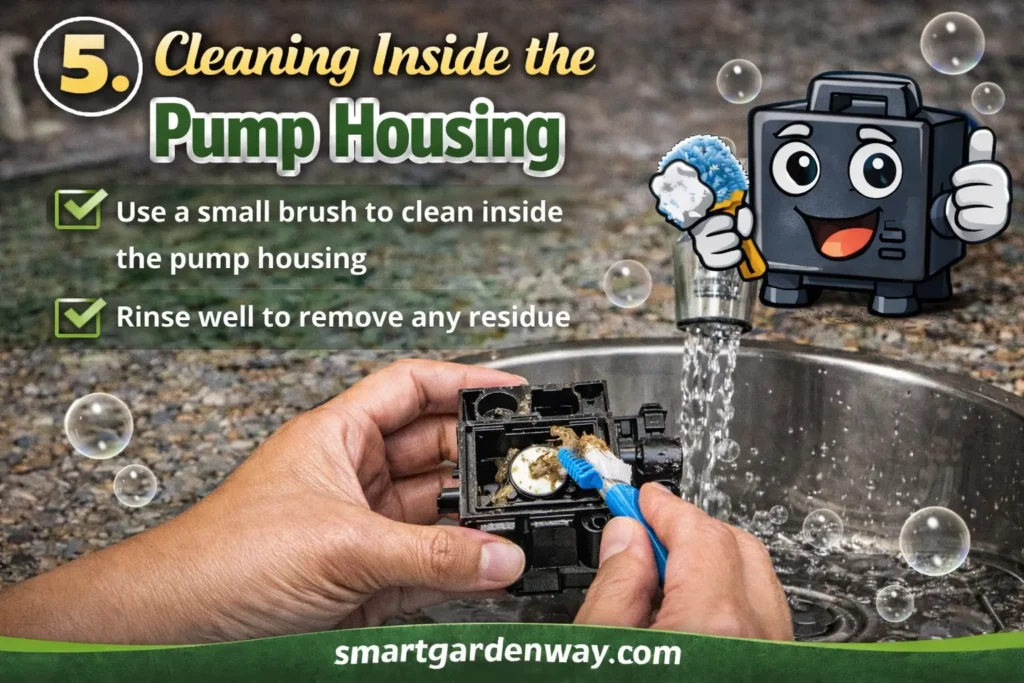
6. Vinegar Cleaning Cycle for the Pump and Reservoir
One effective way to sanitize the AeroGarden system is by using a vinegar cleaning cycle.
To prepare the solution, combine equal parts water and vinegar. This mixture helps remove bacteria, mineral deposits, and algae inside the reservoir and pump.
Fill the grow bowl with the vinegar solution and reconnect the pump. Plug the AeroGarden into power and allow the pump to run for approximately 30 minutes.
During this time, the cleaning solution circulates through the pump and reservoir, breaking down buildup inside the system.
After the cleaning cycle is complete, empty the grow bowl and refill it with clean water.
Allow the pump to run again for several minutes so that any remaining vinegar is flushed from the system.
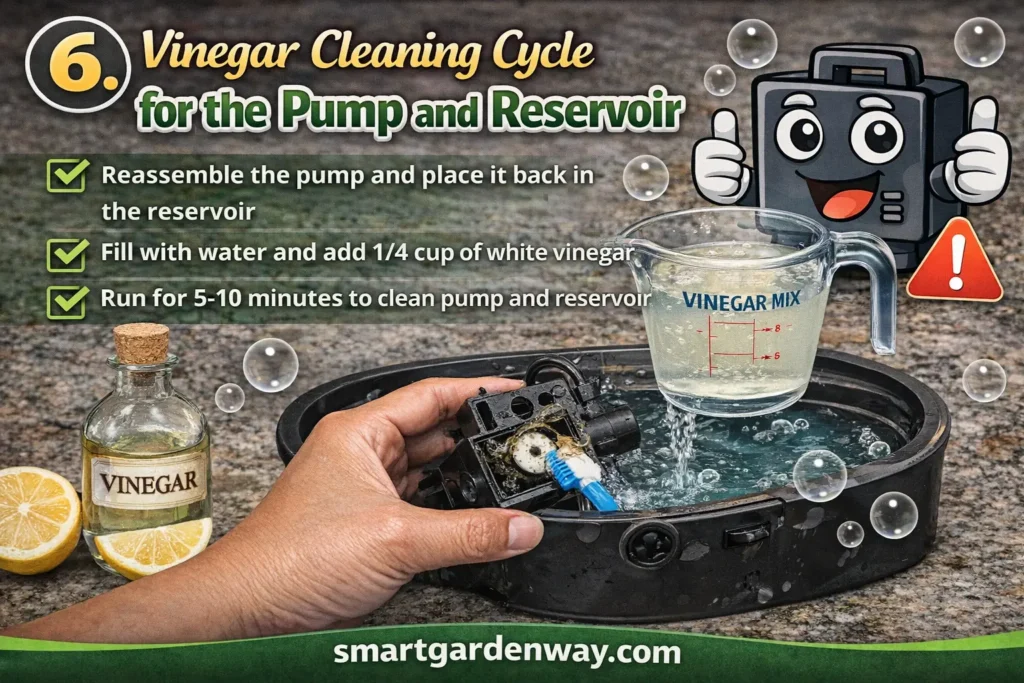
7. Bleach Sanitization Method
Another cleaning method involves using a diluted bleach solution to sanitize the system.
A typical mixture includes a small amount of bleach combined with water in the grow bowl. Once the solution is prepared, reconnect the pump and allow it to circulate through the system.
The pump should run for about 30 minutes so the cleaning solution can sanitize the reservoir and pump components.
Afterward, empty the bowl and rinse the system thoroughly with clean water. Running the pump again with fresh water helps remove any remaining bleach residue.
Because bleach is a strong cleaning agent, rinsing the system completely is important before planting new seeds.
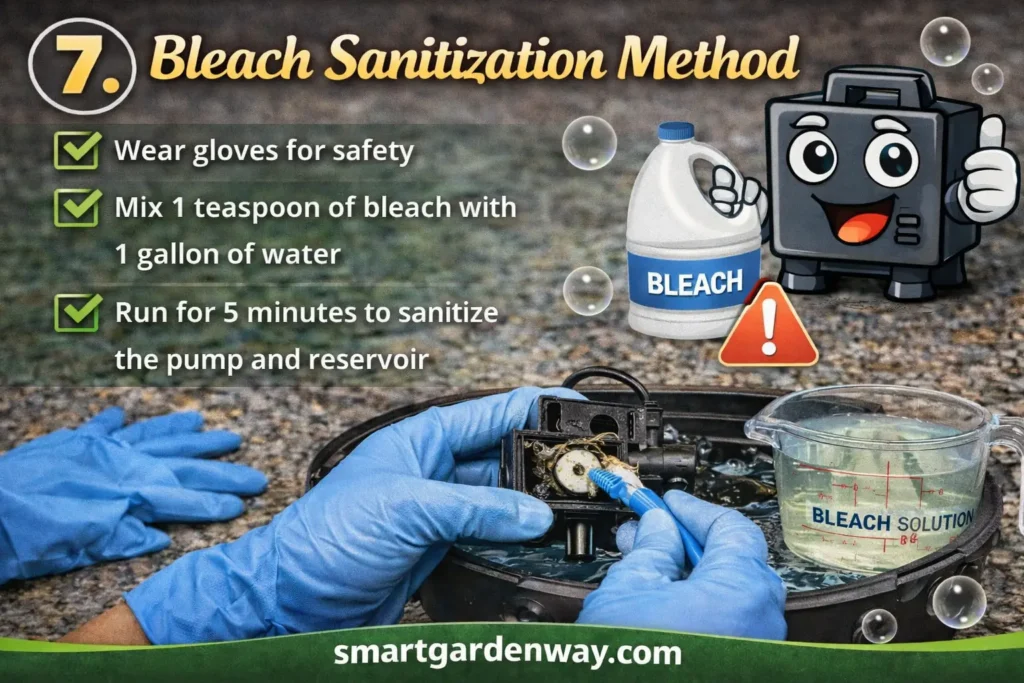
8. Cleaning the Grow Deck and Reservoir
While cleaning the pump, it is also important to clean the grow deck and grow bowl.
The grow deck often contains small spaces where plant food and roots can accumulate. Scrubbing these areas with warm water helps remove residue.
Some AeroGarden components such as the grow deck and bowl may also be cleaned in a dishwasher cycle, provided the pump and electrical components are removed.
Cleaning the reservoir ensures that no leftover nutrients, algae, or debris remain in the system.
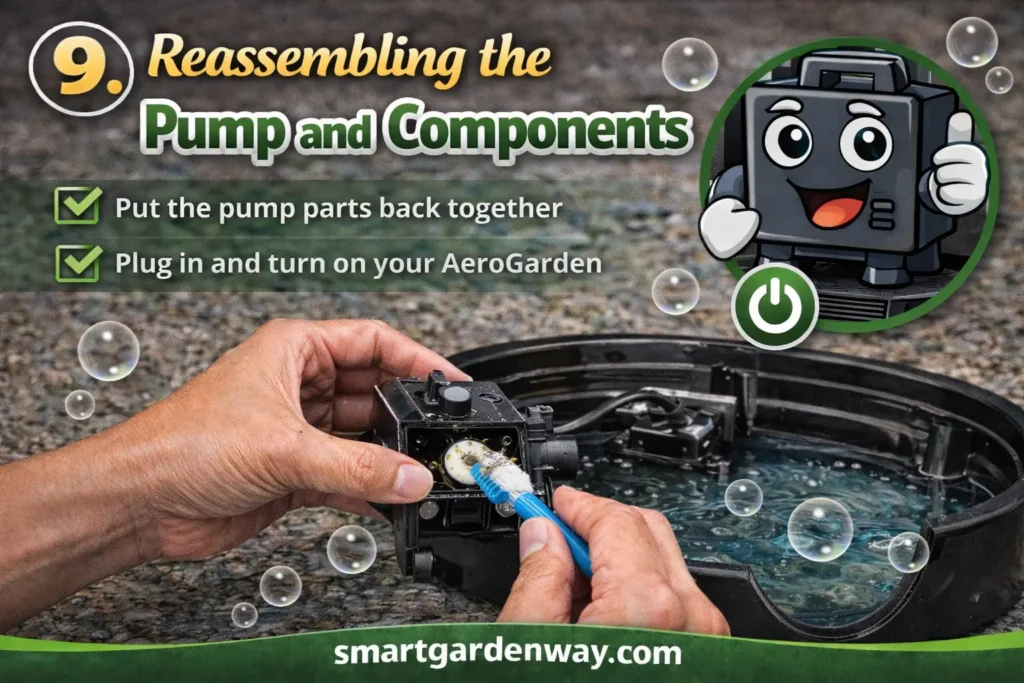
9. Reassembling the Pump and Components
After cleaning and drying the pump, it can be reassembled and placed back into the reservoir.
Begin by inserting the impeller and rotor magnet into the pump housing. Make sure the components are aligned correctly before closing the pump.
Next, attach the pump filter and position the pump inside the grow bowl. Ensure that the pump sits securely and that the intake holes are unobstructed.
Reconnect the power cord and confirm that the pump is positioned correctly for water circulation.
Once the pump is reinstalled, the grow deck can be placed back onto the reservoir.
10. Preventing Future Pump Blockages
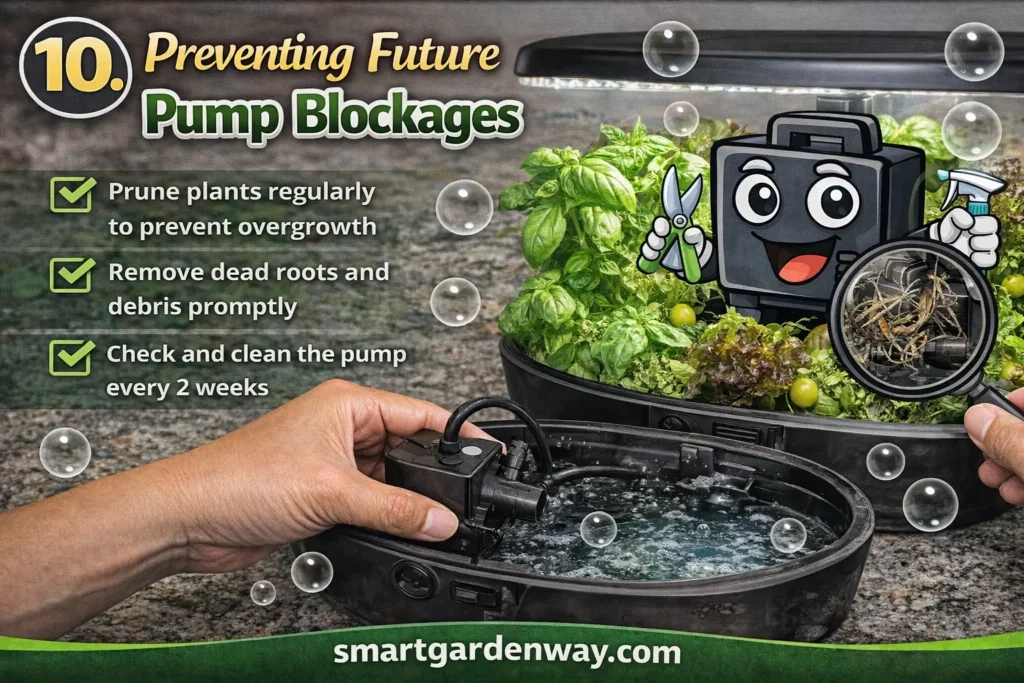
Regular maintenance helps prevent future pump issues. One of the most effective methods is trimming plant roots before they reach the pump.
Roots that extend into the reservoir should be monitored and trimmed when necessary. This prevents them from wrapping around the pump filter.
Maintaining proper water levels also helps prevent mineral deposits and algae buildup.
Inspecting the pump filter and reservoir periodically ensures that debris does not accumulate over time.
11. Troubleshooting Pump Problems
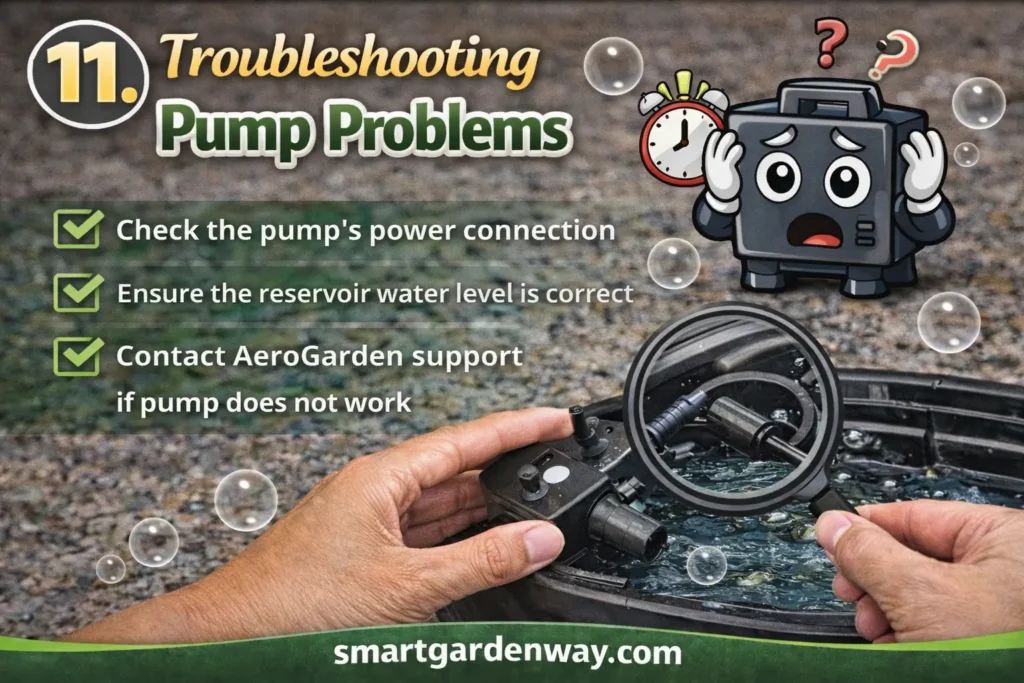
Sometimes the pump may still have issues even after cleaning. If water circulation does not improve, check that the pump is installed correctly and that the impeller can rotate freely.
If the pump continues to struggle, inspect the pump housing for remaining debris or mineral buildup.
Some issues may also occur if the water level float or pump connector is not positioned correctly inside the reservoir.
In many cases, simply cleaning the pump filter and removing roots restores proper function.
12. Restarting the AeroGarden After Cleaning
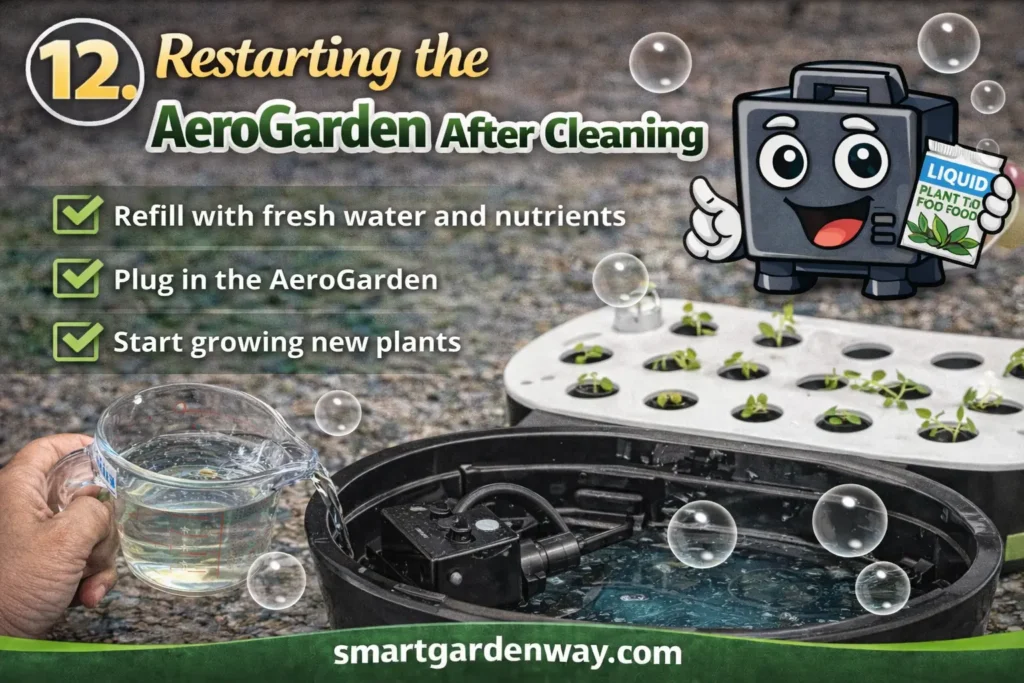
Once the pump and reservoir are clean, the system can be restarted for planting.
Fill the grow bowl with fresh water and reconnect the pump to power. Confirm that water circulates properly through the system.
New grow sponges, nutrients, and seeds can then be added to the grow deck.
Starting with a clean system ensures that plants receive clean water and nutrients from the beginning of the growth cycle.
Frequently Asked Questions
How to clean your AeroGarden pump?
To clean your AeroGarden pump, first unplug the AeroGarden and remove the grow deck to access the reservoir. Take out the pump and inspect the pump filter and intake holes for plant roots or debris. Rinse the pump under warm water and remove any roots wrapped around the filter. If residue or mineral buildup is present, open the pump housing and clean the internal components such as the impeller and rotor magnet. After cleaning, place the pump back into the grow bowl and run a cleaning cycle using a mixture of water and vinegar so the pump circulates the solution through the system. Finally, empty the reservoir, refill with clean water, and run the pump again to rinse the system.
How to clean a hydroponic pump?
Cleaning a hydroponic pump involves removing debris, roots, and mineral buildup that may affect water circulation. Start by disconnecting the pump from the hydroponic system and rinsing the exterior under warm water. Remove the pump filter and check the intake holes for blockages caused by roots or residue. If necessary, open the pump housing and clean internal parts like the impeller and rotor magnet. To sanitize the system, place the pump back into the reservoir and run a cleaning solution such as water and vinegar through the system for about 30 minutes. Afterward, flush the system with fresh water to remove any remaining cleaning solution.
How to clean roots out of AeroGarden pump?
Plant roots often grow through the grow deck and reach the reservoir, where they can wrap around the pump filter and intake holes. To clean roots out of an AeroGarden pump, unplug the system and remove the grow deck to access the water bowl. Carefully pull out the pump and remove any visible roots wrapped around the filter or pump housing. Rinse the pump under warm water and inspect the intake openings for smaller root pieces. If roots have entered the pump housing, open the pump carefully and remove the roots from around the impeller. Once the pump is clear of roots, reinstall it in the reservoir and ensure water can circulate properly.
How to check AeroGarden pump?
To check if an AeroGarden pump is working correctly, start by looking at the water movement inside the grow bowl. When the pump is running, water should circulate smoothly through the reservoir. If there is little or no movement, inspect the pump filter and intake holes for roots or debris. Remove the pump from the reservoir and check that the impeller can rotate freely inside the pump housing. Also verify that the pump is properly connected and positioned in the grow bowl. After reinstalling the pump, turn the system back on and observe whether the water circulates normally through the hydroponic system.
Conclusion
Learning how to clean aerogarden pump is essential for maintaining a healthy hydroponic system. The pump is responsible for circulating water and nutrients through the reservoir, grow bowl, and grow deck, so keeping it clean ensures that plants receive proper hydration and oxygen. Regular cleaning prevents root blockage, algae growth, mineral deposits, and debris from interfering with water flow. The process typically involves removing the pump from the reservoir, cleaning the pump filter and intake holes, removing roots, and sanitizing the system using a vinegar or bleach solution. After circulating the cleaning solution, the system should be rinsed with clean water and reassembled carefully. Maintaining the pump, reservoir, and grow deck between planting cycles keeps the AeroGarden functioning efficiently and supports consistent plant growth. With regular maintenance and inspection, the pump will continue circulating water effectively, helping plants grow successfully throughout each planting cycle.