
The Best hydroponic system for small apartments 2026 is no longer a futuristic concept; it is a practical, scalable, and water-efficient solution that allows urban dwellers to grow fresh herbs, leafy greens, strawberries, tomatoes, and even compact fruiting peppers year-round inside limited indoor space. Whether you live in a studio apartment, a high-rise flat, or a compact urban home, modern hydroponic systems from Kratky jars and Deep Water Culture (DWC) buckets to vertical hydroponic towers like Gardyn, Lettuce Grow, and Rise Gardens make sustainable food production possible with up to 90% less water than traditional soil gardening.
In this comprehensive expert guide, we will analyze system types, nutrient science, smart automation, vertical solutions, environmental impact, real product comparisons, and testing methodologies integrating proven data, entities, and structured insights from leading hydroponic reviews and buyer guides.
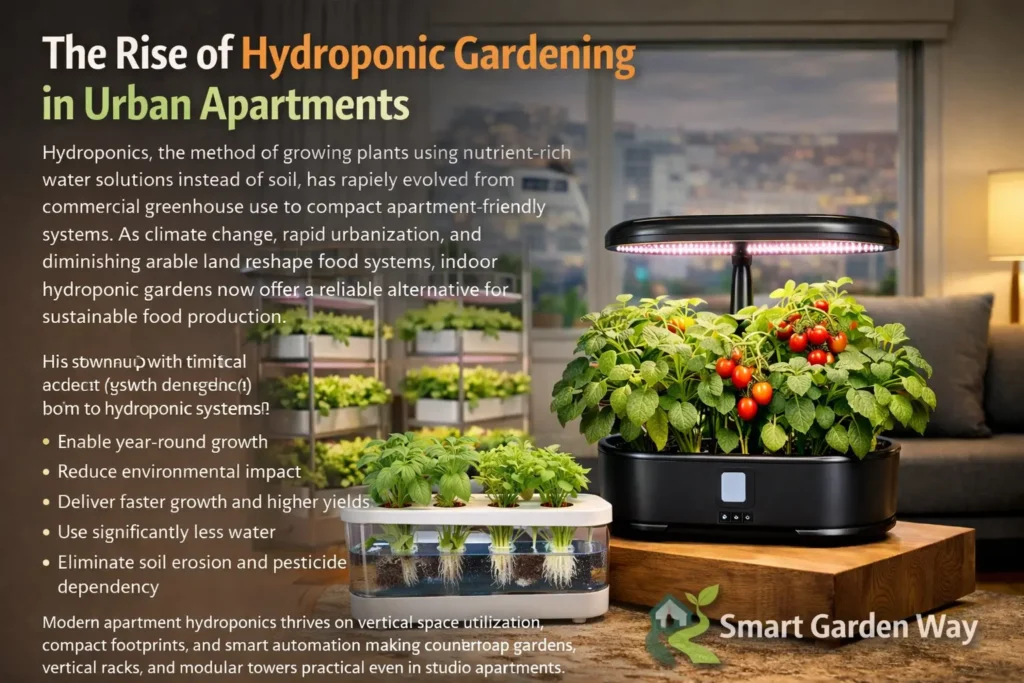
The Rise of Hydroponic Gardening in Urban Apartments
Hydroponics, the method of growing plants using nutrient-rich water solutions instead of soil, has rapidly evolved from commercial greenhouse use to compact apartment-friendly systems. As climate change, rapid urbanization, and diminishing arable land reshape food systems, indoor hydroponic gardens now offer a reliable alternative for sustainable food production.
Urban dwellers with limited outdoor space increasingly turn to hydroponic systems because they:
- Enable year-round growth
- Reduce environmental impact
- Deliver faster growth and higher yields
- Use significantly less water
- Eliminate soil erosion and pesticide dependency
Modern apartment hydroponics thrives on vertical space utilization, compact footprints, and smart automation making countertop gardens, vertical racks, and modular towers practical even in studio apartments.
Why Hydroponic Systems Matter in Small Spaces
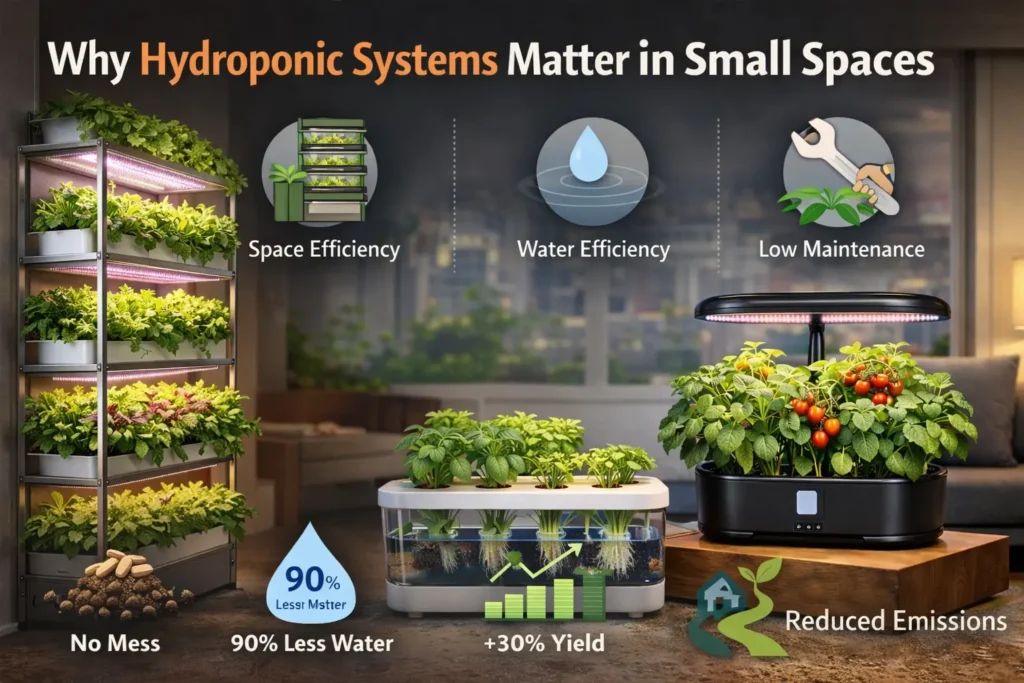
Hydroponic systems matter because they solve three major apartment gardening constraints: space, water efficiency, and maintenance.
Compared to traditional soil gardening:
- Hydroponics uses up to 90% less water
- Recirculating systems minimize nutrient runoff
- No soil means no mess in kitchen or living rooms
- Controlled nutrient delivery improves plant health
- Indoor LED grow lights enable consistent light cycles
Research from hydroponic comparison tables shows that small systems can produce up to 30% more yield per square foot than conventional methods. This is critical when maximizing limited apartment square footage.
Environmental stewardship is another major factor. Reduced pesticide use, minimized greenhouse gas emissions, and carbon footprint monitoring as emphasized by platforms like Farmonaut align hydroponics with sustainable urban agriculture.
Core Components of a Small Apartment Hydroponic System
Every effective hydroponic setup whether countertop or vertical tower relies on specific technical components.
Growing Container and Reservoir
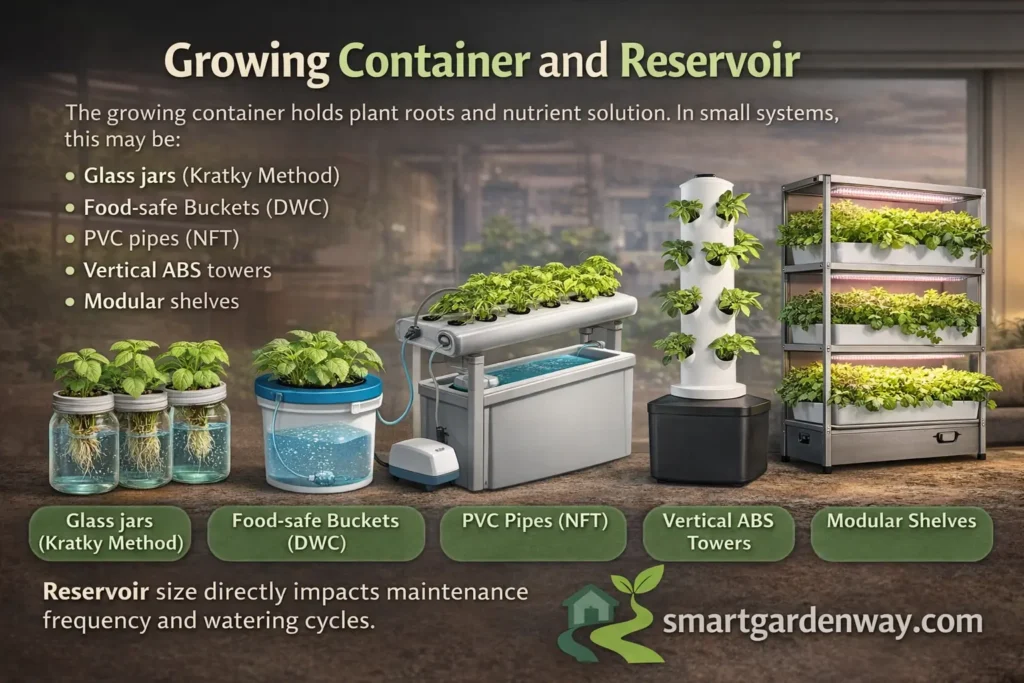
The growing container holds plant roots and nutrient solution. In small systems, this may be:
- Glass jars (Kratky Method)
- Food-safe buckets (DWC)
- PVC pipes (NFT)
- Vertical ABS towers
- Modular shelves
Reservoir size directly impacts maintenance frequency and watering cycles.
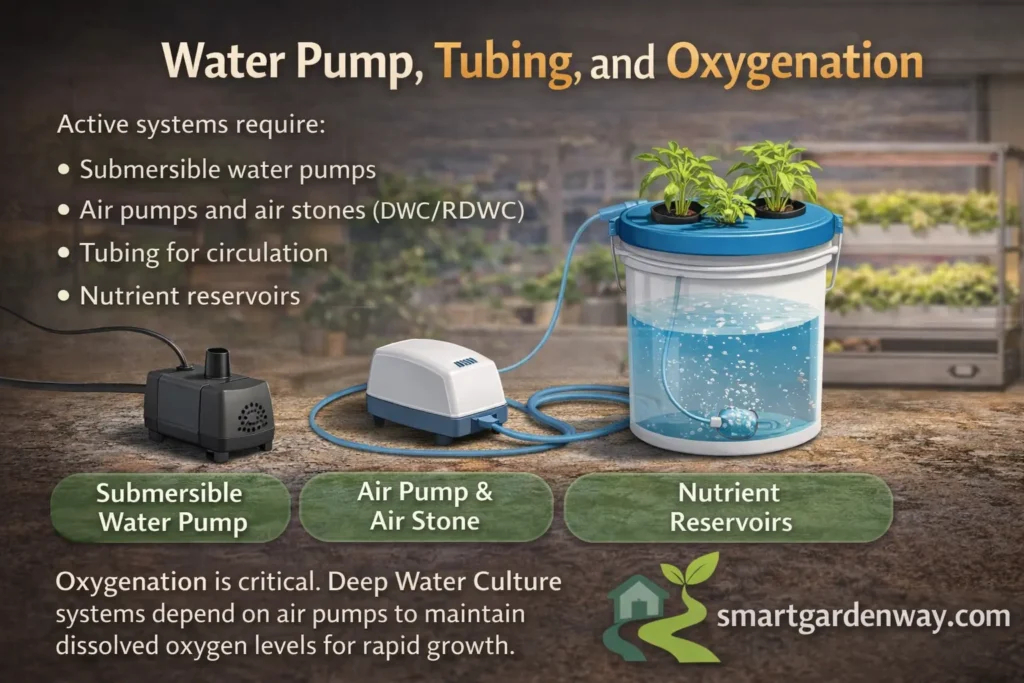
Water Pump, Tubing, and Oxygenation
Active systems require:
- Submersible water pumps
- Air pumps and air stones (DWC/RDWC)
- Tubing for circulation
- Nutrient reservoirs
Oxygenation is critical. Deep Water Culture systems depend on air pumps to maintain dissolved oxygen levels for rapid growth.
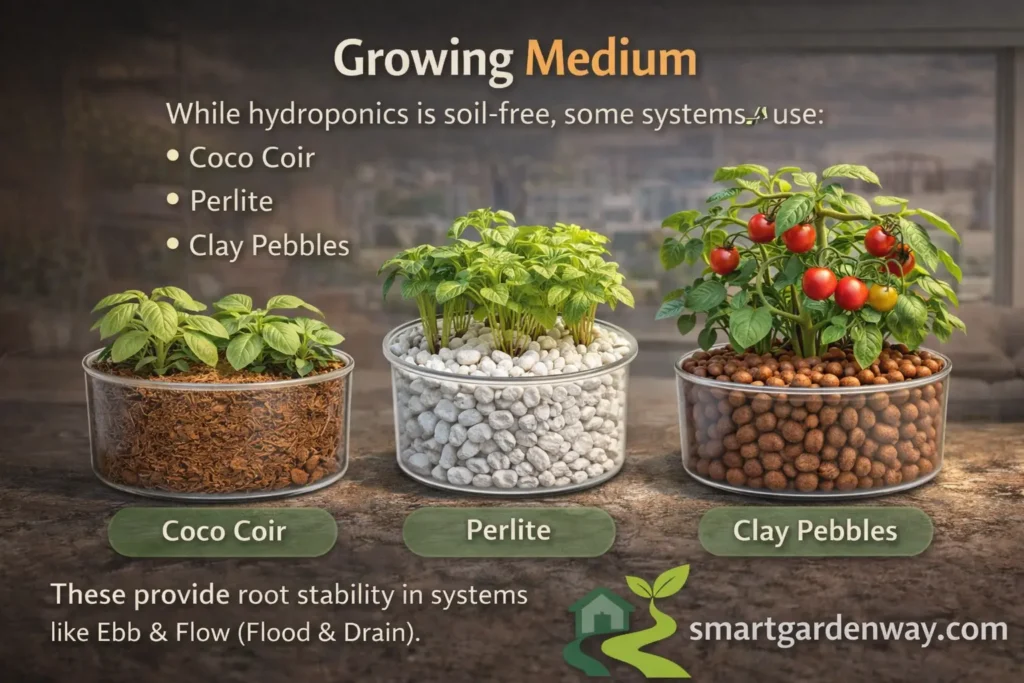
Growing Medium
While hydroponics is soil-free, some systems use:
- Coco coir
- Perlite
- Clay pebbles
These provide root stability in systems like Ebb & Flow (Flood & Drain).
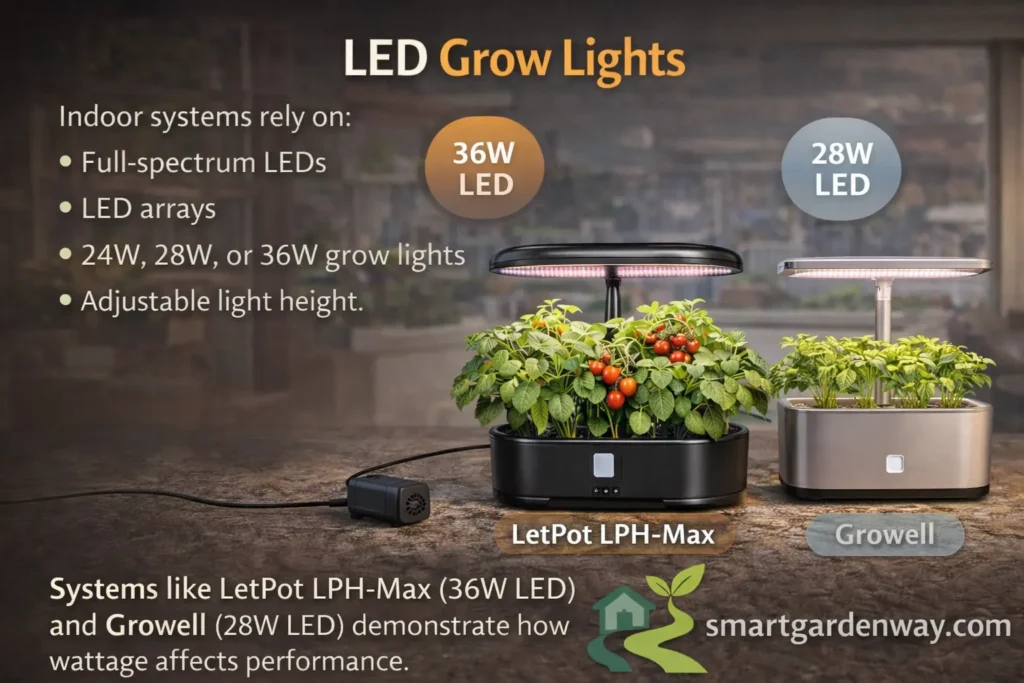
LED Grow Lights
Indoor systems rely on:
- Full-spectrum LEDs
- LED arrays
- 24W, 28W, or 36W grow lights
- Adjustable light height
Systems like LetPot LPH-Max (36W LED) and Growell (28W LED) demonstrate how wattage affects performance.
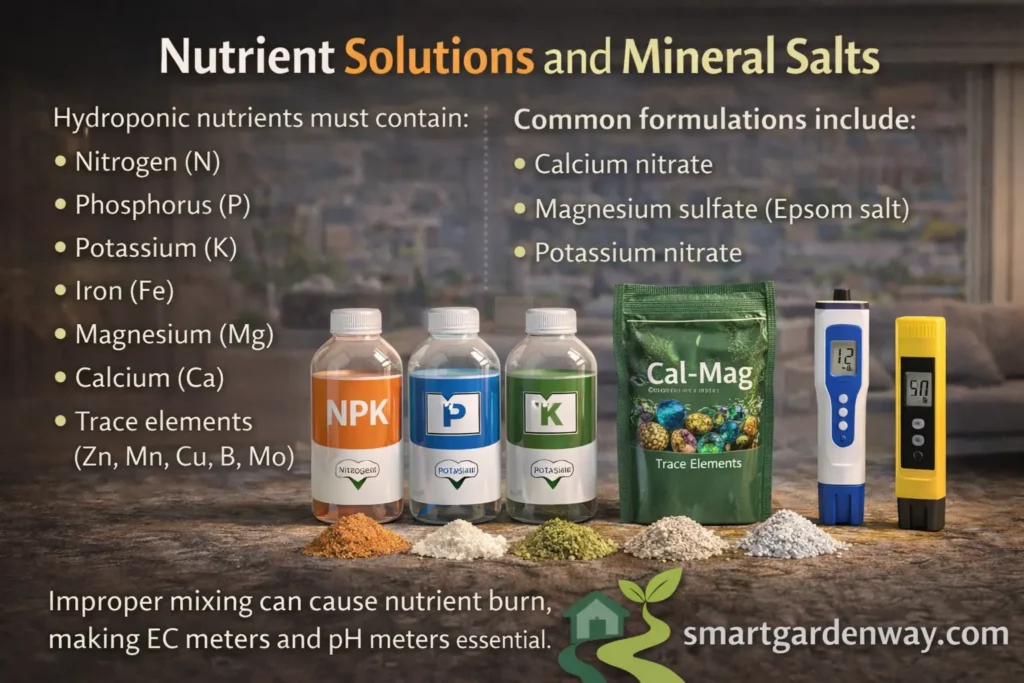
Nutrient Solutions and Mineral Salts
Hydroponic nutrients must contain:
- Nitrogen (N)
- Phosphorus (P)
- Potassium (K)
- Iron (Fe)
- Magnesium (Mg)
- Calcium (Ca)
- Trace elements (Zn, Mn, Cu, B, Mo)
Common formulations include:
- Calcium nitrate
- Magnesium sulfate (Epsom salt)
- Potassium nitrate
Improper mixing can cause nutrient burn, making EC meters and pH meters essential.
Types of Hydroponic Systems Suitable for Apartments
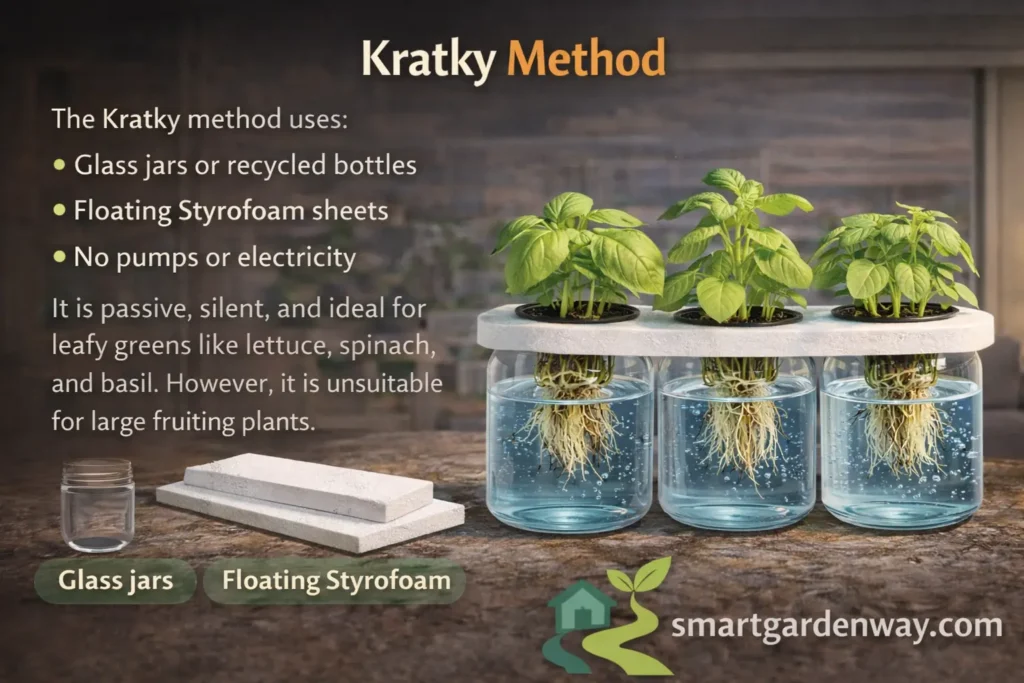
Kratky Method
The Kratky method uses:
- Glass jars or recycled bottles
- Floating Styrofoam sheets
- No pumps or electricity
It is passive, silent, and ideal for leafy greens like lettuce, spinach, and basil. However, it is unsuitable for large fruiting plants.
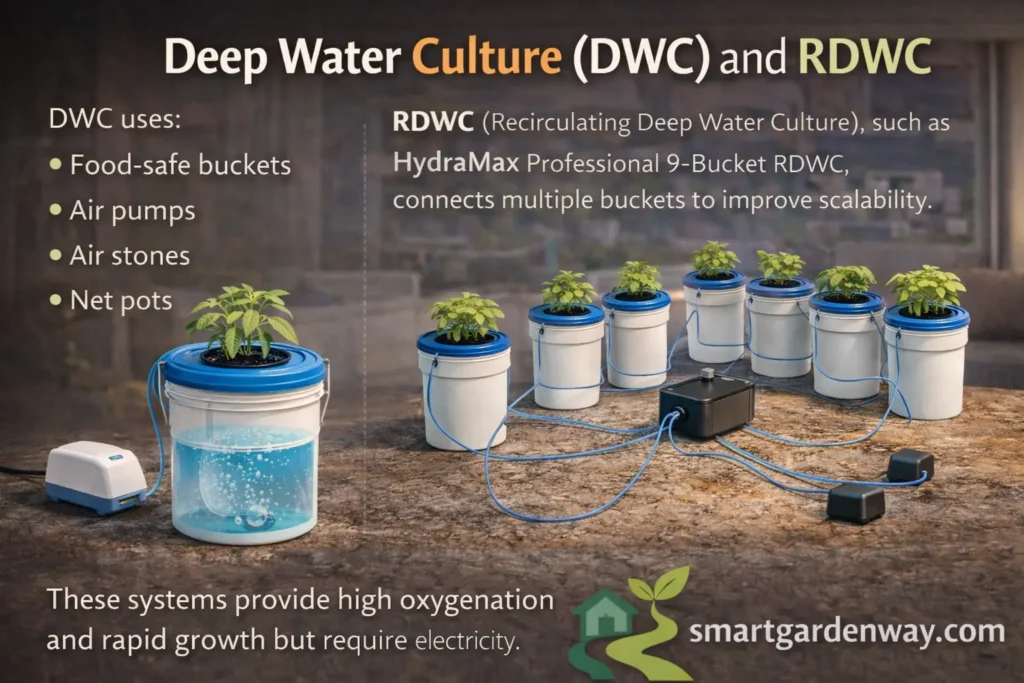
Deep Water Culture (DWC) and RDWC
DWC uses:
- Food-safe buckets
- Air pumps
- Air stones
- Net pots
RDWC (Recirculating Deep Water Culture), such as HydraMax Professional 9-Bucket RDWC, connects multiple buckets to improve scalability.
These systems provide high oxygenation and rapid growth but require electricity.
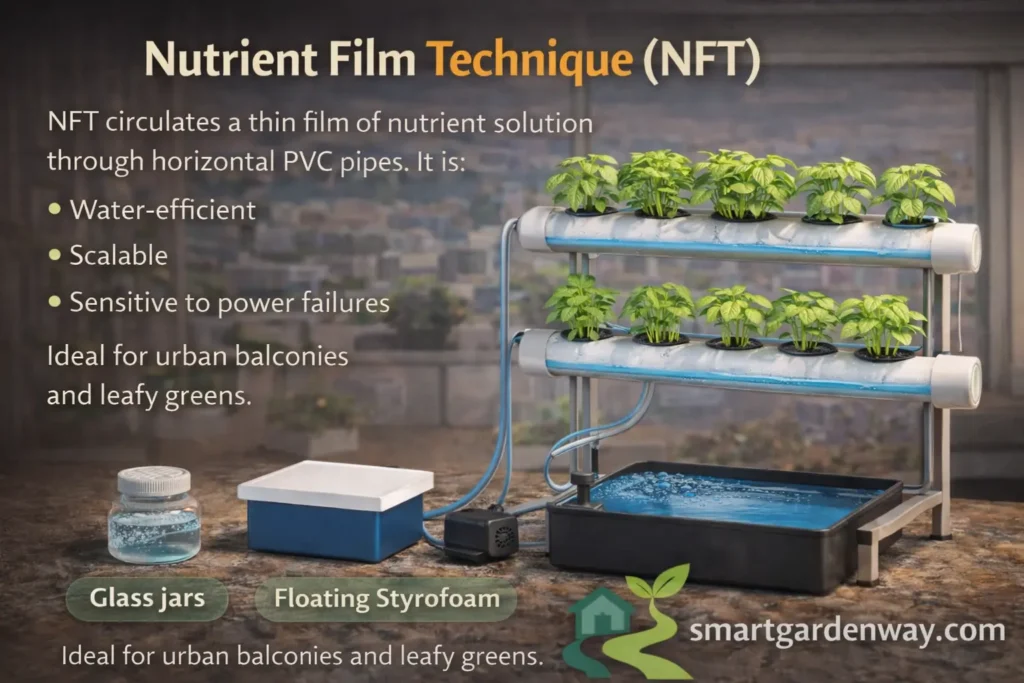
Nutrient Film Technique (NFT)
NFT circulates a thin film of nutrient solution through horizontal PVC pipes. It is:
- Water-efficient
- Scalable
- Sensitive to power failures
Ideal for urban balconies and leafy greens.
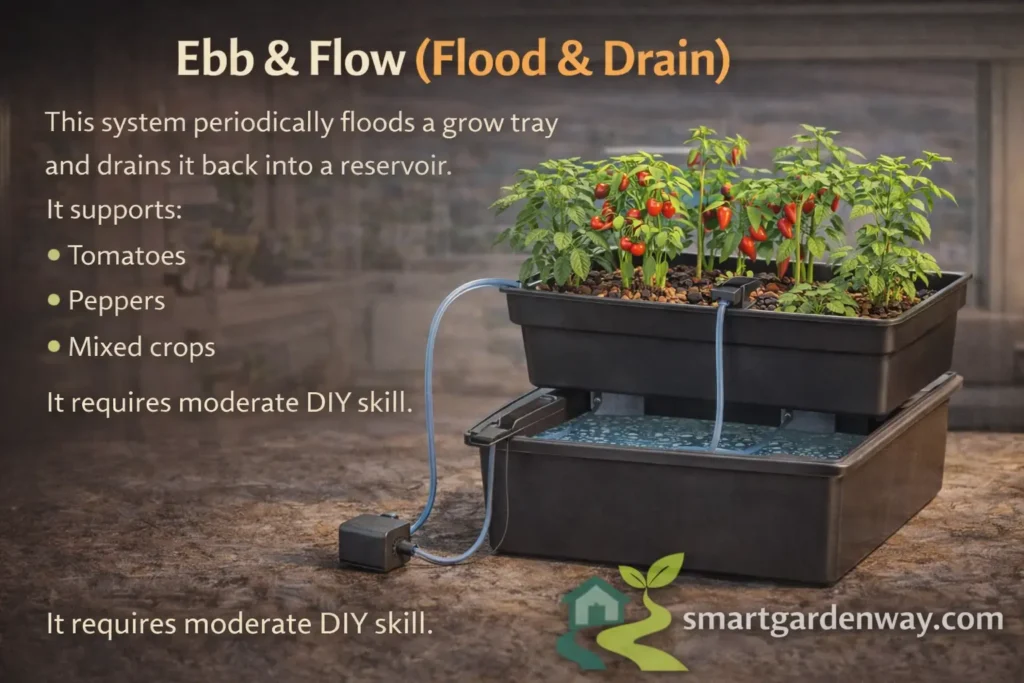
Ebb & Flow (Flood & Drain)
This system periodically floods a grow tray and drains it back into a reservoir. It supports:
- Tomatoes
- Peppers
- Mixed crops
It requires moderate DIY skill.
Vertical Hydroponic Towers
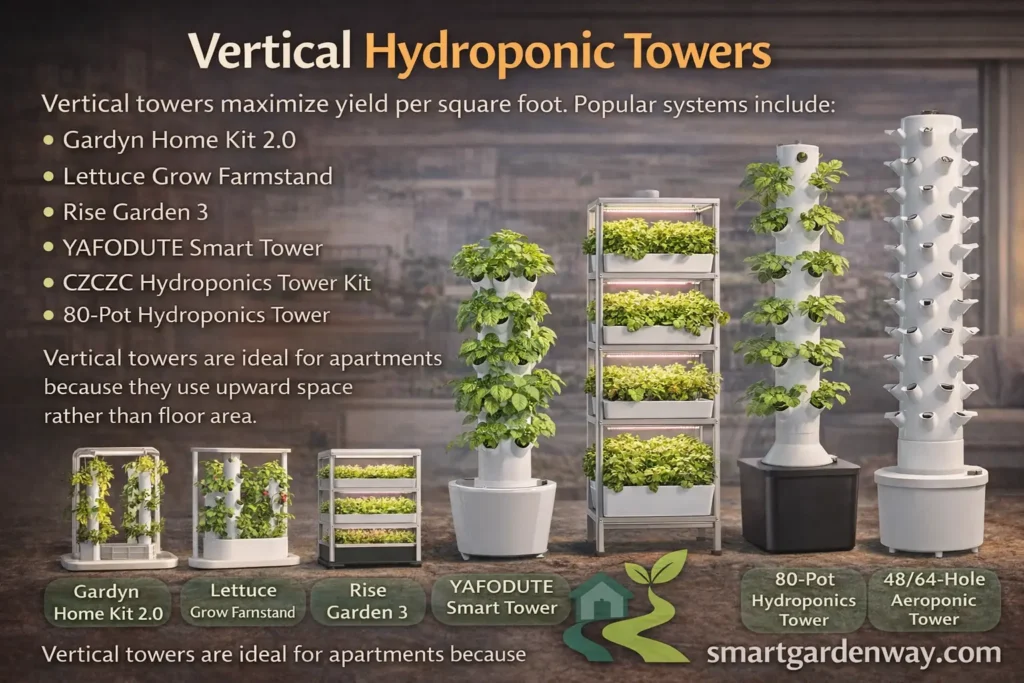
Vertical towers maximize yield per square foot. Popular systems include:
- Gardyn Home Kit 2.0
- Lettuce Grow Farmstand
- Rise Garden 3
- YAFODUTE Smart Tower
- CZCZC Hydroponics Tower Kit
- 80-Pot Hydroponics Tower
- 48/64-Hole Aeroponic Tower
Vertical towers are ideal for apartments because they use upward space rather than floor area.
Smart / Automated Hydroponic Systems
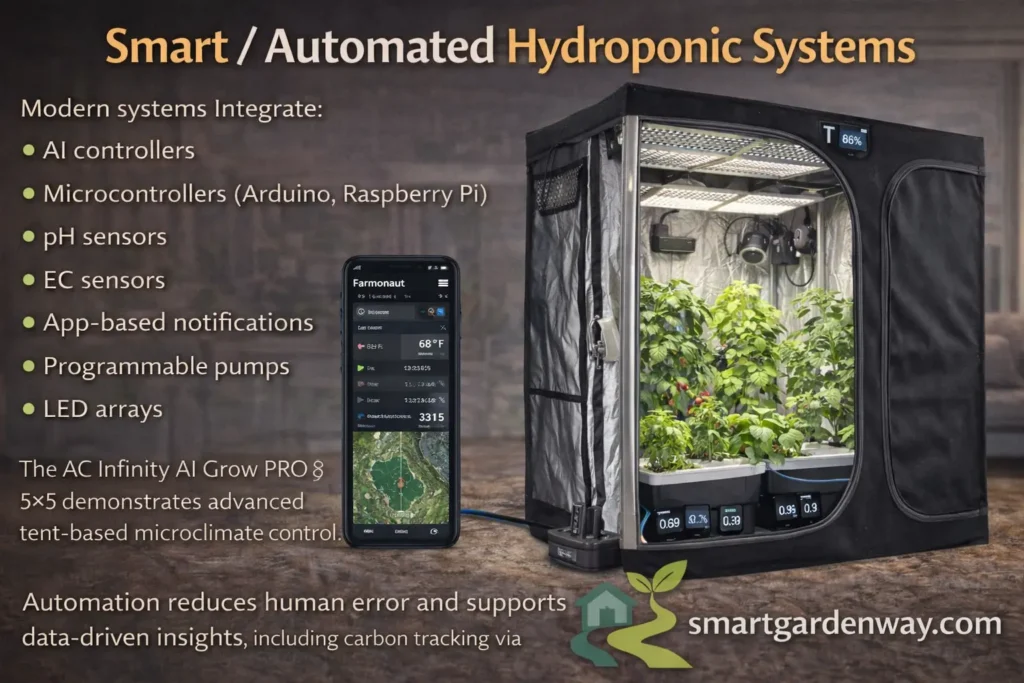
Modern systems integrate:
- AI controllers
- Microcontrollers (Arduino, Raspberry Pi)
- pH sensors
- EC sensors
- App-based notifications
- Programmable pumps
- LED arrays
The AC Infinity AI Grow PRO 5×5 demonstrates advanced tent-based microclimate control.
Automation reduces human error and supports data-driven insights, including carbon tracking via Farmonaut.
Top Hydroponic Systems for Small Apartments (2026 Picks)
Below are leading systems identified across multiple reviews.
AeroGarden Series
- AeroGarden Harvest Elite
- AeroGarden Bounty Elite
- Farm 12XL
- Farm 24XL
These are well-known countertop systems available on Amazon. Ideal for herbs and small greens.
Click & Grow Smart Garden Series
- Smart Garden 3
- Smart Garden 9
- Smart Garden 27
Features include:
- Patented “smart soil”
- Pre-seeded plant pods
- Automated watering
- Compact aesthetic design
Best for beginners and kitchen use.
Gardyn
The Gardyn Home Kit 2.0 uses vertical hydroponics and smart pods with system-coded guidance. It integrates AI recommendations and biodegradable pods. Active community: Gardynrs Facebook group.
Lettuce Grow
Includes the Farmstand and Farmstand Nook. Self-watering and self-fertilizing vertical racks suitable for apartments.
Rise Gardens
Rise Garden 3 offers modular expansion and multi-level beds for experienced gardeners.
LetPot Systems
- LetPot LPH-Max (21 pods, 36W LED)
- LetPot LPH-Air
Smart scheduling, adjustable height, automation.
Budget & Mid-Range Options
- Suncoze Hydroponic Growing System (12 pods)
- Growell Hydroponics Growing System (16 pods, 28W LED)
- Ahopegarden 12-Pod Kit
- Moistenland Hydroponic Kit
- iDOO Hydroponic Growing System
These provide entry-level access for small spaces.
Commercial / Advanced Options
- HydraMax Professional RDWC
- AC Infinity AI Grow PRO 5×5
- Premium LED Towers
Designed for high-capacity and advanced growers.
Comparison Metrics That Matter
When comparing systems, analyze:
- Pod count
- LED wattage (24W / 28W / 36W)
- Reservoir size
- Water usage (L/month)
- Energy consumption (kWh/month)
- Footprint (sq. ft.)
- Sustainability rating
- Price (USD / INR)
Testing methodologies include performance evaluation, design assessment, value comparison, and scoring rubric analysis.
How to Choose the Right Hydroponic System
Gardening Skill Level
Beginners should consider:
- Click & Grow Smart Garden 9
- AeroGarden Harvest Elite
- Suncoze
- Growell
Experienced gardeners may prefer:
- Rise Garden 3
- Gardyn
- RDWC systems
Space Constraints
Countertop: AeroGarden, Click & Grow, LetPot
Vertical footprint: Gardyn, Lettuce Grow
Balcony setups: NFT PVC systems
Plant Types
Best for small apartments:
- Lettuce
- Basil
- Spinach
- Mint
- Parsley
- Strawberries
- Dwarf peppers
Larger fruiting crops may require Ebb & Flow or vertical towers.
Maintenance Commitment
Low maintenance: Kratky, Wick System
Moderate: DWC
Advanced: AI-based smart systems
Sustainability and Environmental Impact
Hydroponics supports:
- Water conservation (90% less water)
- Reduced nutrient runoff
- Pesticide reduction
- Zero soil erosion
- Greenhouse gas monitoring
Farmonaut enables:
- Carbon footprint tracking
- Blockchain traceability
- Real-time environmental monitoring
- AI-based advisory
- API access for developers
These tools support urban environmental compliance and sustainable agriculture.
DIY, Workshops, and Community Support
For DIY enthusiasts:
- Recycled containers
- PVC pipes
- Arduino-based automation
- Raspberry Pi microcontrollers
Communities include:
- Grow Food Anywhere SKOOL
- Gardynrs Facebook group
- DIY forums
- Amazon product reviews
Education improves nutrient balance, pH monitoring, and troubleshooting.
Testing and Evaluation Framework
Leading reviews use:
- 55-day test cycles
- Real-world performance tracking
- Yield comparison
- Energy analysis
- Design evaluation
- Cost-benefit ratio
- Durability assessment
This ensures that “best” claims are backed by measurable metrics.
Frequently Asked Questions
What is the best hydroponic system for beginners?
Click & Grow Smart Garden 9, AeroGarden Harvest Elite, and Suncoze are beginner-friendly due to automation and minimal setup.
What is the lowest maintenance hydroponic system?
Kratky and Wick systems require minimal oversight. Smart systems reduce daily monitoring via sensors.
Are hydroponic gardens worth it?
Yes. With efficient water use, year-round harvests, and reduced grocery dependency, ROI becomes evident over time.
Conclusion: The Future of Apartment Hydroponics in 2026
The best hydroponic system for small apartments 2026 is not a single product, it is a category of intelligent, space-optimized, water-efficient systems designed to meet modern urban living constraints. From passive Kratky jars to advanced AI-controlled vertical towers like Gardyn, Rise Gardens, and Lettuce Grow, hydroponics has matured into a scalable indoor farming solution.
With up to 90% less water usage, reduced environmental impact, and yield improvements of up to 30% per square foot, hydroponics offers both ecological and economic advantages. Integrated sensors, microcontrollers like Arduino and Raspberry Pi, and platforms such as Farmonaut bring data-driven precision to small-scale indoor agriculture.
Whether you choose a countertop AeroGarden, a modular Rise Garden, a smart LetPot system, or a vertical hydroponic tower, 2026 marks a turning point where apartment dwellers can produce sustainable, high-quality food year-round.
Urban agriculture is no longer limited by soil or space it begins at home, vertically, intelligently, and efficiently.